
Every sourdough baker eventually faces the same recurring situation: a jar of discard sitting in the refrigerator, growing larger with each feeding cycle, and a vague sense of obligation to do something useful with it before it becomes too sharp and acidic to enjoy. Most discard recipes offer the same solutions — pancakes, crackers, flatbreads. Good options, all of them, but none as satisfying as pulling a golden loaf from the oven that uses the discard in a way that genuinely improves the final product.
This sourdough rhubarb bread is that recipe. It is a quick bread in structure — leavened with baking powder, mixed in two bowls, baked in a standard loaf pan — but the sourdough discard adds a mild, tangy depth that plain quick breads simply do not have. Combined with tart rhubarb pieces distributed throughout the crumb and a simple sprinkle of sugar on top that bakes into a crispy, caramelized crust, this loaf is one of the most complete and satisfying sourdough rhubarb recipes you can make with an hour and a half and a handful of pantry ingredients.
Why You’ll Love This Sourdough Rhubarb Bread
Among all the sourdough rhubarb recipes available to the home baker — sourdough rhubarb cake, sourdough strawberry rhubarb pie, sourdough rhubarb cobbler — this quick bread earns its place as the most practical and most repeatable. It requires no stand mixer, no kneading, no shaping, no proofing, and no dutch oven. The barrier to entry is so low that it genuinely qualifies as a beginner sourdough project even though it produces results that taste like something considerably more advanced.
The sourdough discard adds more than just flavor. The natural acids in the discard interact with the baking powder during baking, contributing a slightly more complex rise and a delicate, tender crumb that plain milk-and-oil quick breads cannot replicate. The flavor is subtle — just enough tanginess to make each slice taste interesting — without overwhelming the rhubarb or making the bread taste sour.
It is also one of the most effective discard recipes for managing the steady accumulation of unfed starter. One cup of discard goes into each loaf — a meaningful dent in even the most prolific sourdough maintenance routine.
Common Mistakes (And How to Avoid Them)
Overmixing the batter. The most important rule of every quick bread applies here with particular emphasis. Sourdough discard batter, because it already contains some structure from the fermented flour, can develop a tough, gummy crumb even more quickly than a standard quick bread batter when overworked. Mix the wet and dry ingredients together until just combined — the batter should look rough and uneven, with no dry pockets of flour but also no smooth, homogenous consistency. Stop stirring. Fold in the rhubarb with the fewest possible strokes that distribute it evenly.
Using expired baking powder. This recipe relies entirely on baking powder for its lift — the sourdough discard, unlike active starter, does not contribute meaningful leavening. If the baking powder is old or improperly stored, the bread will emerge dense, flat, and heavy regardless of how perfectly everything else was executed. Test it before using: drop one teaspoon into hot water. Vigorous bubbling means it is active. A weak fizz or no reaction means it needs to be replaced. Baking powder has a practical shelf life of about six to twelve months from opening.
Using discard that is too acidic. Sourdough discard that has been sitting in the refrigerator for more than two weeks without feeding becomes aggressively sour and can overwhelm the other flavors in the bread, making the finished loaf taste unpleasantly sharp rather than pleasantly tangy. Use discard that has been refreshed within the past one to two weeks for the best flavor balance.
Not lining the pan with parchment. The sugar sprinkled on top of the loaf before baking caramelizes beautifully against the hot batter, but it also means any overflow makes contact with the pan and bonds to it. The sugar already present in the batter does the same along the sides and bottom. Greasing alone is often insufficient. A parchment liner that extends up the two short sides of the pan guarantees the loaf lifts out cleanly and the caramelized sugar crust on top stays intact.
Slicing while warm. Quick bread, and especially discard quick bread, has a delicate crumb structure when hot that tears rather than slices. Allow the loaf to cool completely on a wire rack before slicing — at least an hour. For the cleanest, most cohesive slices with the crumb fully set, refrigerate the completely cooled loaf for two to three hours before cutting.
Chef’s Notes
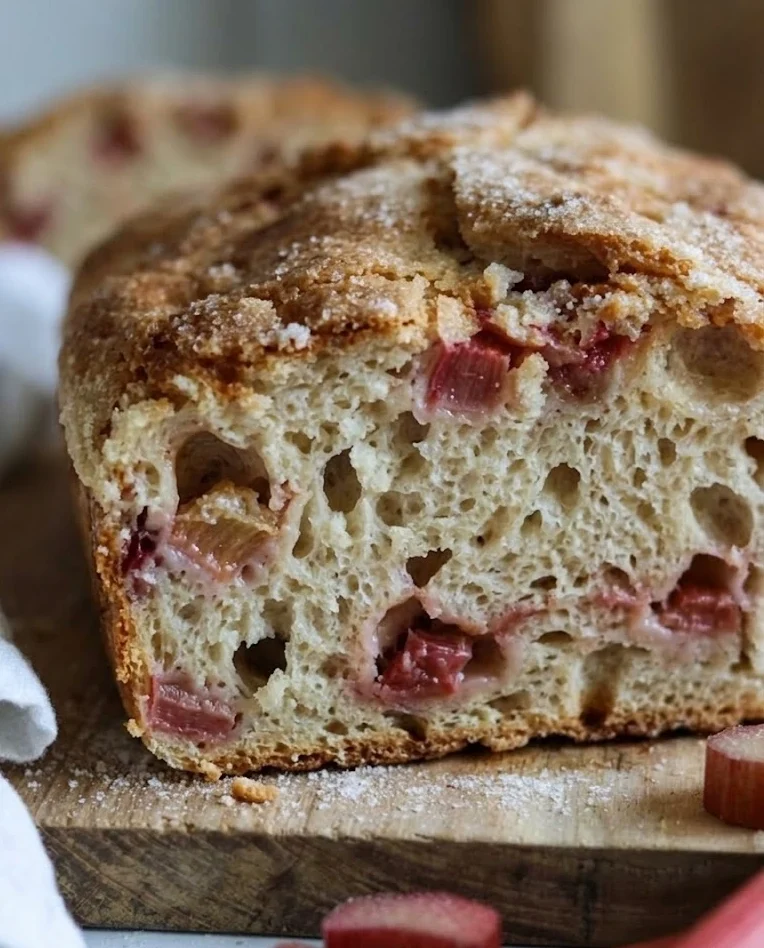
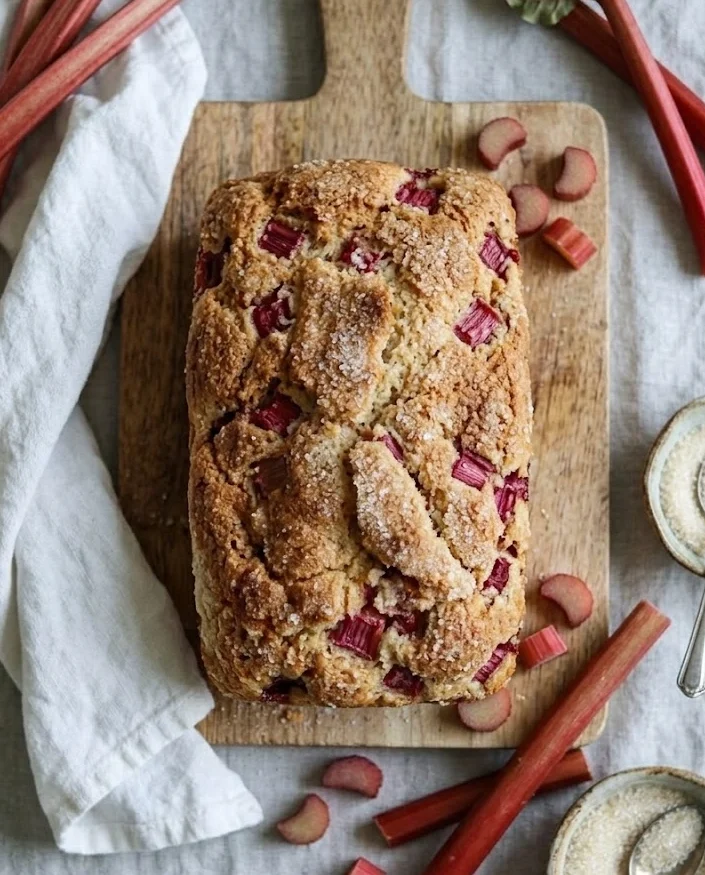
The sugar sprinkled on top of the batter before baking is the detail that elevates this from a good quick bread to a memorable one. As the loaf rises in the oven, the sugar on the surface melts slightly and then re-crystallizes into a thin, crunchy, amber-colored crust that provides a textural contrast to the soft interior. It also catches the eye immediately when the loaf is sliced — golden on the outside, cream-colored crumb inside, vivid pink-red flecks of rhubarb throughout.
The ratio of sourdough discard to flour in this recipe is higher than most discard quick bread recipes — one cup of discard to one and a half cups of flour, rather than the more typical quarter cup or half cup that many discard recipes use. This is deliberate. The higher proportion of discard is what produces the genuinely tangy, complex flavor that makes this bread worth making specifically as a sourdough recipe rather than just any rhubarb quick bread. Do not reduce the discard quantity.
For anyone who wants to maximize the rhubarb flavor, two cups of rhubarb instead of the standard one cup produces a loaf with tart fruit in virtually every bite. The bread will be slightly moister and may need five additional minutes in the oven, but the result is deeply satisfying for committed rhubarb enthusiasts.
Key Ingredients
All-purpose flour provides the structural foundation of the loaf. At one and a half cups combined with one full cup of discard, the total flour equivalent in this recipe is higher than it initially appears — the discard contributes its own fermented flour to the batter, which is why the texture of the finished bread is denser and more substantial than a loaf made with flour and milk alone.
Sourdough discard is the ingredient that makes this recipe unique among rhubarb quick bread recipes. It contributes fermented flour proteins that add structure, wild yeast acids that add flavor complexity, and a mild tanginess that interacts with the sweetness of the sugar and the tartness of the rhubarb in a way that makes the finished bread taste layered and interesting rather than one-dimensional. The discard does not need to be active or bubbly — it is used here purely for flavor and texture rather than leavening.
Baking powder is the leavening agent that makes the bread rise in the oven. Because the discard does not contribute meaningful lift in this quick bread format, the baking powder carries the full responsibility for the loaf’s rise. Fresh, correctly stored baking powder is non-negotiable.
Fresh rhubarb brings the signature tartness that makes this a rhubarb bread rather than just a sourdough loaf. Chopped into half-inch pieces and folded raw into the batter, the rhubarb softens completely during baking and releases its juices into the surrounding crumb, creating pockets of concentrated rhubarb flavor throughout the loaf. These pockets are what make each slice look beautiful when cut — vivid red-pink pieces visible in every cross-section.
Sugar serves two purposes: sweetening the batter and creating the caramelized crust on top. The granulated sugar inside the batter balances the tartness of both the rhubarb and the sourdough discard. The sugar sprinkled over the top surface before baking melts and re-crystallizes into the crunchy, golden crust that is the visual signature of this loaf.
Vegetable oil keeps the crumb moist and tender after baking. Unlike butter, which solidifies at room temperature and causes quick breads to firm up and dry out within a day, oil stays liquid and maintains the loaf’s moisture for several days without refrigeration.
Egg, milk, and vanilla round out the wet ingredients, providing richness, additional moisture, and a gentle flavor foundation that allows the sourdough and rhubarb to be the dominant notes without the bread tasting bare or underdeveloped.
How to Make Sourdough Rhubarb Bread
- Preheat your oven to 350°F (175°C). Grease a 9×5-inch loaf pan and line it with parchment paper, allowing the paper to extend up the two short sides for easy removal. Set aside.
- Wash and trim the rhubarb, then chop into half-inch pieces. You need two cups of chopped rhubarb. Set aside.
- In a large mixing bowl, combine the all-purpose flour, sugar, baking powder, and salt. Whisk until evenly distributed.
- In a separate bowl, combine the milk, egg, vanilla extract, sourdough discard, and vegetable oil. Whisk until smooth and fully incorporated.
- Pour the wet ingredients into the dry ingredients and mix with a rubber spatula until just combined. The batter should look rough and slightly lumpy — do not stir further.
- Fold the chopped rhubarb into the batter with a few gentle strokes until distributed. Do not overmix.
- Pour the batter into the prepared loaf pan and smooth the top gently with a spatula. Sprinkle a generous layer of granulated sugar evenly across the entire surface.
- Bake for 60 to 65 minutes, until a toothpick inserted into the center of the loaf comes out clean or with a few dry crumbs. The top should be deep golden brown with a visibly crystallized sugar crust.
- Transfer the pan to a wire rack and allow the loaf to cool in the pan for 10 minutes. Then lift the loaf out using the parchment handles and cool completely on the rack before slicing.
- For the cleanest slices, refrigerate the completely cooled loaf for two to three hours before cutting.
Looking for more ways to bake with rhubarb this spring? Our ultimate rhubarb recipe roundup collects 20 of the best rhubarb desserts in one place — including easy rhubarb recipes, strawberry rhubarb pie, rhubarb cake, rhubarb crisp, sourdough rhubarb bread, healthy rhubarb muffins, and much more. Whether you have fresh rhubarb from the garden or a bag of frozen stalks in the freezer, this guide has the perfect recipe waiting for you. Explore all 20 rhubarb recipes here.
Variations and Tips
Sourdough strawberry rhubarb bread: Replace one cup of the rhubarb with fresh hulled and diced strawberries. Toss the strawberries lightly in one tablespoon of flour before folding into the batter — this prevents them from sinking to the bottom of the loaf during baking. The result is a sweeter, more colorful loaf that sits at the intersection of sourdough rhubarb recipes and classic strawberry rhubarb recipes.
Brown sugar top: Replace the granulated sugar topping with an equal amount of packed brown sugar. It caramelizes more deeply and produces a darker, richer, almost toffee-like crust that pairs particularly well with the tanginess of the sourdough discard.
Half brown sugar in the batter: Substitute half the granulated sugar in the batter with packed brown sugar. This adds a subtle molasses note to the crumb that gives the bread a warmer, more complex flavor without changing its structure or bake time.
Gluten-free sourdough rhubarb bread: Use a certified 1:1 gluten-free baking flour blend in place of the all-purpose flour. If you maintain a gluten-free sourdough starter, use it here; if not, a standard discard still works. The texture will be slightly more delicate but the flavor will be fully intact.
Rhubarb sourdough recipes for diabetics: Replace the granulated sugar in both the batter and the topping with a 1:1 granulated erythritol or monk fruit sweetener. The leavening chemistry is unaffected. The sugar topping will not crystallize quite as dramatically as granulated sugar but will still produce a pleasantly firm surface. This makes the recipe a genuinely accessible option among sourdough rhubarb recipes for diabetics.
Long ferment option: For a deeper sourdough flavor and better digestibility, mix the batter — without the rhubarb — and refrigerate it overnight, covered tightly. In the morning, fold in the fresh rhubarb, pour into the prepared pan, and bake as directed, adding five to ten minutes to the bake time for the cold batter. The extended fermentation allows the sourdough acids to work into the flour more thoroughly, producing a tangier, more complex crumb.
How to Meal Prep
This sourdough rhubarb bread is one of the most make-ahead-friendly sourdough rhubarb recipes available. The loaf actively improves over the first 24 hours as the moisture from the rhubarb redistributes through the crumb and the sourdough flavor deepens in a way that is noticeably more pleasant than the freshly-baked version.
Bake the loaf the day before it is needed, cool completely, wrap tightly in plastic wrap, and store at room temperature for up to two days. For longer storage, refrigerate wrapped for up to five days — the crumb stays moist and the sourdough tang intensifies pleasantly. Slices reheat well in the microwave for 15 to 20 seconds or can be eaten cold directly from the refrigerator.
For freezer storage, allow the loaf to cool completely and wrap tightly in plastic wrap followed by aluminum foil. Freeze for up to three months. For more convenient access, slice the loaf before freezing and separate slices with small squares of parchment. Individual frozen slices can be thawed at room temperature in 30 minutes or toasted directly from frozen.
The sourdough discard itself can be portioned into one-cup measurements in zip-lock bags and frozen for up to three months, making it easy to have exactly the right amount ready whenever rhubarb season arrives — or whenever a bag of frozen rhubarb pulls you toward a loaf on a cold winter morning.
Cultural Context
Sourdough discard baking sits at an interesting crossroads between ancient tradition and very modern sensibility. Sourdough starters — living cultures of wild yeast and bacteria maintained through regular feeding — have been used in bread baking for thousands of years, across virtually every culture that developed a bread tradition. The practice of using the excess discarded culture in secondary recipes is almost as old, driven by the same basic logic that has always governed thrifty kitchen culture: nothing edible should be wasted.
What is distinctly contemporary about sourdough discard recipes — and sourdough rhubarb recipes in particular — is the way they have been embraced by a new generation of home bakers who came to sourdough not through family tradition but through curiosity, environmental consciousness, and a desire to understand more deeply the food they eat. For many of these bakers, the discard jar is not a burden but an opportunity, and recipes like this rhubarb quick bread are the direct expression of that philosophy.
Rhubarb, in this context, is a natural partner. It is similarly tied to seasonal rhythms, similarly abundant during its brief window, and similarly underappreciated by anyone who has not had the experience of baking with it well. The combination of sourdough discard’s gentle tang and rhubarb’s sharp tartness produces a flavor that is genuinely more interesting than either ingredient alone — a quality that the best rhubarb recipes have always possessed, and that this loaf delivers in a format that requires almost nothing of the person making it.
Sourdough Rhubarb Bread
Equipment
- 9×5-inch loaf pan
- mixing bowls
- whisk
- rubber spatula
- parchment paper
Ingredients
- 1.5 cup all-purpose flour
- 1 cup granulated sugar
- 2 tsp baking powder
- 0.5 tsp salt
- 0.5 cup milk
- 1 egg
- 1 tsp vanilla extract
- 1 cup sourdough discard
- 0.33 cup vegetable oil
- 2 cups chopped rhubarb
- 2 tbsp granulated sugar (for topping)
Instructions
- Preheat oven to 350°F (175°C). Grease a 9×5-inch loaf pan and line with parchment paper.
- Chop rhubarb into small pieces and set aside.
- In a large bowl, whisk together flour, sugar, baking powder, and salt.
- In another bowl, whisk milk, egg, vanilla, sourdough discard, and oil until smooth.
- Combine wet and dry ingredients, stirring until just combined. Do not overmix.
- Fold in chopped rhubarb with minimal stirring.
- Pour batter into prepared pan and smooth top. Sprinkle sugar evenly over the surface.
- Bake for 60–65 minutes until a toothpick inserted comes out clean or with dry crumbs.
- Cool in pan for 10 minutes, then lift out and cool completely on a rack.
- Refrigerate for 2–3 hours for clean slicing, then slice and serve.