
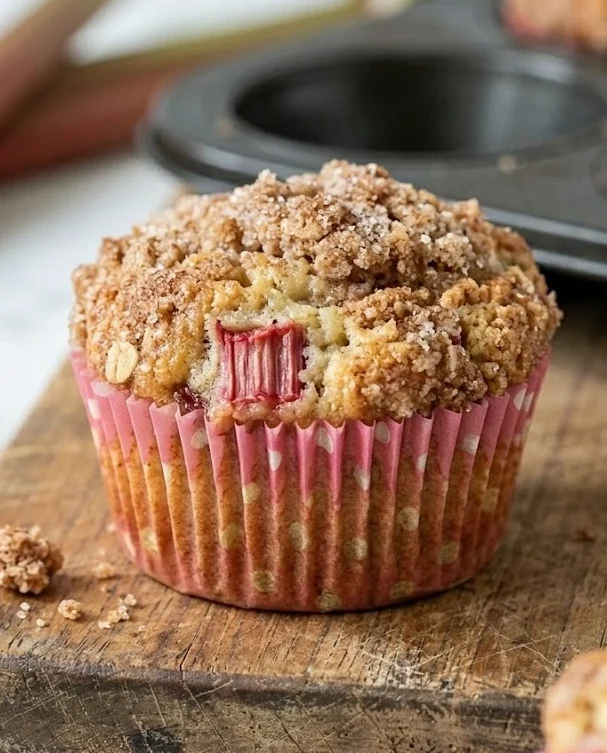
Every spring, the same question surfaces in kitchens across North America: what do I do with all this rhubarb? There are the obvious answers — rhubarb crisp, strawberry rhubarb pie, rhubarb crumble — and then there is this one, which may actually be the most practical of all the easy rhubarb recipes you will ever come across.
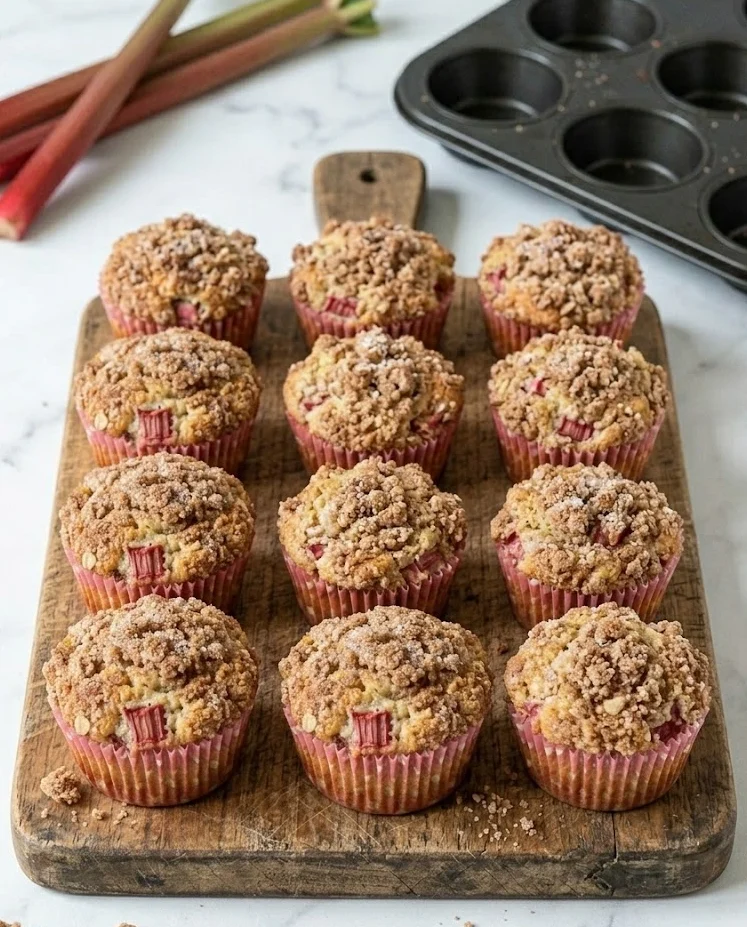
These rhubarb muffins with Greek yogurt take 15 minutes to prepare, 20 minutes to bake, and produce twelve golden, cinnamon-topped muffins that work equally well as a weekday breakfast, a school lunchbox addition, an afternoon snack, or a casual dessert. They are lighter than most muffin recipes thanks to the Greek yogurt substitution, genuinely packed with rhubarb flavor, and finished with a cinnamon sugar topping that crystallizes in the oven into a slightly crunchy, fragrant crust that makes them nearly impossible to stop at one.
Among all the rhubarb recipes muffins lovers search for each spring, this is the one that earns a permanent spot in the recipe rotation.
Why You’ll Love These Rhubarb Muffins
The most compelling thing about this recipe — beyond its flavor — is how it fits into the category of healthy rhubarb recipes without feeling like a compromise. Greek yogurt replaces the sour cream that most muffin recipes call for, cutting the fat significantly while adding a small but meaningful amount of protein. The resulting crumb is tender, moist, and slightly tangy in a way that complements the tartness of the rhubarb rather than fighting it.
The muffins are also made with a blend of whole wheat and all-purpose flour, which adds fiber and a slightly nutty depth of flavor that an all-purpose-only muffin simply does not have. At 226 calories per muffin with 5 grams of protein, these sit comfortably in the healthier rhubarb recipes category without anyone at the table needing to know.
They also happen to be one of the most forgiving and versatile rhubarb recipes in this collection. The base batter works with virtually any fruit you have on hand, and the recipe adapts cleanly to gluten-free, lower-sugar, and dairy-free requirements with minimal adjustment.
Common Mistakes (And How to Avoid Them)
Overmixing the batter. This is the single most important instruction in the entire recipe, and also the one most commonly ignored. The moment the dry and wet ingredients come together — stop stirring. A few streaks of flour in the batter are preferable to a smooth, fully mixed one. Overmixing develops gluten, which turns what should be a light, tender crumb into something tough, dense, and almost rubbery. Fold, do not stir, and stop early.
Using fat-free Greek yogurt. Zero-percent Greek yogurt works in this recipe — the muffins will still bake successfully — but the difference in texture compared to 2% is noticeable. Fat-free yogurt produces a slightly drier, less tender crumb because there is no fat to lubricate the flour proteins and keep the crumb soft. Use 2% or higher for the best result. If you only have 0%, the muffins will still be good; just do not expect quite the same moistness.
Thawing frozen rhubarb before adding it. If you are using frozen rhubarb, add it to the batter while it is still frozen or only partially thawed. Fully thawed rhubarb releases liquid into the batter, making it wetter than intended and producing a denser, potentially undercooked center. Frozen pieces mixed directly into the thick batter stay intact, distribute evenly, and cook perfectly in the 20-minute bake time.
Packing the flour. This recipe uses two cups of flour total — one cup all-purpose and one cup whole wheat. Scooping directly from the bag compacts both and adds more flour than intended, resulting in a dry, heavy muffin. Spoon each flour into the measuring cup and level it off with a straight edge for an accurate, consistent measurement every time.
Skipping the topping. The cinnamon sugar topping is not decorative. As the muffins bake, the sugar melts slightly and then re-crystallizes on the surface, forming a thin, lightly crunchy crust that provides textural contrast to the soft interior. Muffins baked without it are still good — they are just missing the element that makes this recipe genuinely memorable.
Chef’s Notes
The batter for these muffins is intentionally thick — noticeably thicker than most muffin batters you have worked with. This is correct and deliberate. The thickness is what allows the muffins to mound above the rim of the tin as they bake, producing that beautiful domed top that sets bakery-style muffins apart from flat, sunken ones. Do not add extra liquid to thin it.
Cinnamon is used generously here — one full teaspoon in the batter plus an additional half teaspoon in the topping. If you find the cinnamon comes through less strongly than expected, it is worth checking the age of your ground cinnamon. Ground spices lose their potency after six to twelve months, and older cinnamon can be nearly flavorless even when added in what looks like a significant amount. Fresh cinnamon transforms this recipe.
A note on rhubarb sizing: the recipe calls for the rhubarb to be diced into quarter-inch pieces — smaller than the half-inch pieces used in most rhubarb crisp and pie recipes. The smaller cut ensures the rhubarb distributes evenly throughout the batter and cooks completely in the 20-minute window. Larger pieces may not fully soften in the center, leaving firm, fibrous chunks in an otherwise tender muffin.
Key Ingredients
Fresh rhubarb is the star, and at one and a half cups diced into quarter-inch pieces, it is present in every single bite. As it bakes, it softens and releases just enough of its tart juice to perfume the surrounding crumb without making the batter wet. The tartness is what makes these muffins taste distinctly of rhubarb rather than just of cinnamon and sugar — and that tartness is the point.
Greek yogurt is the ingredient that elevates this above standard rhubarb recipes muffins. It reacts with the baking soda in the batter, contributing to lift and creating a more open, airy crumb than butter-and-milk muffins typically achieve. It also adds a subtle tang that mirrors and amplifies the sourness of the rhubarb, creating a flavor harmony that makes the whole recipe feel intentional and coherent. Use 2% plain Greek yogurt for the best balance of nutrition and texture.
Whole wheat flour adds fiber, a gentle nuttiness, and a slightly denser crumb that makes these muffins feel more substantial than an all-purpose-only version. It is one of the details that earns this recipe its place among truly healthy rhubarb recipes rather than ones that are simply marketed that way.
Unsalted butter, melted and cooled, provides the fat that keeps the crumb tender and moist even after cooling. It also carries flavor in a way that neutral oils do not — the buttery richness is present but understated, supporting the rhubarb and cinnamon rather than competing with them.
Ground cinnamon is the dominant spice and the flavor bridge between the tartness of the rhubarb and the sweetness of the sugar. One teaspoon in the batter and half a teaspoon in the topping ensures it is present throughout every layer of the muffin from interior crumb to surface crust.
Baking powder and baking soda work together here. The baking powder provides the primary lift, while the baking soda reacts specifically with the acid in the Greek yogurt to contribute additional rise and help neutralize some of the yogurt’s tang. Both are necessary and should not be substituted for each other.
How to Make Rhubarb Muffins with Greek Yogurt
- Preheat your oven to 400°F (200°C). Line a 12-cup muffin tin with paper liners or spray generously with non-stick cooking spray.
- In a medium mixing bowl, whisk together the all-purpose flour, whole wheat flour, granulated sugar, baking powder, ground cinnamon, baking soda, and salt until evenly combined. Set aside.
- In a large mixing bowl, whisk together the Greek yogurt, melted and cooled butter, eggs, and vanilla extract until smooth and creamy.
- Add the dry ingredients to the wet ingredients — not the other way around. Fold gently with a spatula until just barely combined. The batter will be very thick and will still have a few streaks of flour. This is correct.
- Add the diced rhubarb and fold it in with two or three more strokes. Stop mixing the moment the rhubarb is distributed. Do not overmix.
- Divide the thick batter evenly among the 12 muffin cups using a large spoon or ice cream scoop. The batter should mound slightly above the rim of each cup.
- In a small bowl, combine the 3 tablespoons of granulated sugar and the half teaspoon of cinnamon for the topping. Mix well. Sprinkle a generous half teaspoon of the cinnamon sugar over the top of each muffin, then gently press the topping into the surface with your fingertips so it adheres.
- Bake for 20 to 22 minutes, until the muffin tops are golden brown, feel springy when lightly pressed in the center, and a toothpick inserted in the middle comes out clean.
- Allow the muffins to cool in the pan for 5 to 10 minutes before transferring to a wire rack. Serve warm.
Looking for more ways to bake with rhubarb this spring? Our ultimate rhubarb recipe roundup collects 20 of the best rhubarb desserts in one place — including easy rhubarb recipes, strawberry rhubarb pie, rhubarb cake, rhubarb crisp, sourdough rhubarb bread, healthy rhubarb muffins, and much more. Whether you have fresh rhubarb from the garden or a bag of frozen stalks in the freezer, this guide has the perfect recipe waiting for you. Explore all 20 rhubarb recipes here.
Variations and Tips
Strawberry rhubarb muffins: Replace half the rhubarb with an equal volume of fresh strawberries, hulled and diced to the same quarter-inch size. This is one of the most natural strawberry rhubarb recipes in muffin form — sweeter, more colorful, and slightly less tart than the rhubarb-only version. A perfect entry point for anyone new to rhubarb baking.
Gluten-free rhubarb muffins: Substitute the all-purpose and whole wheat flours with an equal amount of a certified 1:1 gluten-free baking flour blend such as Bob’s Red Mill. The batter will behave nearly identically. Add an extra two to three minutes to the bake time and check with a toothpick before removing from the oven.
Diabetic-friendly rhubarb muffins: Replace the granulated sugar in the batter with a 1:1 granulated erythritol or monk fruit sweetener. The baking chemistry is largely unaffected since the sugar in a muffin contributes less to structure than it does in a cake. The topping can be replaced with a cinnamon-sweetener blend as well. This makes these genuinely viable as rhubarb recipes for diabetics who want a morning treat without a significant glycemic impact.
Dairy-free option: Substitute the Greek yogurt with an unsweetened coconut-milk yogurt or a soy-based plain yogurt with similar fat content. Replace the butter with melted coconut oil or a neutral vegetable oil in the same quantity.
Cardamom and orange variation: Add half a teaspoon of ground cardamom and one teaspoon of fresh orange zest to the dry ingredients. Omit the vanilla extract and add a few drops of orange extract instead. This variation is particularly well-suited to rhubarb’s floral, citrus-adjacent tartness and produces a muffin with a distinctly Scandinavian character.
How to Meal Prep
These rhubarb muffins are among the most meal-prep-friendly rhubarb recipes in any baker’s repertoire. Bake a full batch on Sunday and you have breakfast, snacks, or packed lunches covered for three to four days with no additional effort during the week.
Once completely cooled, store in an airtight container at room temperature for two to three days, or in the refrigerator for up to five. To reheat, wrap individual muffins in a paper towel and microwave for 20 to 30 seconds — they emerge warm and nearly as fresh as when they first came out of the oven.
For longer storage, freeze the cooled muffins in a zip-lock freezer bag or airtight container for up to three months. Thaw at room temperature for about an hour, or microwave from frozen for 45 to 60 seconds. The cinnamon sugar topping softens slightly after freezing and reheating, but the flavor of the crumb is completely unaffected.
The rhubarb itself can be prepped well in advance: clean, dice into quarter-inch pieces, and freeze in pre-measured 1.5-cup portions in zip-lock bags. When the muffin craving hits, pull a bag from the freezer, add the still-frozen rhubarb directly to the batter, and bake as normal. Having frozen rhubarb portioned and ready is the shortcut that makes these feel effortless even on a busy morning.
Cultural Context
The muffin as we know it today — a single-serving quick bread leavened with baking powder rather than yeast — is a distinctly North American invention, emerging in its modern form in the mid-to-late 19th century as baking powder became widely available to home cooks. Unlike the English muffin, which is a yeast-leavened flatbread cooked on a griddle, the North American muffin is a baked good closer in structure to a quick bread or a simple cake, designed for speed, convenience, and adaptability.
Rhubarb’s entry into muffin recipes followed naturally from its role as one of the most abundant spring crops in northern North American gardens. By the early 20th century, rhubarb muffin recipes were appearing in church cookbooks, farm almanacs, and home economics pamphlets across Canada and the northern United States — practical recipes designed to use an ingredient that arrived in quantity and needed to be dealt with creatively.
The Greek yogurt variation is a more recent evolution, reflecting the broader shift in home baking toward lighter, higher-protein dairy substitutions that gained momentum in the early 2000s as Greek yogurt became a mainstream grocery staple. It is a genuinely useful substitution — not a health-marketing invention — that improves the nutritional profile of the muffin while simultaneously improving its texture. The result is one of those rhubarb recipes where the healthier version is also, by most measures, the better one.
Rhubarb Muffins with Greek Yogurt
Equipment
- muffin tin
- mixing bowls
- whisk
- spatula
- measuring cups
Ingredients
- 1 cup all-purpose flour
- 1 cup whole wheat flour
- 150 g granulated sugar
- 2 tsp baking powder
- 1 tsp ground cinnamon
- 0.5 tsp baking soda
- 0.5 tsp salt
- 240 g Greek yogurt (2%)
- 115 g unsalted butter, melted and cooled
- 2 eggs
- 1 tsp vanilla extract
- 1.5 cups fresh rhubarb, diced
- 3 tbsp granulated sugar (for topping)
- 0.5 tsp ground cinnamon (for topping)
Instructions
- Preheat oven to 400°F (200°C) and prepare a 12-cup muffin tin with liners or grease.
- Whisk together all-purpose flour, whole wheat flour, sugar, baking powder, cinnamon, baking soda, and salt.
- In another bowl, whisk Greek yogurt, melted butter, eggs, and vanilla until smooth.
- Add dry ingredients to wet and fold gently until just combined. Do not overmix.
- Fold in diced rhubarb with minimal mixing.
- Divide batter evenly into muffin cups, mounding slightly above the rim.
- Mix sugar and cinnamon for topping and sprinkle over each muffin, pressing lightly.
- Bake for 20–22 minutes until golden and a toothpick comes out clean.
- Cool in pan briefly, then transfer to a rack and serve warm.