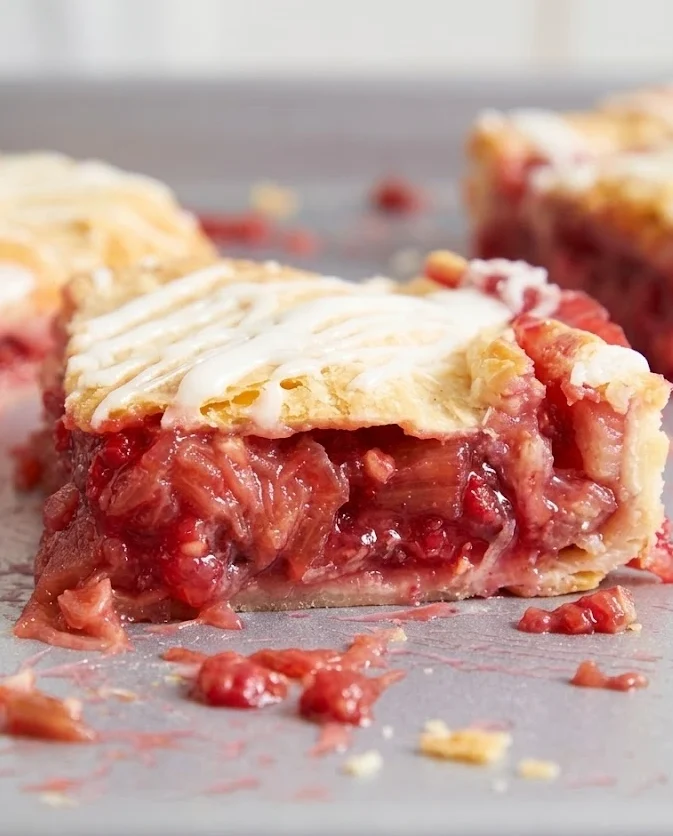
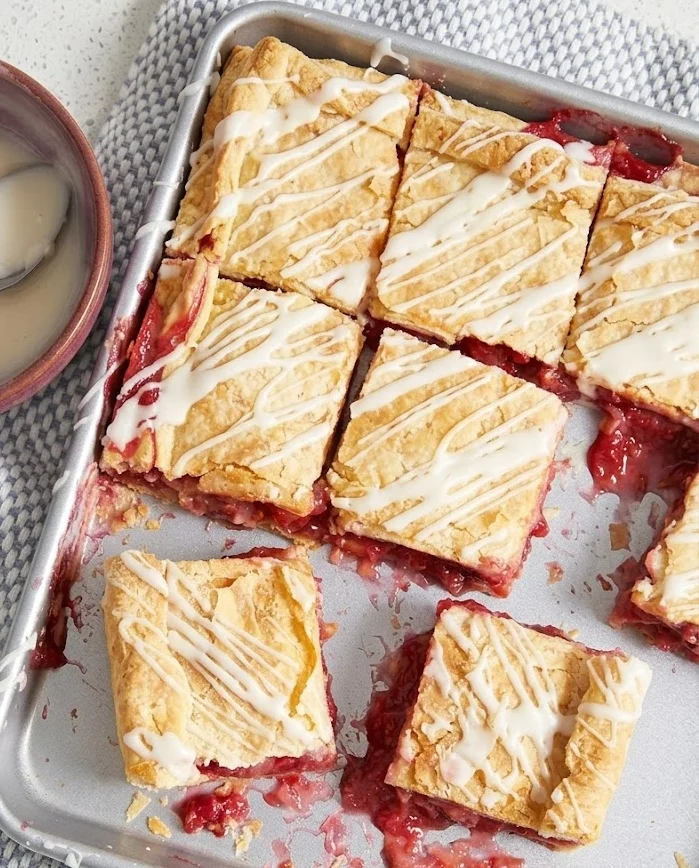
If you have ever made a rhubarb pie for a dinner party and watched it disappear in under five minutes — leaving half the table without a slice — this recipe is the answer. The raspberry rhubarb slab pie takes everything that makes rhubarb pie one of the most beloved rhubarb recipes and scales it up dramatically, baking the whole thing in a sheet pan that produces 24 generous, sliceable squares.
It is the dessert that shows up at potlucks and gets photographed before anyone has even cut into it. That vivid hot pink filling, visible at the edges through the golden crust, topped with a vanilla icing drizzle — it looks like the kind of thing a professional bakery would charge a significant amount for. And it is made in your home kitchen, in about an hour and a half, with ingredients you can find in any grocery store in the country.
This is not just a rhubarb recipes pie for spring. It is the pie you make when you want to feed a crowd, make a visual impression, and use up a serious quantity of rhubarb and raspberries in one glorious, crowd-silencing dessert.
Why You’ll Love This Rhubarb Slab Pie
Among all the rhubarb recipes pie variations — rhubarb custard pie, strawberry rhubarb pie, rhubarb cream cheese pie, sour cream rhubarb pie — the slab pie occupies a unique position because it solves a problem that traditional round pies cannot: scale.
A standard nine-inch pie feeds six to eight people, which means feeding a crowd requires making multiple pies. The slab pie bakes in a 15×10-inch jelly roll pan and cuts into 24 squares, which means one baking session, one pan, and dessert for everyone without anyone drawing the short straw.
The format also has a genuine technical advantage. Because the filling is spread thinner across a larger surface area, it bakes more evenly and releases moisture more efficiently. The result is a bottom crust that actually stays crisp rather than turning soggy under the weight of a deep fruit filling — one of the perennial struggles with traditional rhubarb pie. Every bite has the ideal ratio of flaky pastry to jammy fruit that most pie lovers spend years chasing.
Common Mistakes (And How to Avoid Them)
Not chilling the dough before rolling. The one-hour refrigeration step is not optional. Cold butter is the foundation of a flaky pie crust — as it melts in the oven, it creates layers of steam that separate the pastry into those distinct, thin, shatteringly crisp sheets. Rolling warm dough means the butter has already begun to soften and incorporate, producing a crust that is tender but flat, dense, and without flake. Chill the dough, handle it as little as possible, and work quickly when rolling.
Adding too much milk to the dough. The temptation when making homemade pie dough is always to add more liquid when the dough looks crumbly and refuses to hold together. Resist this. Extra milk develops the gluten in the flour and produces a tough, chewy crust rather than a tender, flaky one. Add milk one tablespoon at a time and stop the moment the dough holds together in a ball when pressed. It should still look a little rough — that is correct.
Skipping the draining step for frozen fruit. Both frozen raspberries and frozen rhubarb must be thawed and drained before going into the filling. Undrained frozen fruit carries a significant volume of excess water that will overwhelm the cornstarch during baking, producing a watery, soupy filling that leaks through the bottom crust and turns it soggy. Measure the fruit frozen, then thaw it completely in a colander and let the liquid drain away for at least 20 to 30 minutes before using.
Not pricking the top crust. The fork pricks across the surface of the top crust are the steam vents that allow moisture to escape during baking. Without them, steam builds up inside the pie, saturating the top crust from the inside and preventing it from crisping properly. Prick generously and evenly across the entire surface.
Cutting before the pie cools. A slab pie cut while still warm will have a runny filling that spreads across the pan and makes clean squares impossible. Allow the pie to cool completely on a wire rack before cutting — this is the step that takes the most patience and delivers the most reward. The filling sets as it cools, producing clean, defined squares with a cohesive filling that holds its shape on the plate.
Chef’s Notes
The vanilla icing drizzle is simple — confectioners’ sugar, vanilla extract, and just enough milk to reach a pourable consistency — but its role goes beyond decoration. The sweetness of the icing provides a final counterbalance to the tartness of the rhubarb filling, and the vanilla fragrance it adds as it sets is one of the details that makes this slab pie smell as good as it looks.
The consistency of the icing matters. Too thick and it clumps rather than drizzles, creating uneven blobs across the surface. Too thin and it disappears into the crust rather than sitting on top. The target is a thin, ribbon-like stream that falls from the spoon in a steady flow — similar to a glaze rather than a frosting. Add milk one teaspoon at a time until you reach that consistency, and apply the drizzle while it is still fluid, just before serving.
On the question of fresh versus frozen rhubarb: for a recipe this size — three cups of sliced rhubarb — fresh spring rhubarb is ideal. However, the slab pie format is actually particularly well-suited to frozen rhubarb because the thinner filling layer means faster, more even baking. Frozen rhubarb that has been properly thawed and drained works beautifully here, which makes this one of the few rhubarb recipes pie lovers can realistically execute in any season.
Key Ingredients
All-purpose flour forms the structure of the homemade crust. Measuring it correctly — spooning it into the cup and leveling with a knife rather than scooping from the bag — is the single most important precision step in the entire recipe. Too much flour makes a tough, dry crust. The right amount produces something light, flaky, and deeply satisfying.
Cold butter is the fat that creates the flaky layers in the pastry. Cutting cold butter into flour produces irregular pieces that melt at slightly different rates in the oven, creating the layered, uneven structure that defines great pie pastry. Never soften it. Work with it cold and work quickly to keep it cold throughout the process.
Egg yolk in the pastry dough adds richness and protein that helps bind the crust together and gives it a more golden color after baking. It is a small addition that makes a visible difference in the finished pie’s appearance and flavor.
Fresh or frozen raspberries contribute brightness, natural sweetness, and that brilliant hot pink color that makes this pie visually arresting. They balance rhubarb’s sharp tartness with a floral sweetness and melt into the filling during baking, creating a unified, intensely colored sauce that stains the crust at the edges in the most beautiful way.
Fresh or frozen rhubarb is the backbone of the filling and the reason the tartness of this pie is genuinely complex rather than one-dimensional. Sliced into pieces and tossed with sugar and cornstarch, it breaks down during baking into a jammy, glossy filling that is one of the most compelling things rhubarb does in any of its rhubarb recipes applications.
Cornstarch is the thickener that keeps the filling cohesive. One-third of a cup for eight combined cups of fruit is exactly the right ratio for a filling that is thick and sliceable without being stiff or gluey. It produces a glossy, clear filling rather than a cloudy, starchy one.
Confectioners’ sugar and vanilla form the two-minute icing that finishes the pie. Powdered sugar dissolves instantly in milk with no heating required, and the vanilla extract adds a warm, rounded sweetness that ties the whole dessert together.
How to Make Raspberry Rhubarb Slab Pie
- In a large bowl, whisk together the flour and salt. Add the cold cubed butter and cut it in using a pastry cutter, two knives, or your fingertips until the mixture resembles coarse, irregular crumbs with some pea-sized pieces of butter visible.
- In a small bowl or measuring cup, whisk the egg yolk into three-quarters cup of milk. Gradually pour the milk mixture into the flour mixture, tossing with a fork after each addition. Add additional milk one tablespoon at a time only if the dough will not hold together when pressed. Stop as soon as the dough just forms a ball.
- Divide the dough into two portions, making one noticeably larger than the other — the bottom crust needs to cover a larger surface. Wrap each portion tightly in plastic wrap and refrigerate for at least one hour, or until firm enough to roll easily.
- Preheat your oven to 375°F (190°C).
- Remove the larger dough portion from the refrigerator. Roll it out between two sheets of lightly floured waxed paper into an 18×13-inch rectangle. Using the waxed paper to help transfer, lay the crust into an ungreased 15x10x1-inch jelly roll pan. Press it gently onto the bottom and up all four sides, trimming any excess even with the pan edges.
- In a large bowl, stir together the granulated sugar and cornstarch until combined. Add the drained raspberries and drained rhubarb and toss gently to coat. Spoon the filling evenly across the bottom crust.
- Roll out the second, smaller dough portion on another piece of floured waxed paper. Carefully transfer it over the filling and lay it across the top.
- Fold the edges of the bottom crust up over the edges of the top crust and press firmly to seal. Crimp with a fork to create a neat decorative border. Prick the entire surface of the top crust generously with a fork.
- Bake for 45 to 55 minutes, until the crust is deep golden brown and the filling is visibly bubbling through the fork holes.
- Transfer to a wire rack and cool completely before cutting.
- Whisk together the confectioners’ sugar, vanilla extract, and enough milk to achieve a drizzling consistency. Drizzle the icing over the cooled pie with a spoon. Cut into 24 squares and serve.
Looking for more ways to bake with rhubarb this spring? Our ultimate rhubarb recipe roundup collects 20 of the best rhubarb desserts in one place — including easy rhubarb recipes, strawberry rhubarb pie, rhubarb cake, rhubarb crisp, sourdough rhubarb bread, healthy rhubarb muffins, and much more. Whether you have fresh rhubarb from the garden or a bag of frozen stalks in the freezer, this guide has the perfect recipe waiting for you. Explore all 20 rhubarb recipes here.
Variations and Tips
Strawberry rhubarb slab pie: Replace the raspberries with an equal volume of hulled, sliced fresh or frozen strawberries, thawed and drained. This produces one of the most classic and universally loved strawberry rhubarb recipes in slab pie form — familiar, deeply sweet-tart, and equally beautiful in color.
Spiced rhubarb slab pie: Add one teaspoon of ground cinnamon or half a teaspoon of ground cardamom to the filling with the sugar and cornstarch. Cardamom in particular has a floral, citrus-adjacent warmth that pairs beautifully with rhubarb’s tartness and gives this pie a distinctly Scandinavian character.
Turbinado sugar topping: Instead of the vanilla icing, brush the top crust with a lightly beaten whole egg before baking and sprinkle with turbinado sugar. This produces a crunchy, glittering amber crust that adds texture and visual drama and skips the post-bake finishing step entirely.
Rhubarb slab pie for diabetics: Replace the granulated sugar in the filling with a 1:1 granulated erythritol or monk fruit sweetener. The cornstarch will still thicken the filling correctly. For the icing, use a powdered erythritol blend. The crust recipe is unaffected. This adaptation makes a genuinely satisfying version of one of the best rhubarb recipes for diabetics who want to participate in spring pie season without compromise.
Gluten-free slab pie: A certified 1:1 gluten-free all-purpose baking flour substitutes directly in the crust. The dough will be slightly more fragile and may crack when rolled — patch tears with your fingers and proceed. The finished crust will be slightly more crumbly but entirely delicious.
How to Meal Prep
The slab pie is one of the most make-ahead-friendly formats in the entire rhubarb recipes pie category. The dough can be made up to three days in advance, wrapped tightly, and refrigerated. It can also be frozen for up to three months — thaw overnight in the refrigerator before rolling.
The assembled, unbaked pie can be refrigerated for up to 24 hours before baking, making it an excellent prepare-the-day-before option for events and gatherings. Remove it from the refrigerator while the oven preheats and add about five minutes to the bake time for the cold start.
The baked, cooled pie stores wrapped on the counter for up to two days or in the refrigerator for up to four. To restore crispness to the crust after refrigeration, reheat individual squares in a toaster oven at 350°F for five to eight minutes. The pie freezes well for up to two months — wrap the entire pan tightly in two layers of plastic wrap and foil, or cut into squares and freeze individually wrapped portions. Thaw overnight in the refrigerator before serving.
Cultural Context
The slab pie occupies a specific and beloved niche in American baking history. Originating in the tradition of large-quantity baking — church socials, harvest festivals, county fairs, and the bakery counters of small-town main streets — the slab pie was practical long before it was fashionable. A single baker could produce dessert for a large gathering without making a dozen individual pies, and the rectangular format meant every slice was exactly the same size, which mattered enormously when feeding a crowd fairly.
The recipe creator behind this version notes that her grandfather, a professional baker, served slab pies to his customers as a matter of course. In that context, the slab pie was not a novelty — it was simply how a commercial kitchen managed volume and minimized waste. Every square inch of pastry and filling was used, nothing was trimmed away, and every customer got the same experience.
Rhubarb’s role in the slab pie tradition is inseparable from the seasonal abundance that has defined rhubarb’s place in home and commercial baking for over a century. In the regions where rhubarb grows prolifically — the Upper Midwest, the Pacific Northwest, the Great Lakes states, and across Canada — spring rhubarb season has always meant baking in quantity. The slab pie format, more than almost any other in the rhubarb recipes canon, is built precisely for that reality: an ingredient that arrives in abundance, a format that uses it generously, and a result that feeds everyone at the table with something genuinely worth eating.
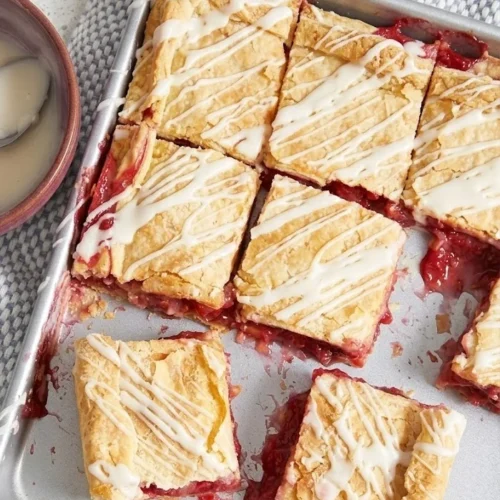
Raspberry Rhubarb Slab Pie
Equipment
- Large Mixing Bowl
- pastry cutter or knives
- Rolling Pin
- 15×10-inch jelly roll pan
- whisk
- wire rack
Ingredients
- 3 cups all-purpose flour
- 1 tsp salt
- 1 cup cold butter, cubed
- 1 egg yolk
- 180 ml milk (plus extra if needed)
- 4 cups raspberries, fresh or frozen (thawed and drained)
- 3 cups rhubarb, sliced
- 1.5 cups granulated sugar
- 0.33 cup cornstarch
- 1 cup confectioners’ sugar
- 1 tsp vanilla extract
- 2-3 tbsp milk (for icing)
Instructions
- In a large bowl, whisk together flour and salt. Cut in cold butter until the mixture resembles coarse crumbs with pea-sized pieces.
- Whisk egg yolk with milk, then gradually add to the flour mixture, mixing until the dough just comes together.
- Divide dough into two portions (one larger), wrap, and refrigerate for at least 1 hour.
- Preheat oven to 375°F (190°C). Roll out the larger dough and fit into a 15×10-inch pan.
- Mix sugar and cornstarch, then toss with raspberries and rhubarb. Spread evenly over crust.
- Roll out remaining dough and place over filling. Seal edges and prick top with a fork.
- Bake for 45–55 minutes until golden brown and bubbling. Cool completely on a rack.
- Whisk confectioners’ sugar, vanilla, and milk to make icing. Drizzle over cooled pie, slice, and serve.