There are rhubarb recipes that show off. The fluted pie with its lattice top. The layered cake with its poached rhubarb garnish. The cheesecake that requires a water bath, a springform pan, and a certain willingness to hover anxiously by the oven. And then there are the rhubarb recipes that simply get devoured — no presentation required, no ceremony needed, no elaborate technique standing between you and a plate of something genuinely spectacular.
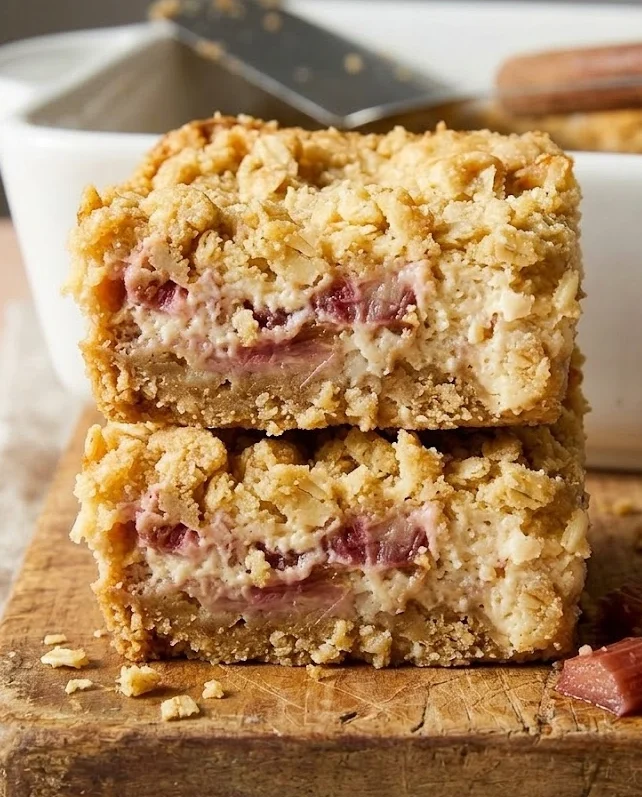
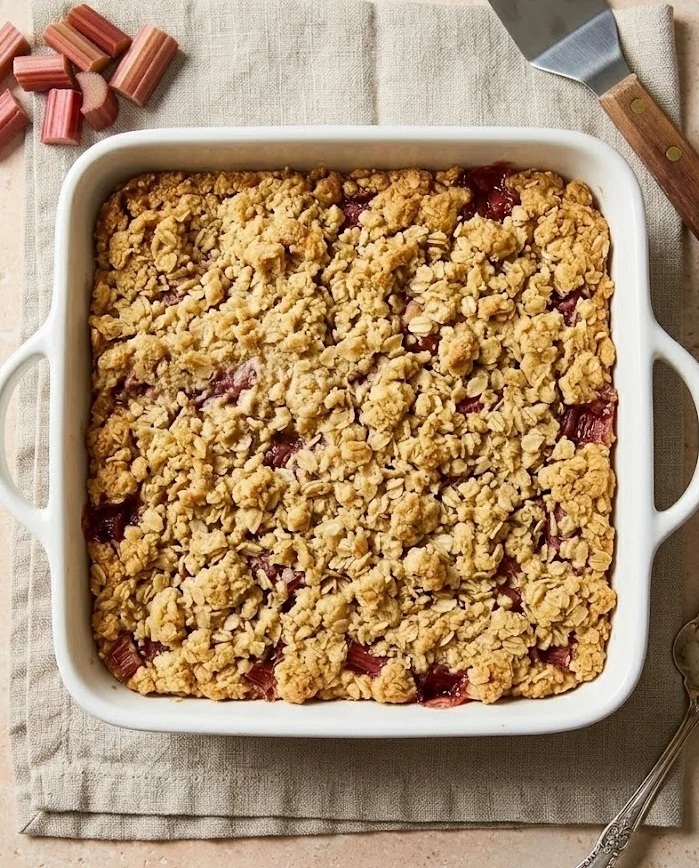
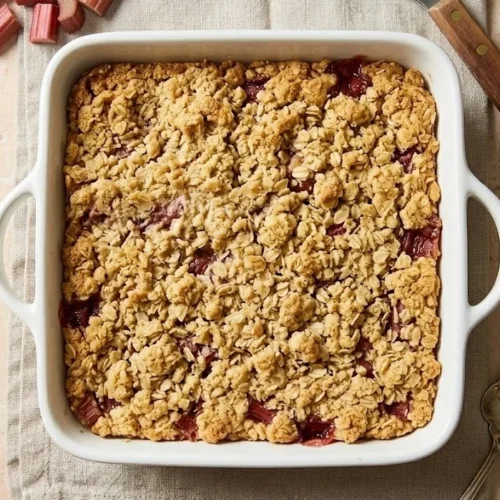
These rhubarb cheesecake squares fall firmly in the second category. A single 9-inch square pan produces 16 bars layered with a buttery oat crust, a silky cream cheese filling folded through with tart diced rhubarb, and a golden crumble topping that bakes into something crunchy, caramelized, and completely irresistible. They look modest from the outside. They taste extraordinary. And they require about 25 minutes of hands-on work, one mixing bowl, and a hand mixer.
Among all the rhubarb recipes bars available to the home baker, this is the one that earns the most recipe card requests at potlucks.
Why You’ll Love These Rhubarb Cheesecake Squares
What makes these stand apart from other rhubarb recipes desserts is the layering of contrasting textures and flavors in every single bite. The crust and the crumble topping use the same base mixture — flour, oats, brown sugar, and cold butter — which means the whole recipe comes together from one bowl and produces two textural components that feel deliberately matched. The crust bakes firm and slightly chewy. The topping bakes crunchy and golden. Between them sits a filling that is soft, tangy, and deeply rich.
The rhubarb folds directly into the cream cheese filling rather than sitting as a separate layer, which means every square has rhubarb distributed through it rather than concentrated in one area. The cream cheese tempers the sharpness of the rhubarb, the sugar softens its edges, and the cinnamon and nutmeg in the filling add a warm spice note that makes the whole bar taste complete rather than one-dimensional.
At 216 calories per square, these are also among the more reasonable rhubarb recipes desserts — cheesecake flavor and richness without the caloric weight of a full slice of cheesecake.
Common Mistakes (And How to Avoid Them)
Not softening the cream cheese before beating. Cold cream cheese beaten with sugar produces a lumpy, grainy filling with visible white flecks that never fully smooth out no matter how long you beat it. Room temperature cream cheese — left out for at least an hour before you begin — incorporates almost instantly into a silky, uniform filling with none of that unpleasant texture. This is not a step that can be rushed.
Overbeating after the egg goes in. The egg should be beaten on low speed and only until it is just combined with the cream cheese mixture. Beating at high speed after adding the egg incorporates too much air, which causes the filling to puff up dramatically in the oven and then deflate and crack as it cools. Low speed, brief mixing — stop the moment you see no visible streaks of egg.
Forgetting to thaw and drain frozen rhubarb. If frozen rhubarb goes into the cream cheese filling still carrying its thawing liquid, that water gets incorporated into the filling and prevents it from setting properly. The bars will be underbaked in the center even after the full 40 minutes, and the filling will feel wet rather than clean and creamy when cold. Thaw completely, drain in a colander, and pat lightly dry before folding into the filling.
Cutting before fully chilled. The cheesecake filling needs a minimum of two hours in the refrigerator — and ideally overnight — before it is cold enough to cut cleanly. Cutting warm or room-temperature cheesecake bars produces a smeared, messy result with no clean edges. The filling is still technically set after cooling on the rack for an hour, but it is not cold enough to slice neatly. Refrigerate fully before cutting and use a warm, wiped-clean knife for the cleanest squares.
Under-pressing the crust. The crust needs to be pressed firmly and evenly into the pan so it holds together as a unified base when sliced. A loose, crumbly crust that was not packed properly will crumble away from the filling when you cut or lift the bars. Use the bottom of a flat measuring cup to press it firmly and evenly across the entire surface.
Chef’s Notes
The wobble test is the most reliable way to judge doneness for these bars. At 40 minutes, open the oven and give the pan a gentle shake. The edges should be completely set and still. The very center — roughly the size of a quarter — can have the faintest wobble, the kind that looks like a slow, unified jiggle rather than a liquid slosh. That residual wobble will resolve during the hour of cooling on the rack and the two hours of refrigeration that follow.
Using a serrated knife and a warm water technique produces dramatically cleaner squares than a regular knife. Fill a tall glass with hot water, dip the serrated blade in for a few seconds, wipe it dry, and make one cut. Dip, wipe, and repeat for every subsequent cut. The warm blade glides through cold cheesecake cleanly rather than dragging and smearing the filling.
If you want even cleaner cuts with the ability to lift the entire slab out of the pan before slicing, line the pan with two overlapping strips of parchment paper before adding the crust, letting the ends hang over the sides like handles. After chilling, lift the entire slab out onto a cutting board and cut squares from there — the cleanest possible result with the least resistance.
Key Ingredients
All-purpose flour provides the structural backbone of both the crust and the crumble topping. Combined with oats and brown sugar, it forms a mixture that presses firmly into a base and bakes into something substantial enough to support the weight and moisture of the cream cheese filling above it.
Old-fashioned rolled oats give the crust and topping their most distinctive quality: chew in the base, crunch in the topping. They absorb butter during baking and develop a nutty, toasted flavor that is one of the best things about this recipe. Quick oats work in a pinch but produce a finer, less textured result. Old-fashioned oats are worth seeking out.
Brown sugar adds molasses depth to the crust and topping that granulated sugar simply cannot replicate. It caramelizes more deeply in the oven, producing a richer, slightly toffee-like flavor in the crumble and a darker, more attractive golden color in the finished bars.
Cold unsalted butter cut into the oat mixture creates the crumbly, irregular texture that defines both the crust and topping. Keep it refrigerator-cold and work quickly. The irregularity of the crumble — some sandy, some pea-sized — produces the layered texture that makes each bite interesting.
Cream cheese is the heart of the filling. An eight-ounce block, fully softened, beaten with sugar and spices into a smooth, tangy base that sets to a firm but creamy consistency after baking and chilling. Full-fat cream cheese produces the best texture and flavor — reduced-fat versions can produce a slightly grainy, less stable filling.
Cinnamon and nutmeg are the two spices that elevate the cream cheese filling from plain to complex. Cinnamon is warm and familiar. Nutmeg is slightly floral, slightly earthy, and adds a depth that most people cannot immediately identify but everyone notices. Together they make the filling taste like something considerably more sophisticated than its ingredients suggest.
Rhubarb brings the tartness that makes this a rhubarb cheesecake bar rather than just a cheesecake bar. Diced into small pieces and folded raw into the filling, it cooks entirely in the oven during the 40-minute bake, softening into tender, jammy pockets throughout the cream cheese layer. It provides both flavor and the visual interest of pink-red flecks visible in every cut square.
How to Make Rhubarb Cheesecake Squares
- Preheat your oven to 350°F (175°C). Grease a 9-inch square baking pan. If you want clean, liftable squares, line it with two overlapping strips of parchment paper, letting the ends hang over the sides as handles.
- In a medium bowl, combine the flour, old-fashioned oats, and packed brown sugar. Stir briefly to distribute. Add the cold cubed butter and cut it in using a pastry cutter or your fingertips until the mixture resembles coarse, irregular crumbles. Work quickly to keep the butter cold.
- Reserve exactly one cup of this crumble mixture and set it aside for the topping. Press the remaining mixture firmly and evenly into the bottom of the prepared pan using your hands or the flat bottom of a measuring cup.
- In a large bowl, beat the softened cream cheese, granulated sugar, salt, cinnamon, and nutmeg together on medium speed until completely smooth and fluffy, about two minutes. There should be no lumps.
- Add the lightly beaten room-temperature egg and vanilla extract. Switch to low speed and beat only until just combined — about 30 seconds. Do not overbeat.
- Fold the diced rhubarb gently into the cream cheese filling using a spatula. Distribute it evenly with a few gentle folds.
- Spread the filling evenly over the pressed crust, using a spatula to smooth it to the edges.
- Scatter the reserved crumble topping evenly over the entire surface of the filling.
- Bake for 40 minutes, until the topping is deep golden brown and the filling passes the wobble test — edges completely still, center with only the faintest unified wobble.
- Transfer to a wire rack and cool for one full hour at room temperature. Cover and refrigerate for at least two hours, or overnight, before cutting.
- Cut into 16 squares using a warm, wiped-clean serrated knife. Store covered in the refrigerator.
Looking for more ways to bake with rhubarb this spring? Our ultimate rhubarb recipe roundup collects 20 of the best rhubarb desserts in one place — including easy rhubarb recipes, strawberry rhubarb pie, rhubarb cake, rhubarb crisp, sourdough rhubarb bread, healthy rhubarb muffins, and much more. Whether you have fresh rhubarb from the garden or a bag of frozen stalks in the freezer, this guide has the perfect recipe waiting for you. Explore all 20 rhubarb recipes here.
Variations and Tips
Strawberry rhubarb cheesecake bars: Replace half a cup of the rhubarb with fresh, hulled, and diced strawberries. This is one of the most natural and beloved strawberry rhubarb recipes in bar form — sweeter, more colorful, and perfectly calibrated for the crowds who find plain rhubarb too sharp. The strawberries also add a beautiful pink blush to the filling.
Lemon rhubarb cheesecake bars: Add the finely grated zest of one lemon to the cream cheese filling along with the spices. The citrus oils brighten and amplify the tartness of the rhubarb in a way that makes the finished bars taste considerably more complex and springlike.
Vanilla glaze finish: Once the bars are chilled and cut, drizzle them with a simple glaze made from powdered sugar, vanilla extract, and just enough milk to reach a drizzling consistency. It adds visual appeal and a soft sweetness that plays beautifully against the tart rhubarb filling.
Gluten-free rhubarb cheesecake bars: Substitute the all-purpose flour with a certified 1:1 gluten-free baking blend in equal measure. Make sure your oats are certified gluten-free as well. The crust and topping will be slightly more delicate but entirely successful.
Rhubarb cheesecake bars for diabetics: Replace the granulated sugar in the filling with an equal amount of granulated erythritol or a monk fruit blend. Replace the brown sugar in the crust and topping with a brown sugar erythritol blend. The structural behavior of the recipe is largely unaffected since the sugars here contribute primarily to flavor and modest browning rather than to structural chemistry. These make a genuinely satisfying version of one of the most approachable rhubarb recipes for diabetics in the cheesecake bar format.
How to Meal Prep
Rhubarb cheesecake squares are one of the best make-ahead rhubarb recipes in any baker’s arsenal. They actively improve overnight — the filling firms further, the crust melds with the filling at the base, and the flavors deepen and integrate in the refrigerator in a way that makes next-day bars noticeably better than freshly cooled ones.
Bake them the day before serving, cool completely on the rack, cover the pan tightly with plastic wrap, and refrigerate overnight. Cut into squares just before serving. This approach works perfectly for bake sales, potlucks, holiday gatherings, and any situation where you need a dessert that is ready to go without same-day effort.
The bars store in an airtight container in the refrigerator for up to five days, with no meaningful deterioration in quality over that window. For longer storage, freeze individual squares wrapped tightly in plastic wrap and placed in a freezer-safe container or zip-lock bag for up to three months. Thaw in the refrigerator overnight before serving — they emerge from the freezer almost indistinguishable from freshly made.
The rhubarb itself can be prepped several days in advance: dice, measure, and store covered in the refrigerator for up to three days, or freeze in pre-measured portions for up to six months. Having ready-measured rhubarb in the freezer means you are always under an hour from a finished batch of these bars.
Cultural Context
The cheesecake bar sits at an interesting crossroads in American baking history — part cheesecake, part cookie bar, entirely practical. It emerged as a mainstream home-baking format in the mid-20th century, enabled by the widespread availability of packaged cream cheese and the growing popularity of the bar cookie as a format that could be made in a single pan, cut into individual portions, and transported easily.
Rhubarb cheesecake bars specifically reflect the intersection of two deeply rooted traditions in the home kitchens of the Upper Midwest and northern United States: the spring rhubarb harvest, which has driven rhubarb baking in this region for well over a century, and the church basement bar cookie tradition, which valued recipes that fed a crowd, traveled well, and could be assembled without special equipment or advanced technique.
The recipe’s origin — submitted from Mandan, North Dakota, a region where rhubarb grows abundantly and practically every home garden has at least one established crown — places it squarely in that tradition. It is a recipe that was developed to use what was available, feed people generously, and require nothing more than a standard home kitchen and a modest amount of time. That it also happens to be one of the most delicious and crowd-pleasing rhubarb recipes in the entire bar cookie category is the kind of happy result that tends to emerge from cooking driven by practicality and generosity rather than ambition.
Rhubarb Cheesecake Squares
Equipment
- 9-inch square baking pan
- mixing bowls
- hand mixer
- spatula
- measuring cups and spoons
Ingredients
- 1 cup all-purpose flour
- 1 cup old-fashioned rolled oats
- 3/4 cup brown sugar, packed
- 1/2 cup unsalted butter, cold and cubed
- 8 oz cream cheese, softened
- 1/2 cup granulated sugar
- 1 large egg
- 1 tsp vanilla extract
- 1/2 tsp ground cinnamon
- 1/4 tsp ground nutmeg
- 1/4 tsp salt
- 1 1/2 cups fresh or frozen rhubarb, diced
Instructions
- Preheat oven to 350°F (175°C). Grease or line a 9-inch square baking pan with parchment paper.
- In a bowl, mix flour, oats, and brown sugar. Cut in cold butter until crumbly.
- Reserve 1 cup of the mixture for topping. Press the remaining mixture firmly into the bottom of the pan.
- Beat cream cheese, granulated sugar, salt, cinnamon, and nutmeg until smooth and fluffy.
- Add egg and vanilla extract. Mix on low speed until just combined.
- Fold in diced rhubarb gently until evenly distributed.
- Spread filling evenly over the crust and smooth the top.
- Sprinkle reserved crumble mixture evenly over the top.
- Bake for 40 minutes until golden and the center is just set.
- Cool for 1 hour, then refrigerate for at least 2 hours before slicing into squares.