
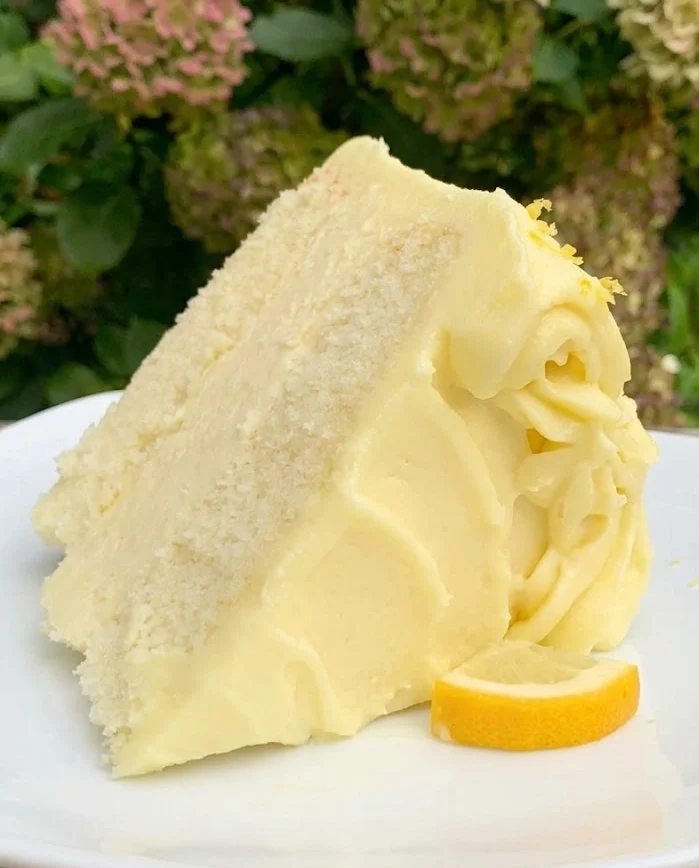
There are dessert recipes, and then there are dessert recipes that make people stop mid-conversation to ask what they just ate. This Lemon Cheesecake Cake is firmly in the second category.
It is exactly what it sounds like — a full lemon cheesecake layer, baked and chilled until firm, then nestled between two moist lemon buttermilk cake layers and wrapped in a tangy lemon cream cheese frosting. The result is a dessert recipe cake that delivers cheesecake richness, bakery-style lightness, and bold lemon flavor in every single slice.
If you have ever wished your birthday cake tasted like cheesecake, or wished your cheesecake had the structure and elegance of a layer cake, this recipe exists for exactly that reason.
Why You’ll Love This Dessert Recipe
This is the kind of dessert recipe cake that earns a permanent spot in your celebration rotation. The lemon flavor is bright and present without being sharp — it runs through the cake layers, the cheesecake filling, and the frosting in a way that feels cohesive rather than overwhelming.
It is also a genuinely impressive dessert recipe for a crowd. It serves up to 15 people, slices cleanly with a warm knife, and the visible cheesecake layer in every cross-section is a showstopper that draws gasps at the table before anyone takes a single bite.
And while it is a multi-component dessert recipe, none of the individual steps are technically difficult. The cheesecake layer is simpler than a standalone cheesecake. The lemon cake is a straightforward buttermilk batter. The frosting comes together in minutes. Made over two days, this recipe is completely manageable for any home baker.
Common Mistakes (And How to Avoid Them)
Skipping the water pan in the oven for the cheesecake. This is the step most home bakers want to skip because it seems fussy, but it is essential. The pan of hot water placed on a lower oven rack creates ambient humidity that prevents the surface of the cheesecake from drying out too quickly, which is the primary cause of cracking. A cracked cheesecake layer does not affect flavor, but it does compromise the clean presentation when the cake is sliced.
Rushing the cheesecake chill. The cheesecake layer must be completely firm before assembly. If it is even slightly warm or soft in the center, it will compress and slide when placed onto the cake layer beneath it. Two to three hours in the freezer or five to six hours in the refrigerator is the minimum — overnight is ideal.
Overmixing the lemon cake batter. Once you begin alternating the dry and wet ingredients, the goal is incorporation, not aeration. Mixing above medium speed or continuing past the point of smoothness develops gluten and produces a tough, rubbery crumb instead of the light, tender texture this dessert recipe cake is known for.
Using soft cream cheese in the frosting. The lemon cream cheese frosting needs cream cheese that is slightly softened but still cool to the touch. If it is too warm, the frosting will be too loose to hold the weight of the cheesecake layer and may cause the cake to slide. If at any point the assembled cake feels unstable, slide it into the freezer for 15 minutes before continuing.
Chef’s Notes
The single most important technique in this entire dessert recipe is the use of a hot knife. Run a thin knife under hot water and wipe it dry before releasing the cheesecake from the springform pan, before trimming any excess from the cheesecake edges, and before slicing the finished cake for serving. A hot, clean knife glides through each layer without dragging or tearing, which is what gives you those clean, bakery-style slices where every layer is clearly visible.
Also worth noting: this cake benefits significantly from being assembled the day before serving. An overnight rest in the refrigerator lets the frosting firm up completely, the flavors meld, and the cheesecake layer settle into the structure of the cake in a way that makes both the texture and the flavor noticeably better by the next day.
Key Ingredients
Cake flour is specified for the lemon cake layers, and for good reason. Its lower protein content produces a finer, more tender crumb than all-purpose flour — the difference is particularly noticeable in layer cakes where the delicacy of the texture matters. If you do not have cake flour, the recipe offers a simple substitution using all-purpose flour and cornstarch.
Buttermilk is the liquid base of the cake layers and contributes both moisture and a mild acidity that reacts with the baking soda to create a lighter crumb. It also amplifies the lemon flavor by adding a subtle tang that pure milk cannot replicate.
Lemon zest appears in both the cake batter and optionally in the frosting. Zest carries the essential oils of the lemon, which deliver a more complex, aromatic lemon character than juice or extract alone. Using both zest and lemon extract gives the cake layers a layered, nuanced citrus flavor rather than a flat, one-dimensional lemon hit.
Full-fat block cream cheese is specified for both the cheesecake layer and the frosting, and this is non-negotiable. Reduced-fat cream cheese contains more water, which prevents the cheesecake from setting properly and makes the frosting too soft to support the weight of the layers. Tub-style cream cheese has the same problem and should not be substituted here.
Sour cream in the cheesecake layer adds moisture and a gentle tang that complements the lemon extract beautifully. It also contributes to the characteristic dense-yet-silky texture that distinguishes a properly made baked cheesecake from a no-bake version.
Lemon extract appears in all three components of this dessert recipe cake — the cheesecake layer, the cake batter, and the frosting. Using it consistently throughout ensures that the lemon flavor is unified and pronounced in every single bite rather than concentrated in just one layer.
How to Make Lemon Cheesecake Cake
For the cheesecake layer:
- Place a 9×13 inch pan filled with one inch of water on the lower rack of the oven. Preheat to 300°F (150°C). Line the bottom of a 9-inch springform pan with a parchment circle.
- Beat softened cream cheese until completely smooth. Add sugar, salt, and flour on low speed. Mix in lemon extract and sour cream until incorporated.
- Add the eggs one at a time, mixing on low just until each egg is fully combined. Do not over-beat once the eggs go in — excess air causes cracking.
- Pour the batter into the prepared springform pan and place it on the rack directly above the water pan.
- Bake for 45 minutes until set with only a slight jiggle at the very center. Turn the oven off and leave the cheesecake inside with the door slightly open for 30 more minutes.
- Cool to room temperature, then cover with foil and freeze for 2 to 3 hours until completely firm. Alternatively, refrigerate for at least 5 to 6 hours or overnight.
For the lemon cake layers:
- Preheat the oven to 350°F. Grease, flour, and line two 9-inch round cake pans with parchment circles.
- Whisk together the cake flour, baking powder, baking soda, salt, and lemon zest in a medium bowl. Set aside.
- Combine the buttermilk, vegetable oil, lemon juice, and lemon extract in a separate bowl.
- Beat the butter in a stand mixer at medium speed until smooth. Add the sugar gradually and beat for 3 to 5 minutes until light and fluffy. Add the eggs one at a time.
- Alternate adding the flour mixture and the buttermilk mixture in three additions of dry and two of liquid, beginning and ending with the dry. Mix only until just combined.
- Divide the batter between the two prepared pans and bake at 350°F for 20 to 24 minutes, until a toothpick inserted in the center comes out clean. Cool in the pans for 10 minutes before turning out.
For the lemon cream cheese frosting:
- Beat the cool, slightly softened butter until smooth. Add the cream cheese in pieces and beat until fully blended. Mix in lemon extract and optional lemon zest.
- Add powdered sugar gradually, beating until smooth and well combined. Refrigerate until ready to use if the kitchen is warm.
Assembly:
- Place the first lemon cake layer on a cake plate or pedestal. Spread with a thin layer of frosting.
- Run a hot knife around the inside edge of the springform pan to release the cheesecake. Release the sides of the pan and flip the cheesecake upside down onto the frosted cake layer. Remove the parchment.
- If the cheesecake is slightly wider than the cake layers, trim the edges with a hot knife. Spread a thin layer of frosting over the cheesecake, then place the second lemon cake layer on top.
- Apply a thin crumb coat of frosting over the entire cake and freeze for 15 minutes. Apply the final coat of frosting, smoothing the sides with a bench scraper and decorating the top as desired.
- Refrigerate for at least one hour before serving. Use a warm, wiped knife for clean slices.
Variations and Tips
Raspberry lemon version: Add a thin layer of seedless raspberry jam between the first cake layer and the cheesecake for a fruit element that pairs beautifully with the lemon flavor throughout this dessert recipe cake.
Gluten-free adaptation: Substitute the cake flour with a high-quality 1:1 gluten-free baking flour. The cheesecake layer and frosting are naturally gluten-free, requiring no changes.
Vanilla cheesecake variation: Replace the lemon extract in the cheesecake layer with pure vanilla extract and vanilla bean seeds for a classic vanilla cheesecake center that still pairs elegantly with the lemon cake layers.
Lime version: Swap every instance of lemon — zest, juice, and extract — for lime. The result is a more tropical, slightly sharper dessert recipe cake that is particularly popular in warmer months.
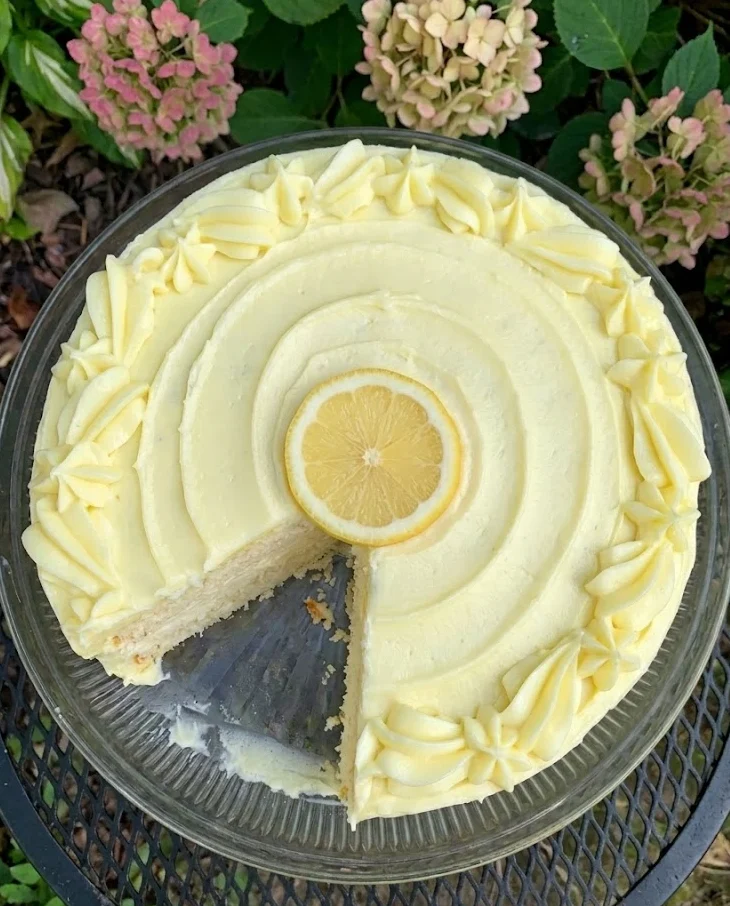
Decoration tip: For a professional finish, use a bench scraper held at a slight angle against the side of the cake as you rotate a turntable. This creates a smooth, even surface that levels out any unevenness in the frosting application. A final ring of piped rosettes or shells along the top edge using a 2D piping tip transforms the cake from homemade to bakery-quality in under five minutes.
How to Meal Prep
This dessert recipe is perfectly structured for a two-day approach that actually produces a better result than making it all in one session.
On day one, bake the cheesecake layer and let it chill overnight in the refrigerator. Make the lemon cake layers, cool them completely, wrap each layer tightly in plastic wrap, and store at room temperature overnight. Prepare the lemon cream cheese frosting and refrigerate it.
On day two, bring the frosting to a slightly spreadable consistency, assemble the cake, apply the crumb coat, and freeze for 15 minutes before applying the final layer of frosting. A fully assembled cake keeps beautifully in the refrigerator for up to three days covered loosely in plastic wrap or stored under a cake dome.
For longer storage, individual slices can be wrapped tightly in plastic and frozen for up to one month. Thaw overnight in the refrigerator before serving.
Cultural Context
The cheesecake cake — a layer cake with a baked cheesecake layer built directly into its structure — is a relatively modern American invention that emerged from the creative baking culture of the early internet food community in the late 1990s and 2000s. It belongs to a broader tradition of hybrid dessert recipes that combine two beloved classics into a single showpiece, a concept that has driven some of the most shared and saved dessert recipe ideas of the social media era.
Lemon, as a flavor, has deep roots in American celebration baking. Lemon layer cakes were staples of Southern home cooking throughout the 19th and 20th centuries, prized for the way their brightness balanced the richness of butter-heavy batters and thick frostings. The pairing of lemon with cheesecake is equally intuitive — the citrus cuts through the density of the cream cheese filling and gives the overall dessert a lifted, refreshing quality that heavier flavors like chocolate cannot achieve in the same way.
Together, the two traditions produce a dessert recipe cake that feels simultaneously nostalgic and modern, which is precisely why it continues to circulate widely across recipe communities and social platforms every spring and summer.
Lemon Cheesecake Cake
Equipment
- springform pan
- mixing bowls
- stand mixer or hand mixer
- whisk
- spatula
- cake pans (9-inch)
- oven
Ingredients
- 680 g cream cheese, full-fat
- 200 g granulated sugar
- 2 tbsp all-purpose flour
- 1 pinch salt
- 1 tsp lemon extract
- 120 g sour cream
- 3 eggs
- 300 g cake flour
- 2 tsp baking powder
- 0.5 tsp baking soda
- 0.5 tsp salt
- 2 tbsp lemon zest
- 240 ml buttermilk
- 120 ml vegetable oil
- 60 ml lemon juice
- 1 tsp lemon extract
- 115 g butter
- 200 g granulated sugar
- 3 eggs
- 115 g butter (for frosting)
- 225 g cream cheese (for frosting)
- 1 tsp lemon extract (for frosting)
- 300 g powdered sugar
Instructions
- Place a pan of water in the oven and preheat to 300°F (150°C). Line a springform pan with parchment.
- Beat cream cheese until smooth, then mix in sugar, flour, salt, lemon extract, and sour cream.
- Add eggs one at a time, mixing gently until combined.
- Pour into pan and bake for 45 minutes. Let cool in oven, then chill until firm.
- Preheat oven to 350°F (175°C) and prepare two 9-inch cake pans.
- Whisk dry ingredients with lemon zest in a bowl.
- Combine buttermilk, oil, lemon juice, and extract in another bowl.
- Cream butter and sugar, then add eggs one at a time.
- Alternate adding dry and wet ingredients, mixing just until combined.
- Divide into pans and bake 20–24 minutes. Cool completely.
- Beat butter and cream cheese, then add lemon extract and powdered sugar to make frosting.
- Place first cake layer on plate and spread a thin layer of frosting.
- Remove cheesecake from pan, trim if needed, and place on top.
- Add frosting and place second cake layer on top.
- Apply crumb coat, chill, then finish frosting the cake.
- Refrigerate before serving and slice with a warm knife.