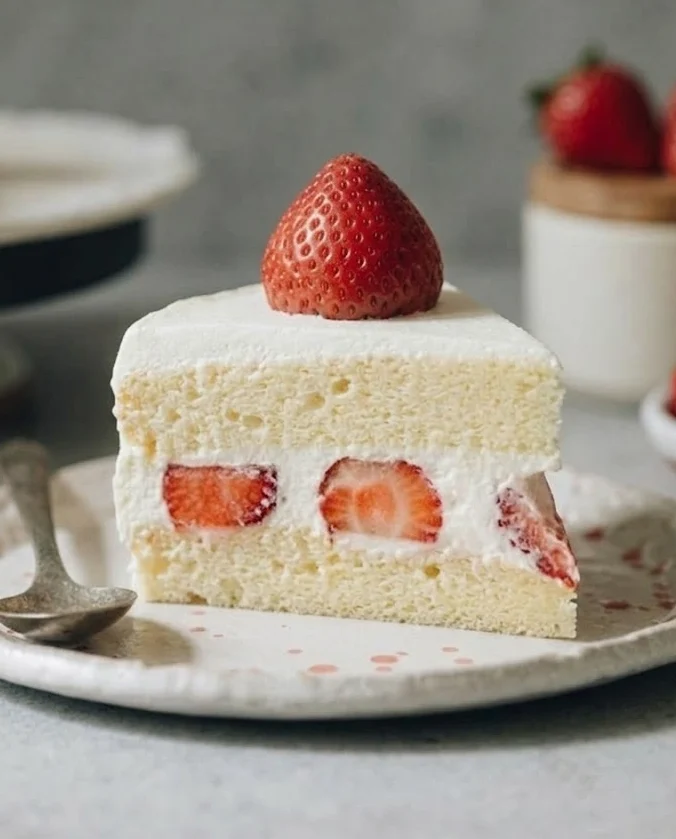
If you have been searching for a dessert recipe that feels elegant but is rooted in simple, wholesome ingredients, this Japanese Strawberry Shortcake is exactly what your kitchen has been missing.
Unlike the dense, heavily frosted cakes that dominate Western bakeries, this cake is feather-light. The sponge practically dissolves on your tongue, the cream is barely sweet, and every bite delivers that clean, fresh strawberry flavor you cannot get from a box mix or a store-bought cake.
This is the dessert recipe people remember. The kind that makes guests go quiet for a moment before asking for seconds.
Why You’ll Love This Dessert Recipe
This cake delivers on every level that matters when you are choosing a dessert recipe to invest your time in.
First, the texture is unlike anything you have made at home before. The chiffon-style sponge uses beaten egg whites and a water bath to achieve that signature Japanese softness — light, moist, and airy all at once.
Second, it is not too sweet. That is intentional. Japanese baking philosophy leans toward letting the natural flavors of fresh ingredients lead, which means the strawberries and cream actually taste like strawberries and cream — not sugar.
Third, this is a crowd dessert recipe that scales beautifully for birthdays, dinner parties, or any celebration. It photographs like a dream, making it a natural fit for a no-bake dessert recipe presentation aesthetic — despite being baked, the assembled cake requires zero cooking after layering.
Common Mistakes (And How to Avoid Them)
Over-whipping the egg whites. This is the single most common reason this cake fails. You want medium peaks, not firm ones. Over-whipped whites make the batter dense and prevent proper rising. Stop the mixer the moment the whites hold a soft, glossy peak that gently folds over.
Using cold water in the water bath. Hot water is essential. It creates immediate steam that helps the batter rise evenly from the start. Cold water in the bath will stall the rise and lead to a gummy, dense center.
Skipping gram measurements. This is a baking recipe where precision matters. Volume measurements like cups and tablespoons introduce too much variation with flour and sugar. A kitchen scale is not optional here — it is the difference between a flat, rubbery cake and a bakery-level result.
Opening the oven too early. The cake needs at least one full hour undisturbed. Opening the door before that creates a temperature drop that causes the delicate structure to collapse.
Chef’s Notes
The secret to this dessert recipe is patience and temperature control. Do not rush the cooling process before assembling. A warm sponge will melt the cream and cause the layers to slide.
If you want to make this a no-bake dessert recipe prep-friendly, bake the sponge the day before and refrigerate it overnight wrapped tightly in plastic. Assemble fresh the next day for the best texture and presentation.
For the most stable result, always use the gelatin-stabilized cream if you plan to transport the cake or serve it hours after assembly. It holds its shape at room temperature for far longer than plain whipped cream.
Key Ingredients
Cake flour is non-negotiable. It has a lower protein content than all-purpose flour, which means less gluten development and a more tender, delicate crumb. Substituting all-purpose flour will produce a noticeably chewier and denser cake.
Whole milk and unsalted butter form the base of the sponge. They are heated together to create an emulsified mixture that integrates smoothly with the egg yolks. This technique, borrowed from Japanese chiffon baking, is what gives the crumb its characteristic moistness.
Heavy whipping cream is the only frosting here. No buttercream, no fondant. The cream is whipped to soft peaks with just a small amount of confectioners sugar, keeping the sweetness low and the flavor clean.
Fresh strawberries are macerated briefly in sugar before filling the cake. This draws out their juices, deepens their flavor, and makes them glossy and sweet without any cooking. The leftover liquid can be added to the brushing syrup for an extra layer of strawberry flavor between the layers.
Gelatin is the optional but recommended stabilizer for the whipped cream. It allows the finished cake to sit in the fridge for up to two days without the cream weeping or deflating — a practical upgrade for anyone making this as a crowd dessert recipe.
How to Make Japanese Strawberry Shortcake
- Preheat your oven to 325°F (160°C). Line an 8-inch round cake pan with parchment paper and prepare a larger baking dish for the water bath. Bring a small pot of water to a boil.
- Melt the butter into the milk in a heatproof bowl. Sift in the cake flour and stir until smooth. Add the egg yolks and mix until fully combined and glossy.
- Beat the egg whites in a clean stand mixer bowl on medium-high until frothy. Gradually add the sugar and continue beating until glossy medium peaks form. Do not over-beat.
- Fold one quarter of the beaten whites into the yolk mixture to loosen it. Pour that back into the remaining whites and gently fold until just combined with no visible streaks.
- Pour the batter into the prepared pan. Drop the pan from about 5 inches onto the counter twice to pop large air bubbles.
- Place the cake pan in the water bath dish. Add one inch of hot water to the outer dish. Bake for 1 hour and 30 minutes. Do not open the oven before the first hour is complete.
- While the cake bakes, slice half the strawberries and toss them with sugar. Let them macerate for one to two hours.
- Prepare the stabilized whipped cream by blooming gelatin in cold water, melting it, then folding it into the freshly whipped cream. Work quickly once the gelatin is added.
- Once the cake cools completely, slice off the browned top and cut it into two even layers using toothpicks as guides and a serrated knife.
- Brush each layer with the sugar syrup. Spread cream on the bottom layer, cover generously with macerated strawberries, add another thin layer of cream, and place the top layer. Frost the outside with a smooth, thin coat of cream.
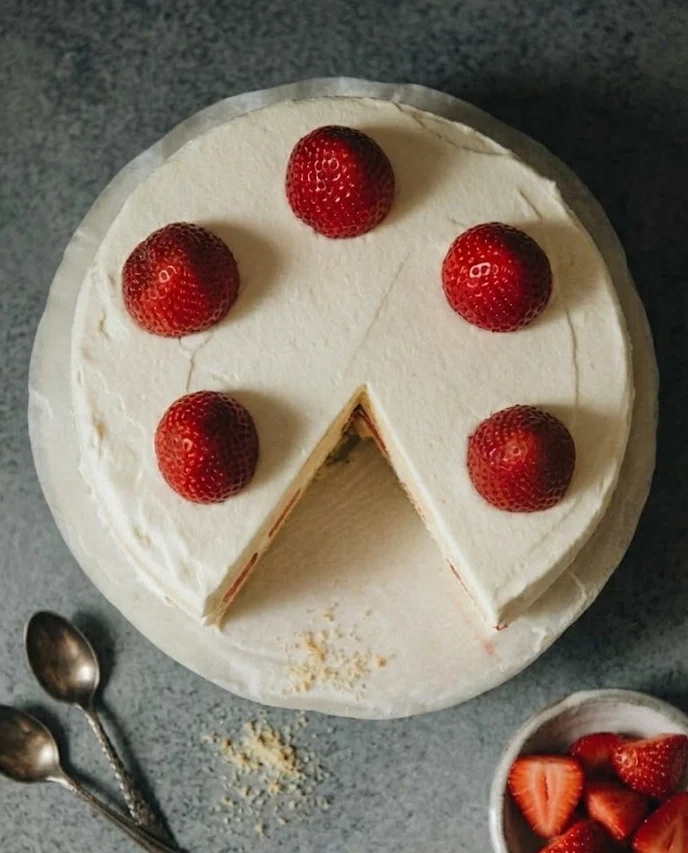
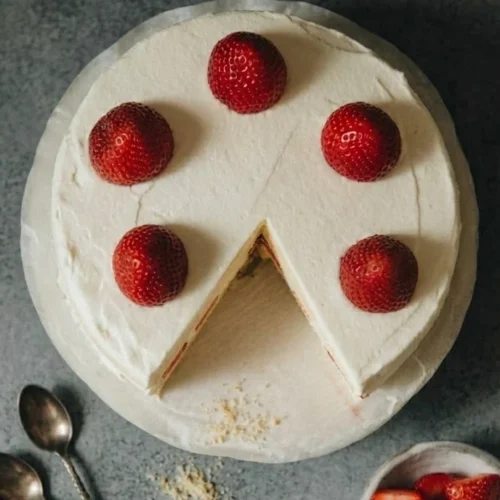
- Decorate the top with fresh whole strawberries. Refrigerate for at least 30 minutes before serving.
Variations and Tips
Gluten-free version: Substitute the cake flour with a fine rice flour blend specifically designed for baking. The texture will be slightly denser but still pleasant.
Dairy-free adaptation: Replace the whole milk with full-fat coconut milk and the butter with refined coconut oil. Use coconut cream in place of heavy cream. The flavor will carry a subtle coconut note that pairs beautifully with strawberries.
Chocolate version: Swap 15g of the cake flour for good-quality cocoa powder to create a light chocolate chiffon base. Pair it with the same whipped cream and strawberries for a simple chocolate dessert recipe variation.
Other fruit options: This is an incredibly versatile base. Replace strawberries with raspberries, peaches, or mangoes depending on the season. The cream and sponge hold their own against any fresh fruit.
Pro tip: Use a spinning cake stand when frosting. It allows you to create that smooth, professional finish with an offset spatula in a matter of minutes. If you do not own one, place an inverted bowl under a flat plate to improvise.
How to Meal Prep
This dessert recipe is perfectly suited to being broken into stages across two days.
On day one, bake and cool the sponge completely. Wrap it tightly in plastic wrap and store it in the refrigerator overnight. On day two, macerate the strawberries, prepare the stabilized cream, and assemble the full cake. The finished assembled cake keeps beautifully in the refrigerator for up to two days when made with gelatin-stabilized cream.
For slicing, use a warm serrated knife wiped clean between cuts. This gives you clean, bakery-style slices every time.
If you are making this dessert recipe for a crowd and need to transport it, refrigerate the assembled cake for a full hour before moving. The stabilized cream firms up enough to survive a short car ride without losing its shape.
Cultural Context
The Japanese strawberry shortcake is not actually related to the American strawberry shortcake, which is typically served as a biscuit split with fruit. The Japanese version emerged in the early 20th century as Western baking techniques were introduced to Japan and then reinterpreted through a distinctly Japanese lens.
Japanese baking culture prizes restraint. Sweetness is measured, texture is prioritized, and the quality of each ingredient is allowed to speak for itself. This dessert recipe reflects that philosophy entirely — it is a cake that does not shout, but leaves a lasting impression.
In Japan, strawberry shortcake became deeply associated with Christmas celebrations, often gifted and shared among families and colleagues. Today it appears year-round in bakeries across East Asia and has quietly become one of the most beloved simple dessert recipes in the world for anyone who encounters it. Once you taste it, you will understand exactly why.
Japanese Strawberry Shortcake
Equipment
- 8-inch cake pan
- mixing bowls
- stand mixer or hand mixer
- whisk
- spatula
- water bath tray
- serrated knife
Ingredients
- 90 g cake flour
- 60 ml whole milk
- 60 g unsalted butter
- 6 eggs (separated)
- 100 g granulated sugar
- 400 ml heavy whipping cream
- 30 g confectioners sugar
- 300 g fresh strawberries
- 2 tbsp sugar (for macerating strawberries)
- 1 tsp gelatin (optional, for stabilizing cream)
- 2 tbsp water (for gelatin blooming)
Instructions
- Preheat oven to 325°F (160°C). Line an 8-inch round cake pan and prepare a water bath. Bring water to a boil.
- Melt butter with milk, then sift in cake flour and mix until smooth. Add egg yolks and combine until glossy.
- Beat egg whites until frothy, gradually add sugar, and whip to medium peaks.
- Fold one-quarter of the egg whites into the yolk mixture, then gently fold everything together until smooth.
- Pour batter into pan, tap to remove air bubbles, place in water bath, and bake for 90 minutes without opening the oven early.
- Slice strawberries and toss with sugar. Let sit for 1–2 hours to macerate.
- Prepare whipped cream and optionally stabilize with gelatin by blooming and mixing it in.
- Cool cake completely, trim top, and slice into two even layers.
- Brush layers with syrup, spread cream, add strawberries, and stack layers.
- Frost the cake with a thin layer of cream, decorate with strawberries, and refrigerate before serving.