
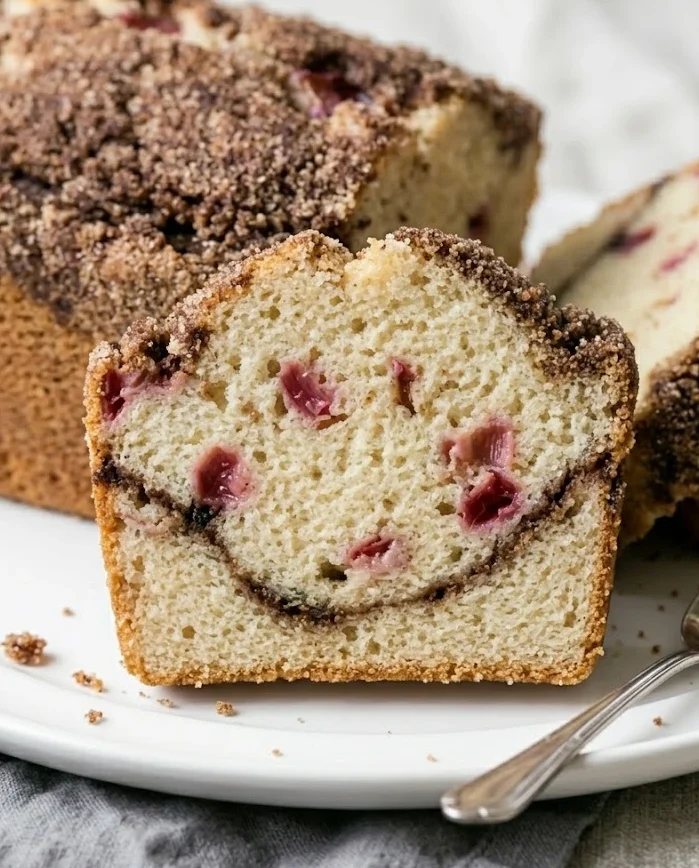
Not everyone who has a pile of rhubarb on the counter wants to make a pie. Pie is wonderful, but it also requires pastry dough, a rolling pin, patience, and at least a passing interest in fussiness. For the days when none of those conditions are met — when you want rhubarb baked into something warm, fragrant, and completely satisfying without any of the ceremony — this cinnamon swirl rhubarb bread is exactly the recipe you need.
It is a quick bread in the truest sense: no yeast, no proofing, no mixer required. Two bowls, a loaf pan, and about 20 minutes of active work produce a loaf that emerges from the oven golden on top, tender throughout, and laced with visible ribbons of caramelized cinnamon sugar that run through every slice. Pockets of tart rhubarb are distributed throughout the crumb, creating the same bright, jammy contrast that makes rhubarb such a compelling baking ingredient in any format.
Among all the easy rhubarb recipes that make use of this abundant spring vegetable, this bread has a strong case for being the most beginner-friendly, the most universally liked, and the one most likely to be made more than once in a single season.
Why You’ll Love This Rhubarb Quick Bread
What separates this from a basic rhubarb loaf is the cinnamon swirl — and it changes everything. Cinnamon sugar layered through the batter does not just add flavor. It creates visible, caramelized striations in the finished bread that make every slice look beautiful and taste more complex than the ingredient list would suggest. The top layer of cinnamon sugar bakes into a lightly crunchy, aromatic crust that perfumes the entire house as it bakes.
This also places it squarely among the easy rhubarb recipes that work as breakfast, snack, or dessert without any awkwardness. A slice with coffee in the morning is completely appropriate. So is a warm slice with butter for an afternoon snack or a slightly thicker piece as a not-too-sweet after-dinner dessert. The bread occupies that rare, comfortable space between sweet and everyday where it never feels like too much.
And for anyone new to baking with rhubarb, this is the ideal entry point. The technique is more forgiving than rhubarb crisp, less precise than rhubarb bars, and far simpler than any rhubarb pie recipe. If you can make banana bread, you can make this.
Common Mistakes (And How to Avoid Them)
Overmixing the batter. This is the defining rule of every quick bread and muffin recipe, and it matters here more than almost anywhere else. When flour is mixed with liquid, gluten begins developing — and the more you mix, the more gluten develops. Gluten is what makes bread chewy and elastic, which is desirable in yeasted bread but deeply undesirable in a quick bread. Overmixed quick bread batter produces tunnels — long vertical air pockets that run through the crumb — along with a dense, rubbery texture that no amount of cinnamon sugar can fix. Stir the wet and dry ingredients together until just moistened. The batter should look rough and uneven, not smooth.
Using cold egg and cold milk directly from the refrigerator. Cold liquid ingredients incorporated into room temperature dry ingredients combine unevenly and can cause the oil to seize slightly, producing a streaky rather than uniform batter. Set your egg and milk out on the counter about an hour before you start, or place the egg in a bowl of warm water for five minutes if you forget. Room temperature ingredients incorporate seamlessly and produce a more homogenous, evenly baked loaf.
Cutting into the bread while still warm. This is the hardest instruction to follow in the entire recipe and also the most important for one served from the loaf. Hot quick bread has a fragile, almost custard-like crumb structure that tears rather than slices cleanly. Chilling the completely cooled loaf for a few hours in the refrigerator before slicing firms the crumb to a texture that cuts cleanly and holds together on the plate. The flavor and texture are also noticeably better cold than warm — richer, more cohesive, with the cinnamon swirl more pronounced.
Not checking before the suggested bake time. Baking times for quick breads vary based on the moisture content of the rhubarb, the exact dimensions of your loaf pan, and the specific calibration of your oven. Start checking at 50 minutes by inserting a toothpick into the center. If it comes out with wet batter, continue baking. If it comes out with moist crumbs or clean, the bread is done. Do not wait for the full 60 minutes if the toothpick tests clean early.
Skipping the parchment liner. Greasing the loaf pan alone is not always sufficient to prevent sticking, especially given the sugar content of this bread. The cinnamon sugar on top and mixed through the batter caramelizes against the pan walls during baking and can bond to metal. Line the bottom of the pan with a strip of parchment that extends up the two short sides — this guarantees the loaf lifts out cleanly every time.
Chef’s Notes
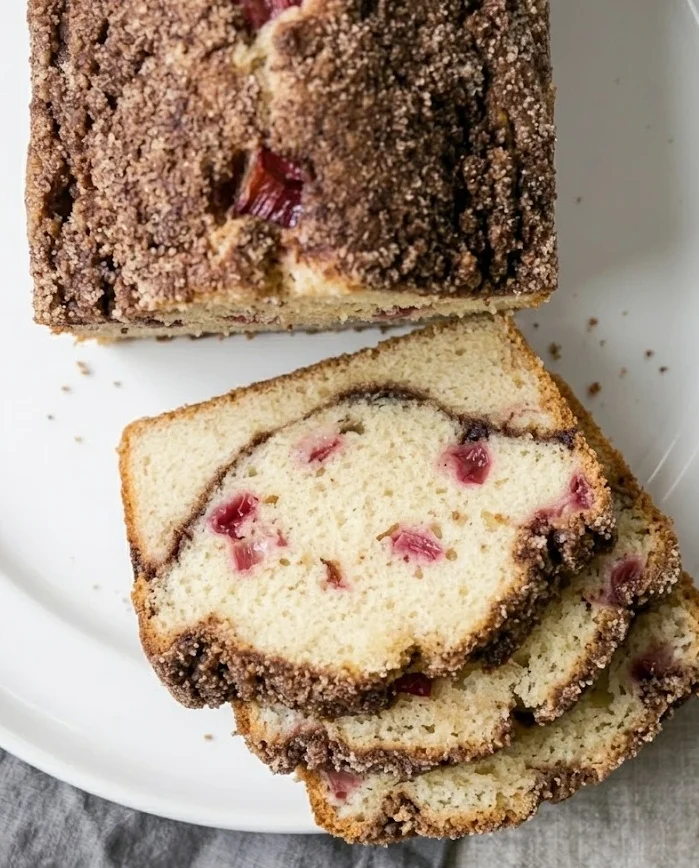
The question of whether to swirl the cinnamon sugar layers into the batter is genuinely a matter of preference and has different results. Not swirling produces distinct, clearly defined horizontal ribbons of cinnamon running through each slice — visible, dramatic, and very striking when the loaf is cut. Swirling with an offset spatula or a knife creates a more marbled effect with the cinnamon integrated more deeply into the crumb, similar to a snickerdoodle loaf. Both are delicious. The un-swirled version is what the original recipe produces. Try one approach the first time and adjust from there.
One reader’s note worth taking seriously: one cup of rhubarb is the minimum the recipe calls for, but some who have made it prefer two cups for a more pronounced rhubarb flavor throughout the loaf. If you are a committed rhubarb enthusiast who wants that tart fruit in every single bite, increase the rhubarb to two cups. The bread will be slightly moister and may need an additional five minutes of baking time, but the result is deeply satisfying.
If frozen rhubarb is all you have, add it to the batter still frozen rather than thawing it first. Thawed rhubarb releases liquid into the batter, throwing off the moisture balance and potentially producing a wet, undercooked center. Frozen pieces hold their integrity through mixing and release their moisture gradually during baking, which the surrounding batter can absorb.
Key Ingredients
All-purpose flour provides the structure of the quick bread. Two cups produces a loaf that is substantial but tender — not cake-light, but not dense either. Measuring it correctly by spooning into the cup and leveling off is the single most important precision step in the recipe.
Baking powder is the leavener that makes this bread rise without yeast. Unlike baking soda, baking powder does not require an acid to activate — it reacts with moisture and heat to produce lift. If your baking powder has been open for more than six months, test it by adding a teaspoon to hot water. If it bubbles vigorously, it is still active. If it barely reacts, replace it before baking.
Vegetable oil provides moisture in a way that butter cannot. Oil stays liquid at room temperature, which means the crumb of an oil-based quick bread remains moist and tender even after a day or two, unlike butter-based breads that firm up and dry out more quickly. The flavor of vegetable oil is neutral, which means it does not compete with the cinnamon and rhubarb.
Sugar plays two roles in this recipe: the granulated sugar in the batter sweetens the loaf, and the cinnamon-sugar mixture is what creates the swirl. The swirl sugar caramelizes against the hot batter during baking, creating those golden, slightly crunchy ribbons that are the visual and textural signature of this bread.
Ground cinnamon is the dominant flavor after rhubarb itself. Two teaspoons total — one-third combined with a portion of the sugar for the swirl — is enough to make the warm spice notes unmistakably present without overwhelming the tartness of the fruit. Fresh cinnamon makes a significant difference here; ground cinnamon loses its potency within six to twelve months of opening.
Fresh rhubarb is the ingredient that makes this bread worth making. Chopped into rough pieces and folded into the batter, it bakes down into tender, intensely tart pockets that provide flavor contrast in every bite. The tartness of the rhubarb is the counterpoint to the sweetness of the cinnamon sugar — remove the rhubarb and you have a pleasant cinnamon loaf; keep it and you have something genuinely interesting.
Egg and milk are the liquid binders that bring the batter together. The egg adds structure and richness. The milk adds moisture and helps the baking powder activate. Both should be at room temperature for the smoothest, most evenly combined batter.
How to Make Cinnamon Swirl Rhubarb Bread
- Preheat your oven to 350°F (175°C). Grease a standard 9×5-inch loaf pan with non-stick baking spray and line the bottom with a strip of parchment paper. Set aside.
- In a small bowl, combine one-third cup of sugar with the ground cinnamon. Stir to combine and set this cinnamon sugar mixture aside.
- In a large bowl, whisk together the flour, baking powder, salt, and the remaining one cup of sugar until evenly distributed.
- In a separate bowl, whisk together the room-temperature egg, milk, and vegetable oil until smooth and fully combined.
- Pour the egg mixture into the flour mixture and stir with a rubber spatula until just moistened. The batter will look rough and slightly lumpy — this is correct. Do not beat or stir further.
- Fold in the chopped rhubarb with a few gentle strokes, distributing it through the batter without overworking the mixture.
- Scrape half of the batter into the prepared loaf pan and smooth it gently to the edges. Sprinkle half of the cinnamon sugar mixture evenly over the batter.
- Add the remaining batter on top, spreading it to cover the cinnamon layer as evenly as possible. Sprinkle the remaining cinnamon sugar mixture over the top surface. If desired, use an offset spatula or a thin knife to swirl the topping lightly into the batter. This step is optional.
- Bake for approximately one hour, checking for doneness with a toothpick starting at 50 minutes. The bread is done when a toothpick inserted into the center comes out clean or with a few dry crumbs, and the top is deep golden brown.
- Transfer the pan to a wire rack and cool for 10 minutes, then lift the loaf out using the parchment and allow to cool completely on the rack.
- For the cleanest slices, wrap the completely cooled loaf in plastic wrap and refrigerate for two to three hours before slicing.
Looking for more ways to bake with rhubarb this spring? Our ultimate rhubarb recipe roundup collects 20 of the best rhubarb desserts in one place — including easy rhubarb recipes, strawberry rhubarb pie, rhubarb cake, rhubarb crisp, sourdough rhubarb bread, healthy rhubarb muffins, and much more. Whether you have fresh rhubarb from the garden or a bag of frozen stalks in the freezer, this guide has the perfect recipe waiting for you. Explore all 20 rhubarb recipes here.
Variations and Tips
Strawberry rhubarb bread: Replace half the rhubarb with fresh, diced strawberries. This is one of the most natural strawberry rhubarb recipes in quick bread form — sweeter, more colorful, and wonderful for anyone who finds plain rhubarb too sharply tart. The strawberries bleed slightly into the surrounding crumb as they bake, creating a pink-flushed interior that looks stunning when sliced.
Nutty cinnamon rhubarb bread: Add half a cup of roughly chopped walnuts or pecans to the cinnamon sugar mixture before layering. The nuts toast slightly in the oven and add crunch and a rich, nutty depth that pairs beautifully with both the cinnamon and the rhubarb.
Gluten-free rhubarb bread: Substitute the all-purpose flour with a certified 1:1 gluten-free baking flour blend in equal measure. The batter may be slightly thicker — add one tablespoon of milk if it seems too stiff to spread evenly in the pan. Baking time may require an additional five minutes.
Healthy rhubarb recipes bread twist: Replace one-third of the all-purpose flour with whole wheat flour, reduce the vegetable oil by one tablespoon and add two tablespoons of plain Greek yogurt in its place. The result is a slightly denser crumb with more fiber, more protein, and a subtle tang from the yogurt that amplifies the tartness of the rhubarb — a genuinely more nutritious version that still tastes excellent.
Rhubarb recipes for diabetics adaptation: Replace the granulated sugar in the batter and the cinnamon swirl with a 1:1 granulated erythritol or monk fruit sweetener. The batter will behave nearly identically and the bread will still bake to a golden color, though the cinnamon sugar topping will not caramelize quite as deeply. The rhubarb’s natural tartness means the bread tastes well-balanced even with reduced sweetness.
How to Meal Prep
This cinnamon swirl rhubarb bread is one of the most effortlessly meal-prep-friendly rhubarb recipes in the quick bread category. It actually improves over the first 24 hours as the moisture redistributes through the loaf and the cinnamon flavor deepens and permeates the crumb more fully. A loaf baked Sunday evening is at its absolute best by Monday morning.
Once completely cooled, the loaf stores at room temperature wrapped tightly in plastic wrap for up to two days. For longer storage, refrigerate wrapped for up to five days — the crumb stays moist and the cinnamon flavor intensifies pleasantly in the cold. Serve slices directly from the refrigerator or warm briefly in the microwave for 15 to 20 seconds.
For longer-term storage, freeze the fully cooled loaf whole — double-wrapped in plastic wrap and then foil — for up to three months. Alternatively, slice the loaf before freezing, separate the slices with parchment, and freeze in a zip-lock bag. Individual frozen slices can be toasted directly from the freezer, producing warm rhubarb bread on demand in under two minutes.
The rhubarb can also be prepped in advance: chop into pieces, place in a zip-lock bag, and refrigerate for up to three days before baking. For longer storage, freeze chopped rhubarb flat in a single layer on a sheet pan, then transfer to a bag and freeze for up to six months. Add frozen rhubarb directly to the batter without thawing.
Cultural Context
The quick bread — leavened with baking powder or baking soda rather than yeast — is a distinctly North American baking tradition that emerged in the 19th century as chemical leaveners became affordable and widely available to home cooks. Before that, a homemade loaf required yeast, time, and a significant degree of skill. The arrival of baking powder changed the equation entirely: almost anyone, with almost any level of experience, could produce a risen, tender loaf in under two hours.
Rhubarb’s incorporation into quick breads followed naturally from its role as the most abundant and least complicated spring baking ingredient in northern gardens. By the early 20th century, rhubarb bread recipes were circulating in home economics textbooks, church cookbooks, and regional newspapers across Canada and the northern United States — practical recipes for a practical ingredient.
The cinnamon swirl element is a more recent and specifically American embellishment, borrowing the visual drama and flavor architecture of the cinnamon roll and applying it to the simpler, faster format of the quick bread. It transforms what would be a pleasant but unremarkable rhubarb loaf into something that looks bakery-made, smells like a cinnamon roll as it bakes, and delivers a level of flavor complexity that its humble ingredient list gives no warning of. Among all the rhubarb recipes that have evolved from the simple spring garden harvest into something worth making specifically — not just because the rhubarb is there and needs using — this cinnamon swirl bread is one of the finest examples.
Cinnamon Swirl Rhubarb Bread
Equipment
- 9×5-inch loaf pan
- mixing bowls
- whisk
- spatula
- measuring cups and spoons
Ingredients
- 2 cups all-purpose flour
- 1 tbsp baking powder
- 1/2 tsp salt
- 1 1/3 cups granulated sugar, divided
- 2 tsp ground cinnamon
- 1 large egg, room temperature
- 1 cup milk, room temperature
- 1/3 cup vegetable oil
- 1 to 2 cups fresh or frozen rhubarb, chopped
Instructions
- Preheat oven to 350°F (175°C). Grease a 9×5-inch loaf pan and line with parchment paper.
- In a small bowl, mix 1/3 cup sugar with cinnamon and set aside.
- In a large bowl, whisk flour, baking powder, salt, and remaining 1 cup sugar.
- In another bowl, whisk egg, milk, and oil until smooth.
- Add wet ingredients to dry ingredients and stir until just combined. Do not overmix.
- Fold in chopped rhubarb gently.
- Spread half the batter into the pan and sprinkle with half the cinnamon sugar.
- Add remaining batter and top with remaining cinnamon sugar. Optionally swirl lightly.
- Bake for 50–60 minutes until a toothpick inserted comes out clean.
- Cool for 10 minutes, remove from pan, and cool completely before slicing.