
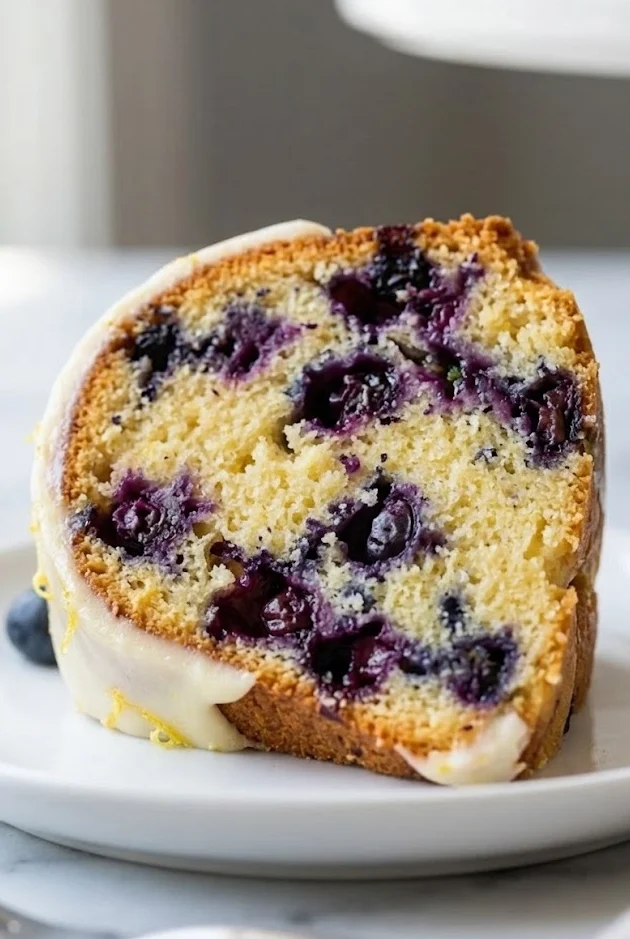
There are certain recipes that make you feel genuinely accomplished the moment you turn them out of the pan. This Lemon Blueberry Bundt Cake is one of them. That moment when the pan lifts away and you see the golden, perfectly shaped cake studded with deep violet blueberries is one of the most satisfying experiences home baking has to offer.
This is the kind of blueberry dessert that earns compliments before anyone has taken a single bite. The shape alone — that classic ridged bundt form — signals celebration and care. And yet the recipe itself is far more straightforward than it looks, built on simple techniques and a handful of quality ingredients that do all the heavy lifting on their own.
It is bright with lemon, sweet with ripe blueberries, tender in the crumb, and finished with a glaze that makes every slice look like it belongs in a patisserie window. Whether you are baking for a weekend brunch, a birthday, or simply because you deserve something beautiful this week, this is the blueberry dessert you want on your counter.
Why You’ll Love This Lemon Blueberry Bundt Cake
This cake delivers on every level that matters. It is one of those blueberry desserts recipes that manages to be simultaneously impressive and genuinely easy — the kind of thing that looks like it required far more skill than it actually did.
The lemon and blueberry pairing is one of the most time-tested and beloved flavor combinations in all of baking. The bright citrus acidity sharpens and elevates the sweet, jammy quality of the blueberries in a way that makes each bite more interesting than the last. Add a cream cheese glaze and a tender, buttery crumb and you have a cake that covers every sensory note — sweet, tart, rich, and fresh all at once.
Here is why this recipe has become a reader favorite:
- A genuinely showstopping presentation with minimal decorating skill required
- Adaptable as gluten free blueberry desserts with a simple flour swap
- Perfect as blueberry desserts for a crowd — a standard bundt serves 12 to 14 people
- The cream cheese glaze echoes the blueberry desserts cream cheese theme throughout the collection
- Keeps beautifully for days, making it ideal for make-ahead entertaining
- One of the most naturally blueberry desserts aesthetic recipes available — no decoration required beyond the glaze and a handful of fresh berries
- Easily scaled down into a mini bundt version for blueberry desserts for two
Common Mistakes (And How to Avoid Them)
A bundt cake introduces a few specific challenges that standard round or sheet cakes do not. These are the mistakes worth knowing before you preheat the oven.
Mistake 1: Not preparing the bundt pan properly. Sticking is the number one bundt cake disaster. The intricate ridges of a bundt pan create more surface area for batter to cling to than a standard cake pan, and a cake that sticks is a cake that breaks when you try to unmold it. Grease every ridge and crevice thoroughly with softened butter using a pastry brush, then dust the entire interior with flour, tapping out the excess. Do not use cooking spray alone — it pools in the ridges and does not coat evenly enough.
Mistake 2: Adding blueberries directly to the batter without coating them. Blueberries are heavy and wet, and they will sink straight to the bottom of your batter — which becomes the top of your cake when unmolded — creating a dense, fruit-heavy layer and an uneven distribution throughout the slice. Toss the blueberries in one tablespoon of flour before folding them in. The flour coating creates just enough friction to suspend them more evenly throughout the batter as it bakes.
Mistake 3: Unmolding the cake too soon. A bundt cake needs to cool in the pan on a wire rack for exactly 10 to 15 minutes before unmolding — no more, no less. Too soon and the cake is too fragile and will tear. Too long and the steam condenses inside the pan, essentially gluing the cake to the surface. Set a timer and trust the window.
Mistake 4: Using bottled lemon juice instead of fresh. The lemon flavor in this cake comes from both the zest and the juice, and bottled lemon juice simply does not have the brightness or complexity of fresh. The zest in particular — which contains the essential oils from the peel — is responsible for the most intense lemon flavor in the finished cake. There is no meaningful substitute for freshly zested lemon in a recipe where citrus is a primary flavor.
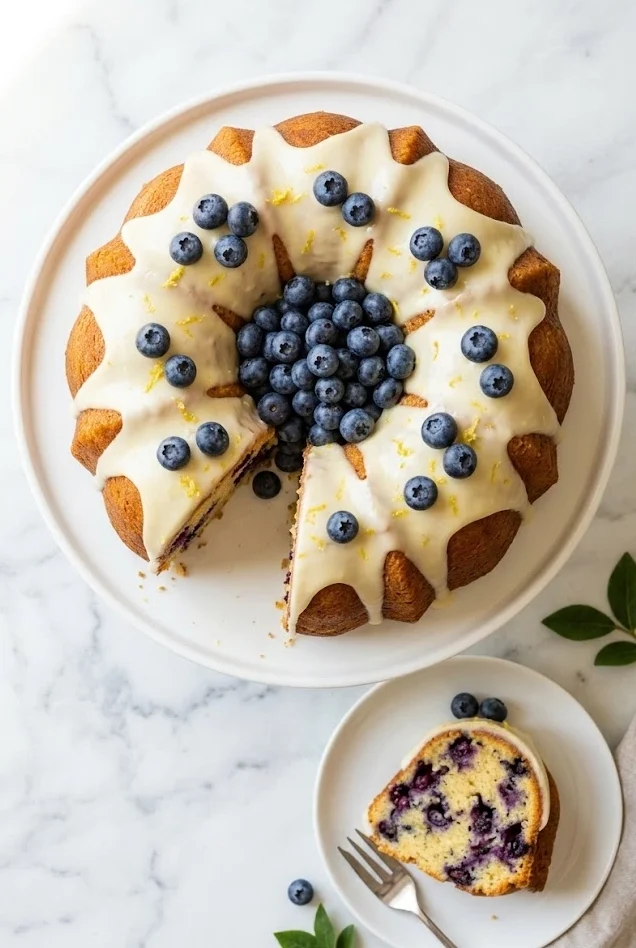
Key Ingredients for Lemon Blueberry Bundt Cake
This is a recipe where understanding your ingredients makes you a better baker. Here is exactly what each component contributes and why it cannot simply be swapped without thought.
Fresh Blueberries Fresh blueberries are strongly preferred over frozen for this cake. Frozen berries release significantly more moisture as they bake, which can create purple-streaked pockets throughout the crumb and make the interior gummy rather than tender. If frozen is your only option, do not thaw them — add them directly from frozen after coating in flour, and expect the baking time to increase by 5 minutes.
Lemon Zest and Fresh Lemon Juice Two full lemons worth of zest goes into this batter, plus fresh juice in both the cake and the glaze. The zest carries fragrant, floral lemon oil that baking powder cannot diminish and that permeates every cell of the crumb. The juice adds acidity that reacts with the baking soda to produce a lighter, more tender texture while reinforcing the citrus flavor.
Full-Fat Sour Cream or Greek Yogurt This is the ingredient most responsible for the extraordinary tenderness of this cake. The fat in sour cream coats the gluten strands that develop during mixing, preventing them from becoming tough. The acidity in sour cream also reacts with the baking soda, producing additional lift. The result is a crumb that is dense enough to hold the blueberries in suspension but tender enough to melt on the tongue. Full-fat Greek yogurt is a seamless substitute with nearly identical results.
Unsalted Butter Room-temperature butter creamed with sugar builds the foundational structure and richness of the cake. It traps air during the creaming process that expands in the oven, contributing to the light, even rise that a bundt cake requires to release cleanly from the pan.
Cream Cheese (For the Glaze) A small amount of softened cream cheese whisked into the glaze gives it a subtle tanginess that plays beautifully against the sweetness of the powdered sugar and the brightness of the lemon. It also gives the glaze a thicker, more luxurious consistency that clings to the ridges of the bundt and drapes in elegant ribbons rather than running off in thin streams.
All-Purpose Flour or Gluten-Free Flour Blend Standard all-purpose flour gives the most reliable and predictable result. For blueberry desserts gluten free adaptation, a high-quality measure-for-measure gluten-free flour blend — such as Bob’s Red Mill 1-to-1 or King Arthur Measure for Measure — works very well in this recipe with no other modifications needed. The sour cream helps compensate for the slightly different texture that gluten-free flours can produce.
How to Make Lemon Blueberry Bundt Cake
Ingredients
For the Cake:
- 3 cups all-purpose flour (or gluten-free measure-for-measure blend), plus 1 tablespoon for coating blueberries
- 2 cups fresh blueberries
- 1 cup (225g) unsalted butter, room temperature
- 1.5 cups granulated sugar
- 4 large eggs, room temperature
- 1 cup full-fat sour cream or full-fat Greek yogurt, room temperature
- 2 tablespoons fresh lemon juice
- Zest of 2 large lemons
- 1 teaspoon pure vanilla extract
- 1 teaspoon baking powder
- 1/2 teaspoon baking soda
- 1/2 teaspoon fine sea salt
For the Cream Cheese Lemon Glaze:
- 4 oz (115g) full-fat block cream cheese, room temperature
- 1.5 cups powdered sugar, sifted
- 3 to 4 tablespoons fresh lemon juice
- 1 teaspoon lemon zest
- 1 pinch of sea salt
Step-by-Step Instructions
- Prepare the Pan and Preheat. Position a rack in the center of your oven and preheat to 325°F (163°C). Using a pastry brush, coat every surface of a 10 to 12 cup bundt pan with softened butter, working the brush carefully into every ridge and crevice. Dust the interior with flour, rotating and tapping the pan to coat evenly, then invert and tap out any excess. Set aside.
- Coat the Blueberries. Place the fresh blueberries in a small bowl and add the reserved tablespoon of flour. Toss gently until every berry is lightly and evenly coated. This step is non-negotiable for even distribution throughout the finished cake.
- Whisk the Dry Ingredients. In a medium bowl, whisk together the flour, baking powder, baking soda, and salt until evenly combined. Set aside.
- Cream the Butter and Sugar. In the bowl of a stand mixer fitted with the paddle attachment, or in a large bowl with a hand mixer, beat the room-temperature butter and granulated sugar together on medium-high speed for 4 to 5 full minutes until the mixture is very pale, light, and noticeably fluffy. Do not rush this step — it is what creates the tender, even crumb the finished cake is known for.
- Add the Eggs. Add the eggs one at a time, beating well after each addition and scraping down the sides of the bowl between each egg. The mixture should look smooth and fully emulsified after all four eggs are incorporated. If it looks slightly curdled, do not worry — it will come together once the dry ingredients are added.
- Add Lemon, Vanilla, and Sour Cream. Add the lemon zest, lemon juice, and vanilla extract and mix on low speed until just combined. Add the sour cream and mix again until smooth and fully incorporated, scraping down the bowl as needed.
- Add the Dry Ingredients. With the mixer on low speed, add the flour mixture in three additions, mixing only until the last streak of flour disappears before adding the next. Do not over-mix — stop the moment the batter is smooth and cohesive. Over-mixing develops gluten and will make the finished cake tough rather than tender.
- Fold In the Blueberries. Remove the bowl from the mixer and use a spatula to fold in the flour-coated blueberries by hand, using gentle sweeping motions from the bottom of the bowl upward. Fold only until the berries are evenly distributed — 8 to 10 folds is usually sufficient.
- Fill the Pan. Spoon the batter into the prepared bundt pan, spreading it into an even layer and smoothing the top with the back of your spatula. Tap the pan firmly on the counter 3 to 4 times to release any large air bubbles trapped in the batter.
- Bake. Place the pan on the center rack and bake for 55 to 65 minutes. Begin checking at the 55-minute mark by inserting a thin wooden skewer or cake tester into the thickest part of the cake — it should come out with no wet batter attached, only a few moist crumbs. The top of the cake should be deeply golden and spring back lightly when pressed. If the top is browning too quickly before the interior is set, tent loosely with foil for the final 15 minutes.
- Cool and Unmold. Transfer the pan to a wire rack and cool for exactly 12 minutes. Run a thin offset spatula or butter knife gently around the outer and inner edges of the pan to loosen any spots that may have adhered. Place the wire rack upside down over the pan, then confidently and quickly invert both together. Lift the pan straight up. Allow the cake to cool completely on the wire rack before glazing — at least 1 hour.
- Make the Cream Cheese Glaze. In a medium bowl, beat the room-temperature cream cheese until completely smooth. Add the sifted powdered sugar, lemon juice, lemon zest, and pinch of salt. Whisk vigorously until the glaze is silky, smooth, and thick enough to drizzle but fluid enough to drape. It should fall from the whisk in a slow, steady ribbon. Adjust consistency with additional lemon juice one teaspoon at a time.
- Glaze and Serve. Place the fully cooled cake on a serving plate or cake stand. Pour the glaze slowly and evenly over the top of the bundt, allowing it to drip naturally down the ridges and sides. Garnish immediately with a small handful of fresh blueberries and a pinch of lemon zest scattered over the glazed surface. Allow the glaze to set for 15 minutes before slicing and serving.
Variations and Tips
Make It Gluten-Free: Replace the all-purpose flour with a certified measure-for-measure gluten-free flour blend in equal quantity. The sour cream in the batter acts as a natural texture compensator, making this one of the most successful gluten free blueberry desserts bundt cake conversions you will find. No other changes to the recipe are needed.
Make It Dairy-Free: Replace the butter with vegan butter, the sour cream with full-fat coconut yogurt, and the cream cheese in the glaze with a dairy-free block cream cheese. The cake will be slightly less rich but still tender and flavorful with a beautifully set glaze.
Blueberry Desserts for Two — Mini Bundt Version: Divide the batter between 6 individual mini bundt pans. Reduce the baking time to 22 to 28 minutes, checking with a skewer from the 22-minute mark. Individual mini bundts make one of the most elegant and portion-perfect blueberry desserts for two or for an intimate dinner party dessert presentation.
Lemon Blueberry Pound Cake Variation: Bake the same batter in a standard 9×5 inch loaf pan at 325°F for 65 to 75 minutes for a more casual, sliceable format. This version is one of the most practical blueberry desserts for a crowd brunch table applications — slice it thick and serve alongside coffee or tea.
Pro Tips:
- Rub the lemon zest directly into the granulated sugar with your fingertips before creaming with the butter — this releases the essential oils from the zest into the sugar and produces a significantly more intense lemon flavor throughout the cake
- For a more dramatic visual effect, reserve one quarter cup of blueberries and press them gently into the surface of the batter after filling the pan
- A light dusting of powdered sugar over the set glaze adds a beautiful finishing touch and makes the cake look professionally finished with zero extra effort
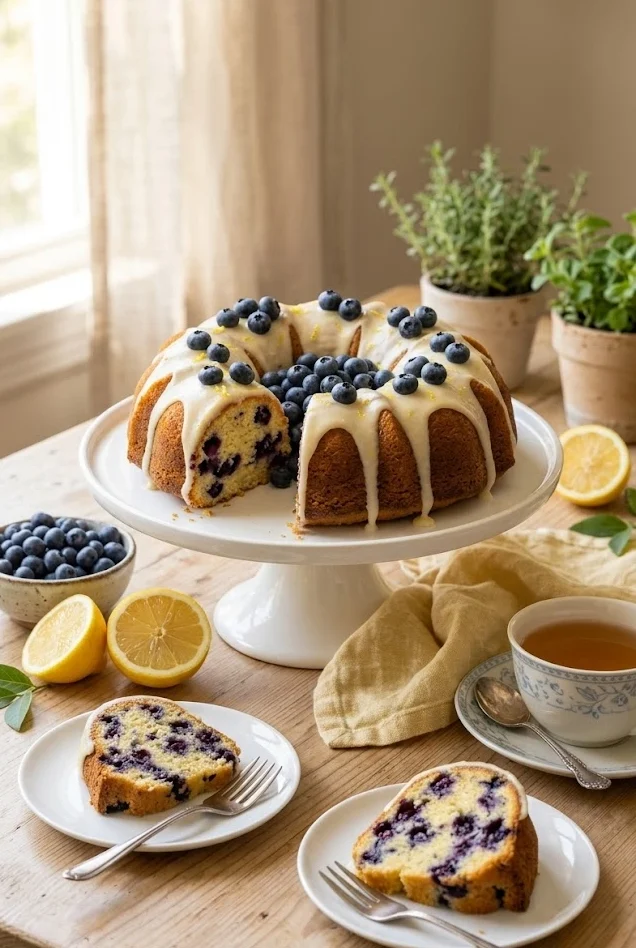
How to Meal Prep This Cake
The Lemon Blueberry Bundt Cake is one of the most rewarding blueberry desserts for a crowd make-ahead baking projects available. It actually improves in flavor after 24 hours as the lemon and blueberry notes deepen and the crumb settles into a more tender, cohesive texture.
Bake the cake up to 2 days in advance and store it unglazed, tightly wrapped in plastic wrap at room temperature. Glaze on the day of serving for the freshest appearance. Once glazed, the cake keeps well under a cake dome at room temperature for up to 3 days or refrigerated for up to 5 days. Bring refrigerated cake to room temperature for 30 minutes before serving for the best flavor and texture.
For longer storage, freeze the unglazed cake tightly wrapped in plastic and then foil for up to 3 months. Thaw overnight at room temperature, then glaze and serve as freshly made. The cream cheese glaze can also be made up to 3 days ahead and stored in a sealed jar in the refrigerator — whisk briefly before using to restore its smooth, pourable consistency.
FAQs
Why did my blueberries all sink to the bottom of the bundt cake? The most common cause is skipping the flour-coating step. Blueberries are dense and moisture-heavy, and raw batter alone cannot suspend them. Coating them in flour before folding them in creates a thin, dry layer that temporarily adheres to the surrounding batter and slows the sinking process significantly. Using room-temperature ingredients also helps — a slightly thicker, properly emulsified batter holds the berries better than a cold, loose one.
Can I use a regular round cake pan instead of a bundt pan? Yes, with adjustments. Divide the batter between two greased 9-inch round cake pans and bake at 350°F for 30 to 35 minutes. This creates a beautiful two-layer lemon blueberry layer cake that pairs beautifully with the cream cheese glaze used as a filling and frosting. The bundt format is recommended for its visual impact and ease of serving, but the batter is versatile enough to work in multiple formats.
My glaze is too runny. How do I fix it? Add more sifted powdered sugar one tablespoon at a time, whisking after each addition, until the glaze reaches the consistency you want. A thicker glaze will drape more dramatically over the ridges and stay more visible on the finished cake. If it becomes too thick, thin it back with fresh lemon juice one teaspoon at a time.
How do I know when the bundt cake is fully baked? The skewer test is the most reliable method — insert a thin wooden skewer into the thickest part of the cake and it should come out with no wet batter attached. Additionally, the cake should have pulled away slightly from the edges of the pan, the top should be deeply golden, and it should spring back when lightly pressed in the center. An internal temperature of 205°F to 210°F read with an instant-read thermometer is the most precise indicator of doneness.
Cultural Context
The bundt cake as a format has an unexpectedly specific and fascinating origin story. The distinctive ring-shaped pan was introduced to the American market in 1950 by Nordic Ware, a Minneapolis-based cookware company, at the request of a group of Jewish home bakers who wanted to recreate the traditional European Gugelhupf — a rich, yeasted ring cake popular in Germany, Austria, and Eastern Europe since the medieval period.
The bundt pan remained a modest regional product until 1966, when a Tunnel of Fudge Cake baked in a Nordic Ware bundt pan placed second in the Pillsbury Bake-Off and generated so many requests for the pan that Nordic Ware was overwhelmed with orders. The bundt cake has been a fixture of American home baking ever since, celebrated precisely for what this Lemon Blueberry Bundt Cake embodies — a cake that looks spectacular with no decorating skill required beyond a simple glaze.
Lemon and blueberry as a pairing reflects the broader American tradition of combining native North American fruit with European citrus influences that arrived through trade and immigration. Blueberries, cultivated and celebrated by Indigenous North American communities for thousands of years, found their perfect partner in lemon — a fruit that travelled from Southeast Asia through the Mediterranean to the American kitchen — creating one of the most iconic and enduring flavor pairings in contemporary baking.
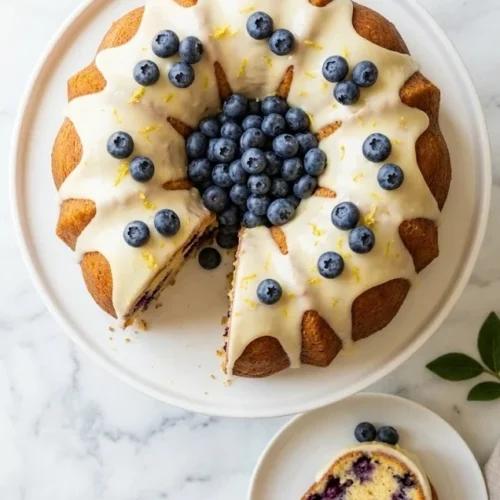
Lemon Blueberry Bundt Cake
Equipment
- bundt pan (10-12 cup)
- mixing bowls
- stand mixer or hand mixer
- whisk
- spatula
- wire rack
Ingredients
- 3 cups all-purpose flour
- 1 tbsp all-purpose flour (for coating blueberries)
- 2 cups fresh blueberries
- 1 cup unsalted butter, room temperature
- 1.5 cups granulated sugar
- 4 large eggs, room temperature
- 1 cup full-fat sour cream or Greek yogurt
- 2 tbsp fresh lemon juice
- 2 lemons, zested
- 1 tsp pure vanilla extract
- 1 tsp baking powder
- 0.5 tsp baking soda
- 0.5 tsp fine sea salt
- 4 oz cream cheese, room temperature
- 1.5 cups powdered sugar, sifted
- 3-4 tbsp fresh lemon juice (for glaze)
- 1 tsp lemon zest (for glaze)
- 1 pinch sea salt (for glaze)
Instructions
- Preheat oven to 325°F (163°C) and thoroughly grease and flour a bundt pan.
- Toss blueberries with 1 tablespoon flour until evenly coated.
- Whisk together flour, baking powder, baking soda, and salt.
- Beat butter and sugar for 4–5 minutes until pale and fluffy.
- Add eggs one at a time, mixing well after each addition.
- Mix in lemon zest, lemon juice, vanilla, and sour cream until smooth.
- Add dry ingredients in three additions, mixing until just combined.
- Fold in coated blueberries gently by hand.
- Transfer batter to pan, smooth top, and tap to release air bubbles.
- Bake for 55–65 minutes until golden and a skewer comes out clean.
- Cool for 12 minutes, then invert onto rack and cool completely.
- Beat cream cheese, then whisk with powdered sugar, lemon juice, zest, and salt until smooth glaze forms.
- Drizzle glaze over cooled cake, garnish if desired, and serve.