
This post may contain affiliate links. As an Amazon Associate, we earn from qualifying purchases. We only recommend products we trust.
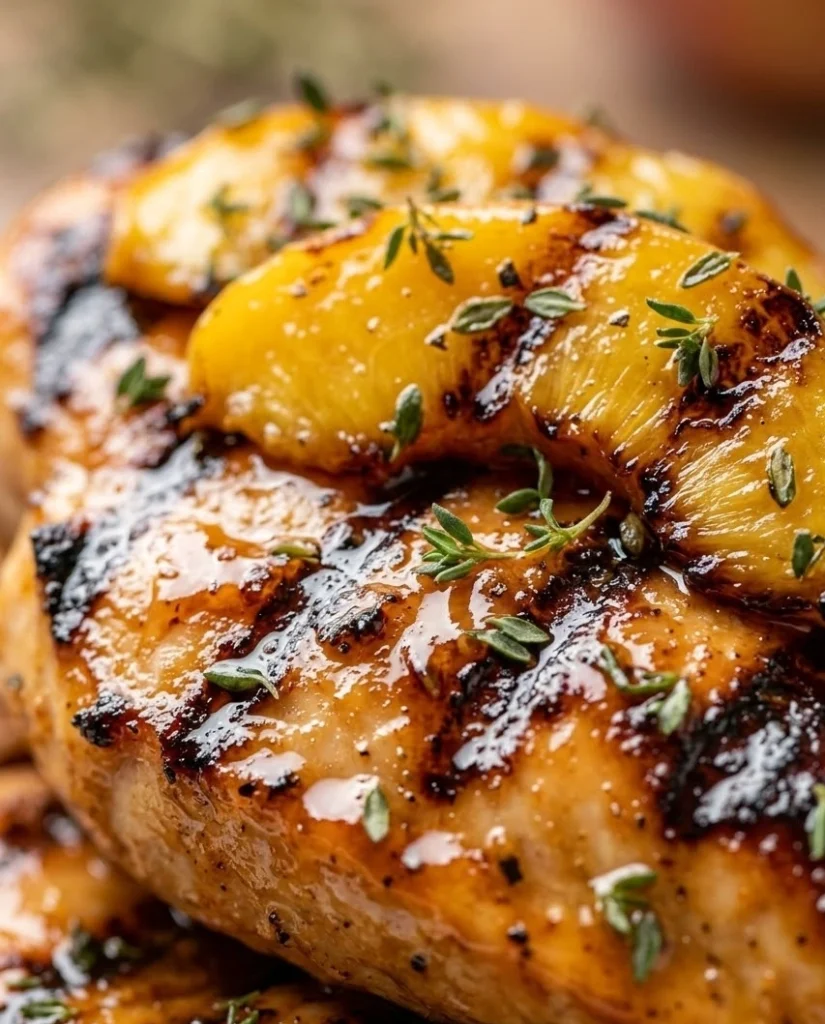
There is a narrow, precious window each year — usually six to eight weeks in late summer — when peaches are at their absolute peak. Fragrant, heavy with juice, sweet with just enough acidity to keep them honest. During this window, the best thing you can do with a ripe peach and a hot grill is make this chicken.
Peach glaze on grilled chicken is one of those flavor combinations that feels both surprising and completely inevitable once you taste it. The sweetness of the peach reduction caramelizes against the hot grill grates into a lacquered, slightly sticky crust that delivers smoke, fruit, heat, and savory depth in a single bite.
This is a grilling recipe that marks the calendar. You’ll remember the first time you made it.
Why You’ll Love This Recipe
Stone fruit and smoke are made for each other. The high sugar content in peaches caramelizes rapidly on a hot grill, developing complex caramel and slightly smoky notes that the raw fruit never has. Cooking transforms good peaches into extraordinary ones.
The glaze does double duty. It marinates the chicken for tenderness and flavor penetration before grilling, then gets applied again as a finishing glaze in the final minutes for that lacquered, glossy crust. One preparation, two applications, maximum result.
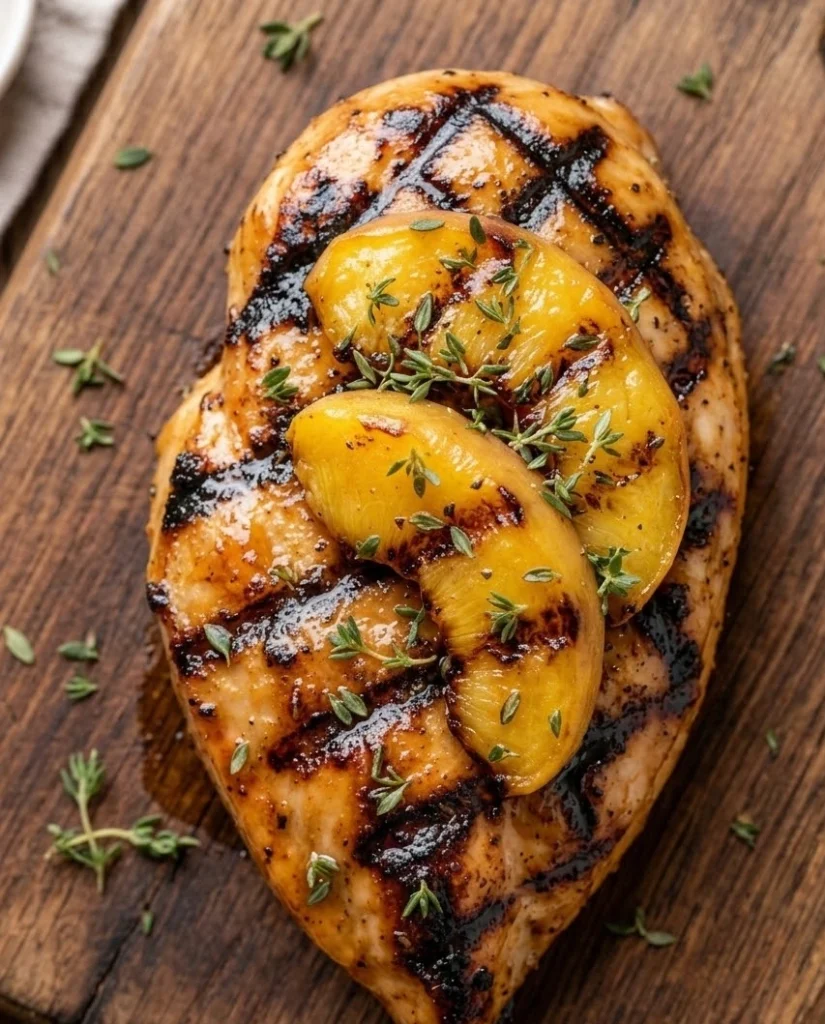
It’s visually stunning. The deep amber-gold color of the caramelized peach glaze against the char marks of the grill is genuinely beautiful on a plate. This is a recipe that photographs as well as it tastes — and it tastes remarkable.
Common Mistakes — And How to Avoid Them
Using out-of-season peaches. Hard, flavorless, out-of-season peaches will produce a flat, one-dimensional glaze. If fresh peaches aren’t available, use good-quality frozen peaches — thawed and drained — before reducing. Canned peaches packed in juice (not syrup) are a viable emergency backup.
Applying the glaze too early. The peach reduction is high in sugar. Added too early in the cooking process, it burns black before the chicken is cooked through. Apply the glaze only in the final 3–4 minutes of grilling, when the chicken is already mostly cooked. One coat, let it set, another coat, let it tack — then off the grill.
Not reducing the glaze enough. The glaze needs to be thick enough to cling to the chicken rather than running straight off. Reduce it to a consistency similar to a loose honey — it should coat the back of a spoon. Thin glaze = no lacquer = no drama.
Choosing breast over thigh. Once again: thighs. Their fat content protects against the aggressive caramelization heat needed to set the glaze. Breast meat will dry out before the glaze has time to work.
Chef’s Notes
My peach glaze has a secret: a small spoonful of whole-grain mustard stirred in at the end. It adds just enough sharpness to prevent the glaze from tasting purely sweet, and the mustard seeds provide little texture bursts throughout. It’s a tiny addition that makes the glaze taste like it came from a restaurant kitchen.
I also grill the peach halves directly alongside the chicken for the last 4 minutes. Cut-side down on a hot grate, they develop beautiful caramelization, their texture becomes slightly jammy, and they make an extraordinary garnish that tells the story of the dish before anyone takes a bite.
The fresh thyme scattered over the finished dish isn’t optional — the herbal, slightly floral character of fresh thyme is the aromatic bridge between the fruit and the chicken. It ties everything together in a way dried thyme simply cannot.
Our Best Amazon Finds
 Buy Now →
 Buy Now →
Cuisinart Griddler Indoor Grill
Buy Now →
Geesta Grilling Prep and Serve Tays
Buy Now →Key Ingredients — And Why They Matter
Bone-in, skin-on chicken thighs (6 pieces): Bone-in thighs take slightly longer to cook, giving the glaze more time to build in layers. The skin crisps into a lacquered shell that carries the glaze magnificently.
Fresh ripe peaches (4, peeled and chopped): The heart of the dish. They get cooked down into a concentrated reduction that is fundamentally different from any bottled sauce — fresh, fragrant, and deeply peachy.
Apple cider vinegar (2 tbsp): The acid that balances the sweetness of the peaches and prevents the glaze from becoming cloying. It also adds brightness that keeps the flavor feeling fresh.
Honey (2 tbsp): Amplifies the natural sweetness of the peach and contributes to the glossy, sticky quality of the finished glaze.
Fresh ginger (1 tsp, grated): Adds warmth and a subtle citrusy heat that makes the glaze feel more complex and layered. Ginger and peach have a deep natural affinity.
Chili flakes (½ tsp): The heat note that transforms this from sweet into sweet-heat. Just enough to notice, not enough to dominate.
Whole-grain mustard (1 tsp): Sharpness, texture, and the secret bridge between fruit sweetness and savory chicken.
How to Make Grilled Chicken With Peach Glaze
- Make the glaze. In a small saucepan over medium heat, combine chopped peaches, apple cider vinegar, honey, grated ginger, chili flakes, and a pinch of salt. Cook for 12–15 minutes, stirring occasionally, until peaches have completely broken down and the mixture has thickened to a loose honey consistency. Stir in whole-grain mustard. Blend smooth if you prefer a refined texture, or leave slightly chunky for rustic character.
- Divide the glaze. Set aside half for finishing. Use the other half to coat the chicken and marinate for at least 1 hour.
- Prep your grill. Preheat to medium-high. Clean and oil grates.
- Grill the chicken. Place chicken skin-side down. Cook 6–7 minutes until the skin is golden and releases cleanly from the grates. Flip and cook another 6 minutes.
- Add the glaze. In the final 3–4 minutes, brush the reserved glaze over the chicken. Allow to set, apply a second coat, and let it tack and slightly char at the edges.
- Grill the peach halves. Halve and pit 2 remaining peaches, brush with a little oil, and place cut-side down on the grill for 3–4 minutes until caramelized.
- Rest and serve. Rest chicken 5 minutes. Serve with grilled peach halves, fresh thyme, and a light drizzle of olive oil.
Variations & Tips
Nectarine or plum version: Both work beautifully using the exact same technique. Nectarines are slightly less sweet and more tart — excellent if you prefer a sharper glaze. Plums produce a deeper, more wine-dark reduction with a gorgeous color.
Bourbon peach glaze: Add 2 tbsp bourbon to the reducing glaze and let the alcohol cook off. The oak and vanilla notes of the bourbon add extraordinary depth and pair perfectly with grilled chicken.
Vegan adaptation: Apply the peach glaze to thick slices of grilled halloumi or firm tofu. The caramelization works identically and the result is a stunning meat-free main.
Pro tip: Never use the same brush or bowl that touched raw chicken for your finishing glaze. Reserve a clean portion of glaze specifically for the final application to avoid cross-contamination.
How to Meal Prep
Make the peach glaze up to 5 days ahead — it keeps beautifully refrigerated in a sealed jar and the flavor deepens over time. Marinate the chicken overnight for maximum flavor penetration. Cooked glazed chicken reheats well under a hot broiler for 4 minutes, which re-crisps the skin and re-caramelizes the glaze. Slice leftover chicken and serve cold over a simple arugula salad with goat cheese — it’s one of the best repurposed leftovers in this entire collection of grilling recipes.
Cultural Context
The marriage of fruit and poultry is one of the oldest flavor pairings in culinary history, appearing across Persian, French, Moroccan, and Chinese cooking traditions. The American South has a particular love for peach and chicken — rooted in the agricultural heritage of Georgia and South Carolina, where peach orchards and chicken farming developed alongside each other in the 19th century.
Grilling peaches specifically is a technique that gained widespread popularity in American backyard cooking during the 1990s, as home cooks became more adventurous with the grill beyond burgers and hot dogs. Today it’s recognized as one of the clearest expressions of summer cooking — the moment when the season’s best produce and the country’s favorite cooking method come together perfectly.
Grilled Chicken With Peach Glaze
Equipment
- grill
- saucepan for making the peach glaze
- mixing bowl
- basting brush
- tongs
- knife
Ingredients
- 6 bone-in skin-on chicken thighs
- 4 ripe peaches, peeled and chopped
- 2 tbsp apple cider vinegar
- 2 tbsp honey
- 1 tsp fresh ginger, grated
- 1/2 tsp red chili flakes
- 1 tsp whole-grain mustard
- 1 tbsp olive oil
- 1/2 tsp salt
- 1/4 tsp black pepper
- 1 tsp fresh thyme leaves (for garnish)
Instructions
- In a saucepan over medium heat combine chopped peaches, apple cider vinegar, honey, grated ginger, chili flakes, and a pinch of salt. Cook for 12–15 minutes until the peaches break down and the mixture thickens.
- Stir in the whole-grain mustard and continue simmering briefly. Blend the glaze if a smoother texture is desired.
- Divide the glaze into two portions. Coat the chicken thighs with half of the glaze and marinate for at least 1 hour in the refrigerator.
- Preheat the grill to medium-high heat and lightly oil the grates.
- Place the chicken thighs skin-side down on the grill and cook for 6–7 minutes until the skin becomes golden and crisp.
- Flip the chicken and continue grilling for another 6 minutes until nearly cooked through.
- During the final 3–4 minutes, brush the reserved peach glaze over the chicken, allowing it to caramelize slightly on the grill.
- Remove the chicken from the grill and rest for 5 minutes before serving.
- Garnish with fresh thyme and serve warm.