
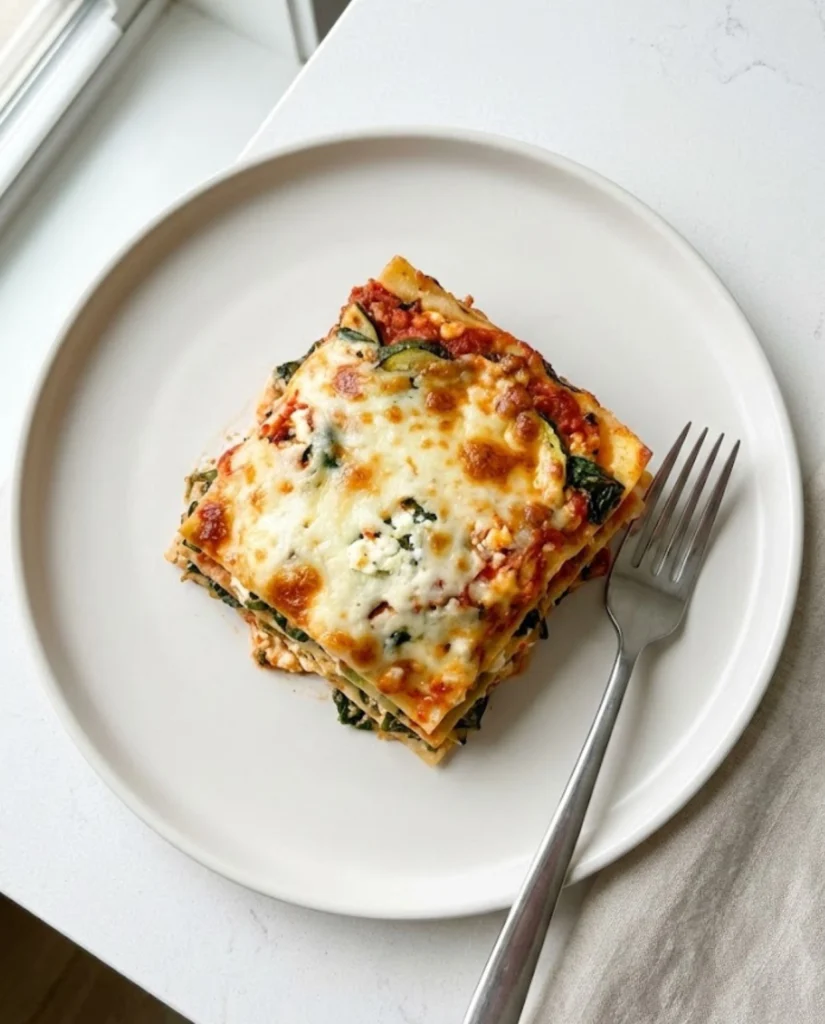
Lasagna is one of those dishes that carries a kind of nostalgic power — the bubbling cheese, the rich layered depth, the way it fills a kitchen with a smell that pulls everyone to the table before you’ve even called them. And this Vegetable Cottage Cheese Lasagna? It delivers every single bit of that magic, with a twist that’s going to change how you think about cottage cheese recipes forever.
Cottage cheese in lasagna isn’t a new idea — Italian-American home cooks have been using it as a ricotta substitute for generations. But this version leans into it fully, treating cottage cheese not as a substitute for something else, but as the hero ingredient it actually is. Creamy, protein-rich, and beautifully mild, it binds the layers together while letting the roasted vegetables and herbs do the flavor talking.
If you’re after a vegetarian dinner that satisfies like a meat dish, a meal prep recipe that feeds a crowd, or simply one of the best cottage cheese recipes you’ve ever tasted — you just found it. Let’s talk about why this works so well.
Why You’ll Love This Vegetable Cottage Cheese Lasagna
This lasagna checks every box you could want from a baked pasta dish. It’s deeply satisfying and comforting without being heavy, it feeds a crowd from a single pan, and the leftovers — if there are any — taste even better the next day as all the flavors meld overnight in the fridge.
The protein content is genuinely impressive for a vegetarian dish. Cottage cheese brings roughly 14 grams of protein per half-cup, and combined with the mozzarella and Parmesan layers, each serving delivers a macronutrient profile that rivals most meat-based lasagnas. You get the indulgence without the compromise.
And then there’s the sheer versatility of this cottage cheese recipe. The vegetable combination is entirely flexible — use whatever is seasonal, whatever is in your fridge, or whatever your family actually likes. The technique stays the same; only the flavor profile shifts. This is a framework as much as it is a recipe.
Common Mistakes — And How to Avoid Them
Not draining the cottage cheese. This is the single most important step most people skip. Cottage cheese holds a significant amount of liquid whey, and if you don’t drain it, that liquid releases during baking and turns your lasagna into a soupy, sliding mess. Line a fine mesh strainer with cheesecloth or paper towels, add the cottage cheese, and let it drain for at least 15–20 minutes before mixing.
Not roasting the vegetables first. Raw vegetables dumped directly into lasagna layers release enormous amounts of steam and water as they cook. Always roast or sauté your vegetables beforehand until most of their moisture has evaporated. This concentrates their flavor dramatically and keeps the lasagna structurally sound.
Under-seasoning the cottage cheese filling. The filling is mild by nature, which means it needs assertive seasoning — garlic, fresh herbs, lemon zest, plenty of salt and pepper. Taste it before it goes into the pan. It should be flavorful enough to eat on its own.
Cutting it too soon. The hardest part of making lasagna is waiting. Let it rest for at least 15 minutes after it comes out of the oven. The layers are set by heat, and cutting too early sends all those beautiful molten layers sliding sideways onto the plate.
Chef’s Notes
The reason cottage cheese works so brilliantly in lasagna comes down to its protein structure. As the dish bakes, the whey proteins in the cottage cheese set and firm — similar to the way ricotta behaves, but with a slightly lighter, more delicate texture and a cleaner, fresher dairy flavor. Where ricotta can sometimes taste dense and rich to the point of heaviness, cottage cheese keeps the layers feeling creamy without weight.
The flavor science here is also worth understanding. Roasting vegetables caramelizes their natural sugars through the Maillard reaction, creating hundreds of new flavor compounds that raw vegetables simply don’t have. A roasted zucchini and a raw zucchini are almost different ingredients in terms of flavor depth. This is why the roasting step is non-negotiable — it’s where most of the flavor in this dish actually gets built.
My professional secret for this cottage cheese recipe: add a thin layer of béchamel or simply a few spoonfuls of reserved pasta water between layers. It keeps the noodles perfectly tender and creates that luxurious, creamy cohesion that separates a good lasagna from a truly great one.
Key Ingredients — And Why They Work
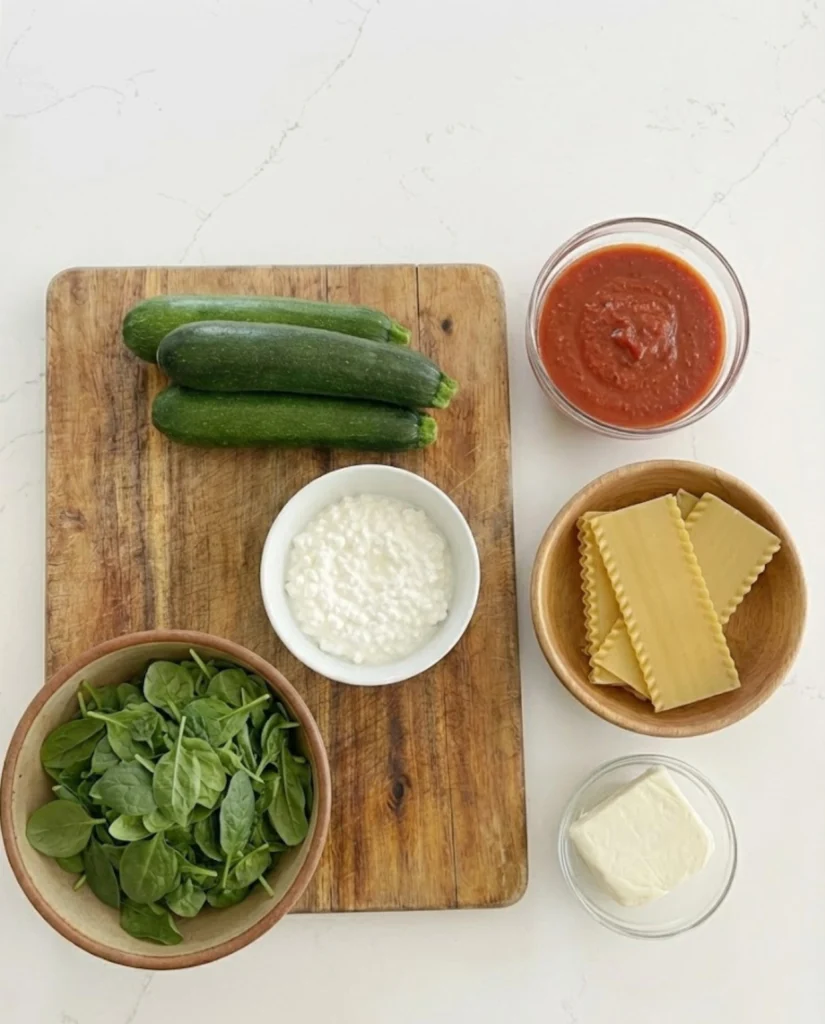
Full-fat cottage cheese, drained, forms the creamy heart of this dish. Full-fat provides the richest texture and the most stable set during baking. The draining step concentrates the flavor and removes the excess whey that would otherwise waterlog the layers.
Fresh vegetables — zucchini, bell peppers, mushrooms, and spinach are the ideal combination here. Zucchini adds gentle sweetness, bell peppers contribute color and a mild fruity depth, mushrooms bring umami and meatiness, and spinach wilts into the layers adding nutrition and a subtle earthiness. Together they create a filling that’s complex enough to make you forget there’s no meat involved.
Whole milk mozzarella (not the low-moisture shredded kind from a bag) melts into long, luxurious pulls and contributes that iconic lasagna cheese-pull moment. It also adds a rich, milky flavor that complements the cottage cheese rather than competing with it.
Aged Parmesan goes on top and between layers for its glutamate-rich savory punch. As it bakes, it forms a golden, slightly crispy crust on the surface — the most fought-over part of any lasagna pan.
San Marzano tomatoes for the sauce bring a natural sweetness and low acidity that makes a genuinely excellent marinara with very little effort. The balance between the bright tomato sauce and the creamy cottage cheese layers is what makes every bite interesting.
Fresh basil and garlic are the aromatic backbone. Garlic sautéed in olive oil forms the foundation of the sauce, while fresh basil — added at the end, never cooked — provides volatile aromatic compounds that lift the whole dish and make it smell like it came from a Roman kitchen.
How to Make Vegetable Cottage Cheese Lasagna — Step by Step
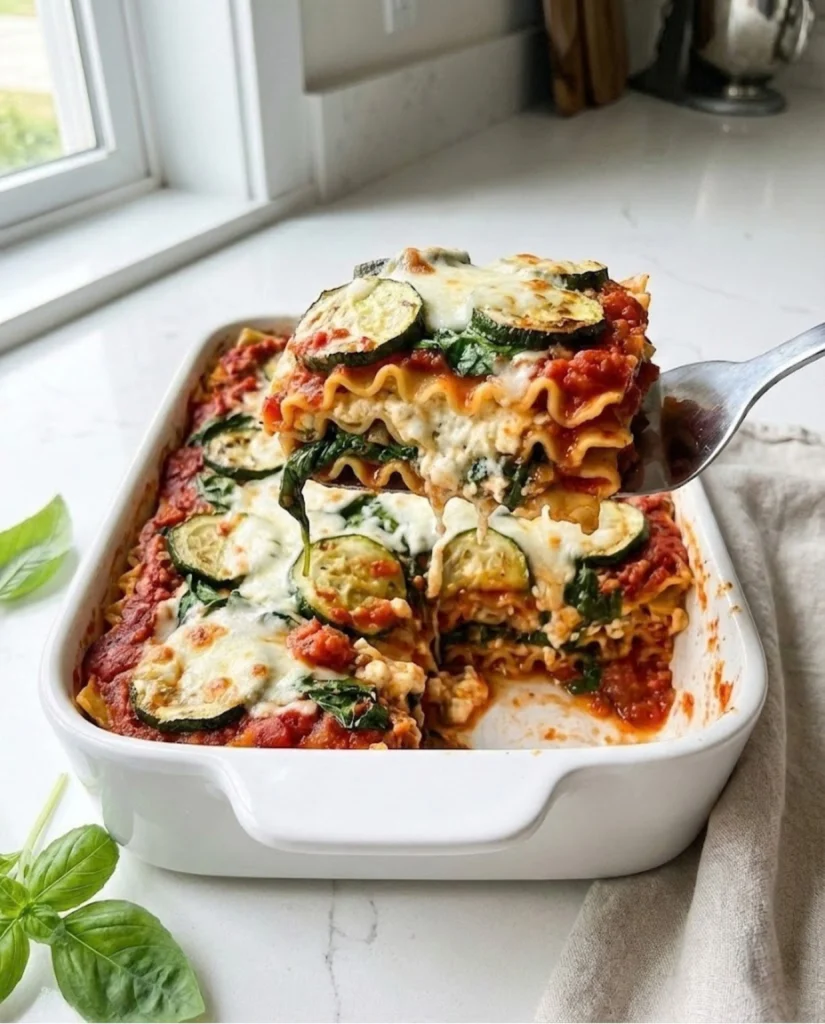
Ingredients (Serves 8)
For the Roasted Vegetables:
- 1 medium zucchini, diced
- 1 red bell pepper, diced
- 8 oz cremini mushrooms, sliced
- 3 cups baby spinach
- 2 tbsp olive oil
- Salt and pepper to taste
For the Cottage Cheese Filling:
- 2 cups full-fat cottage cheese, drained 20 minutes
- 1 large egg
- ½ cup grated Parmesan cheese
- 2 cloves garlic, minced
- Zest of 1 lemon
- 2 tbsp fresh basil, chopped
- 1 tsp dried oregano
- Salt and pepper to taste
For the Marinara Sauce:
- 1 can (28 oz) San Marzano crushed tomatoes
- 4 cloves garlic, minced
- 2 tbsp olive oil
- 1 tsp sugar (balances acidity)
- Fresh basil, salt, and pepper to taste
For Assembly:
- 12 lasagna noodles, cooked al dente (or oven-ready)
- 2½ cups whole milk mozzarella, shredded
- ½ cup grated Parmesan, for topping
- Fresh basil, for garnish
Instructions
- Preheat and roast the vegetables. Set oven to 425°F. Toss zucchini, bell pepper, and mushrooms with olive oil, salt, and pepper on a large sheet pan. Roast for 20–25 minutes until golden and most of the moisture has cooked off. In the last 3 minutes, stir in the spinach and let it wilt. Remove from oven and set aside. Reduce oven to 375°F.
- Make the marinara. Heat olive oil in a saucepan over medium heat. Add garlic and cook 60 seconds until fragrant. Add crushed tomatoes, sugar, salt, pepper, and a handful of torn fresh basil. Simmer uncovered for 15–20 minutes until slightly thickened. Taste and adjust seasoning.
- Make the cottage cheese filling. In a large bowl, combine drained cottage cheese, egg, Parmesan, garlic, lemon zest, basil, oregano, salt, and pepper. Stir until fully combined. Taste it — it should be well-seasoned and bright. Adjust if needed.
- Cook the noodles. Cook lasagna noodles in heavily salted boiling water until just al dente — they’ll continue cooking in the oven. Drain, lay flat on oiled parchment to prevent sticking.
- Build the layers. In a 9×13 baking dish, spread a thin layer of marinara on the bottom (this prevents sticking). Then layer: noodles → cottage cheese filling → roasted vegetables → mozzarella → marinara. Repeat twice more, finishing with noodles topped with remaining marinara, a generous blanket of mozzarella, and a heavy shower of Parmesan.
- Bake covered. Cover tightly with foil and bake at 375°F for 35 minutes. The foil traps steam and ensures the noodles cook through evenly without the top burning.
- Bake uncovered. Remove foil and bake an additional 15–20 minutes until the top is bubbling, golden, and deeply caramelized in spots. This is where the magic happens — don’t rush it.
- Rest before cutting. Remove from the oven and let rest uncovered for a full 15 minutes. Then cut, garnish with fresh basil, and serve.
Variations & Tips
Make it gluten-free. Swap standard lasagna noodles for your favorite gluten-free variety — Barilla and Jovial both make excellent options. The rest of the recipe is naturally gluten-free as written.
Add a béchamel layer. For an even more luxurious result, make a simple béchamel (butter, flour, milk, nutmeg) and alternate it with the cottage cheese filling layers. The combination of the two dairy elements creates something approaching a proper Italian pasticcio — deeply rich and unforgettable.
Boost the protein. Stir a cup of white beans or lentils into the roasted vegetable layer for additional plant-based protein and a subtle earthy heartiness that makes the dish even more satisfying.
Make it spicy. Add ½ teaspoon of crushed red pepper flakes to the marinara sauce as the garlic blooms. The heat weaves through every layer beautifully without overwhelming the creaminess of the cottage cheese filling.
Pro tip: always spread your cottage cheese filling to the very edges of the noodles. Gaps at the edges mean dry, under-filled bites at the corner — and the corners are the best part of the pan. Everyone deserves a great corner piece.
How to Meal Prep This Cottage Cheese Recipe
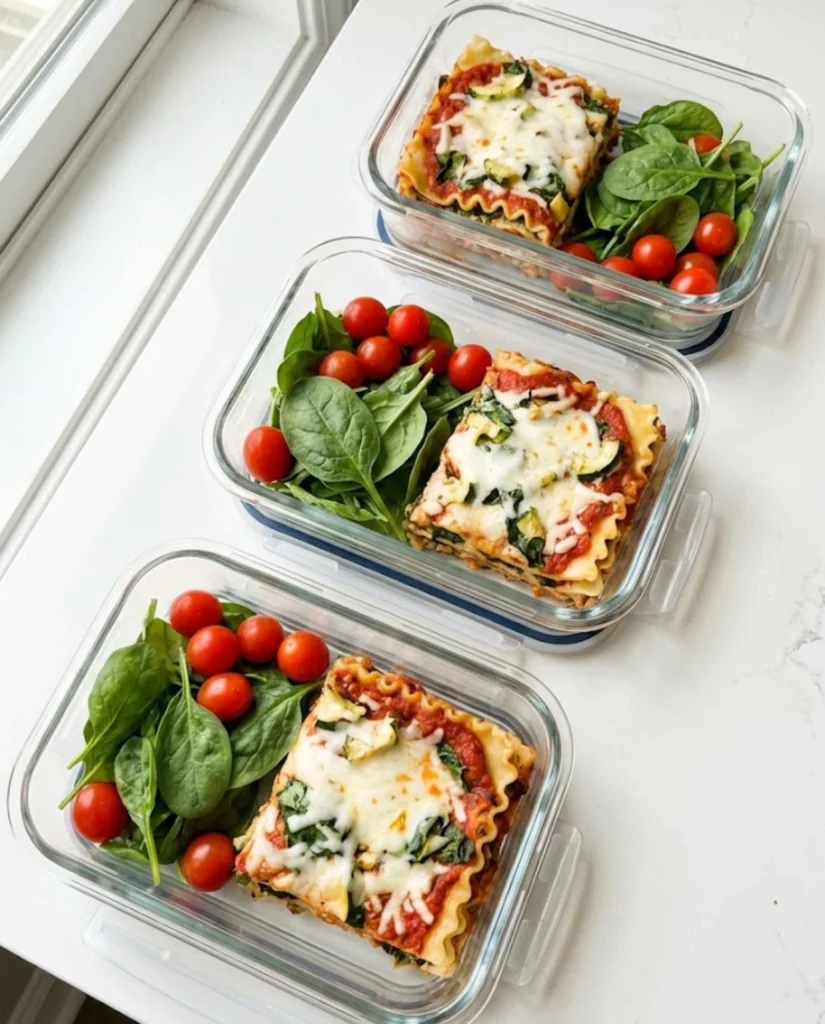
Lasagna is arguably the greatest meal prep dish ever invented, and this vegetable cottage cheese version holds up beautifully all week. Store covered in the refrigerator for up to 5 days — the flavor genuinely improves on day two as the layers meld and the sauce deepens.
For reheating, individual portions do best in the microwave covered with a damp paper towel (to trap steam and keep the noodles from drying out) for 2–3 minutes. For a larger portion, reheat in a 350°F oven covered with foil for 20 minutes.
For freezing, this lasagna is exceptional. Assemble the entire dish but do not bake it, then wrap tightly in two layers of plastic wrap and one layer of foil. Freeze for up to 3 months. Bake straight from frozen at 375°F covered for 60 minutes, then uncovered for 20 minutes. Alternatively, freeze individual baked slices in airtight containers for the ultimate grab-and-reheat lunch solution.
Meal prep pairing ideas: a simple arugula salad with lemon vinaigrette cuts through the richness perfectly, garlic bread is always the right call, and a glass of Chianti if you’re celebrating the fact that you made something this good on a Tuesday.
Cultural Context — Cottage Cheese in the Italian-American Kitchen
Traditional Italian lasagna uses béchamel — that silky butter-and-milk white sauce — between its layers. The ricotta-based lasagna we think of as classic in America is actually an Italian-American invention, born from the ingenuity of immigrant cooks who adapted old-world techniques to new-world ingredients and budgets.
Cottage cheese entered that lineage the same way. It was cheaper and more widely available than ricotta in mid-20th century America, and resourceful home cooks discovered it performed remarkably similarly in baked pasta dishes. What began as a practical substitution quietly became a tradition in its own right — passed down through handwritten recipe cards, church cookbooks, and family kitchens across the country.
Today, as cottage cheese recipes experience their full cultural rehabilitation, this lasagna represents something meaningful: a dish that is simultaneously deeply nostalgic and completely modern. It honors the frugal creativity of Italian-American immigrant cooking while standing confidently on its own merits as a high-protein, vegetable-forward meal that belongs at any table. The cottage cheese recipe that was once “the budget option” is now, rightfully, the star of the show.
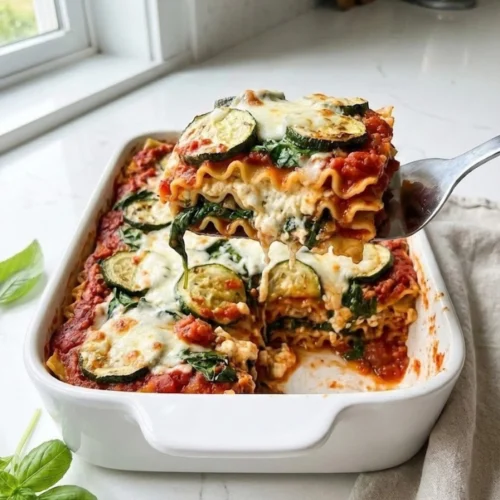
Vegetable Cottage Cheese Lasagna
Equipment
- 9×13 baking dish
- large sheet pan
- Large Mixing Bowl
- saucepan
- fine-mesh strainer
Ingredients
- 1 medium zucchini, diced
- 1 red bell pepper, diced
- 8 oz cremini mushrooms, sliced
- 3 cups baby spinach
- 4 tbsp olive oil, divided
- salt and pepper to taste
- 2 cups full-fat cottage cheese, drained
- 1 large egg
- 1/2 cup grated Parmesan cheese
- 6 cloves garlic, minced and divided
- 1 zest of lemon
- 2 tbsp fresh basil, chopped
- 1 tsp dried oregano
- 28 oz San Marzano crushed tomatoes
- 1 tsp sugar
- 12 lasagna noodles, cooked al dente
- 2 1/2 cups whole milk mozzarella, shredded
- 1/2 cup grated Parmesan cheese for topping
- fresh basil for garnish
Instructions
- Preheat oven to 425°F. Toss zucchini, bell pepper, and mushrooms with 2 tablespoons olive oil, salt, and pepper. Roast 20–25 minutes until golden and moisture has evaporated. Stir in spinach during last 3 minutes to wilt. Reduce oven to 375°F.
- Heat remaining olive oil in a saucepan over medium heat. Add half of the minced garlic and cook until fragrant. Add crushed tomatoes, sugar, salt, pepper, and basil. Simmer 15–20 minutes until slightly thickened.
- In a bowl, combine drained cottage cheese, egg, Parmesan, remaining garlic, lemon zest, basil, oregano, salt, and pepper. Mix well and adjust seasoning.
- Spread a thin layer of marinara in a 9×13 baking dish. Layer noodles, cottage cheese filling, roasted vegetables, mozzarella, and marinara. Repeat layers twice more, finishing with noodles, marinara, mozzarella, and Parmesan.
- Cover tightly with foil and bake at 375°F for 35 minutes.
- Remove foil and bake 15–20 minutes until bubbling and golden brown.
- Rest 15 minutes before slicing. Garnish with fresh basil and serve.