
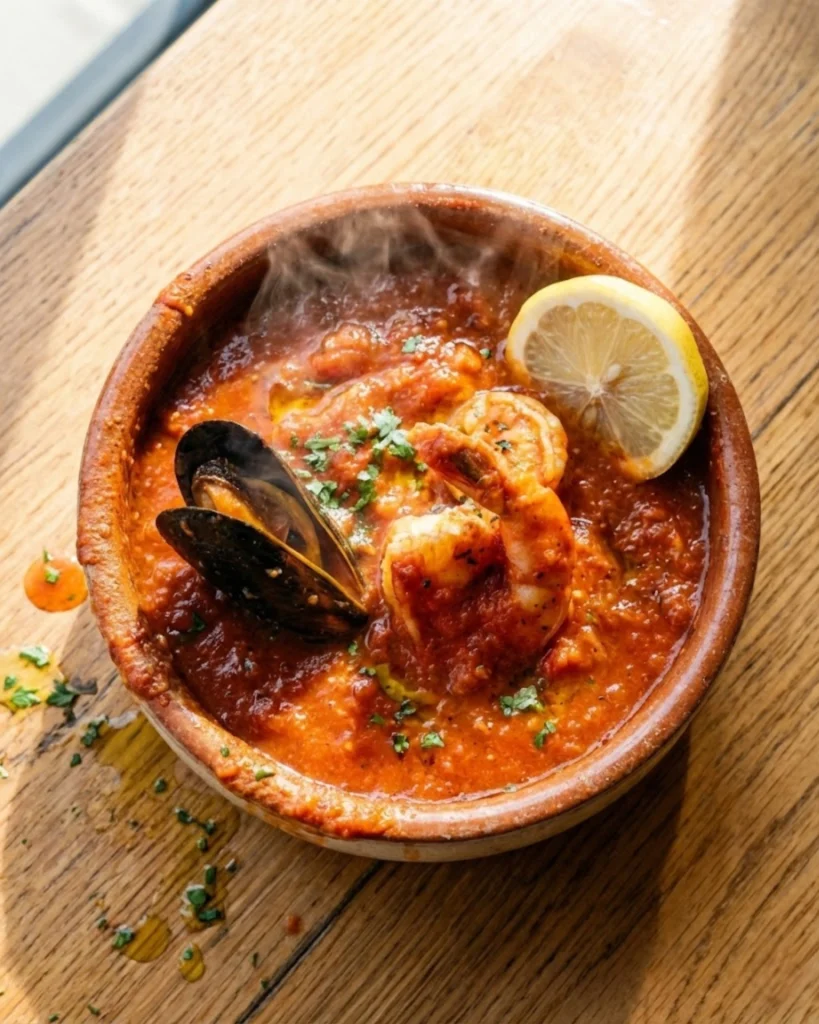
Transport yourself to the sun-drenched coast of Spain with this stunning Spanish Fisherman’s Seafood Stew. It looks like a fancy restaurant meal—the kind you’d pay $40 for at a white-tablecloth establishment—but it’s surprisingly easy to make at home. Yes, really! Don’t let the impressive presentation fool you; this is one of those magical recipes that delivers maximum impact with minimal fuss.
Imagine a rich, fragrant tomato and saffron sauce, thickened with crushed almonds, brimming with juicy mussels, clams, tender shrimp, and flaky white fish. Every spoonful is an explosion of briny, sweet seafood flavor enhanced by that luxuriously thick, nutty sauce. This dish, known as Zarzuela in Catalan cuisine, is perfect for special occasions, romantic dinners, or when you want to impress guests with a true “showstopper” one-pot meal. The best part? While it tastes like you’ve been slaving away all day, you can actually have this Spanish Fisherman’s Seafood Stew on the table in about 45 minutes.
Why This Stew is the “Bouillabaisse” of Spain
If you’ve ever heard of French bouillabaisse and thought it sounded amazing but intimidating, let me introduce you to Spain’s equally spectacular (and arguably more flavorful) answer: Spanish Fisherman’s Seafood Stew, or Zarzuela de Mariscos.
It Celebrates the Seafood. This isn’t a dish where seafood plays second fiddle to heavy cream or overpowering spices. Instead, each piece of fish and shellfish gets to shine, bathed in a sauce that enhances rather than masks the sweet, briny flavors of the ocean. It’s what Spanish fishermen would make with their catch of the day, showcasing the very best of what the sea has to offer.
The Sauce is Thicker and Richer. Unlike brothy soups or thin stews, this Spanish Fisherman’s Seafood Stew has a gorgeously thick, almost velvety sauce that clings to every piece of seafood. It’s substantial enough to be a complete meal, yet light enough that you don’t feel weighed down. The consistency is somewhere between a soup and a sauce—think of it as a luxurious bath for your seafood rather than a simple broth.
It’s Made for Sharing. In Spain, meals are about gathering around the table with people you love, pouring wine, tearing bread, and savoring every moment. This stew embodies that philosophy perfectly. Bring the pot to the table, set out crusty bread for dipping, and let everyone help themselves. The communal nature of the dish makes it feel festive and special.
Luxurious but Accessible. Despite how elegant it looks and tastes, this stew uses straightforward techniques that any home cook can master. There’s no complicated clarifying, no difficult timing—just layered flavors built thoughtfully and seafood cooked simply. It’s proof that luxury doesn’t have to mean complexity.
The Secret Sauce: The “Picada” That Makes This Spanish Fisherman’s Seafood Stew Special
Here’s what truly sets this Spanish Fisherman’s Seafood Stew apart from every other seafood dish you’ve ever made: the picada. This is the secret weapon of Catalan cuisine, and once you discover it, you’ll want to add it to everything!
What Exactly is Picada? It’s a rustic paste made from toasted or fried bread, toasted almonds (or sometimes hazelnuts), garlic, and fresh parsley, all pounded together in a mortar and pestle (or quickly blitzed in a food processor if you’re taking the modern route). Some versions include a bit of saffron, olive oil, or even a splash of brandy for extra complexity.
Why It’s a Game-Changer. The picada serves multiple purposes, and each one is important. First, it thickens the stew naturally without flour or cornstarch, giving you that luxurious, clingy sauce that coats the seafood beautifully. Second, it adds a deeply nutty, complex richness that watery stews simply cannot achieve. The toasted almonds bring an almost sweet, earthy flavor, while the fried bread adds body and helps bind everything together. Finally, the raw garlic and fresh parsley provide a bright, fresh punch that wakes up the entire dish.
It’s What Makes It Authentic. You could skip the picada and still have a nice seafood stew, but you wouldn’t have Zarzuela. It’s the defining characteristic that makes this dish unmistakably Spanish. Think of it like the roux in gumbo or the sofrito in many Latin dishes—it’s the foundational element that creates the soul of the recipe.
Easy to Make Ahead. You can prepare your picada hours or even a day in advance and keep it in the fridge. This makes the actual cooking process even smoother when you’re ready to serve.
How to Make Spanish Fisherman’s Seafood Stew (Step-by-Step)
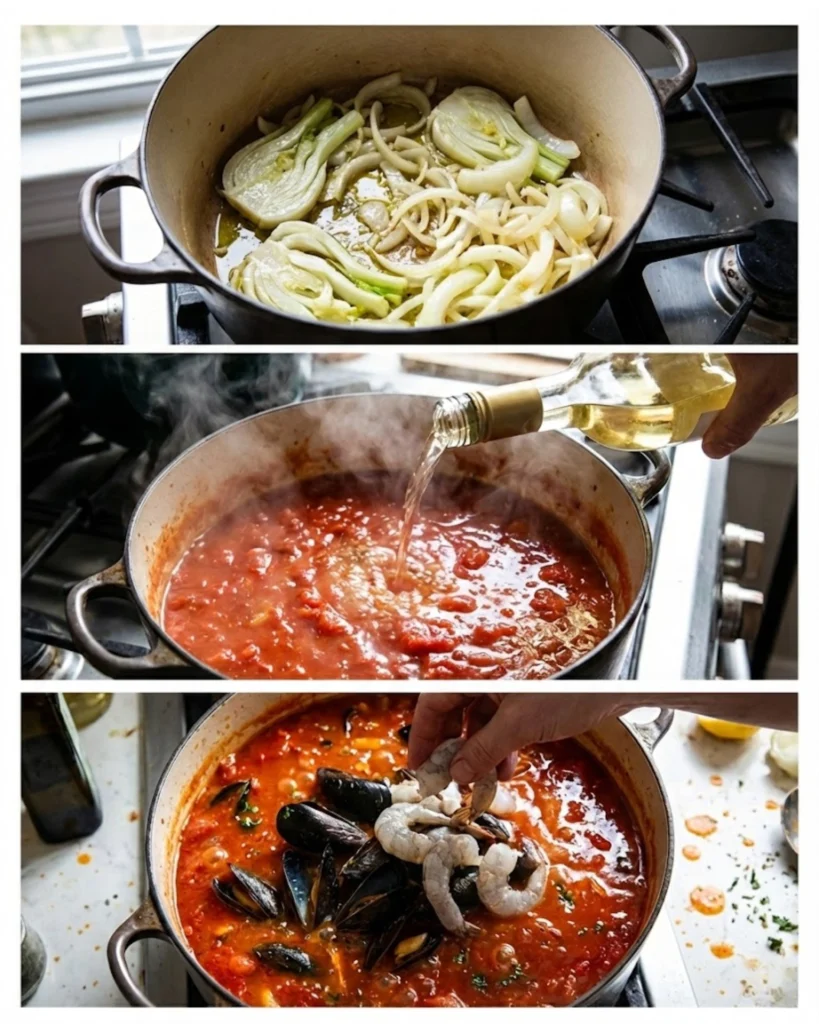
Creating this impressive Spanish Fisherman’s Seafood Stew is easier than you might think. Just follow these steps for restaurant-worthy results every time:
Step 1: Build Your Flavor Base. Start by heating good olive oil in a large, wide pot or Dutch oven over medium heat. Sauté diced onion and thinly sliced fennel until they’re soft and translucent, about 5-7 minutes. The fennel adds a subtle anise note that’s classic in Mediterranean seafood dishes. Add minced garlic and cook for another minute until fragrant. Then stir in diced or crushed tomatoes, smoked paprika, and a generous pinch of saffron threads (if you have them—they add that golden color and distinctive flavor). Let this mixture cook down for about 10 minutes until it becomes thick and concentrated.
Step 2: Add Your Liquids. Pour in fish stock or seafood broth along with a generous splash of dry white wine. The wine adds acidity and complexity that balances the richness of the sauce. Bring everything to a simmer and let it cook for about 10 minutes so the flavors can meld together. This is your chance to season with salt and pepper, though go easy on the salt since the seafood and shellfish will add their own brininess.
Step 3: Stir in the Magical Picada. This is the moment where your stew transforms from good to extraordinary! Add your prepared picada (the almond-bread-garlic paste) to the simmering broth, stirring well to incorporate it completely. Watch as the sauce thickens and takes on that gorgeous, velvety texture. Let it simmer for just 2-3 minutes to marry the flavors. Taste and adjust the seasoning—this is your last chance before the seafood goes in.
Step 4: Layer Your Seafood Strategically. Start with the firmest fish first—thick chunks of halibut, cod, or hake nestled into the sauce. Let them cook for about 3 minutes to get a head start. Then add your shrimp and any squid rings. Finally, nestle in your mussels and clams, making sure they’re partially submerged in the liquid. This layered approach ensures everything finishes cooking at exactly the same time.
Step 5: Cover and Steam to Perfection. Put the lid on your pot and let everything steam for about 5-7 minutes. The shellfish will open, the shrimp will turn pink, and the fish will become perfectly flaky. Don’t overcook! As soon as those shells pop open, you’re done. Discard any shells that refuse to open after 8-10 minutes—they were likely dead before cooking and shouldn’t be eaten.
Choosing the Best Seafood for Your Spanish Fisherman’s Seafood Stew
The beauty of this Spanish Fisherman’s Seafood Stew is its flexibility—you can use whatever fresh seafood looks best at your market. Here’s what works beautifully:
Firm White Fish is Essential. You need fish that won’t fall apart when simmered in sauce. Halibut is ideal with its meaty texture and sweet flavor. Cod is more affordable and widely available, holding its shape beautifully. Hake is the traditional Spanish choice if you can find it—it has a delicate flavor and firm flesh. Monkfish is another excellent option, often called “poor man’s lobster” for its firm, almost meaty texture. Cut your fish into generous 2-inch chunks so they stay intact.
Shellfish Add Briny Magic. Mussels and clams are non-negotiable in my opinion—they release their sweet, briny juices into the broth as they cook, adding incredible depth of flavor. Make sure they’re scrubbed clean and debearded (for mussels). If you can find both, use a mix! Manila clams are particularly sweet, while Mediterranean mussels are plump and tender. Just be sure to give them a tap before cooking—if they don’t close, they’re no good.
Crustaceans for Sweetness. Large shrimp or prawns are the classic choice. For maximum flavor, leave the shells on (just devein them through the back)—the shells add tremendous flavor to the sauce. If you prefer easier eating, peeled shrimp work too, though you’ll sacrifice some flavor. Spot prawns or tiger prawns are especially beautiful if you’re going for that “wow” presentation. Some recipes include lobster tail or langostines for extra luxury!
Squid for Texture. Rings of tender calamari add wonderful textural contrast and a slightly sweet, oceanic flavor. Just don’t overcook them—they need only 2-3 minutes or they’ll turn rubbery. Fresh squid is ideal, but frozen rings work perfectly fine and are much more convenient.
Mix and Match Freely. The traditional Spanish approach is to use whatever the fishermen caught that day. You could do all shellfish, all fin fish, or any combination. Aim for about 2-3 pounds of mixed seafood total for 4-6 servings.
Serving Suggestions for Your Spanish Fisherman’s Seafood Stew
The Spanish Fisherman’s Seafood Stew is the star of the show, but how you serve it makes all the difference in creating that authentic Spanish experience:
Bread is Non-Negotiable. You absolutely must have good, crusty bread to mop up every last drop of that incredible almond-enriched sauce. A warm baguette, rustic sourdough, or traditional Spanish pan de cristal all work beautifully. Tear it into chunks and use it to soak up the sauce between bites of seafood—this is not just acceptable, it’s the proper way to eat it! In fact, some would argue the bread soaked in that sauce is the best part of the entire meal.
Wine Pairing is Important. A crisp, dry white wine is the perfect companion to this dish. Albariño from Spain’s Galicia region is the classic choice—it’s mineral-driven with citrus notes that complement seafood beautifully. Other excellent options include Spanish Verdejo, Portuguese Vinho Verde, or even a dry rosé from Provence. The key is something with good acidity to cut through the richness of the sauce and refresh your palate between bites.
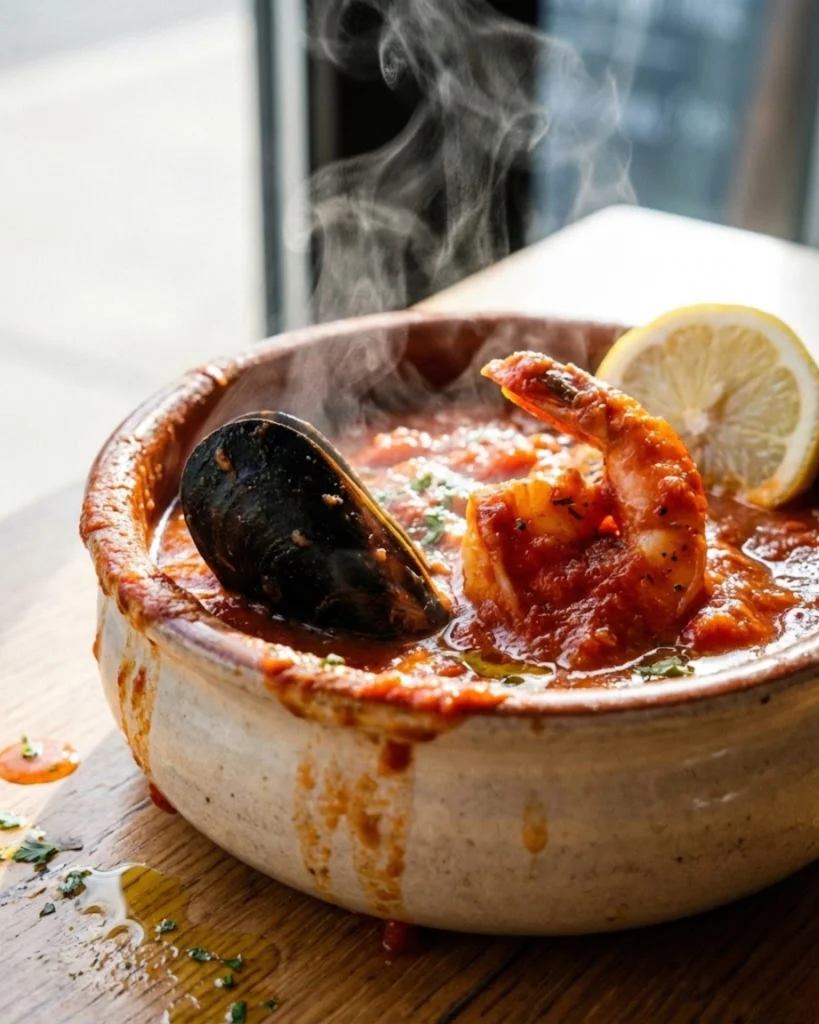
Finish with Brightness. Serve the stew with lemon wedges on the side so everyone can add a squeeze of fresh citrus to their bowl. That hit of acid brightens everything and makes the seafood flavors pop. A sprinkle of fresh parsley over the top adds color and freshness. Some people like a drizzle of excellent extra virgin olive oil at the table as a final flourish.
Presentation Matters. Serve this family-style, bringing the pot directly to the table (use a trivet!). The sight of all that beautiful seafood peeking out of the rich, red-gold sauce is half the appeal. Provide small empty bowls for discarded shells, and don’t forget plenty of napkins—eating shellfish is meant to be a slightly messy, hands-on affair!
Frequently Asked Questions About Spanish Fisherman’s Seafood Stew
Can I use frozen seafood mix instead of fresh?
Absolutely! Frozen seafood works beautifully in this Spanish Fisherman’s Seafood Stew, and it’s often more affordable and convenient. Just make sure to thaw it completely first—ideally overnight in the refrigerator or in a bowl of cold water if you’re short on time. Pat everything dry with paper towels before adding it to the stew. The key reason for thawing first is that frozen seafood releases a lot of water as it cooks, which can dilute your carefully crafted sauce and make it watery. Pre-thawed seafood maintains the perfect sauce consistency.
Is this stew spicy or hot?
The Spanish Fisherman’s Seafood Stew has a wonderful warmth to it from the paprika and garlic, but it’s not “hot” or spicy in the sense of burning heat. It’s more aromatic and flavorful than fiery. The Spanish approach is about building layers of savory, smoky flavor rather than aggressive heat. That said, if you love spice, you can absolutely add a pinch of cayenne pepper or some red pepper flakes to the sauce. Just remember the seafood is delicate and you don’t want to overpower its natural sweetness.
Can I make the sauce ahead of time?
Yes, this is actually a brilliant strategy for entertaining! You can make the entire base—everything up through adding the picada—a day ahead of time. Let it cool completely, then refrigerate it in your cooking pot. When you’re ready to serve, simply reheat the sauce gently until it’s simmering, then add your fresh seafood and proceed with the recipe. This means all the messy prep is done in advance, and you only need about 10-15 minutes of active cooking time when your guests arrive. The seafood must be cooked fresh, though—it doesn’t reheat well and will become rubbery if cooked twice.
Conclusion
This Spanish Fisherman’s Seafood Stew is a celebration of flavor, tradition, and the bounty of the sea. It’s rich, nutty, briny, and absolutely unforgettable—the kind of dish that makes people close their eyes and sigh with contentment after the first bite. The combination of sweet seafood, that luxurious almond-thickened sauce, and the aromatic base creates something truly special that tastes like you’ve spent hours perfecting it, even though the actual hands-on time is quite minimal.
Whether you’re celebrating a special occasion, planning a romantic dinner for two, or hosting friends who appreciate good food, this Spanish Fisherman’s Seafood Stew delivers every single time. It’s impressive without being intimidating, elegant without being fussy, and delicious in a way that transcends simple home cooking to become something memorable.
Treat yourself to a seafood feast that would make any Spanish fisherman proud! Let me know if you make the picada—it truly transforms the dish—and tell me what combination of seafood you used. And don’t forget to save this elegant recipe to your “Dinner Party” or “Special Occasion Meals” board on Pinterest! Your guests will be talking about this meal for months.
Spanish Fisherman’s Seafood Stew (Zarzuela de Mariscos)
Equipment
- Dutch Oven or Large Pot
- food processor or mortar
Ingredients
- 1/4 cup olive oil
- 1 large onion, diced
- 1 fennel bulb, thinly sliced
- 4 cloves garlic, minced
- 14 oz crushed tomatoes
- 1 tablespoon smoked paprika
- pinch saffron threads (optional)
- 1 cup dry white wine
- 2 cups fish stock or seafood broth
- 1 lb firm white fish, cut into 2-inch chunks
- 1 lb large shrimp, peeled and deveined
- 1 lb mussels, scrubbed and debearded
- 1 lb clams, scrubbed
- 1/2 lb squid rings (optional)
- salt and pepper to taste
- fresh parsley for garnish
- lemon wedges for serving
- 1/2 cup toasted almonds (for picada)
- 2 slices bread, fried in olive oil
- 3 cloves garlic (for picada)
- 1/4 cup fresh parsley (for picada)
- 2 tablespoons olive oil (for picada)
Instructions
- Make the picada by blending almonds, fried bread, garlic, and parsley into a thick paste.
- Heat olive oil and sauté onion and fennel 5–7 minutes until soft.
- Add garlic, tomatoes, paprika, and saffron. Cook 10 minutes.
- Add wine and fish stock. Simmer 10 minutes.
- Stir in the picada and cook until sauce thickens.
- Add fish and cook 3 minutes. Add shrimp and squid; cook 2 minutes.
- Add mussels and clams. Cover and steam until they open.
- Serve with parsley and lemon wedges.