
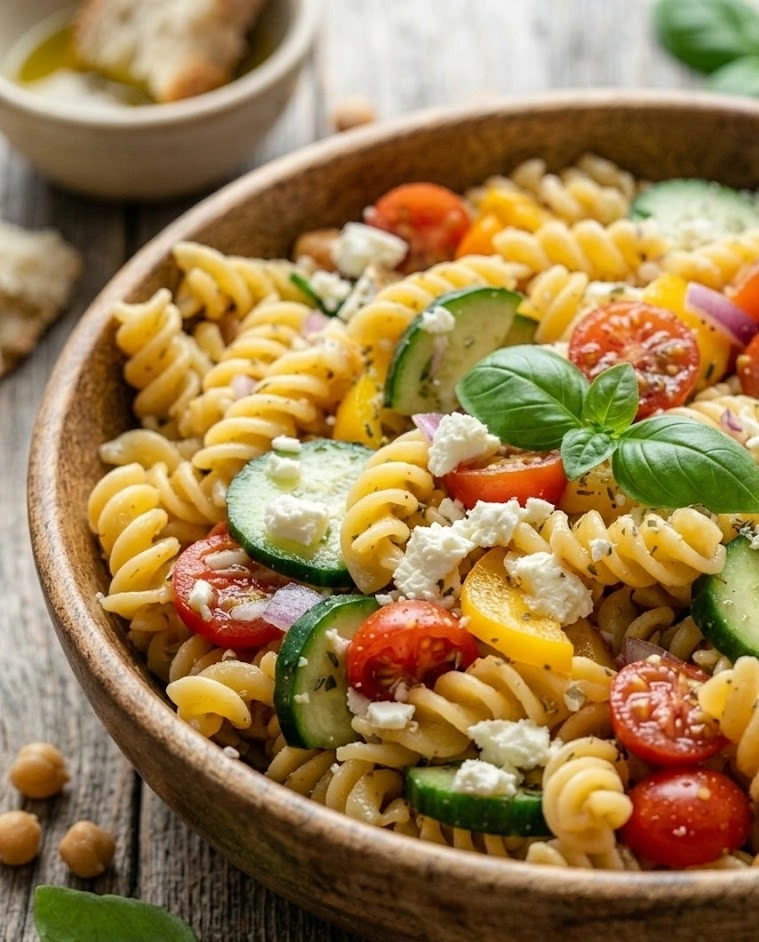
If your idea of pasta salad is a bowl of limp noodles drowning in mayonnaise, this recipe is going to change things for you. This is the cold pasta salad that earns its place as a main dish — not just a side that gets pushed around the plate.
This Greek version is built on a simple but brilliant foundation: protein-packed pasta, crunchy fresh vegetables, crumbled feta, and a homemade lemon and red wine vinegar dressing that is bright, tangy, and completely addictive. No mayo. No heavy cream-based anything. Just clean, bold Mediterranean flavor in every single bite.
Whether you are building a healthy pasta salad for weekly meal prep or need something impressive for a summer gathering, this one delivers without any drama.
Why You’ll Love This Pasta Salad
This pasta salad recipe checks every box that actually matters on a busy week. It is ready in about 30 minutes, holds up in the fridge for four days, and tastes noticeably better the longer it sits — which makes it one of the most rewarding make-ahead recipes you can keep in rotation.
The protein content here is a genuine differentiator. Using a high-protein pasta variety alongside feta cheese means you are not looking at a carb-heavy side dish — you are looking at a complete, satisfying meal that will hold you until dinner without any mid-afternoon crash.
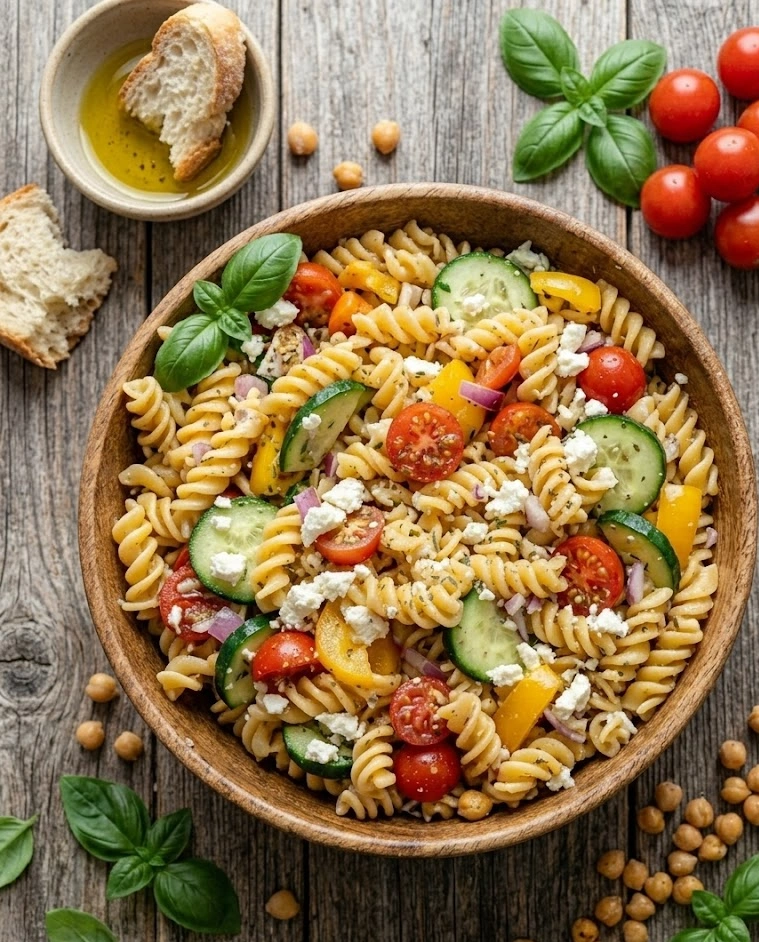
It is also just visually stunning. The combination of red and yellow peppers, deep green cucumber, ruby tomatoes, and white feta against the pale pasta makes it the kind of dish that photographs beautifully and disappears fast at any table you put it on.
Common Mistakes — And How to Avoid Them
Not salting your cucumber. Cucumber holds a significant amount of water, and if you skip this step, it will slowly release that water into your salad and dilute your dressing into something flat and watery. Slice your cucumber, toss it lightly with salt, and let it sit for ten minutes before adding it to the bowl. Then pat it dry. This one small step makes a substantial difference.
Adding all the dressing at once. Pasta is absorbent, especially as it chills in the fridge overnight. If you dress the entire salad before refrigerating it, you may find it dry and dull by the next morning with very little dressing left to coat anything. Start with about three-quarters of the dressing and hold the rest back until just before serving so you can refresh it to exactly the right consistency.
Rinsing the pasta with warm water. The whole point of rinsing pasta for a cold salad is to stop the cooking process and chill it down quickly. If your rinse water is lukewarm, you are not accomplishing either of those things. Use cold running water and keep it running until the pasta itself feels cool to the touch.
Forgetting to taste at the end. Cold temperatures dull seasoning noticeably. What tasted perfectly seasoned at room temperature will likely need another pinch of salt, an extra squeeze of lemon, or a splash more vinegar after it has been in the fridge for an hour. Always taste before serving and adjust accordingly.
Chef’s Notes
The dressing is the soul of this pasta salad, and the ratio of oil to acid matters. Two-thirds cup of olive oil to half a cup of red wine vinegar plus a full lemon’s worth of juice is deliberately more acidic than a standard vinaigrette. That sharpness is intentional — it needs to cut through the richness of the feta and coat every piece of pasta with enough flavor to come through even when served cold.
Use fresh lemon juice, not bottled. The difference in brightness is real and worth the extra thirty seconds of squeezing.
If you want to deepen the flavor even further, add a teaspoon of Dijon mustard to the dressing before whisking. It acts as an emulsifier and adds a very subtle background warmth that makes the whole vinaigrette feel more cohesive.
For the feta, buy a block and crumble it yourself if you can. Pre-crumbled feta tends to be drier and less flavorful than block feta, which is creamier and more pungent. The difference shows in the final salad.
Key Ingredients
High-protein pasta. This is the element that elevates a standard Greek salad into a genuinely filling meal. Protein-enriched pasta varieties, made with ingredients like lentil flour, chickpea flour, or added wheat protein, can deliver significantly more protein per serving than regular pasta while maintaining a texture that holds up well in cold preparations. Barilla Protein+ is a widely available option that cooks and behaves almost identically to regular pasta.
Cucumber. Raw cucumber brings crunch, freshness, and a mild cooling quality that balances the acidity of the dressing beautifully. Peeling it is recommended here — the skin can be slightly bitter and tough in a cold salad where texture is everything.
Red and yellow bell peppers. Using two colors is not just about aesthetics. Red bell peppers are sweeter and more mellow, while yellow peppers have a slightly sharper, fruitier quality. Together they create a more complex flavor base than using a single color would.
Feta cheese. Salty, tangy, and creamy, feta is irreplaceable in this recipe. It does double duty as both a flavor anchor and a protein contributor. Do not be shy with it — five ounces in a salad this size is the right amount.
Fresh dill. This is the ingredient most people overlook, and it is one of the most important. Fresh dill has an herby brightness that dried dill cannot replicate. It ties together the Greek flavor profile and lifts the whole salad. Add it at the end so it stays vibrant and does not wilt.
Lemon and red wine vinegar dressing. The homemade dressing here is what separates this from a bottle of Italian vinaigrette poured over vegetables. The combination of lemon juice, red wine vinegar, olive oil, dried oregano, and garlic powder is simple to make and produces a dressing that is tangy, herby, and completely balanced.
How to Make Greek Pasta Salad
Step 1: Prep your vegetables. While your pasta water comes to a boil, peel and slice one cucumber into half-inch half-moons, dice one red and one yellow bell pepper into half-inch pieces, thinly slice one red onion, and halve one pint of tomatoes. Chop two tablespoons of fresh dill and have five ounces of feta crumbles ready. Keep everything in a large mixing bowl as you go.
Step 2: Cook and cool the pasta. Bring a large pot of heavily salted water to a rolling boil. Cook sixteen ounces of protein pasta according to package directions until al dente. Drain thoroughly, then rinse under cold running water until the pasta is completely cool. This stops the cooking and prevents the acidic dressing from turning warm pasta to mush.
Step 3: Make the dressing. In a small bowl or jar, whisk together two-thirds cup olive oil, half a cup of red wine vinegar, and the juice of one fresh lemon. Add one tablespoon of dried oregano, half a teaspoon of garlic powder, a quarter teaspoon each of salt and pepper. Whisk until fully emulsified.
Step 4: Combine everything. Add the cooled pasta to the bowl with your prepped vegetables. Pour about three-quarters of the dressing over the top and toss until everything is evenly coated. Add the feta crumbles and fresh dill and toss once more gently so the feta does not break down completely.
Step 5: Rest, then serve. Let the salad rest for at least 15 to 20 minutes at room temperature, or refrigerate for up to four hours. Before serving, give it a good stir, taste for seasoning, and add the remaining dressing if needed. Adjust salt, pepper, or a splash more vinegar to bring everything into balance.
Variations and Tips
Add grilled chicken. Two sliced chicken breasts tossed in olive oil, lemon, garlic, and oregano before grilling will turn this into a powerhouse high-protein pasta salad with chicken that works as a serious post-workout meal or a complete dinner.
Make it vegan. Swap the feta for marinated tofu cubes or a vegan feta alternative, and add a can of drained chickpeas for protein. The dressing is already fully plant-based.
Add olives. Kalamata olives are the natural addition here and they work beautifully. Their brininess complements the feta and reinforces the Greek profile of the whole dish.
Boost the greens. A handful of baby spinach or arugula stirred in right before serving adds color, nutrients, and a pleasant peppery note. Add it at the last moment so it stays fresh rather than wilting.
Make the dressing in a jar. Combine all dressing ingredients in a mason jar, seal it, and shake vigorously. It emulsifies faster than whisking and you can store any leftover dressing in the same jar for up to a week.
How to Meal Prep This Pasta Salad
This pasta salad is practically designed for meal prep. Make the full batch on Sunday, store it in a large airtight container, and you have cold, healthy lunches ready to go from Monday through Thursday without any additional cooking required.
The key to keeping it fresh across multiple days is dressing management. Add only three-quarters of the dressing when you first assemble it. The pasta will absorb a significant amount overnight, and having that reserved quarter of dressing means you can refresh the salad each day with a drizzle before eating rather than serving it dry and dull.
Hold the feta back if you are planning to portion into individual containers for grab-and-go lunches. Sprinkle it fresh over each portion before eating so it stays crumbly and does not turn into a wet, salty paste after sitting in the dressing for three days.
If the salad seems dry by day three or four, a tablespoon of olive oil and a small squeeze of lemon is all it takes to bring it fully back to life.
Cultural Context
Greek salad, known in Greece as horiatiki, is one of the most recognizable dishes in Mediterranean cuisine. In its original form it contains tomatoes, cucumber, olives, onion, and a generous slab of feta cheese dressed in olive oil and dried oregano. Pasta is not part of the traditional recipe — in Greek home cooking, pasta is typically served hot as a main dish, not cold as a salad component.
The Greek pasta salad as a concept is largely an American adaptation, born from the widespread popularity of Mediterranean flavors in Western food culture and the practical appeal of cold pasta dishes for warm-weather entertaining. It takes the core flavor profile of horiatiki — feta, lemon, oregano, olive oil, crisp raw vegetables — and applies it to pasta, creating something that sits comfortably between two culinary traditions.
The addition of high-protein pasta is a thoroughly modern evolution, driven by the growing mainstream interest in high-satiety, nutrient-dense meals that do not require sacrificing flavor or convenience. It is a small ingredient swap with a meaningful nutritional impact, and it is one of those rare changes that actually improves the dish rather than just making it more complicated.
High Protein Greek Pasta Salad
Equipment
- large pot
- colander
- Large Mixing Bowl
- knife
- cutting board
- mixing bowl or jar for dressing
Ingredients
- 16 oz protein pasta
- 1 cucumber, peeled and sliced
- 1 red bell pepper, diced
- 1 yellow bell pepper, diced
- 1 red onion, thinly sliced
- 1 pint cherry tomatoes, halved
- 5 oz feta cheese, crumbled
- 2 tbsp fresh dill, chopped
- 2/3 cup olive oil
- 1/2 cup red wine vinegar
- 1 lemon, juiced
- 1 tbsp dried oregano
- 1/2 tsp garlic powder
- 1/4 tsp salt
- 1/4 tsp black pepper
Instructions
- Peel and slice cucumber, dice bell peppers, slice red onion, halve tomatoes, and chop dill. Add all to a large mixing bowl along with feta.
- Bring a large pot of salted water to a boil. Cook protein pasta until al dente. Drain and rinse under cold water until fully cooled.
- In a bowl or jar, whisk together olive oil, red wine vinegar, lemon juice, oregano, garlic powder, salt, and pepper until emulsified.
- Add cooled pasta to the vegetables. Pour in about three-quarters of the dressing and toss until evenly coated. Gently mix in feta and dill.
- Let rest 15–20 minutes or chill up to 4 hours. Toss, taste, and add remaining dressing before serving if needed.