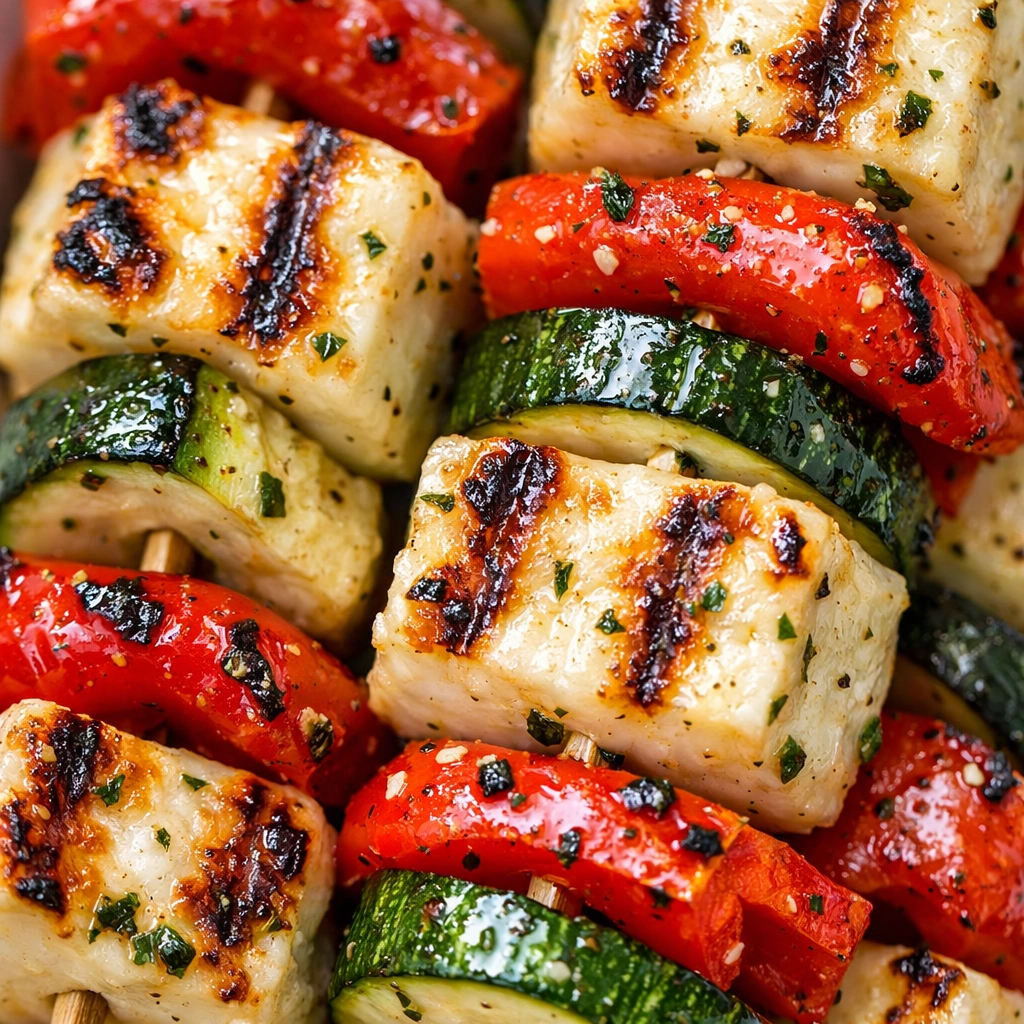
For too long, vegetarians at backyard cookouts have been handed a sad, afterthought veggie burger while everyone else debates the merits of their ribs. That era ends today. These grilled vegetable and halloumi skewers are not a consolation prize — they are the dish that meat-eaters will be eyeing from across the yard, wondering if they can sneak one before the vegetarian notices.
Halloumi is the secret weapon that makes this grilling recipe extraordinary. It is a semi-hard, brined Cypriot cheese with a remarkably high melting point — which means it does something almost no other cheese in the world can do. It goes directly onto a screaming-hot grill, develops a deep golden crust, and comes off intact, with a salty, squeaky, smoky interior that is unlike anything else in the cheese world.
Pair that with charred, caramelized vegetables threaded onto skewers and finished with a herb-lemon marinade, and you have a grilling recipe that needs no apology and no asterisk.
Why You’ll Love This Grilling Recipe
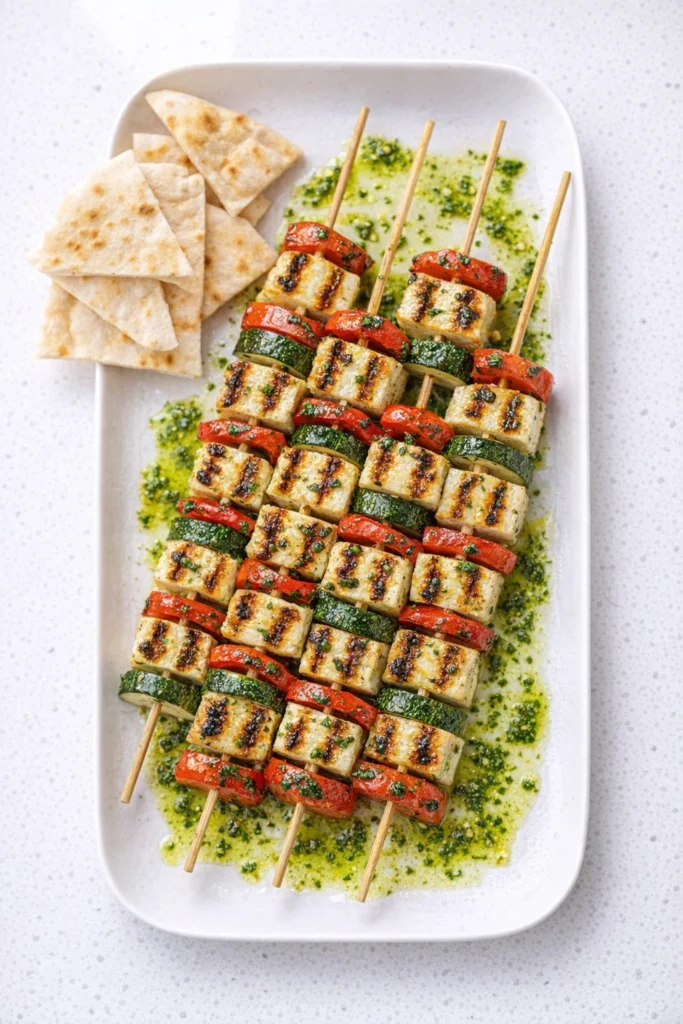
It is visually spectacular. The combination of red pepper, zucchini, red onion, cherry tomatoes, and golden halloumi on a skewer is one of the most naturally beautiful grilling recipes you can put on a plate. Color, texture, and contrast — it photographs like a professional food shoot and requires zero styling effort.
The flavor is genuinely complex. Halloumi brings salty, milky richness. The vegetables bring sweetness, earthiness, and acidity as they char and caramelize. The herb marinade brings brightness and aromatic depth. Every skewer is a complete, balanced bite that hits every flavor register simultaneously.
It satisfies everyone at the table. Vegetarian, gluten-free, and high-protein without compromise. But more importantly — it is genuinely, unambiguously delicious in a way that transcends dietary categories. This is not a grilling recipe people eat because they have to. It is one they come back for because they want to.
Common Mistakes (And How to Avoid Them)
Threading everything too tightly. Skewers packed so densely that the pieces are pressing against each other create steamed vegetables rather than grilled ones. Each piece needs a small gap around it — about a quarter inch — for the heat to circulate, the moisture to escape, and the char to develop on all exposed surfaces. Tight skewers = soft, pale, steamed disappointment.
Using wooden skewers without soaking them. Dry wooden skewers ignite over direct flame and will be halfway burned through before your halloumi gets its first color. Soak them in cold water for at least 30 minutes before threading — or better yet, invest in flat metal skewers, which conduct heat into the center of the ingredients and never catch fire.
Cutting vegetables and halloumi in inconsistent sizes. If your zucchini chunks are twice the size of your cherry tomatoes, they will not cook at the same rate. The tomatoes will burst and collapse while the zucchini is still raw in the center. Cut everything to roughly the same 1–1.25 inch size, and thread cherry tomatoes whole — they are naturally sized for a skewer.
Marinating the halloumi too long in an acidic marinade. Halloumi’s tight, brined protein structure is what allows it to grill without melting. A prolonged soak in a highly acidic marinade — anything more than 30 minutes — begins to break down that structure, and you risk the cheese softening and falling apart on the grill. Marinate for 20–30 minutes maximum, or simply brush the marinade on during cooking.
Chef’s Notes
Halloumi varies significantly in quality across brands. Look for halloumi made with a blend of sheep’s and goat’s milk rather than purely cow’s milk — the traditional composition gives it a more complex, tangy flavor and a better grilling texture. It should feel dense and springy when you press it, not soft or spongy.
The single most important move in this grilling recipe is a very hot, very clean, very well-oiled grill. Halloumi has a tendency to stick if the grates are not properly prepared — and a stuck piece of halloumi that tears when you try to flip it is a heartbreaking thing to witness. Preheat thoroughly, scrub the grates, and oil them generously immediately before the skewers go on. Then — and this is critical — do not move the skewers for the first 3 minutes. Let the crust form and the cheese will release on its own.
Key Ingredients — And Why They Work
Halloumi cheese (250g, cut into 1–1.25 inch cubes): The hero ingredient. Halloumi’s exceptional grillability comes from its unusually low moisture content and high protein density — the result of the traditional brining process it undergoes during production. Where most cheeses melt and drip through the grates, halloumi holds its shape, browns magnificently, and develops a savory, slightly smoky crust that contrasts beautifully with its squeaky, milky interior.
Red bell pepper: Brings natural sweetness, vibrant color, and a slight smokiness when charred. Red peppers have been ripened longer than green or yellow varieties — they contain more sugar, which means they caramelize more deeply on a hot grill and contribute a richer, sweeter flavor to the skewer.
Zucchini: A grilling recipe workhorse. Zucchini has a high water content that steams slightly from the inside as it grills, keeping it tender while the exterior chars. Its mild, slightly grassy flavor absorbs the herb marinade beautifully and provides a textural counterpoint to the density of the halloumi.
Red onion: When red onion hits high heat, its harsh raw pungency transforms into a deep, jammy sweetness — almost like a quick-caramelized onion compressed into a single piece on a skewer. It also softens slightly at the edges where it contacts the grill, creating a textural gradient from tender-charred exterior to slightly crisp interior.
Cherry tomatoes: Thread them whole. They blister, burst at the seams, and concentrate into intensely sweet, jammy, acidic bursts that provide the brightness and juiciness the skewer needs. They are the acid counterpoint to the salty richness of the halloumi — and visually, they are the jewels of the skewer.
Olive oil (in the marinade): The fat carrier for all the aromatic compounds in the herb marinade. Oil-soluble flavor molecules — from garlic, herbs, and lemon zest — dissolve into the olive oil and are carried directly onto every surface of the vegetables and cheese during marination. It also prevents sticking and promotes even browning.
Lemon zest and juice: Zest provides aromatic citrus oils that perfume the marinade with intensity. Juice provides acidity that balances the salty richness of the halloumi and brightens the caramelized sweetness of the vegetables. Applied as a final finishing squeeze at the table, fresh lemon makes everything taste more alive.
Fresh herbs (oregano, thyme, and flat-leaf parsley): Oregano and thyme are the aromatic backbone — earthy, resinous, and deeply Mediterranean. Parsley is the finishing herb — bright, green, and fresh, added after grilling where its volatile aromatics remain intact rather than burning off over the flame.
Garlic: Infuses the oil-based marinade with savory depth. When a little of the marinade chars lightly on the grill, the garlic creates those incredibly complex, slightly bitter, caramelized flavor notes that are the hallmark of great grilled food.
How to Make Grilled Vegetable and Halloumi Skewers
Serves: 4 | Prep Time: 20 min (+ 20–30 min marinating) | Cook Time: 10–12 min
Ingredients:
For the skewers:
- 250g halloumi, cut into 1–1.25 inch cubes
- 2 red bell peppers, cut into 1.25 inch pieces
- 2 medium zucchini, cut into 1 inch rounds
- 1 large red onion, cut into 1.25 inch wedges, layers separated
- 200g cherry tomatoes, whole
- 8–10 wooden skewers (soaked 30 min) or metal skewers
For the herb marinade:
- 4 tbsp good quality olive oil
- Zest of 1 lemon
- 2 tbsp fresh lemon juice
- 3 cloves garlic, finely grated
- 1 tsp dried oregano
- 1 tsp fresh thyme leaves
- ½ tsp chili flakes (optional)
- ½ tsp kosher salt
- ¼ tsp black pepper
To finish:
- 3 tbsp fresh flat-leaf parsley, roughly chopped
- Extra lemon wedges for serving
- Flaky sea salt
- 2 tbsp pomegranate molasses or balsamic glaze (optional, for drizzling)
- Tzatziki or hummus for serving
Instructions:
- Make the herb marinade. In a large bowl, whisk together olive oil, lemon zest, lemon juice, grated garlic, dried oregano, fresh thyme, chili flakes, salt, and black pepper until fully combined. The marinade should smell intensely aromatic — that is the oil carrying all the volatile flavor compounds from the herbs and garlic.
- Marinate the vegetables and halloumi. Add the halloumi cubes, bell pepper pieces, zucchini rounds, red onion wedges, and cherry tomatoes to the marinade bowl. Toss gently but thoroughly to coat every surface. Let marinate for 20–30 minutes at room temperature. Do not exceed 30 minutes — particularly for the halloumi.
- Soak or prepare your skewers. If using wooden skewers, ensure they have been soaking in cold water for at least 30 minutes. If using flat metal skewers, lightly oil them before threading to prevent sticking.
- Thread the skewers. Build each skewer by alternating ingredients — a piece of halloumi, then red pepper, then zucchini, then red onion, then a cherry tomato, then repeat. This alternating pattern ensures even cooking, visual variety, and that every bite contains a little of everything. Leave a small gap between each piece. Do not overcrowd.
- Preheat and prepare the grill. Heat your grill to high — 425–450°F. Scrub the grates clean, then using tongs, wipe a generously oil-soaked paper towel across the grates immediately before the skewers go on. This step is especially critical for halloumi — a dirty or poorly oiled grate will cause the cheese to tear on the flip.
- Grill the first side. Lay the skewers on the grill perpendicular to the grates. Close the lid and grill undisturbed for 3–4 minutes. Do not touch, nudge, or peek prematurely. The halloumi and vegetables need uninterrupted contact with the hot grates to develop their crust and release cleanly.
- Flip and grill the second side. Using tongs, flip each skewer carefully. The halloumi should release without resistance — if any piece sticks, give it one more minute before forcing it. Grill for another 3–4 minutes on the second side until the vegetables are tender with charred edges and the halloumi is deep golden on both sides.
- Final rotation (optional but recommended). Give the skewers a quarter turn and grill for 1–2 minutes more to char any remaining pale sides. This gives you a more evenly bronzed, visually stunning result.
- Rest and finish. Remove skewers from the grill and arrange on a serving platter. Scatter fresh flat-leaf parsley generously over the top. Finish with a pinch of flaky sea salt, a squeeze of fresh lemon juice, and a drizzle of pomegranate molasses or balsamic glaze if using. Serve immediately alongside tzatziki or hummus.
Variations & Tips
Add mushrooms: Large portobello or cremini mushrooms cut into thick wedges are outstanding on these skewers. They absorb the herb marinade like a sponge and develop an almost meaty, umami-rich depth when grilled — making the skewers even more satisfying for vegetarians and omnivores alike.
Make it vegan: Replace the halloumi with extra-firm tofu that has been pressed for at least 30 minutes and frozen then thawed (the freeze-thaw cycle creates a spongier, chewier texture that grills better than fresh tofu). Or use thick slices of king oyster mushroom stem, which has a dense, chewy texture that mimics the heft of halloumi beautifully on a skewer.
Mediterranean grain bowl: Slide the grilled skewer ingredients off the sticks over a base of herbed couscous, freekeh, or bulgur wheat. Top with crumbled feta, a spoonful of harissa, and a drizzle of tahini. The skewer becomes a complete, restaurant-worthy bowl meal.
Add a spiced yogurt sauce: Whisk together 1 cup of full-fat Greek yogurt with 1 teaspoon of cumin, ½ teaspoon of smoked paprika, a clove of grated garlic, and the juice of half a lemon. This sauce is particularly spectacular with the salty halloumi and charred sweet peppers.
Pro tip: If your skewers are browning unevenly, it is almost always a grill hot spot issue. Rotate them 90 degrees every 2 minutes rather than waiting for a full flip — this ensures every face of every ingredient gets equal exposure to the heat.
How to Meal Prep
The herb marinade is the workhorse of this grilling recipe from a meal prep perspective. Make it in a large jar and refrigerate for up to one week — it doubles as a vinaigrette for salads, a sauce for roasted vegetables, and a marinade for virtually any protein or plant-based protein you want to grill throughout the week.
The vegetables can be cut and stored in airtight containers in the refrigerator up to 2 days in advance — do not marinate until 20–30 minutes before grilling. Pre-cut vegetables weep moisture in the fridge, which is perfectly fine for storage, but marinating early draws out even more liquid and can make the zucchini and peppers soft before they ever see the grill.
Leftover grilled skewers — stored in an airtight container for up to 2 days — are genuinely excellent cold or at room temperature. Slide everything off the sticks and use in a wrap with hummus and arugula, chop and fold into a grain salad with lemon tahini dressing, or reheat briefly in a hot skillet to re-crisp the halloumi before serving over flatbread with yogurt sauce and fresh herbs.
Cultural Context
Halloumi is one of the most geographically specific foods in the world. Its origin is Cyprus — the small island nation in the eastern Mediterranean — where it has been produced using traditional methods for centuries, likely since the Byzantine period. The cheese is so deeply tied to Cypriot national identity that it holds Protected Designation of Origin status in the European Union, meaning authentic halloumi can only be produced in Cyprus.
The tradition of threading meat, fish, and vegetables onto skewers and cooking them over an open fire is one of humanity’s oldest cooking techniques — predating recorded history and appearing independently across cultures from the Middle East to East Asia to the Americas. In the eastern Mediterranean specifically, grilled skewers appear throughout Greek, Turkish, Lebanese, and Cypriot cuisines in countless variations, from souvlaki to shish kebab to kafta.
What makes this particular grilling recipe a product of its moment is the decision to make halloumi — traditionally served as a supporting character alongside grilled meats — the undisputed star of the skewer. As vegetarian and flexitarian eating has grown globally, ingredients like halloumi have stepped from the culinary wings onto center stage, revealing that a cheese capable of withstanding direct flame was, all along, one of the most extraordinary grilling ingredients on earth. It simply took the world catching up to what Cypriots already knew.
Grilled Vegetable and Halloumi Skewers
Equipment
- grill gas or charcoal
- skewers wooden soaked or metal
- mixing bowl
- tongs
- knife and cutting board
Ingredients
- 250 g halloumi cheese, cut into cubes
- 2 red bell peppers, chopped
- 2 zucchini, sliced
- 1 red onion, cut into wedges
- 200 g cherry tomatoes
- 8-10 wooden or metal skewers
- 4 tbsp olive oil
- 1 lemon zest
- 2 tbsp fresh lemon juice
- 3 garlic cloves, grated
- 1 tsp dried oregano
- 1 tsp fresh thyme leaves
- 0.5 tsp chili flakes (optional)
- 0.5 tsp kosher salt
- 0.25 tsp black pepper
- 3 tbsp fresh parsley, chopped
- lemon wedges for serving
- flaky sea salt to taste
- 2 tbsp pomegranate molasses or balsamic glaze (optional)
- tzatziki or hummus for serving
Instructions
- In a large bowl, whisk together olive oil, lemon zest, lemon juice, garlic, oregano, thyme, chili flakes, salt, and pepper until combined.
- Add halloumi, peppers, zucchini, onion, and tomatoes to the marinade and toss gently to coat. Let marinate for 20–30 minutes.
- Soak wooden skewers in water for 30 minutes if using, or prepare metal skewers.
- Thread halloumi and vegetables onto skewers, alternating ingredients and leaving small gaps between pieces.
- Preheat grill to high heat (425–450°F) and clean and oil the grates.
- Place skewers on grill and cook undisturbed for 3–4 minutes until charred.
- Flip skewers and grill another 3–4 minutes until vegetables are tender and halloumi is golden.
- Rotate skewers for an additional 1–2 minutes to evenly char all sides if needed.
- Remove from grill and finish with parsley, lemon juice, flaky salt, and optional glaze. Serve immediately.