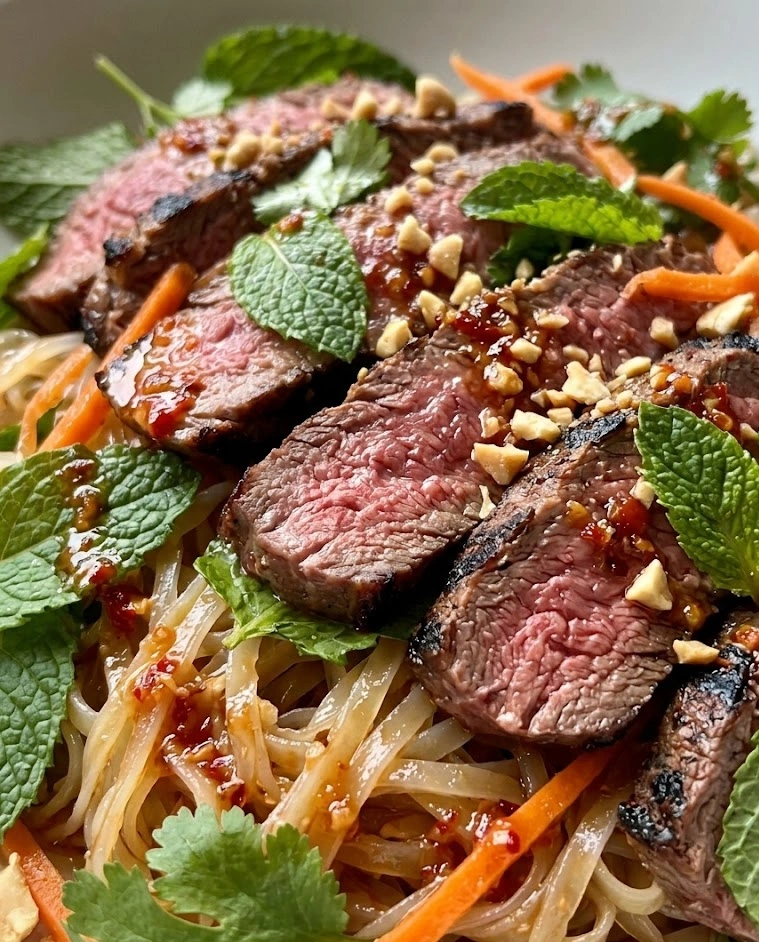
Most spring dinner ideas lean fresh and gentle — light vinaigrettes, mild herbs, delicate vegetables just waking up from winter. And there’s a place for all of that. But sometimes spring calls for something with more fire. Something that jolts you awake, makes your eyes water slightly in the best possible way, and leaves you thinking about it for the rest of the evening. That is exactly what Crying Tiger Beef Noodle Salad delivers.
Crying Tiger — or Suea Rong Hai in Thai — is one of Thailand’s most celebrated grilled beef preparations. The name is wonderfully dramatic: the beef is supposedly so good, or the accompanying chili sauce so fierce, that even a tiger would weep at its intensity. The original dish is grilled steak served with a roasted rice powder-thickened dipping sauce called jaew — smoky, fiery, funky with fish sauce, and bright with lime and toasted dried chili.
This version takes all of that bold Thai flavor and builds it into a full noodle salad — silky rice noodles, crisp cucumber and bean sprouts, fresh herbs, quick-pickled shallots, and that legendary jaew sauce doing double duty as both dressing and dipping sauce. The result is a spring dinner idea that is equal parts sophisticated and primal, and completely unlike anything else in your rotation.
Why You’ll Love This Spring Dinner Idea
The first reason is the sauce. The jaew dipping sauce is one of Thai cuisine’s great flavor achievements — it combines fish sauce’s deep umami, lime juice’s brightness, toasted chili’s smoky heat, palm sugar’s gentle sweetness, and roasted rice powder’s nutty, slightly gritty texture into something genuinely complex and addictive. Once you understand how to make it, you will find yourself putting it on everything.
The second reason is the textural experience. This salad is engineered for contrast — tender, charred sliced beef against chewy noodles against crisp vegetables against soft fresh herbs against crunchy toasted rice powder scattered on top. Every component contributes something texturally distinct, which means every single bite is interesting in a way that simpler salads simply cannot match.
The third reason is its suitability for spring entertaining. This is a dinner party dish masquerading as an easy weeknight meal. It looks spectacular on the table, carries flavors that feel genuinely special, and can be largely prepped ahead — making it one of the most impressive yet low-stress spring dinner ideas you can put in front of guests.
Common Mistakes — And How to Avoid Them
Mistake 1: Skipping the Toasted Rice Powder
Toasted rice powder — khao khua — is not a garnish you can skip or substitute. It is a fundamental textural and flavor component of the jaew sauce and the finished salad. It adds a nutty, smoky depth and a subtle grittiness that is entirely unique and impossible to replicate with any other ingredient. It takes 5 minutes to make and transforms the dish from good to authentic. Make it.
Mistake 2: Overcooking the Beef
Crying Tiger beef is traditionally served medium to medium-rare — pink, juicy, and tender at the center with a deeply charred exterior. Cooking it to well-done destroys the textural contrast that makes this dish work and produces dry, chewy slices that fight the noodles rather than complementing them. Use a thermometer: pull at 130–135°F for medium-rare, 140–145°F for medium. Rest fully before slicing.
Mistake 3: Slicing the Beef with the Grain
This is the single most common mistake with grilled steak in salads and the one that most dramatically affects the eating experience. Slicing with the grain produces long, stringy, chewy pieces. Slicing against the grain cuts through the muscle fibers, producing tender, clean pieces that melt in the mouth. Always identify the direction of the grain before your knife touches the meat.
Mistake 4: Under-seasoning the Noodles
Plain rice noodles are a neutral canvas — they will taste like almost nothing without seasoning. Toss the cooked, drained noodles immediately with a small amount of the jaew sauce, a drizzle of sesame oil, and a pinch of salt while they’re still warm. They absorb seasoning far more readily when hot, and this base coat of flavor is what separates a flat noodle salad from one where every component sings.
Mistake 5: Adding All the Herbs at Once
Fresh herbs — particularly Thai basil, mint, and cilantro — wilt rapidly once they make contact with dressing or warm ingredients. Reserve at least half your herbs to add immediately before serving. The herbs that go in earlier will mellow and integrate into the background flavor. The herbs added at the end provide the bright, fresh top note that makes the salad taste alive.
Chef’s Notes
I want to talk about fish sauce, because it is the ingredient that intimidates most people and the one they are most tempted to substitute or reduce — and both of those instincts work against them. Fish sauce smells aggressive straight from the bottle. It is pungent, funky, and intensely saline in isolation. But when it hits acid, heat, sugar, and other aromatics, it transforms entirely. It becomes the umami backbone — the thing that makes the sauce taste deep and complex and savory without tasting fishy at all. Reducing the fish sauce makes the jaew flat. Substituting soy sauce makes it lose its characteristic Southeast Asian depth. Trust the recipe and trust the transformation.
The other ingredient worth understanding is palm sugar. Palm sugar has a lower glycemic index than refined white sugar and a subtly caramel, almost butterscotch-like flavor that white sugar or brown sugar do not fully replicate. In the jaew sauce, it provides sweetness without sharpness — a rounded, gentle sweetness that balances the fish sauce and lime without competing with them. If you cannot find palm sugar, light brown sugar is the closest substitute, used at the same quantity.
For the beef, I recommend skirt steak or flank steak as the ideal cuts for this preparation. Both have pronounced grain structure that makes the against-the-grain slicing technique particularly impactful — and both have enough fat marbling and robust flavor to stand up to the intensity of the jaew sauce without being overwhelmed by it. Ribeye works beautifully if you want more richness and are cooking for a special occasion.
Key Ingredients & Why They Matter
Skirt Steak or Flank Steak are the ideal cuts for this dish because of their bold, beefy flavor and their pronounced muscle grain — which, when sliced correctly against the grain, produces beautifully tender pieces. Both cuts also char magnificently over high heat, developing the caramelized crust that is central to the Crying Tiger experience.
Fish Sauce is the umami engine of the jaew. It is made from fermented anchovies and salt, and its glutamate content is extraordinarily high — higher than soy sauce, higher than Worcestershire. In the jaew it provides a savory depth that no other single ingredient can replicate. Use a quality Thai brand such as Tiparos or Megachef for the cleanest, least harsh result.
Dried Thai Chilies are toasted in a dry pan until darkened and fragrant, then roughly ground. This toasting process is transformative — it converts the raw, sharp heat of the chili into something smoky, complex, and deeply aromatic. The difference between raw dried chili flakes and properly toasted ground Thai chili in this sauce is the difference between heat and flavor.
Toasted Rice Powder is raw jasmine rice toasted in a dry pan until golden, then ground to a coarse powder. It adds a nutty, popcorn-adjacent flavor and a subtle gritty texture that is entirely unique to Thai cooking. It also acts as a very light thickening agent in the jaew, giving the sauce a slightly clinging, coating consistency rather than a thin, watery one.
Lime Juice provides the brightness that lifts the entire sauce and salad. As with the Fiesta Lime Chicken and the Mediterranean Couscous Salad, fresh is non-negotiable — bottled lime juice loses the volatile aromatic compounds that make lime taste alive and citrusy rather than flat and sour.
Palm Sugar rounds out the jaew with a gentle, caramel-tinged sweetness that balances the fish sauce and lime without making the sauce taste sweet. It is the fulcrum on which the entire flavor balance of the sauce rests.
Rice Noodles are the ideal noodle for this salad because they are neutral, silky, and gluten-free, and their delicate texture provides a contrast to the bold flavors of the jaew and the char of the beef. Use medium-width rice noodles — about the width of linguine — for the best textural balance.
Thai Basil has a flavor profile distinct from Italian basil — slightly anise-like, peppery, and more aromatic. It is one of the defining herbs of Thai cuisine and contributes an irreplaceable flavor note to this salad. If you absolutely cannot find it, a combination of Italian basil and fresh mint gets reasonably close.
Quick-Pickled Shallots cut through the richness of the beef and the intensity of the jaew with a sharp, vinegary brightness. They take 10 minutes to make and add a professional, restaurant-quality element that elevates the entire dish visually and flavor-wise.
How to Make Crying Tiger Beef Noodle Salad
Ingredients
For the Beef:
- 1½ lbs skirt steak or flank steak
- 2 tbsp fish sauce
- 1 tbsp oyster sauce
- 1 tsp dark soy sauce
- 1 tsp palm sugar or light brown sugar
- 1 tsp black pepper, coarsely ground
- 2 cloves garlic, grated
For the Jaew Dipping Sauce:
- 3 tbsp fish sauce
- 3 tbsp fresh lime juice
- 1½ tbsp palm sugar or light brown sugar
- 1 tbsp toasted rice powder (see below)
- 1–2 tsp dried Thai chili flakes, toasted and ground
- 2 shallots, very finely minced
- 2 tbsp fresh cilantro, finely chopped
For the Toasted Rice Powder:
- 3 tbsp raw jasmine rice
For the Quick-Pickled Shallots:
- 3 shallots, thinly sliced into rings
- 3 tbsp rice wine vinegar
- 1 tsp sugar
- ½ tsp salt
For the Noodle Salad:
- 8 oz medium rice noodles
- 1 English cucumber, julienned or thinly sliced
- 1½ cups bean sprouts
- 1 cup cherry tomatoes, halved
- 3 spring onions, thinly sliced
- 1 cup fresh Thai basil leaves
- 1 cup fresh mint leaves
- ½ cup fresh cilantro, roughly torn
- 1 tbsp sesame oil
- 2 tbsp toasted sesame seeds
- Extra toasted rice powder for finishing
- Make the toasted rice powder. Place raw jasmine rice in a dry skillet over medium heat. Toast, stirring constantly, for 5–7 minutes until the rice turns deep golden brown and smells nutty and fragrant — like popcorn with a toasted grain quality. Transfer to a mortar and pestle or spice grinder and grind to a coarse, sandy powder. Set aside. This can be made days ahead and stored in an airtight jar.
- Make the quick-pickled shallots. Combine rice wine vinegar, sugar, and salt in a small bowl and stir until dissolved. Add the sliced shallots and toss to coat. Let sit for at least 10 minutes — they will turn lightly pink and soften slightly at the edges while retaining their crunch.
- Make the jaew sauce. Whisk together the fish sauce, lime juice, and palm sugar until the sugar dissolves completely. Add the toasted chili flakes, toasted rice powder, and minced shallots. Stir well and taste — it should be simultaneously salty, sour, smoky, sweet, and hot, with no single element dominating. Adjust as needed and stir in the cilantro just before serving.
- Marinate the beef. Combine fish sauce, oyster sauce, dark soy sauce, palm sugar, black pepper, and grated garlic in a bowl. Add the steak and turn to coat thoroughly. Marinate at room temperature for 20–30 minutes, or refrigerate for up to 4 hours.
- Cook the rice noodles. Prepare according to package directions — most medium rice noodles need 6–8 minutes in boiling water. Drain, rinse briefly under cold water to stop cooking, and transfer to a large bowl. Immediately toss with sesame oil and 2 tablespoons of the jaew sauce while warm so the noodles absorb seasoning from within.
- Grill the beef. Heat a grill or grill pan to the highest possible heat — you want intense, immediate searing. Remove the steak from the marinade, shake off excess, and grill for 3–4 minutes per side for medium-rare on skirt steak, or 4–5 minutes per side for flank steak. You want a deep, almost blackened char on the exterior with a pink, juicy interior. Rest on a cutting board for 8 full minutes.
- Slice the beef. Identify the direction of the muscle fibers — the grain — and slice decisively against it at a 45-degree angle into thin strips, no more than ¼ inch thick. The slices should look clean and tender, not stringy.
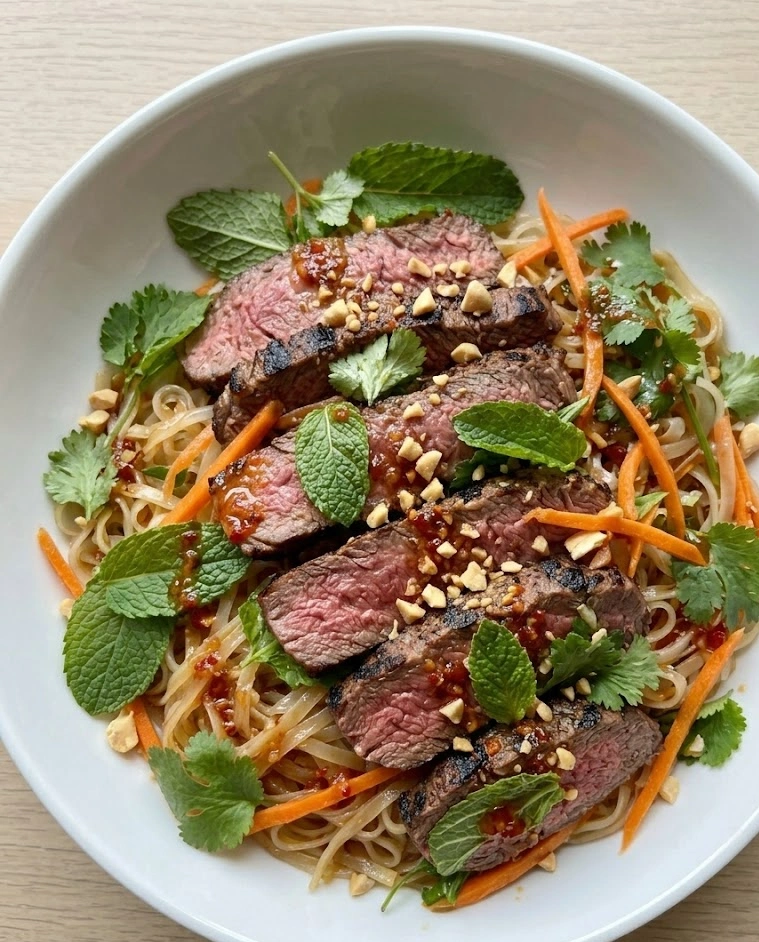
- Assemble the salad. Arrange the seasoned noodles on a large platter or in individual bowls. Layer the cucumber, bean sprouts, and cherry tomatoes over the noodles. Arrange the sliced beef over the top. Scatter the quick-pickled shallots, spring onions, and half the fresh herbs throughout.
- Dress and finish. Spoon half the jaew sauce over the assembled salad. Scatter the toasted sesame seeds and an extra pinch of toasted rice powder over everything. Add the remaining fresh herbs immediately before serving.
- Serve the rest of the jaew on the side so guests can add more heat and flavor to their own bowls. This is non-negotiable — the jaew is the soul of the dish and it should be generous and accessible at the table.
Variations & Tips
Make It Chicken or Pork: The jaew sauce works beautifully with grilled chicken thighs or pork tenderloin if beef isn’t your preference. Marinate in the same beef marinade and grill over high heat until cooked through. Pork tenderloin in particular takes on the Thai flavors exceptionally well and offers a leaner result.
Make It Vegetarian: Replace the beef with thick slabs of extra-firm tofu or king oyster mushrooms, both marinated in the same mixture with fish sauce swapped for soy sauce and a small amount of seaweed flakes for umami depth. Grill or char the tofu and mushrooms over the highest possible heat for maximum caramelization.
Control the Heat: The jaew is traditionally quite spicy. For a milder result, start with ½ teaspoon of toasted chili flakes and add more incrementally. For maximum heat, use bird’s eye chilies — fresh or dried — which are significantly hotter than standard dried Thai chilies and add an additional fresh, green heat note.
Add Mango for Spring Sweetness: Thinly sliced green or semi-ripe mango tucked into the salad adds a sweet, tart, crunchy element that is completely seasonal and particularly beautiful against the beef and herbs. It is a very common addition in Thai beef salads and makes this spring dinner idea feel even more seasonally relevant.
Pro Tip — Serve at Room Temperature: This salad is best served at room temperature, not cold. Cold mutes the aromatics of the herbs, hardens the fat in the beef, and flattens the jaew. If prepping ahead, bring all components to room temperature before assembling and dressing — the flavor difference is significant and immediate.
How to Meal Prep Crying Tiger Beef Noodle Salad
Unlike the Mediterranean Couscous Salad — which gets better as it sits fully assembled — this salad is best prepped as components and assembled fresh each time, because the fresh herbs and the jaew sauce are at their best when combined at the last moment.
Prep the Jaew Ahead: The jaew sauce keeps in the fridge for up to 5 days and actually deepens in flavor as the shallots continue to mellow and the chili infuses further. Make a double batch at the start of the week and use it as a dipping sauce, a dressing, and a marinade across multiple meals.
Grill the Beef in Bulk: Grill a full batch of marinated steak at the start of the week, rest completely, slice, and store in an airtight container for up to 3 days. The sliced beef reheats well in a hot dry skillet for 60 seconds, or can be eaten at room temperature directly from the fridge after a 15-minute rest.
Store the Toasted Rice Powder: Make a large batch of toasted rice powder and keep it in a sealed jar at room temperature for up to a month. It keeps indefinitely without refrigeration and adds instant depth to soups, salads, and stir-fries throughout the week — one of the most versatile pantry additions Thai cooking offers.
Pre-Cook and Season the Noodles: Cooked, sesame-oiled noodles keep in the fridge for 3 days without clumping or drying out. Store them in an airtight container and bring to room temperature before assembling — cold noodles straight from the fridge will cool the beef and mute the jaew, which is exactly what you don’t want from one of your boldest spring dinner ideas.
Cultural Context: The Legend of the Crying Tiger
Suea Rong Hai — Crying Tiger — is a dish from the Isan region of northeastern Thailand, a part of the country whose cuisine is arguably the most vibrant, assertive, and herbaceous in all of Thai cooking. Isan food is defined by its bold use of fermented fish paste, roasted dried chilies, fresh lime, toasted rice powder, and an abundance of fresh herbs — all flavors that appear in their most concentrated form in the jaew sauce at the heart of this dish.
The name has several competing origin stories, as the best dish names always do. One account says the beef is so tough that even a tiger would cry trying to eat it — a playful warning about the cut traditionally used, which required serious chewing. Another, more romantic version holds that the chili sauce is so ferociously hot that it reduces tigers — the most fearsome predators in the region — to tears. A third suggests the dish was named for the way the fat drips from the beef as it grills over charcoal, the droplets resembling tears falling from the grate. All three stories are more interesting than a straightforward name, which is perhaps exactly the point.
Isan cuisine has gained enormous global recognition in recent decades as Thai food culture has spread worldwide and food writers and chefs have looked beyond the central Thai dishes most familiar to Western audiences. Restaurants from London to Los Angeles to Sydney now feature Isan-inspired menus, and the jaew sauce in particular has developed a devoted following among chefs who prize its extraordinary depth and balance.
Rice noodles, meanwhile, have been a staple across Southeast Asia for over two thousand years, originating in southern China and spreading through trade and migration throughout the region. Their neutral flavor and silky texture make them the ideal vehicle for bold sauces like jaew — present enough to add substance and chew, restrained enough to let the surrounding flavors dominate.
So when you build this Crying Tiger Beef Noodle Salad on a spring evening, you are drawing from one of Thailand’s most storied regional traditions — one that is built on the same principles as all great cooking everywhere: balance, contrast, freshness, and the kind of bold flavor that makes people stop mid-bite and pay attention. That is the best possible thing a spring dinner idea can do.
Crying Tiger Beef Noodle Salad
Equipment
- grill or grill pan
- Large Mixing Bowl
- skillet
- mortar and pestle or spice grinder
- instant-read thermometer
Ingredients
- 1 1/2 lbs skirt steak or flank steak
- 5 tbsp fish sauce (divided)
- 1 tbsp oyster sauce
- 1 tsp dark soy sauce
- 2 1/2 tbsp palm sugar or light brown sugar (divided)
- 1 tsp black pepper, coarsely ground
- 2 cloves garlic, grated
- 3 tbsp fresh lime juice
- 1 1/2 tbsp toasted rice powder
- 1-2 tsp dried Thai chili flakes, toasted and ground
- 5 shallots (divided)
- 2 tbsp fresh cilantro, finely chopped
- 3 tbsp raw jasmine rice
- 3 tbsp rice wine vinegar
- 8 oz medium rice noodles
- 1 English cucumber, julienned
- 1 1/2 cups bean sprouts
- 1 cup cherry tomatoes, halved
- 3 spring onions, sliced
- 1 cup fresh Thai basil leaves
- 1 cup fresh mint leaves
- 1/2 cup fresh cilantro, roughly torn
- 1 tbsp sesame oil
- 2 tbsp toasted sesame seeds
Instructions
- Toast jasmine rice in a dry skillet 5–7 minutes until deep golden. Grind to a coarse powder and set aside.
- Combine rice wine vinegar, sugar, and salt. Add sliced shallots and let sit 10 minutes to pickle.
- Whisk fish sauce, lime juice, palm sugar, toasted chili flakes, toasted rice powder, minced shallots, and cilantro to create the jaew sauce.
- Marinate steak with fish sauce, oyster sauce, dark soy sauce, palm sugar, black pepper, and garlic for 20–30 minutes.
- Cook rice noodles according to package directions. Drain and toss immediately with sesame oil and 2 tablespoons jaew sauce.
- Grill steak over high heat 3–5 minutes per side until internal temperature reaches 130–135°F for medium-rare. Rest 8 minutes.
- Slice beef thinly against the grain at a 45-degree angle.
- Arrange noodles in bowls. Top with cucumber, bean sprouts, tomatoes, sliced beef, pickled shallots, spring onions, and half the herbs.
- Spoon remaining jaew over top. Garnish with sesame seeds, extra toasted rice powder, and remaining herbs. Serve extra jaew on the side.