
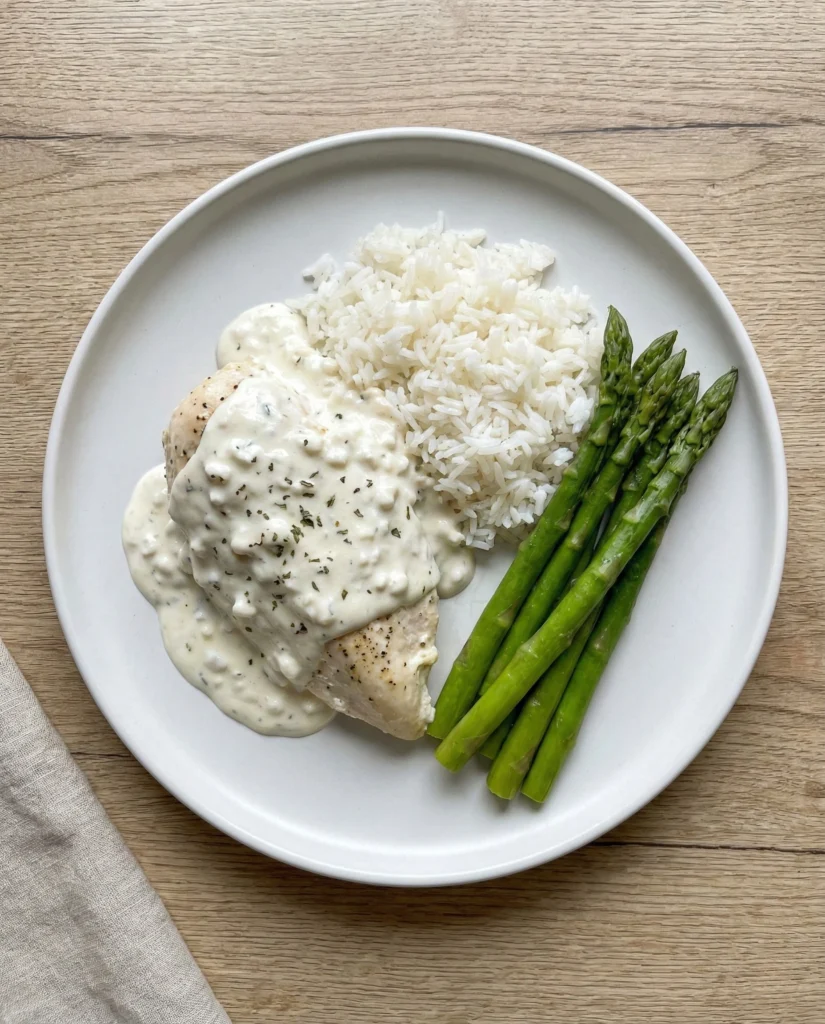
What if the creamiest, most satisfying chicken dinner you’ve ever made required nothing more exotic than a humble tub of cottage cheese sitting in your fridge right now? This Creamy Cottage Cheese Chicken is one of the smartest cottage cheese recipes circulating the internet — and once you taste it, you’ll understand the hype immediately.
Cottage cheese has had a serious culinary renaissance lately, and for very good reason. It’s protein-packed, surprisingly versatile, and when blended, it transforms into a silky, luscious sauce that rivals anything made with heavy cream. But the flavor is where the real magic happens. As your chef guide here at FlavorfulCooking.com, I’m going to tell you not just how to make this dish — but why every single step creates something extraordinary.
Whether you’re searching for easy weeknight dinners, high-protein meal prep, or cottage cheese recipes that don’t taste remotely like diet food — you just found your new favorite.
Why You’ll Love This Creamy Cottage Cheese Chicken
This dish checks every box on the weeknight dinner wishlist. It comes together in under 30 minutes, uses a single pan, and the flavor payoff is wildly disproportionate to the effort involved. You get deep savory umami from the Parmesan, brightness from lemon zest, and an herbaceous warmth from fresh thyme — all wrapped in a sauce so creamy people will assume you spent hours on it.
It’s also one of those rare recipes that’s genuinely nutritious without tasting like it. Cottage cheese delivers roughly 14 grams of protein per half-cup, meaning this dish can clock in at 45–50g of protein per serving. Low-carb? Yes. Gluten-free? Absolutely. Kid-approved? Every single time it hits the table.
And the versatility is real. This cottage cheese recipe works equally well with chicken thighs or breasts, and it can be served over pasta, rice, zucchini noodles, or eaten straight from the pan with crusty bread for dunking. It adapts to you and whatever your week looks like.
Common Mistakes — And How to Avoid Them
Skipping the blend. The number-one error people make with cottage cheese recipes is dropping the curds straight from the container into a hot pan. Those lumps will not melt into a smooth sauce. You must blend your cottage cheese first — 30 seconds in a blender transforms it into a pourable, silky liquid that behaves just like cream. This step is non-negotiable.
Overcooking the chicken. Rubbery chicken kills the entire dish. Pull your chicken at an internal temperature of 160°F — it will carry over to the safe 165°F as it rests off the heat. A $10 instant-read thermometer will save every dinner you cook from this point forward. Use it.
Adding cottage cheese to a screaming-hot pan. Dairy proteins are delicate. Dump blended cottage cheese into an overly hot pan and it will curdle into a grainy, broken mess. Always reduce to medium-low before adding the sauce, and stir gently and continuously. The result should be glossy and creamy — not scrambled-egg-adjacent.
Under-seasoning. Cottage cheese is naturally mild — which is a feature, not a bug, but it means you must season with confidence at every stage. Season the chicken before it hits the pan. Season the aromatics. Taste the sauce and adjust before it goes on the plate. Salt is not your enemy here.
Chef’s Notes
The reason this cottage cheese recipe works so brilliantly as a sauce comes down to protein chemistry. When you blend cottage cheese, you break up the curds and create an emulsion of milk proteins and whey. As that emulsion heats gently, the proteins set just enough to thicken the sauce beautifully — but only if you maintain a moderate temperature. Think of it as a béchamel with a built-in protein boost and far less butter involved.
The Parmesan adds glutamates — the compounds responsible for deep, savory umami flavor. The garlic provides aromatic sulfur compounds that bloom and sweeten in olive oil. The lemon zest contributes limonene, a bright volatile compound that cuts through the richness and keeps the dish from ever feeling heavy or cloying.
My personal secret: add a pinch of nutmeg to the sauce. It’s the classic French trick for cream-based sauces, adding a warm, almost floral depth that makes people pause mid-bite and ask “what is that?” Now you know — and you can keep it to yourself.
Key Ingredients — And Why They Work
Full-fat cottage cheese is the star of this cottage cheese recipe. The higher fat content creates a richer, more stable sauce. Low-fat works in a pinch but produces a thinner result with slightly less body. Either way, the protein content stays impressively high.
Chicken breasts or thighs each bring something different. Breasts are leaner and cook faster; thighs carry more intramuscular fat, which means more inherent flavor and much more forgiveness if you overshoot the temperature by a degree or two. Both work beautifully — choose based on your priorities.
Aged Parmesan is one of the most glutamate-rich foods on earth, which is the scientific way of saying it makes everything around it taste more intensely savory. As it melts into the cottage cheese sauce, it amplifies every other flavor in the pan and adds a nutty, salty depth that’s impossible to replicate.
Fresh garlic sautéed in olive oil converts its sharp raw allicin into sweeter, gentler aromatic compounds — warm and fragrant without any harsh bite. Always cook your garlic before the sauce goes in.
Lemon zest and fresh thyme keep the whole dish feeling alive. The zest adds aromatic brightness without acidity; the thyme brings an earthy, slightly floral note that’s been pairing with chicken in professional kitchens for centuries.
How to Make Creamy Cottage Cheese Chicken — Step by Step
Ingredients (Serves 4)
For the Chicken:
- 4 boneless, skinless chicken breasts or thighs (about 6 oz each)
- 1 tbsp olive oil
- 1 tsp garlic powder
- 1 tsp smoked paprika
- ½ tsp salt and black pepper each
For the Cottage Cheese Sauce:
- 1½ cups full-fat cottage cheese, blended smooth
- ½ cup grated Parmesan cheese
- 4 cloves garlic, minced
- ½ cup low-sodium chicken broth
- Zest of 1 lemon
- 1 tsp fresh thyme leaves (or ½ tsp dried)
- Pinch of nutmeg
- Salt and pepper to taste
- Fresh parsley, for garnish
Instructions
- Blend the cottage cheese. Add 1½ cups of cottage cheese to a blender and blend on high for 30–45 seconds until completely smooth with zero lumps remaining. Set aside.
- Season and sear the chicken. Pat chicken completely dry with paper towels — a dry surface is essential for a proper golden sear. Season both sides generously with garlic powder, smoked paprika, salt, and pepper. Heat olive oil in a large skillet over medium-high until shimmering, then add the chicken. Cook 5–6 minutes per side until deeply golden and the internal temperature reaches 160°F. Transfer to a plate and tent loosely with foil to rest.
- Build the aromatics. Reduce pan heat to medium. Add minced garlic and cook, stirring constantly, for 60–90 seconds until fragrant and lightly golden. Watch it carefully — burned garlic is bitter and will flavor everything that follows.
- Build the sauce. Pour in chicken broth and scrape up every brown bit from the bottom of the pan with a wooden spoon. Those caramelized bits are concentrated flavor — don’t leave a single one behind. Reduce heat to medium-low, then stir in the blended cottage cheese and Parmesan, stirring continuously as everything warms and comes together.
- Season and finish the sauce. Add lemon zest, thyme, nutmeg, and salt and pepper to taste. Stir gently for 2–3 minutes until the sauce is thick, creamy, and glossy. If it thickens too much, loosen with a splash of extra broth.
- Return the chicken. Nestle the rested chicken back into the pan and spoon the sauce generously over each piece. Let everything warm together for 2 minutes.
- Serve. Plate with a heavy spoonful of sauce, a shower of fresh parsley, and an extra grating of Parmesan. Because there is never a wrong time for extra Parmesan.
Variations & Tips
Make it vegan. Swap chicken for pan-seared extra-firm tofu or thick portobello mushroom caps. Use a plant-based cottage cheese — Kite Hill’s version is excellent — and nutritional yeast in place of Parmesan. Every flavor-building principle in this recipe translates perfectly.
Make it spicy. Add ½ teaspoon of crushed red pepper flakes to the garlic step, or stir in a teaspoon of Calabrian chili paste with the sauce. The heat blooms in the fat and distributes beautifully throughout every bite.
Add vegetables. Wilt baby spinach or kale directly into the sauce during the final 2 minutes. Sun-dried tomatoes stirred in at the sauce stage add incredible depth and a jewel-toned pop of color. Artichoke hearts turn this into something that feels almost Greek and utterly special.
Herb swaps. No thyme? Fresh rosemary (use less — it’s bold), basil, tarragon, or dill all work wonderfully and take the dish in distinctly different flavor directions without changing a single technique.
Pro tip: always use a wide, heavy-bottomed pan — cast iron or stainless steel — for the best sear and the richest fond (those sticky golden-brown bits) that form the backbone of the sauce.
How to Meal Prep This Cottage Cheese Recipe
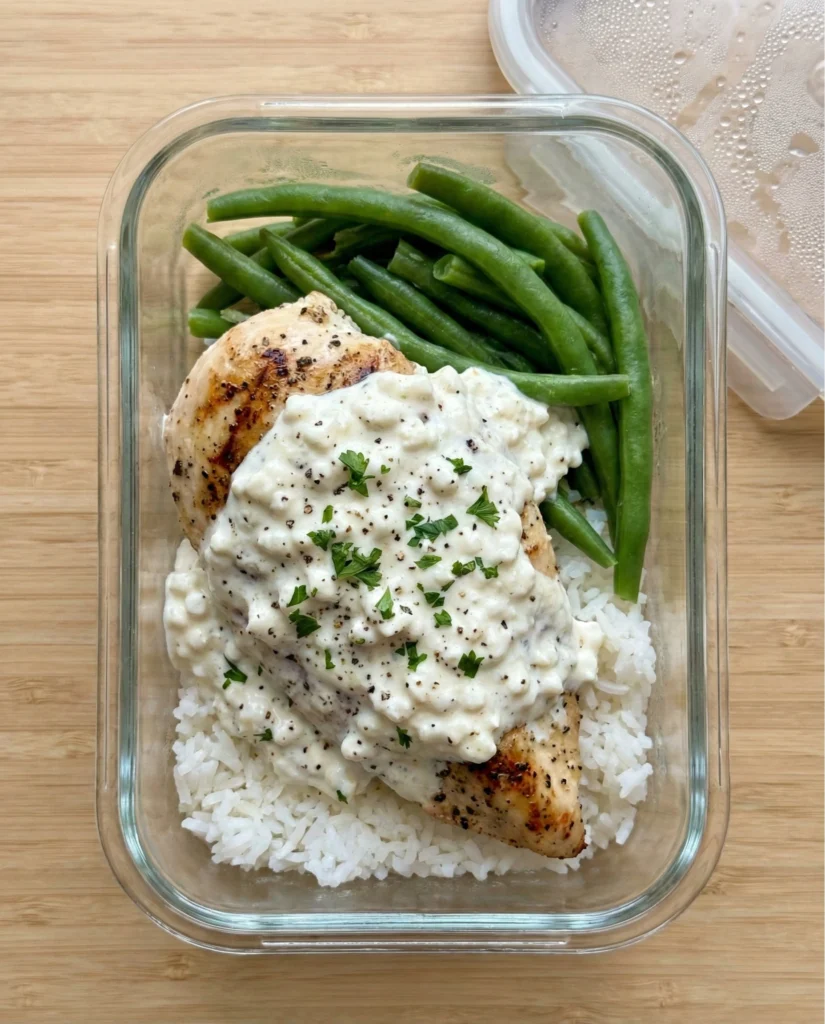
This dish is a legitimate meal prep hero. Cook a double batch on Sunday and you’ll have high-protein, restaurant-quality dinners sorted for most of the week with zero additional effort on busy evenings.
Store the chicken and sauce together in airtight containers in the refrigerator for up to 4 days. The sauce thickens as it chills — simply reheat gently in a saucepan over medium-low heat, adding a splash of broth while stirring to bring it back to its original silky consistency. Avoid blasting it on high microwave power, which can cause the sauce to break and separate.
For the freezer: the sauce alone freezes beautifully for up to 2 months. The chicken is best fresh, but freezes acceptably for up to 6 weeks. Thaw everything overnight in the refrigerator and reheat gently on the stovetop.
Great pairing ideas for meal prep containers: steamed rice or quinoa (the sauce works perfectly as a gravy), roasted broccoli or asparagus, zucchini noodles, or sliced over crisp salad greens with extra sauce used as the dressing.
Cultural Context — The Cottage Cheese Renaissance
Cottage cheese is one of America’s oldest fresh cheeses, dating to the early 1800s when farm families made it from curds left over after cream was skimmed for butter. It became a mid-century diet staple — the centerpiece of countless Weight Watchers plates — before falling completely out of fashion with younger generations who associated it with flavorless, texturally challenging diet food of a bygone era.
That changed dramatically around 2022–2023, when food creators began blending it into pasta sauces, high-protein ice cream, and baked goods on social media, revealing what professional cooks had quietly understood for decades: cottage cheese is a remarkable culinary ingredient when handled correctly. The texture problem? Solved with a blender. The flavor problem? Solved with bold aromatics and proper seasoning.
Today it sits alongside Greek yogurt and eggs as a pillar of modern high-protein, whole-food cooking. Recipes like this Creamy Cottage Cheese Chicken represent the full evolution of home cooking — honoring the resourceful, frugal spirit of that original farmhouse cheese while reimagining it through a modern, flavor-first lens. The cottage cheese recipe revolution isn’t a trend. It’s a correction.
Creamy Cottage Cheese Chicken
Equipment
- large skillet
- blender
- wooden spoon
- instant-read thermometer
Ingredients
- 4 boneless skinless chicken breasts or thighs (about 6 oz each)
- 1 tbsp olive oil
- 1 tsp garlic powder
- 1 tsp smoked paprika
- 1/2 tsp salt
- 1/2 tsp black pepper
- 1 1/2 cups full-fat cottage cheese
- 1/2 cup grated Parmesan cheese
- 4 cloves garlic, minced
- 1/2 cup low-sodium chicken broth
- 1 lemon zest
- 1 tsp fresh thyme leaves
- 1 pinch nutmeg
- salt and pepper to taste
- fresh parsley for garnish
Instructions
- Add cottage cheese to a blender and blend for 30–45 seconds until completely smooth.
- Pat chicken dry and season with garlic powder, smoked paprika, salt, and pepper.
- Heat olive oil in a large skillet over medium-high heat. Sear chicken 5–6 minutes per side until golden and internal temperature reaches 160°F. Remove and rest.
- Reduce heat to medium. Add minced garlic and cook 60–90 seconds until fragrant.
- Add chicken broth and scrape browned bits from the pan. Reduce heat to medium-low and stir in blended cottage cheese and Parmesan.
- Add lemon zest, thyme, nutmeg, and salt and pepper to taste. Stir gently until sauce is creamy and thickened.
- Return chicken to the pan and spoon sauce over top. Simmer gently for 2 minutes to warm through.
- Garnish with fresh parsley and additional Parmesan before serving.