This post may contain affiliate links. As an Amazon Associate, we earn from qualifying purchases. We only recommend products we trust.
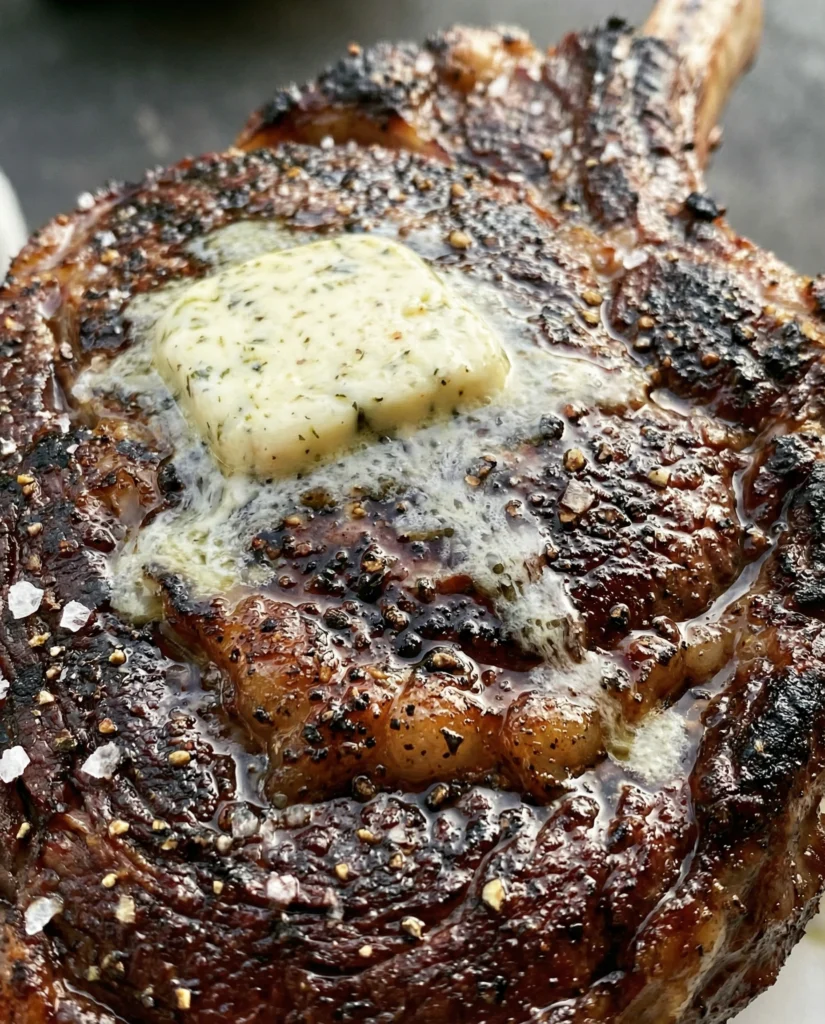
Some grilling recipes are about weeknight convenience. Some are about crowd-feeding efficiency. And then there’s the Cowboy Ribeye — a recipe that exists entirely to make a statement.
A thick-cut, bone-in ribeye, also called a tomahawk or cowboy cut, is one of the most visually dramatic pieces of meat you can put on a grill. The long frenched bone, the extraordinary marbling, the sheer size — before it even hits the grates, it has already announced itself.
But this recipe isn’t about spectacle. It’s about understanding that an inch-and-a-half of beautifully marbled beef deserves a specific technique — one that guarantees a perfect crust on the outside and a rosy, butter-tender interior all the way through.
Why You’ll Love This Recipe
The reverse sear changes everything. Traditional high-heat-first searing is actually inferior for thick steaks. The reverse sear — low heat first, then a screaming hot sear at the end — gives you unparalleled control over the internal temperature while still delivering the deepest, most flavorful crust possible. Once you do it this way, you’ll never go back.
The fat is the flavor. Ribeye is the most marbled of all common steak cuts. That intramuscular fat — the white threads running through the red muscle — renders slowly during cooking, basting the meat from within and producing a richness and depth of flavor that no lean cut can approach. This is the steak that teaches you what beef is supposed to taste like.
It’s a showpiece meal. Whether you’re cooking for a partner, a group of friends, or simply yourself on a night when ordinary feels insufficient, the Cowboy Ribeye elevates the occasion. Plating a bone-in ribeye with herb butter melting across its surface is one of the most satisfying moments in home cooking.
Common Mistakes — And How to Avoid Them
Buying too thin. A cowboy ribeye should be at least 1.5 inches thick — ideally 2 inches. Anything thinner and the reverse sear loses its advantage. You’ll also find it nearly impossible to achieve a great crust without overcooking the interior. Ask your butcher to cut it thick.
Skipping the dry brine. Salt your steak and leave it uncovered in the fridge overnight — or at minimum for 1 hour. The salt draws moisture to the surface, which then gets reabsorbed carrying dissolved proteins back into the meat. This process seasons the interior, not just the surface, and produces a drier exterior that sears incomparably better.
Using cold steak on the grill. For a steak this thick, taking it straight from fridge to grill is especially damaging. The exterior will overcook attempting to bring the cold center up to temperature. Minimum 45 minutes on the counter before it goes anywhere near heat.
Cutting into it immediately. Rest this steak for at least 8–10 minutes. The thermal mass of a thick cowboy ribeye means internal temperature continues rising 3–5°F after it leaves the grill. Factor this into your target temp and rest before slicing.
Our Best Amazon Finds
 Buy Now →
 Buy Now →
Cuisinart Griddler Indoor Grill
Buy Now →
Geesta Grilling Prep and Serve Tays
Buy Now →Chef’s Notes
My dry rub for this steak is just four ingredients: flaky salt, coarse black pepper, garlic powder, and smoked paprika. The smoked paprika is the one move that surprises people — it deepens the color of the crust and adds a subtle wood-smoke layer that amplifies the grill’s own smoke character.
The herb butter is non-negotiable. Softened butter blended with fresh thyme, rosemary, garlic, and a pinch of flaky salt, formed into a log in plastic wrap and chilled. Slice a disc over the resting steak the moment it comes off the grill. It melts slowly into all the crevices of the meat, pooling around the edges and creating a self-basting sauce that makes the entire plate shine.
One more thing: use the bone as a handle. Pick it up. Eat it. The meat closest to the bone is always the most flavorful — it’s been protected by the bone during cooking and carries a mineral richness that the rest of the steak doesn’t have.
Key Ingredients — And Why They Matter
Bone-in cowboy ribeye (1 steak, 600–900g, 1.5–2 inches thick): The bone conducts heat differently than the surrounding meat, creating a slightly different texture and flavor profile right at the bone. The extraordinary marbling of ribeye makes this the most forgiving and most flavorful cut for grilling.
Flaky sea salt: Applied the night before (dry brine) and again right before grilling. Penetrates the meat over time rather than just seasoning the surface.
Coarse black pepper: Creates texture and aromatic heat on the crust. Use a coarser grind than table pepper — the visible pieces char slightly on the grill and add complexity.
Smoked paprika (1 tsp): Adds color and a secondary layer of smokiness that works in harmony with the grill.
Garlic powder (½ tsp): Mellower than fresh garlic in a rub — it won’t burn on the grill the way fresh garlic would, and it provides a savory depth throughout the crust.
Herb butter: Unsalted butter (4 tbsp), fresh thyme, fresh rosemary, minced garlic, flaky salt. This is your finishing sauce. Make it the night before and chill.
How to Make Cowboy Ribeye
- Dry brine. The night before, season the steak generously on all sides with flaky salt. Place uncovered on a rack over a tray in the fridge overnight.
- Make the herb butter. Blend softened butter with minced thyme, rosemary, garlic, and salt. Roll in plastic wrap into a log and refrigerate.
- Bring to room temperature. Remove steak from fridge 45 minutes before cooking. Apply the remaining dry rub (pepper, smoked paprika, garlic powder) on all surfaces.
- Set up a two-zone grill. One side on low heat (indirect), one side on maximum heat (direct). This is essential for the reverse sear.
- Slow cook first. Place the steak on the indirect/low side. Close the lid and cook until internal temperature reaches 110°F/43°C for medium-rare target. This takes roughly 25–35 minutes depending on thickness.
- Sear hard. Transfer to the screaming hot direct side. Sear 60–90 seconds per side, including the edges. You’re building the crust now — the interior is already nearly at temperature.
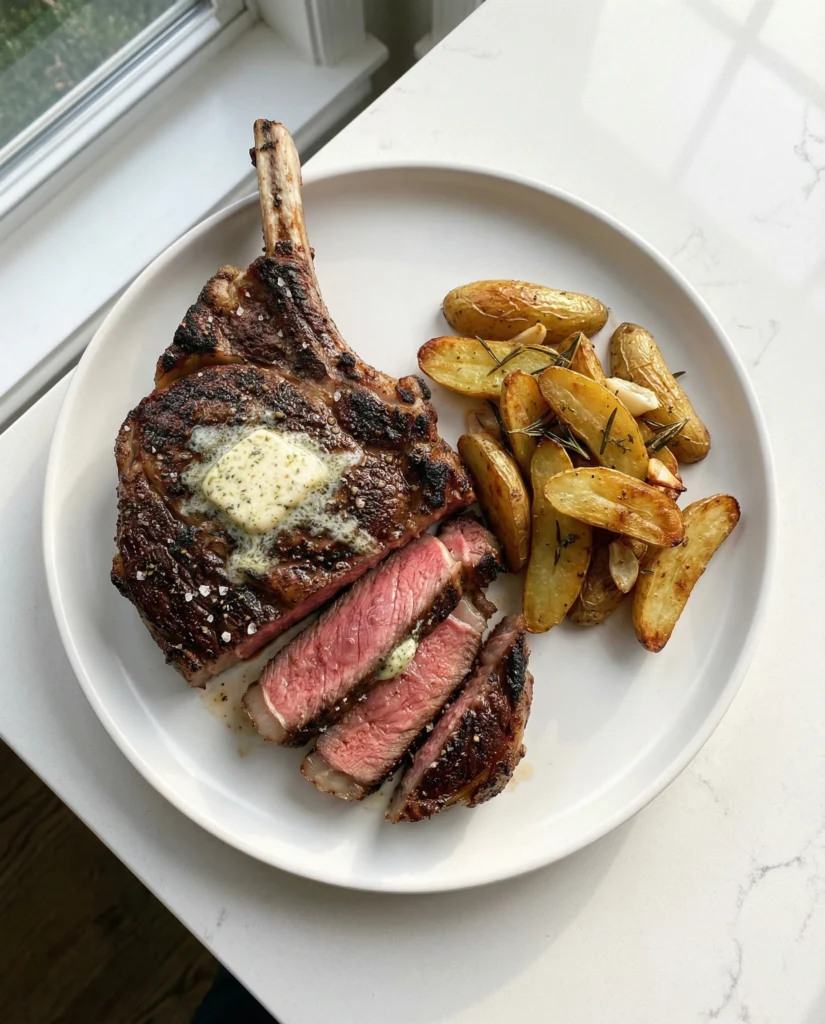
- Rest with herb butter. Transfer to a board, immediately place a generous disc of herb butter on top. Rest 8–10 minutes uncovered.
- Slice and serve. Cut against the grain into thick slices for sharing, or serve whole for individual drama. Spoon any pooled herb butter from the board over the slices.
Variations & Tips
Tomahawk version: The tomahawk is simply a cowboy ribeye with a longer frenched rib bone — sometimes 12–16 inches. The cooking technique is identical. The visual impact is even more extraordinary.
Coffee rub variation: Add 1 tsp finely ground espresso to the dry rub. Coffee has a natural bitterness that amplifies the savory depth of beef without tasting like coffee on the finished steak. It’s a pro-kitchen trick worth trying.
Compound butter alternatives: Blue cheese butter, truffle butter, or anchovy-parsley butter all work magnificently on ribeye. Anchovy especially — it dissolves completely and adds pure umami without any fish flavor.
Pro tip — sear the fat cap. Before the reverse sear begins, hold the steak on its side with tongs and sear the fat cap edge directly on the hot grates for 2 minutes. Rendered fat cap is one of the greatest textures in all of grilling.
How to Meal Prep
Dry brine up to 48 hours ahead for even deeper seasoning. Make herb butter up to a week in advance — it freezes for 3 months. Leftover cowboy ribeye is exceptional: slice cold and serve over a rocket salad with balsamic, or chop and fold into scrambled eggs the next morning. Store sliced steak refrigerated for up to 3 days. Reheat gently in a 275°F oven for 10 minutes to avoid overcooking the already-perfect interior.
Cultural Context
The cowboy cut ribeye takes its name from the ranching culture of the American West, where cattle drives and open-fire cooking produced a tradition of bold, unapologetic meat preparation. The bone-in presentation reflects a philosophy of using the whole animal — nothing wasted, the bone contributing both flavor and theater to the eating experience.
The reverse sear technique, now standard in professional kitchens, was popularized by food scientist J. Kenji López-Alt, who demonstrated definitively that low-then-high produces more consistent results than high-then-low for thick cuts. Traditional technique and modern food science, applied to one of the oldest cooking methods on earth.
Cowboy Ribeye
Equipment
- grill two-zone heat setup recommended
- meat thermometer for precise internal temperature
- mixing bowl
- knife
- cutting board
- tongs
Ingredients
- 1 bone-in cowboy ribeye steak (600–900 g, about 1.5–2 inches thick)
- 1 tsp flaky sea salt
- 1 tsp coarsely ground black pepper
- 1 tsp smoked paprika
- 1/2 tsp garlic powder
- 4 tbsp unsalted butter, softened
- 1 tsp fresh thyme, finely chopped
- 1 tsp fresh rosemary, finely chopped
- 1 clove garlic, minced
- 1 pinch flaky salt (for herb butter)
Instructions
- Season the steak generously with flaky salt on all sides and place it uncovered on a rack in the refrigerator overnight or for at least 1 hour to dry brine.
- Prepare the herb butter by mixing softened butter with chopped thyme, rosemary, minced garlic, and a pinch of flaky salt. Roll into a log using plastic wrap and refrigerate until firm.
- Remove the steak from the refrigerator about 45 minutes before cooking to allow it to reach room temperature.
- Season the steak with black pepper, smoked paprika, and garlic powder on all sides.
- Set up a two-zone grill with one side on low heat and the other on high heat.
- Place the steak on the indirect heat side of the grill and cook with the lid closed until the internal temperature reaches about 43°C (110°F).
- Move the steak to the direct high heat side and sear for 60–90 seconds per side, including the edges, until a deep crust forms.
- Transfer the steak to a cutting board, place a slice of herb butter on top, and rest for 8–10 minutes before slicing.
- Slice the steak against the grain and serve with the melted herb butter spooned over the top.