

If you’re looking for a cookie that is as beautiful as it is delicious, you must make these classic Christmas Linzer Cookies.
Imagine biting into a delicate, buttery cookie sandwich with a heavenly almond scent that fills your kitchen as they bake. Through the signature “windowpane” cutout, jewel-toned raspberry or apricot jam peeks through, glistening like stained glass. A delicate dusting of powdered sugar adds the final touch, making each cookie look like a tiny work of art. The texture is pure perfection—tender and slightly crumbly, with just enough structure to hold that luscious jam filling.
They look like they’re from a professional European bakery, but this simple, step-by-step guide makes them totally achievable at home. Yes, these Christmas Linzer Cookies require a bit more time and attention than drop cookies, but I promise you, the stunning results and incredible flavor are worth every moment. Your family and friends will be absolutely amazed!
What Are Linzer Cookies?
Let me share a little history that makes these cookies even more special!
Linzer cookies are inspired by the famous Linzertorte, which originated in Linz, Austria, and is considered one of the oldest known tortes in the world—dating back to the 1600s! The traditional torte features a rich, nut-based pastry filled with red currant or raspberry preserves, and these cookies capture all those same wonderful flavors in a delightful, handheld form.
The key components that make Christmas Linzer Cookies so special are a tender, nut-based dough (traditionally made with almond flour or hazelnut flour) and a sweet, fruity jam filling. Unlike regular sandwich cookies, Linzer cookies are distinguished by their signature “window” cutout on the top cookie, which creates that gorgeous peek-a-boo effect that shows off the colorful jam beneath.
The combination of nutty, slightly spiced dough and tangy-sweet preserves creates a flavor profile that’s incredibly sophisticated yet comforting. These aren’t your everyday cookies—they’re the ones you pull out for special occasions when you really want to impress!
The Secret to Tender, Buttery Linzer Cookie Dough
The magic of these cookies is all in the dough, so let’s talk about what makes it so special.
Almond flour is the star ingredient. Unlike all-purpose flour alone, almond flour (or finely ground almonds) gives these cookies their characteristic tender, melt-in-your-mouth texture and a subtle, sophisticated nuttiness. The almond flour also adds moisture and creates that delicate crumb that makes each bite absolutely divine. Some traditional recipes use hazelnuts, which are equally delicious if you want to try a variation!
High-quality butter is non-negotiable. Since butter is a primary flavor in these Christmas Linzer Cookies, use the best you can find. European-style butter with a higher fat content creates an even richer, more tender cookie. Make sure your butter is properly softened (not melted!) so it creams beautifully with the sugar.
A hint of warm spice elevates everything. Traditional Linzer dough includes warming spices like cinnamon, and sometimes a touch of cloves or nutmeg. I also love adding a bit of fresh lemon zest, which brightens the flavors and complements both the almonds and the jam beautifully. These subtle additions make your cookies taste complex and bakery-worthy.
The golden rule: don’t overmix! Once you add your flour mixture to the butter and eggs, mix just until combined. Overworking the dough develops too much gluten, which results in tough, dense cookies instead of the tender, delicate texture we’re after. As soon as you no longer see streaks of flour, stop mixing!
Looking for another traditional European Christmas cookie? These Italian Cuccidati Cookies are filled with figs, nuts, and warm spices—another holiday showstopper!
How to Make Christmas Linzer Cookies (The “Windowpane” Method)
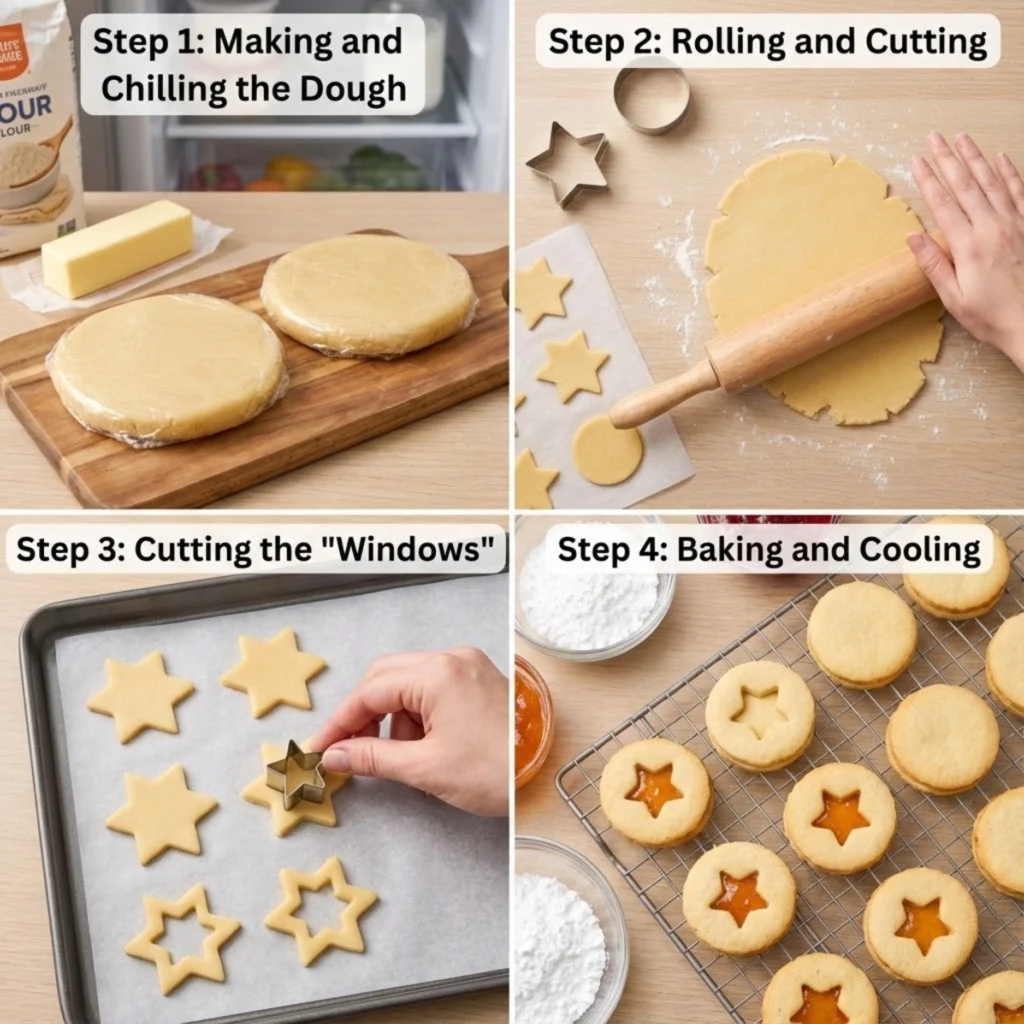
Let me walk you through this process step-by-step so your cookies turn out absolutely perfect!
Step 1: Making and Chilling the Dough
This step is absolutely critical, so don’t skip it! After mixing your dough, divide it into two flat disks, wrap them tightly in plastic wrap, and refrigerate for at least 2 hours (or up to 3 days). Chilling serves multiple purposes: it allows the butter to firm up so the dough is easier to roll, lets the flour fully hydrate for better texture, and prevents the cookies from spreading too much during baking. If you’re short on time, you can freeze the dough for 30-45 minutes, but longer, slower chilling in the refrigerator yields the best results.
Step 2: Rolling and Cutting
Working with one disk at a time (keep the other chilled!), roll your dough on a lightly floured surface to about ¼-inch thickness. Consistency is key here—use rolling pin guides or rubber bands on the ends of your rolling pin to ensure even thickness. This helps all your cookies bake evenly. Cut out your shapes using cookie cutters (classic shapes include circles, hearts, stars, and flowers), then carefully transfer them to parchment-lined baking sheets using a thin spatula. If the dough gets too soft while you’re working, pop it back in the fridge for 10 minutes.
Step 3: Cutting the “Windows”
Here’s where the magic happens! Take half of your cut cookies (these will be your “tops”) and use a smaller cookie cutter to cut out a shape from the center. This creates that beautiful windowpane effect. I like to use a cutter that’s about 1-2 sizes smaller than my main cookie cutter. The cutout shapes can be baked separately as bonus mini cookies—they’re perfect for snacking while you assemble the rest!
Step 4: Baking and Cooling
Bake your Christmas Linzer Cookies at 350°F for about 8-12 minutes, depending on size. They should be just barely starting to turn golden around the edges—you don’t want them brown, as they’ll continue to firm up as they cool. Let them cool on the baking sheet for 5 minutes (they’re very delicate when hot!), then transfer to a wire rack to cool completely before assembling. This patience is important—if you fill warm cookies, the jam will be too runny and the cookies might break.
Assembling Your Cookies (The Fun Part!)
Now comes my favorite part—putting these beauties together!
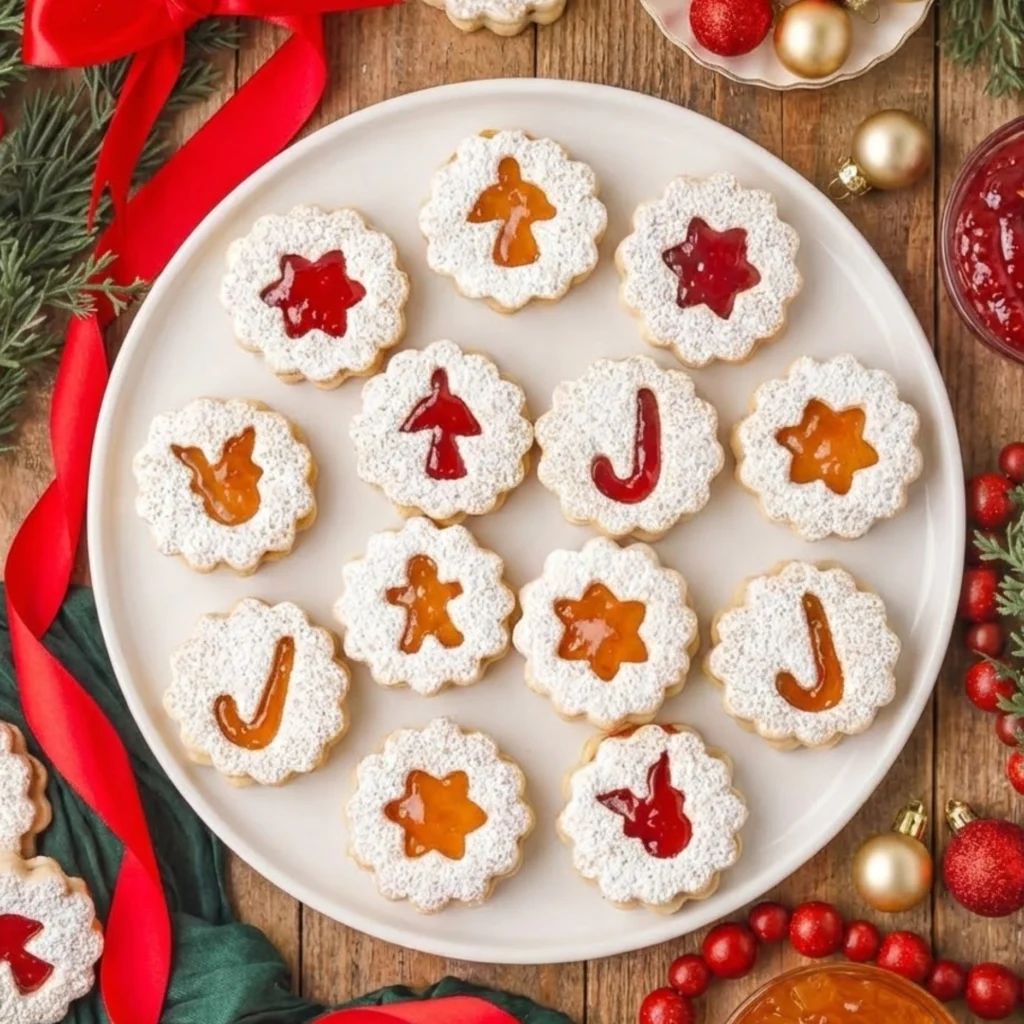
Dust with powdered sugar first. This is an important timing tip! Generously dust your “top” cookies (the ones with the cutout windows) with powdered sugar before you add the jam. If you wait until after assembly, the jam’s moisture will make the powdered sugar dissolve and look spotty. Use a fine-mesh sieve to create an even, professional-looking dusting. For an extra festive touch, you can place a paper snowflake stencil over the cookie while dusting to create a beautiful pattern!
Choose your jam wisely. The best jams for Christmas Linzer Cookies are thick, high-quality preserves with intense flavor. Raspberry and apricot are traditional classics, and their bright colors look absolutely stunning through the window. Strawberry, blackberry, and red currant are also wonderful choices. Avoid jelly (which is too runny) or jams with large fruit chunks (which make assembly difficult). If your jam seems too loose, you can simmer it gently for a few minutes to thicken it up before using.
Fill without the mess. Here’s my foolproof method: arrange all your bottom cookies on your work surface. Spoon or pipe about ½ to 1 teaspoon of jam onto the center of each bottom cookie, keeping it away from the edges. Gently place a powdered-sugar-dusted top cookie over each one and press down very lightly—the jam will spread toward the edges naturally. If you overfill or press too hard, the jam will squeeze out the sides and create a sticky mess. Less is definitely more here!
Your Guide to Storing & Making Linzer Cookies Ahead
These cookies are actually one of the best make-ahead treats, which makes them perfect for busy holiday baking!
Storage secrets: Store your assembled Christmas Linzer Cookies in an airtight container at room temperature for up to 5 days, with layers separated by parchment paper to prevent sticking. Here’s a wonderful secret: these cookies actually get better after a day or two! As they sit, the moisture from the jam softens the cookies slightly, creating an even more tender, harmonious texture. The flavors also meld together beautifully. Just keep them away from other cookies with strong flavors, as they can absorb odors.
Yes, you can freeze the dough! This is a game-changer for holiday prep. Wrap your dough disks tightly in plastic wrap, then place them in a freezer bag. They’ll keep beautifully for up to 3 months. When you’re ready to bake, thaw the dough overnight in the refrigerator, then roll and cut as directed. You can also roll out and cut the cookies, then freeze them on a baking sheet before transferring to a freezer bag. Bake from frozen, adding just 1-2 minutes to the baking time.
Freezing assembled cookies: Absolutely! Once your cookies are fully assembled and the jam has set, freeze them in a single layer on a baking sheet, then transfer to an airtight container with parchment between layers. They’ll keep for up to 2 months. Thaw at room temperature for about 30 minutes before serving. You may want to add a fresh dusting of powdered sugar after thawing to make them look picture-perfect again.
FAQs
My dough is too crumbly, what did I do wrong?
Crumbly dough usually means there’s not enough moisture to hold everything together. This can happen if you added too much flour (always spoon and level your flour rather than scooping), if your butter wasn’t soft enough to fully incorporate, or if the eggs were too cold. The fix is simple: add ice water, one teaspoon at a time, kneading gently until the dough just comes together. You can also let the dough rest for 15 minutes—sometimes the flour just needs more time to absorb the moisture. If you’re measuring almond flour, make sure to use the weight measurement if provided, as almond flour can vary significantly in volume.
Do I have to use almond flour?
While almond flour is traditional and gives these Christmas Linzer Cookies their signature texture and flavor, you do have options! You can substitute finely ground hazelnuts for a more traditional Austrian version, or use finely ground pecans or walnuts for a different twist. Some bakers use half almond flour and half all-purpose flour for a slightly sturdier cookie. However, I don’t recommend replacing the almond flour entirely with all-purpose flour—the cookies will taste completely different and won’t have that characteristic tender, melt-away texture that makes Linzer cookies so special. If you have a nut allergy, look for a nut-free Linzer recipe that’s specifically formulated without almond flour, as the proportions will be quite different.
How do I stop the jam from oozing out?
The key is using the right amount and the right consistency of jam! First, make sure your jam is thick—if it runs off the spoon easily, it’s too thin. Simmer it gently to reduce excess liquid. Second, use only about ½ teaspoon of jam per cookie; it seems like too little, but it will spread when you place the top cookie on. Third, keep the jam away from the edges—leave at least a ¼-inch border. Finally, press very gently when placing the top cookie; you want just enough pressure to make them stick, not enough to squeeze the jam out. If you’re gifting or transporting these cookies, slightly underfill them to be safe!
Conclusion
These Christmas Linzer Cookies are a true labor of love, but they are the most rewarding and beautiful cookie for your holiday platter. From their delicate, buttery texture to their jewel-toned jam centers and elegant powdered sugar dusting, these cookies never fail to impress. Yes, they take a bit more time and patience than simple drop cookies, but every step is absolutely worth it when you see the gorgeous final result.
The wonderful aroma of almond and warm spices filling your kitchen, the satisfaction of creating something truly bakery-worthy, and the joy on your loved ones’ faces when they taste these sophisticated treats—that’s what holiday baking is all about. These Christmas Linzer Cookies bring a touch of Old World elegance to your cookie tray and create memories that will last long after the last crumb is gone.
I hope you enjoy making these elegant cookies! Let me know what jam you use in the comments below—I’d love to hear if you stick with classic raspberry or try something adventurous. And be sure to Pin this showstopper recipe for your holiday baking so you can find it year after year. These beauties are destined to become a cherished tradition in your home!
Happy baking!

Linzer Cookies
Equipment
- Rolling Pin
- cookie cutters
- baking sheets
- parchment paper
Ingredients
- 1 cup unsalted butter, softened
- 2/3 cup sugar
- 1 large egg
- 1 teaspoon vanilla extract
- 2 cups all-purpose flour
- 1 cup almond flour
- 1/4 teaspoon salt
- 3/4 cup jam (raspberry, strawberry, or apricot)
- 1/2 cup powdered sugar for dusting
Instructions
- Beat the butter and sugar together in a large mixing bowl until light and creamy, about 2 minutes.
- Add the egg and vanilla extract, mixing just until combined and smooth.
- Stir in the all-purpose flour, almond flour, and salt. Mix until a soft dough forms.
- Divide the dough into two discs, wrap in plastic wrap, and refrigerate for at least 1 hour.
- Preheat oven to 350°F (177°C) and line baking sheets with parchment paper.
- Roll out one disc of dough on a lightly floured surface to 1/8-inch thickness. Cut half the cookies with a solid cutter and the other half with center cutouts.
- Transfer cookies to prepared baking sheets, spacing about an inch apart. Re-roll scraps as needed.
- Bake for 8–10 minutes, or until edges lightly golden. Cool on baking sheet briefly, then transfer to a wire rack.
- Dust the top (cut-out) cookies with powdered sugar once cooled.
- Spread 1 teaspoon jam onto each bottom cookie, then top with a dusted cookie to form a sandwich.