
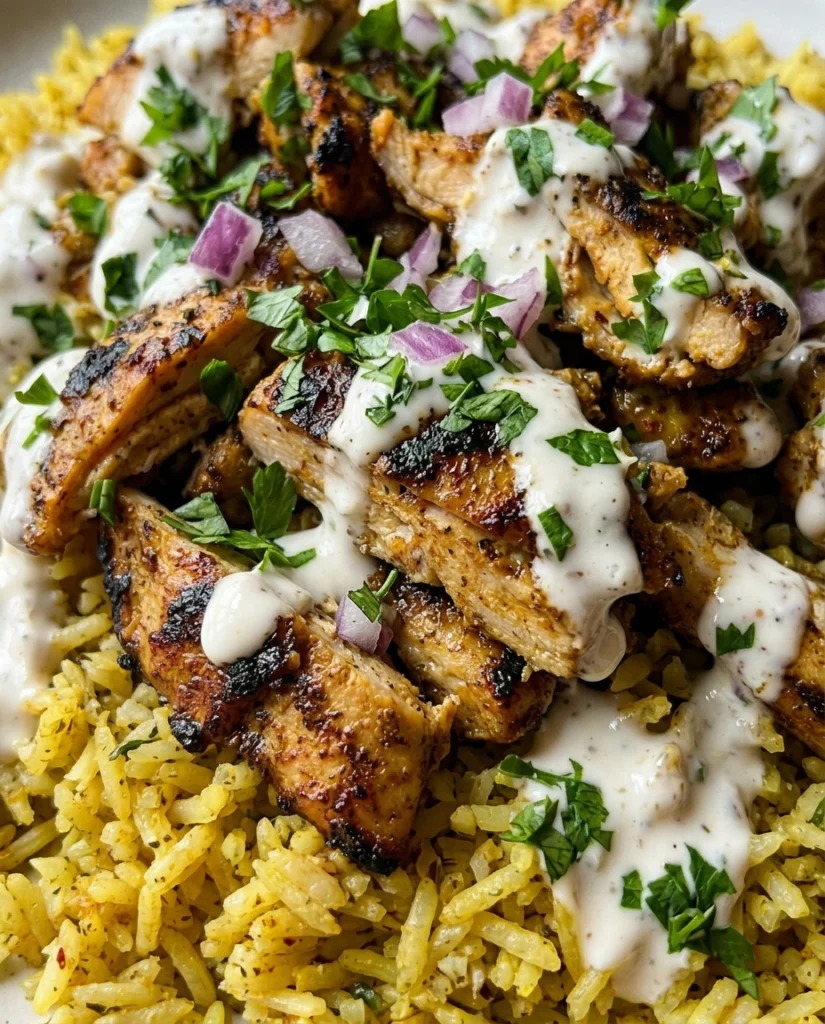
There are certain dishes that announce themselves before you even lift the lid. The moment the shawarma spice blend hits a hot pan — cumin, coriander, turmeric, smoked paprika, cinnamon, allspice — the kitchen fills with an aroma so complex and so deeply satisfying that whatever else was happening in the house simply stops. Everyone migrates toward the smell. This Chicken Shawarma With Baked Rice is that dish, and it is one of the most genuinely spectacular spring dinner ideas you will make all season.
Shawarma is one of the Middle East’s great gifts to the world’s street food canon — spiced, marinated meat cooked slowly on a vertical rotisserie, shaved thin and piled into flatbread with pickles and garlic sauce. This home kitchen version captures all of that flavor through a marinade that works the same spice magic in a fraction of the time, finished in the oven over a bed of rice that acts as a living sponge — absorbing the rendered chicken fat, the spiced juices, and the concentrated flavor of everything above it as it bakes into something extraordinary.
The baked rice is not a side dish. It is a co-star. As the chicken roasts above it, every drop of seasoned fat and spiced juice falls into the rice below, infusing it from the inside out and producing a result that no amount of seasoning added separately could replicate. The bottom layer develops a golden, slightly crispy crust — the Persian tahdig tradition translated into a shawarma context — while the interior stays fluffy, fragrant, and deeply flavored. This is the spring dinner idea that makes people wonder how long you trained.
Why You’ll Love This Spring Dinner Idea
The first reason is the depth of flavor relative to the effort. The marinade takes five minutes to mix. The rice setup takes ten. The oven does everything else — building the crust, rendering the chicken, driving the spiced juices downward into the rice — while you are entirely free to do something else. This is a dinner that tastes like a project and cooks like a hands-off weeknight meal.
The second reason is the architecture of the dish. Chicken and rice cooked together in one pan is one of cooking’s most universal and most satisfying formats — found in Spanish arroz con pollo, Persian zereshk polo ba morgh, Hainanese chicken rice, and countless other traditions — because it works. Fat from the protein enriches the starch below. The starch absorbs the cooking liquid and the drippings simultaneously. Everything tastes more fully of itself and more fully of everything else at the same time.
The third reason is the presentation. A pan of Chicken Shawarma With Baked Rice brought to the table whole — golden chicken thighs gleaming with spiced crust, the rice underneath fragrant with turmeric and charred at the edges — looks like a feast. It looks like the kind of dinner you make when you want to impress. The fact that it requires one pan and largely passive cooking time is information the dish does not volunteer.
Common Mistakes — And How to Avoid Them
Mistake 1: Not Marinating Long Enough
The shawarma spice blend contains fat-soluble flavor compounds — the essential oils in cumin, coriander, and cinnamon dissolve into the olive oil in the marinade and penetrate the chicken during resting time. A rushed 15-minute marinade coats the surface but does not drive flavor into the meat. A minimum of one hour — and ideally overnight in the refrigerator — produces chicken where the spice penetration goes all the way through every slice. Plan ahead and the payoff is dramatic.
Mistake 2: Using the Wrong Rice
Not all rice behaves the same way in a baked rice preparation. Long-grain rice — basmati in particular — is essential here because its low starch content means the grains stay separate and fluffy rather than clumping into a starchy mass as they absorb the cooking liquid and chicken drippings. Short-grain or medium-grain rice absorbs liquid differently and produces a stickier, denser result that works against the light, separate-grained texture the dish requires. Rinse the basmati until the water runs clear — this removes excess surface starch and is the single most impactful step for achieving properly fluffy baked rice.
Mistake 3: Adding Too Much Liquid to the Rice
Baked rice requires less liquid than stovetop rice because the sealed environment of the oven retains steam far more efficiently than an open pot. The standard stovetop ratio of 1:2 rice to water produces waterlogged, mushy baked rice. The correct ratio for this preparation is closer to 1:1.5 — one cup of rinsed basmati to one and a half cups of liquid. The chicken also releases moisture as it roasts, contributing additional liquid to the rice from above. Account for this when measuring.
Mistake 4: Skipping the Sear
The temptation to skip the stovetop sear and go directly from marinade to oven is understandable — it is one fewer pan and one fewer step. Resist it. The Maillard reaction that happens when the marinated chicken skin hits a screaming hot pan produces flavor compounds that simply cannot form in the moderate, moist heat of an oven. The crust, the char, the caramelized spices on the exterior — these are created in the first two minutes of searing and they are irreplaceable. Sear first, always.
Mistake 5: Cutting Into the Chicken Immediately
The resting step is mentioned in nearly every chicken recipe and skipped in nearly every home kitchen because the food is hot and everyone is hungry. In this dish the stakes are particularly high — slicing into shawarma chicken immediately after it comes from the oven releases the accumulated juices onto the cutting board rather than allowing them to redistribute into the meat. A five-minute rest tented loosely with foil costs nothing and produces chicken that is noticeably, measurably juicier than chicken cut without resting.
Chef’s Notes
Shawarma spice blends vary significantly across the Middle East — Lebanese, Syrian, Turkish, Israeli, and Egyptian versions all emphasize different spice ratios and include region-specific ingredients. What they share is the use of warm spices — cinnamon, allspice, cloves — alongside the more expected savory spices of cumin and coriander. This combination of warm and savory is what gives shawarma its distinctive character and what separates it from other spiced chicken preparations that use only the savory spice family.
The cinnamon is the ingredient that surprises people most and the one they are most tempted to reduce or omit. Do not. In small quantities, cinnamon does not read as a sweet or dessert spice — it reads as warmth, complexity, and depth. It is the note in the shawarma chord that you cannot quite identify but would immediately miss if it were gone. Trust it. Use it.
For the baked rice, I want you to think about what is actually happening in the pan during the baking process. The rice is submerged in seasoned liquid and covered with chicken thighs. As the oven heat penetrates the pan, the liquid begins to simmer and steam simultaneously. The steam is trapped by the foil seal during the first phase of cooking, creating a pressure-cooker-like environment that drives the liquid into the rice efficiently and evenly. When the foil is removed for the final phase, the steam escapes and the surface begins to dry out and develop texture — the rice grains separate, the edges crisp, and the chicken skin crisps and deepens. These are two distinct cooking phases serving two distinct purposes, and both are essential.
The garlic yogurt sauce served alongside — labne-adjacent in character, bright with lemon, sharp with raw garlic — is not optional garnish. It is the acid and dairy counterpoint that the richness of the chicken fat and spiced rice demands. It resets the palate between bites and adds a cooling contrast to the warm spices that is fundamental to how shawarma is meant to be experienced.
Key Ingredients & Why They Matter
Bone-In, Skin-On Chicken Thighs are the essential cut for this preparation. The bone conducts heat more evenly into the thickest part of the meat, preventing the dry exterior and undercooked interior that boneless thighs can produce in a long oven cook. The skin renders its fat downward into the rice during roasting — this rendered fat is the primary flavor vehicle for the rice below and the source of the golden, crispy crust that develops at the pan’s edges. Boneless, skinless thighs produce a leaner, less flavorful result and deprive the rice of its most important flavoring agent.
Basmati Rice is the correct rice for this preparation for three reasons: its long grains stay separate and fluffy rather than clumping, its natural fragrance complements the shawarma spice blend beautifully, and its relatively low surface starch — once rinsed — absorbs flavored liquid cleanly without becoming gluey. It is the rice of the Persian and South Asian cooking traditions that have most deeply influenced Middle Eastern rice preparations, and its use here is culturally as well as culinarily appropriate.
Cumin is the savory backbone of the shawarma spice blend. It provides an earthy, slightly smoky warmth that anchors all the other spices and gives the blend its distinctly Middle Eastern character. Whole cumin seeds toasted and freshly ground produce a noticeably more complex and aromatic result than pre-ground cumin — if you have a spice grinder, this is the recipe to use it for.
Coriander contributes a citrusy, floral note that lifts and brightens the blend. It pairs with cumin the way lemon juice pairs with olive oil — each makes the other more fully itself. Together they form the aromatic foundation of countless Middle Eastern spice preparations.
Turmeric provides the golden color that gives both the chicken and the rice their characteristic warm, sunlit hue. It contributes a mild, slightly bitter earthiness to the flavor and contains curcumin — a compound with significant anti-inflammatory properties that makes this one of the more nutritionally interesting spiced chicken preparations in any spring dinner ideas collection.
Cinnamon and Allspice are the warm spices that give shawarma its distinctive complexity — the notes that make it taste unlike any other spiced chicken preparation. Used in small quantities, they read as depth and warmth rather than sweetness, and they are the flavor elements that most immediately signal Middle Eastern cooking to the palate.
Smoked Paprika adds a subtle smokiness that mimics the char of a rotisserie without requiring one. It contributes color, mild sweetness, and the faintest suggestion of wood smoke that grounds the spice blend in something that feels genuinely cooked over fire.
Full-Fat Greek Yogurt forms the base of the garlic sauce and provides the cooling, dairy counterpoint that shawarma has always been served with in some form — whether as toum (Lebanese garlic sauce), tzatziki, or simple yogurt with lemon. Its tanginess cuts through the richness of the spiced chicken fat and its creaminess coats the palate in a way that makes the next bite of rice taste even more deeply spiced by contrast.
Fresh Lemon appears in both the marinade and the garlic sauce, providing the acid that brightens the entire dish and keeps the warm spices from feeling heavy. In the marinade, lemon juice begins the tenderizing process and carries the spice compounds into the surface of the meat. In the sauce, it provides the sharp, citrusy top note that makes the yogurt taste alive rather than flat.
Chicken Broth is the cooking liquid for the rice — used in place of water to add a savory depth that plain water cannot provide. Combined with the chicken drippings that fall into the rice during roasting, it creates a cooking liquid of remarkable complexity that produces rice far more flavorful than any amount of separately added seasoning could achieve.
How to Make Chicken Shawarma With Baked Rice
Ingredients
For the Shawarma Marinade:
- 6 bone-in, skin-on chicken thighs
- 4 tbsp extra-virgin olive oil
- Juice of 1 large lemon
- Zest of 1 lemon
- 5 cloves garlic, finely grated
- 2 tsp ground cumin
- 2 tsp ground coriander
- 1½ tsp smoked paprika
- 1 tsp turmeric
- ½ tsp ground cinnamon
- ½ tsp ground allspice
- ¼ tsp cayenne pepper
- 1½ tsp salt
- ½ tsp black pepper
For the Baked Rice:
- 1½ cups basmati rice, rinsed until water runs clear
- 2¼ cups low-sodium chicken broth
- 1 tbsp extra-virgin olive oil
- 1 tsp turmeric
- 1 tsp cumin
- ½ tsp salt
- ¼ tsp black pepper
- 1 medium yellow onion, finely diced
- 4 cloves garlic, thinly sliced
For the Garlic Yogurt Sauce:
- 1 cup full-fat Greek yogurt
- 2 cloves garlic, finely grated
- Juice of ½ lemon
- 2 tbsp extra-virgin olive oil
- 2 tbsp fresh parsley, finely chopped
- Salt and pepper to taste
For Serving:
- Fresh parsley and mint, roughly torn
- Thinly sliced cucumber and tomato
- Pickled red onions or turnips
- Lemon wedges
- Warm flatbread alongside
- Marinate the chicken. Combine all marinade ingredients in a large bowl and whisk until the olive oil, lemon juice, and spices form a cohesive, fragrant paste. Add the chicken thighs and turn to coat thoroughly, working the marinade under the skin where possible. Cover and refrigerate for a minimum of 1 hour and ideally overnight. Remove from the fridge 20 minutes before cooking.
- Preheat the oven to 400°F. Position a rack in the center of the oven.
- Sear the chicken. Heat a large, oven-safe skillet or braising pan — at least 12 inches — over high heat until smoking. Add 1 tablespoon of olive oil. Place the chicken thighs skin-side down in the hot pan and sear without moving for 3–4 minutes until the skin is deeply golden, caramelized, and releases naturally from the pan surface. Flip and sear the flesh side for 2 minutes. Transfer to a plate. Do not discard the fat in the pan — it is the foundation of the rice’s flavor.
- Build the rice base. Reduce the pan heat to medium. Add the diced onion to the rendered chicken fat remaining in the pan and cook, stirring occasionally, for 4–5 minutes until softened and beginning to turn golden at the edges. Add the sliced garlic, turmeric, and cumin and cook for 60 seconds until fragrant. Add the rinsed, drained basmati rice and stir to coat every grain in the spiced onion and fat — this toasting step adds a subtle nutty depth to the finished rice.
- Add the liquid. Pour the chicken broth into the pan and stir to combine with the rice and aromatics. Season with salt and pepper. Bring to a gentle simmer over medium heat, then remove from the heat immediately.
- Arrange the chicken over the rice. Nestle the seared chicken thighs skin-side up over the rice, pressing them gently into position. They should sit on top of the rice rather than submerging into it — the skin must remain above the liquid to crisp rather than steam. Pour any resting juices from the plate over the rice around the chicken.
- Cover and bake — phase one. Cover the pan tightly with aluminum foil, crimping the edges to create a firm seal. Bake covered at 400°F for 25 minutes. During this phase the steam is trapped, the rice absorbs the liquid, and the chicken cooks through gently from the inside.
- Uncover and bake — phase two. Remove the foil carefully — the trapped steam will release dramatically. Return the uncovered pan to the oven for 15–20 minutes until the chicken skin is deeply golden and crispy, the rice at the pan edges has developed a slightly golden crust, and an instant-read thermometer inserted into the thickest part of the chicken reads 165°F.
- Rest. Remove the pan from the oven and allow it to rest, uncovered, for 5–8 minutes. The chicken juices will redistribute and the rice will finish steaming and setting during this window.
- Make the garlic yogurt sauce. While the pan rests, whisk together the Greek yogurt, grated garlic, lemon juice, olive oil, and parsley. Season with salt and pepper. The sauce should be creamy, sharp, and bright — taste and adjust the garlic and lemon to your preference. Serve the pan at the table directly, scattered with fresh herbs, with the garlic yogurt sauce, pickled vegetables, and lemon wedges alongside.
Variations & Tips
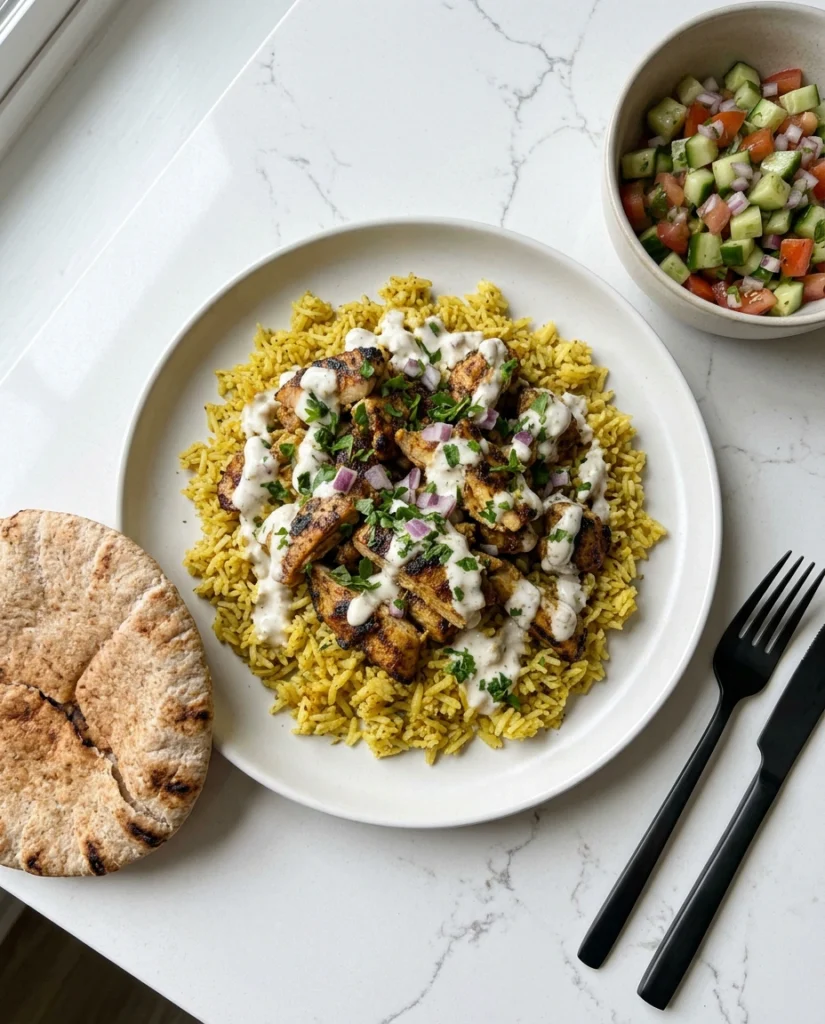
Make It a Full Mezze Spread: Serve alongside hummus, warm flatbread, tabbouleh, and a simple cucumber-tomato salad dressed with lemon and olive oil. The chicken shawarma and baked rice becomes the centerpiece of a Middle Eastern feast that scales effortlessly for a dinner party and presents as one of the most impressive spring dinner ideas for entertaining.
Make It Spicier: Double the cayenne in the marinade and add a teaspoon of Aleppo pepper — a Syrian chili with a mild, fruity heat and a slightly oily, brick-red character that is distinctly Middle Eastern in flavor. Aleppo pepper adds heat alongside complexity rather than just heat, which keeps the spice blend balanced rather than simply hot.
Make It With Lamb: Replace the chicken thighs with bone-in lamb shoulder chops using the same marinade and the same technique. Lamb and shawarma spices is the original — the flavor combination that the rotisserie tradition was built on — and the richer, more assertive flavor of lamb produces a result that is even more deeply complex than the chicken version. Extend the covered baking time to 35 minutes for lamb.
Add a Vermicelli Layer: Before adding the rinsed basmati, toast a handful of broken vermicelli noodles in the pan fat until golden brown — a technique borrowed from Lebanese rice pilaf. The toasted vermicelli adds a nutty flavor and a textural variation throughout the finished rice that makes every spoonful slightly different and considerably more interesting.
Pro Tip — The Foil Seal Matters: The quality of the foil seal during phase one baking directly determines the quality of the finished rice. A loose or imperfect seal allows steam to escape, reducing the liquid available to the rice and producing undercooked, dry grains with a crusty top rather than the fluffy, evenly cooked interior the recipe requires. Press the foil firmly against the pan rim and crimp it deliberately at every edge before the pan goes into the oven.
How to Meal Prep Chicken Shawarma With Baked Rice
This is one of the most intelligently meal-prep-suited spring dinner ideas in the collection — not just because it reheats beautifully, but because the component parts hold separately at different rates and can be mixed and matched across an entire week of meals.
Marinate in Bulk and Freeze Raw: The shawarma marinade coated chicken freezes exceptionally well for up to 3 months. Marinate a double or triple batch of chicken thighs, divide into meal-sized portions in zip-lock bags, and freeze flat. The chicken marinates as it thaws in the refrigerator overnight — meaning you always have deeply marinated, ready-to-cook shawarma chicken available with zero day-of prep beyond a 20-minute counter rest.
Cook Once, Eat Multiple Ways: A full batch of shawarma chicken yields protein for a week of different meals. Serve over baked rice on night one. Slice thin and pile into warm flatbread with pickled onions and garlic yogurt for shawarma wraps on night two. Lay over a simple green salad with tahini dressing on night three. Fold into a grain bowl with hummus, roasted vegetables, and cucumber on night four. The spiced chicken adapts effortlessly to every format.
Reheat the Rice Properly: Leftover baked rice reheats best with a splash of chicken broth or water added before reheating — about two tablespoons per cup of rice — either in a covered skillet over medium-low heat for 4–5 minutes or in a microwave-safe container covered loosely with a damp paper towel. The added moisture rehydrates the rice and restores its fluffy texture rather than producing the dry, separated grains that reheated rice typically suffers from.
Make the Garlic Yogurt Sauce in Bulk: The garlic yogurt sauce keeps in the refrigerator for up to 5 days and improves as the raw garlic mellows and infuses into the yogurt over time. A double batch made at the start of the week serves as a dipping sauce, a salad dressing thinned with additional lemon juice, a spread for flatbread, and a cooling accompaniment for any spiced protein — making it one of the most versatile and useful condiments you can have in your spring dinner ideas prep arsenal.
Cultural Context: Shawarma, the Spice Road, and the Global Journey of a Single Dish
Shawarma is one of the most widely traveled dishes in the world — a preparation that originated in the Ottoman Empire, spread across the Middle East and North Africa, migrated with immigrant communities to Europe, the Americas, and Australia, and ultimately became one of the most recognizable and beloved street foods on the planet. The vertical rotisserie technique from which it takes its character is believed to have developed in the early 19th century in what is now Turkey, where it was known as döner kebab — rotating roast — before spreading southward and westward through the Ottoman sphere of influence.
The name shawarma itself derives from the Turkish çevirme, meaning “turning” — a direct reference to the rotating spit that is the defining feature of the traditional preparation. As the dish traveled through the Levant — Lebanon, Syria, Palestine, Jordan, Israel — it absorbed the specific spice palates of each region, resulting in the extraordinary variety of shawarma flavor profiles that exist today. Lebanese shawarma emphasizes cinnamon and allspice. Syrian versions often include more cloves and nutmeg. Israeli shawarma frequently incorporates za’atar and sumac. Each is distinctly shawarma and each is distinctly regional.
The baked rice tradition that accompanies this version draws from the Persian concept of polo — long-grain rice cooked with aromatics and fat until the bottom develops a golden, crispy crust called tahdig, meaning “bottom of the pot” — which is considered the most prized portion of the meal in Persian cooking culture. The tahdig tradition has influenced rice preparations across the entire Middle East and Central Asia, and its principles — fat, heat, and patience producing a crust rather than a burn — are exactly what the pan edges of this baked rice deliver.
Together, shawarma and baked rice represent one of the great flavor marriages of the Middle Eastern kitchen — the bold, warming spice of the rotisserie tradition meeting the ancient, refined technique of the Persian rice canon. When you lift the foil on this pan after 25 minutes and smell what the oven has built — the caramelized chicken fat, the turmeric-gold rice, the concentrated shawarma spices rising in a single complex wave of steam — you are smelling something with roots stretching back centuries across one of the world’s great culinary civilizations. That is a remarkable thing to make on a spring weeknight. And it is, without question, one of the finest spring dinner ideas in this entire collection.
Chicken Shawarma With Baked Rice
Equipment
- large oven-safe skillet or braiser 12-inch minimum recommended
- mixing bowl
- whisk
- aluminum foil for tight seal during baking
Ingredients
- 6 bone-in, skin-on chicken thighs
- 4 tbsp extra-virgin olive oil
- 1 lemon, juiced and zested
- 5 cloves garlic, grated
- 2 tsp ground cumin
- 2 tsp ground coriander
- 1 1/2 tsp smoked paprika
- 1 tsp turmeric
- 1/2 tsp ground cinnamon
- 1/2 tsp ground allspice
- 1/4 tsp cayenne pepper
- 1 1/2 tsp salt
- 1/2 tsp black pepper
- 1 1/2 cups basmati rice, rinsed
- 2 1/4 cups low-sodium chicken broth
- 1 medium yellow onion, diced
- 4 cloves garlic, sliced
- 1 tsp turmeric (for rice)
- 1 tsp ground cumin (for rice)
- 1/2 tsp salt (for rice)
- 1/4 tsp black pepper (for rice)
- 1 cup full-fat Greek yogurt
- 2 cloves garlic, grated (for sauce)
- 1/2 lemon, juiced (for sauce)
- 2 tbsp extra-virgin olive oil (for sauce)
- 2 tbsp fresh parsley, chopped
Instructions
- Whisk marinade ingredients together. Coat chicken thoroughly and refrigerate at least 1 hour or overnight.
- Preheat oven to 400°F.
- Sear chicken skin-side down in a hot oven-safe skillet for 3–4 minutes until deeply golden. Flip and sear 2 minutes more. Remove to plate.
- In the same pan, sauté diced onion in rendered fat until softened. Add garlic, turmeric, and cumin; cook until fragrant.
- Add rinsed basmati rice and stir to coat. Pour in chicken broth and season with salt and pepper. Bring to a gentle simmer, then remove from heat.
- Nestle chicken thighs skin-side up over rice. Cover tightly with foil.
- Bake covered 25 minutes.
- Remove foil and bake 15–20 minutes more until chicken reaches 165°F and rice edges are golden.
- Rest 5–8 minutes before serving.
- Whisk yogurt, garlic, lemon juice, olive oil, and parsley together for sauce. Season to taste and serve alongside.