
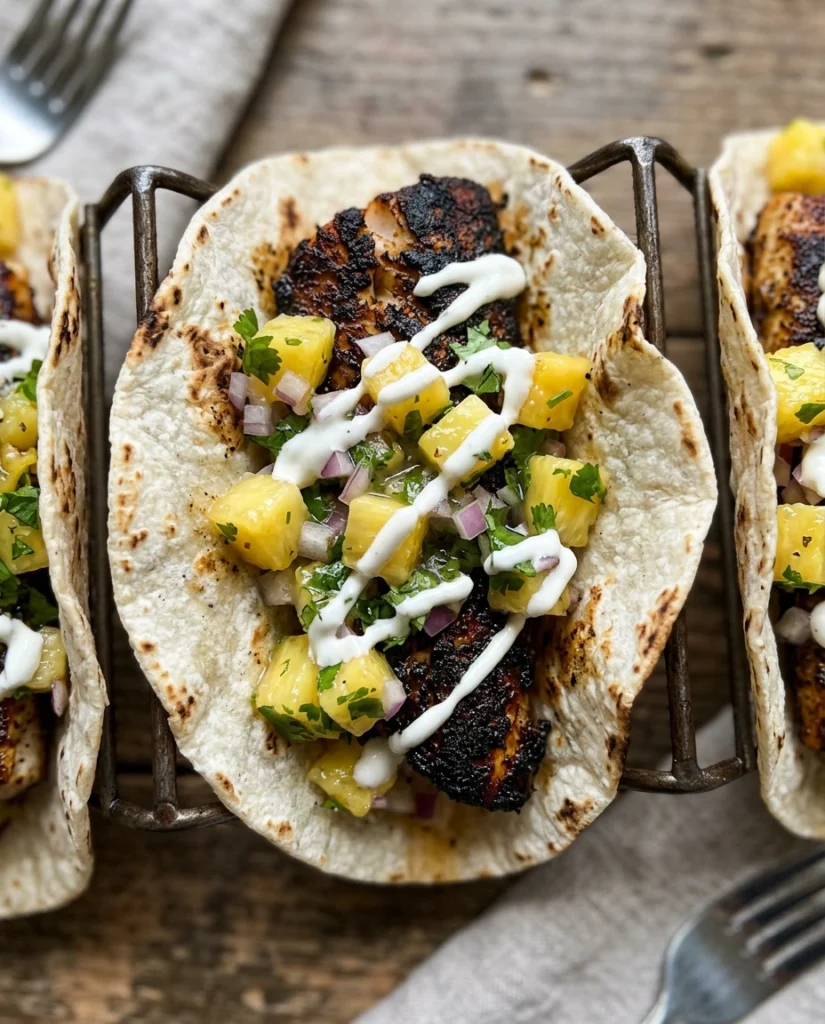
There is a specific moment — and anyone who has eaten a truly great fish taco knows exactly what it is — where every element of the taco lands simultaneously. The heat of the spice. The sweetness of the fruit. The cool creaminess of the sauce. The char and smoke of the fish. The give of a warm tortilla holding all of it together.
These blackened mahi-mahi tacos are built specifically for that moment.
Blackening is one of the most dramatic and rewarding techniques in the world of grilling recipes. It is not burning — it is controlled, intentional charring of a spice crust at extreme heat, creating a deeply complex, smoky, slightly bitter outer layer that contrasts electrifyingly with the sweet, moist fish underneath. Add a pineapple salsa that is all tropical brightness and acid, and you have a taco that is complete, balanced, and completely unforgettable.
Why You’ll Love This Grilling Recipe
The blackening technique is a revelation. Most home cooks have never experienced properly blackened fish — the kind where the spice crust chars to a near-black crust that crackles when you bite through it and gives way to flaky, moist, perfectly cooked fish underneath. Once you understand this technique, it becomes one of the most-reached-for grilling recipes in your arsenal.
Sweet and heat in perfect tension. The pineapple salsa is not just a garnish — it is a structural component of the flavor architecture. Its tropical sweetness and sharp acidity exist in deliberate counterpoint to the fierce, smoky heat of the blackening spice. Neither element makes sense without the other.
Weeknight fast, weekend impressive. From spice rub to plated taco in under 30 minutes. This is a grilling recipe that delivers restaurant-quality results on a Tuesday evening with minimal cleanup and maximum flavor payoff.
Common Mistakes (And How to Avoid Them)
Confusing blackening with burning. The distinction is everything. Blackening happens when a thick, oil-coated spice crust makes direct contact with very high heat and chars at the surface while insulating the fish underneath. Burning happens when the fish itself overcooks or when a thin, dry spice coating scorches without the buffer of oil. The fix is twofold — use enough oil to coat the spice into a paste on the surface of the fish, and work fast over very high heat so the crust forms before the interior overcooks.
Using mahi-mahi fillets that are too thin. Thin fillets — under half an inch — will cook through in 90 seconds over the high heat required for blackening, leaving zero margin for error and no textural contrast between the crust and the interior. Look for fillets that are at least ¾ to 1 inch thick at the center. Thickness is your insurance policy.
Making the pineapple salsa with unripe pineapple. An underripe pineapple is harsh, acidic, and almost aggressively tart — it will fight the dish instead of balancing it. A ripe pineapple is sweet, floral, and juicy, with just enough natural acidity to do its job. Test ripeness by pulling a leaf from the crown — it should come away with gentle resistance. The base of the pineapple should smell sweet and fragrant, not neutral or fermented.
Overloading the tacos. A great taco is a study in restraint. Every component should be present in proportions that allow you to taste all of them simultaneously in a single bite. Too much fish overwhelms the salsa. Too much salsa drowns the fish. Too much sauce makes the tortilla soggy before you finish eating it. Build with intention — three to four pieces of fish, two generous spoonfuls of salsa, a modest drizzle of sauce.
Chef’s Notes
Blackening was popularized by Chef Paul Prudhomme in New Orleans in the early 1980s, originally applied to redfish in a cast iron skillet heated to temperatures that would set off smoke alarms in any normal kitchen. The technique translates magnificently to the grill, where the open flame handles the smoke and the intense heat of a properly preheated grill surface replicates the searing power of cast iron.
The single best upgrade you can make to this grilling recipe is charring your tortillas directly on the grill grate for 20–30 seconds per side immediately before building the tacos. A tortilla with char marks and a slight crispness at the edges is a completely different eating experience from a soft, steamed one — it adds structural integrity, a subtle smokiness, and a textural contrast that elevates the entire taco.
Key Ingredients — And Why They Work
Mahi-mahi fillets: The ideal fish for blackening and for tacos simultaneously. Mahi-mahi has a firm, dense flesh that holds together beautifully on the grill without flaking apart, a mild-to-moderate flavor that is assertive enough to stand up to the blackening spice without being overpowered, and a natural sweetness that harmonizes with the pineapple salsa. It is also a sustainable, widely available choice that makes this grilling recipe accessible year-round.
The blackening spice blend: This is not a single ingredient — it is a carefully calibrated system. Smoked paprika provides the deep, brick-red color and smoky base. Cayenne provides direct heat. Garlic and onion powder provide savory depth. Dried thyme and oregano provide earthy, resinous aromatic complexity. Cumin adds a warm, slightly bitter earthiness. Black and white pepper together provide layered heat — black pepper burns at the front of the mouth, white pepper at the back. Every component has a specific job.
Neutral oil (applied over the spice rub): The oil is the delivery mechanism and the buffer. It binds the spices into a cohesive crust, conducts heat evenly across the surface of the fish, and prevents the spices from burning to ash before the crust has time to form properly. Do not skip it or reduce it — a dry blackening rub on fish is a recipe for acrid, bitter char rather than complex, smoky crust.
Ripe pineapple: Beyond its flavor contribution, pineapple contains bromelain — a natural enzyme that acts as a gentle meat tenderizer. In the context of a fresh salsa served over hot fish, this is purely academic, but it speaks to why pineapple has been paired with proteins across Pacific and Latin American cuisines for centuries. The real reason it belongs here is simpler: nothing cuts through the fierce heat of blackened spice like the bright, tropical sweetness of a perfectly ripe pineapple.
Jalapeño: Provides clean, direct heat in the salsa that echoes and complements — rather than duplicates — the heat of the blackening spice. The salsa’s heat is fresh and bright; the blackening spice’s heat is deep and smoky. They are related but different, which creates complexity rather than redundancy.
Chipotle crema: The cool, creamy, smoky element that ties the entire taco together. Chipotle peppers in adobo bring a deep, smoky heat that bridges the blackened fish and the fresh salsa. Mixed into sour cream or Mexican crema, they create a sauce that cools, enriches, and adds another layer of smoky complexity to every bite.
Corn tortillas: Non-negotiable for this grilling recipe. Corn tortillas have a slight sweetness, earthiness, and structural integrity that flour tortillas simply cannot replicate here. Charred briefly on the grill, a corn tortilla becomes a smoky, slightly crisp vessel that is a genuine flavor component of the taco — not merely a wrapper.
Red cabbage: Provides essential crunch, a peppery bite, and structural support that prevents the taco from collapsing under the weight of the fish and salsa. Its deep purple color also makes the finished taco visually stunning — the contrast between the near-black fish, the golden pineapple salsa, the white crema, and the purple cabbage is one of the most visually appealing plates in this entire series of grilling recipes.
How to Make Blackened Mahi-Mahi Tacos With Pineapple Salsa
Serves: 4 | Prep Time: 20 min | Cook Time: 8–10 min
Ingredients:
For the blackened mahi-mahi:
- 4 mahi-mahi fillets (6 oz each, ¾–1 inch thick)
- 2 tbsp neutral oil (avocado or grapeseed)
For the blackening spice blend:
- 2 tsp smoked paprika
- 1 tsp cayenne pepper (reduce to ½ tsp for milder heat)
- 1 tsp garlic powder
- 1 tsp onion powder
- ½ tsp dried thyme
- ½ tsp dried oregano
- ½ tsp ground cumin
- ½ tsp fine kosher salt
- ¼ tsp black pepper
- ¼ tsp white pepper
For the pineapple salsa:
- 2 cups fresh pineapple, finely diced (about ½ a ripe pineapple)
- 1 jalapeño, seeded and finely minced
- ½ red onion, finely diced
- ½ red bell pepper, finely diced
- ¼ cup fresh cilantro, roughly chopped
- Zest of 1 lime
- 3 tbsp fresh lime juice
- ½ tsp kosher salt
- 1 tsp honey (optional, only if pineapple needs balancing)
For the chipotle crema:
- ½ cup sour cream or Mexican crema
- 1–2 chipotle peppers in adobo sauce, finely minced
- 1 tsp adobo sauce (from the can)
- 1 tbsp fresh lime juice
- Pinch of salt
To build and serve:
- 12 small corn tortillas
- 1½ cups red cabbage, very thinly shredded
- 1 ripe avocado, thinly sliced
- Fresh cilantro leaves
- Lime wedges
- Flaky sea salt
Instructions:
- Make the pineapple salsa. Combine diced pineapple, jalapeño, red onion, red bell pepper, cilantro, lime zest, lime juice, and salt in a bowl. Toss gently to combine — keep the pineapple pieces defined and intact, not mashed. Taste and add honey only if the pineapple is particularly tart. Set aside at room temperature — do not refrigerate. Cold salsa on hot fish mutes every flavor.
- Make the chipotle crema. Whisk together sour cream, minced chipotle peppers, adobo sauce, lime juice, and salt until smooth and fully combined. Taste and adjust heat by adding more chipotle if desired. Transfer to a squeeze bottle or small bowl. Refrigerate until needed.
- Build the blackening spice blend. Combine smoked paprika, cayenne, garlic powder, onion powder, dried thyme, dried oregano, cumin, salt, black pepper, and white pepper in a small bowl. Mix thoroughly until uniform in color — it should look deep brick-red with flecks of darker spice throughout.
- Prepare the mahi-mahi. Pat the fillets completely dry on both sides with paper towels — surface moisture is the enemy of blackening. Drizzle both sides of each fillet with neutral oil and rub it evenly across all surfaces. Press the blackening spice blend generously onto both sides of each fillet, using your hands to pat it firmly into the flesh. The oil and spice should form a dense, cohesive coating — not a thin dusting.
- Preheat the grill. Heat your grill to very high — 450–500°F. You want maximum heat for blackening. Clean and oil your grates thoroughly. If using a gas grill, let it preheat with the lid closed for at least 10 minutes to ensure the grates are genuinely screaming hot, not just warm.
- Grill the mahi-mahi. Place the fillets on the hottest part of the grill. Close the lid immediately. Grill undisturbed for 3–4 minutes — the spice crust needs uninterrupted contact with the hot grates to blacken properly. You will see the edges of the crust turning deep brown to black and the flesh turning opaque from the bottom up. When the fish releases cleanly from the grates, it is ready to flip.
- Flip once and finish. Flip each fillet carefully using a thin, flexible spatula — get it completely underneath before lifting. Grill for another 3–4 minutes until the second side is equally blackened and the fish flakes easily at the thickest point. Internal temperature should read 137°F. Remove from the grill immediately.
- Rest and flake. Let the fillets rest on a cutting board for 2 minutes. Then use two forks to break each fillet into large, irregular chunks — not neat slices. Irregular pieces create more surface area, more textural variation, and a more visually rustic, authentic taco filling.
- Char the tortillas. Working quickly while the fish rests, place corn tortillas directly on the grill grates over medium-high heat for 20–30 seconds per side until they develop light char marks and a slight crispness at the edges. Stack and wrap in a clean kitchen towel to keep warm and pliable.
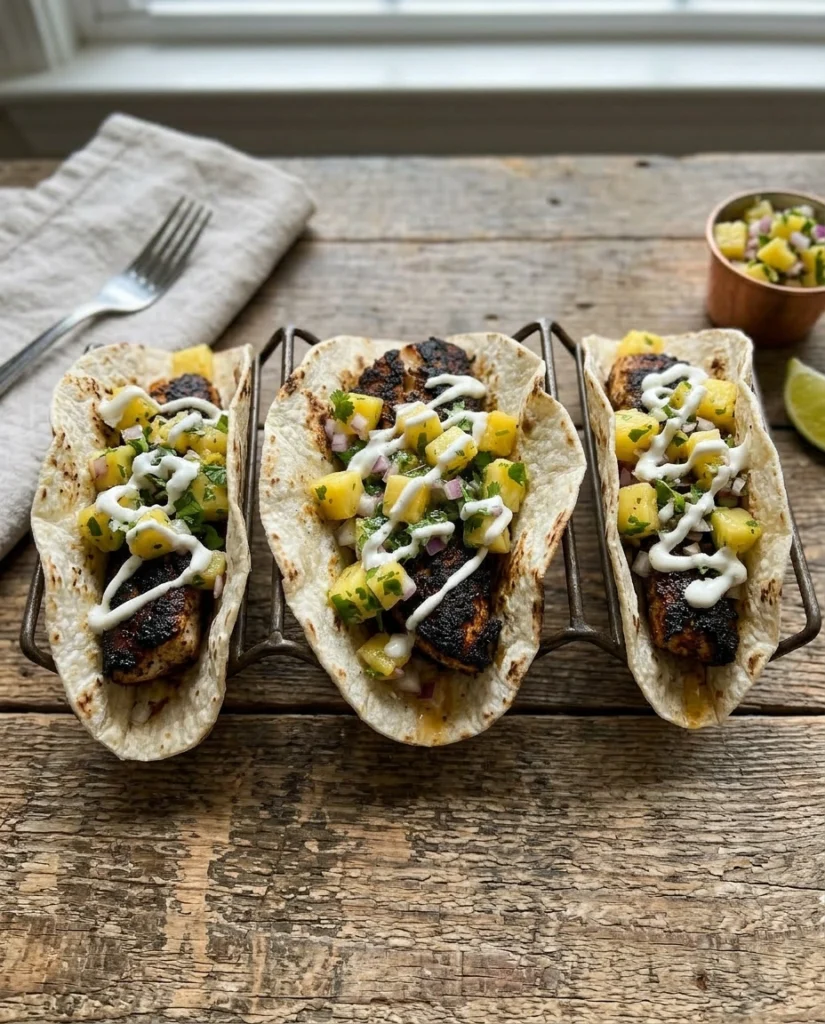
- Build the tacos. For each taco — lay a charred tortilla flat, add a small handful of shredded red cabbage as the base, arrange 3–4 chunks of blackened mahi-mahi over the cabbage, spoon pineapple salsa generously over the fish, add 2–3 slices of avocado, drizzle with chipotle crema, and finish with fresh cilantro leaves and a pinch of flaky sea salt. Serve immediately with lime wedges.
Variations & Tips
Make it milder: Reduce cayenne in the blackening blend to ¼ teaspoon and add an extra ½ teaspoon of smoked paprika in its place. The crust will still blacken and char beautifully — the heat will simply whisper rather than shout.
Swap the fish: This blackening technique works beautifully on snapper, grouper, tilapia, or even thick-cut salmon. Adjust cooking time based on fillet thickness — the internal temperature target of 137°F remains constant regardless of species.
Make it gluten-free: Corn tortillas are naturally gluten-free. Verify your spice blend contains no hidden gluten additives, which is occasionally an issue with commercial spice mixes. Everything else in this grilling recipe is naturally gluten-free.
Mango version: Replace the pineapple in the salsa with an equal amount of ripe diced mango for a deeper, richer tropical sweetness that leans more floral than bright. Both versions are extraordinary — mango salsa is slightly more luxurious, pineapple salsa is slightly more electric.
Pro tip: If your grill has a tendency to flare up dramatically, keep a spray bottle of water nearby for controlled flare management. A brief burst of water knocks down a flare without dropping the grill temperature significantly — far more elegant and effective than moving the fish to a cooler zone mid-cook.
How to Meal Prep
The blackening spice blend is the most make-ahead-friendly component of this grilling recipe. Mixed in large quantities and stored in an airtight jar, it keeps for up to 3 months at full potency and works on shrimp, chicken thighs, pork tenderloin, and cauliflower steaks with equal distinction. Having it pre-made reduces this entire recipe to a genuine 15-minute weeknight meal.
The chipotle crema keeps in the refrigerator for up to 5 days and actually improves after 24 hours as the chipotle flavor deepens and integrates into the cream base. Make a double batch and use it as a dipping sauce for grilled vegetables, a spread for sandwiches, or a dressing for grain bowls throughout the week.
The pineapple salsa is best made fresh within 45 minutes of serving — but the vegetables can be diced and stored separately in the refrigerator up to 24 hours in advance. Combine them with the lime juice, zest, and salt only when you are ready to serve, which preserves the texture and prevents the salsa from becoming watery and flat.
Leftover blackened mahi-mahi — stored in an airtight container for up to 2 days — makes an outstanding taco bowl over cilantro-lime rice with black beans, the remaining salsa, and crema. Cold leftover fish can also be flaked into a salad of arugula, avocado, and thinly sliced red onion with a lime vinaigrette — the smoky, spiced crust becomes an extraordinary salad protein at room temperature.
Cultural Context
Fish tacos are one of the most geographically traceable dishes in the modern American food landscape. Their story begins on the Baja California peninsula — specifically in the coastal cities of Ensenada and San Felipe — where local fishermen and street vendors developed the practice of battering and frying fresh-caught fish and serving it in corn tortillas with shredded cabbage, crema, and salsa. The simplicity was the point — a taco built entirely from what the sea and the land immediately provided.
The fish taco crossed north into the United States in the 1970s and 1980s, carried largely by surfers who had discovered them in Baja and wanted them back home in California. The first American fish taco restaurant of note — Rubio’s, founded in San Diego in 1983 — brought the Baja tradition to a mainstream audience and launched what would eventually become a nationwide obsession.
Blackening itself entered the American culinary vocabulary from an entirely different direction — New Orleans, Louisiana, and the Cajun kitchen of Chef Paul Prudhomme, whose 1980s technique of coating fish in spice and cooking it in a white-hot cast iron skillet became one of the most influential and widely imitated cooking techniques of its era.
These blackened mahi-mahi tacos represent the meeting of those two distinct American food traditions — the sun-bleached, surf-culture simplicity of the Baja fish taco and the fierce, smoke-and-spice intensity of Louisiana blackening — united by a grilling recipe that understands that the best food often happens at the intersection of two great culinary ideas that were always meant to find each other.
Blackened Mahi-Mahi Tacos With Pineapple Salsa
Equipment
- grill
- mixing bowls
- tongs
- spatula
- knife and cutting board
Ingredients
- 4 mahi-mahi fillets (6 oz each, ¾–1 inch thick)
- 2 tbsp neutral oil (avocado or grapeseed)
- 2 tsp smoked paprika
- 1 tsp cayenne pepper
- 1 tsp garlic powder
- 1 tsp onion powder
- 0.5 tsp dried thyme
- 0.5 tsp dried oregano
- 0.5 tsp ground cumin
- 0.5 tsp kosher salt
- 0.25 tsp black pepper
- 0.25 tsp white pepper
- 2 cups fresh pineapple, finely diced
- 1 jalapeño, seeded and minced
- 0.5 red onion, finely diced
- 0.5 red bell pepper, finely diced
- 0.25 cup fresh cilantro, chopped
- 1 lime zest
- 3 tbsp fresh lime juice
- 0.5 tsp kosher salt
- 1 tsp honey (optional)
- 0.5 cup sour cream or Mexican crema
- 2 chipotle peppers in adobo, minced
- 1 tsp adobo sauce
- 1 tbsp lime juice
- 1 pinch salt
- 12 small corn tortillas
- 1.5 cups red cabbage, shredded
- 1 avocado, sliced
- fresh cilantro leaves
- lime wedges
- flaky sea salt
Instructions
- Combine pineapple, jalapeño, red onion, red bell pepper, cilantro, lime zest, lime juice, and salt in a bowl. Mix gently and set aside.
- Whisk together sour cream, chipotle peppers, adobo sauce, lime juice, and salt until smooth. Refrigerate until needed.
- Mix all blackening spices in a bowl until fully combined.
- Pat mahi-mahi dry, coat with oil, and press spice blend firmly onto both sides to form a thick crust.
- Preheat grill to very high heat (450–500°F) and oil the grates well.
- Place fish on the grill and cook undisturbed for 3–4 minutes until a dark crust forms.
- Flip and cook another 3–4 minutes until fish is cooked through and blackened.
- Rest fish briefly, then flake into large chunks.
- Grill tortillas for 20–30 seconds per side until lightly charred and warm.
- Assemble tacos with cabbage, fish, pineapple salsa, avocado, and chipotle crema. Garnish and serve immediately.