
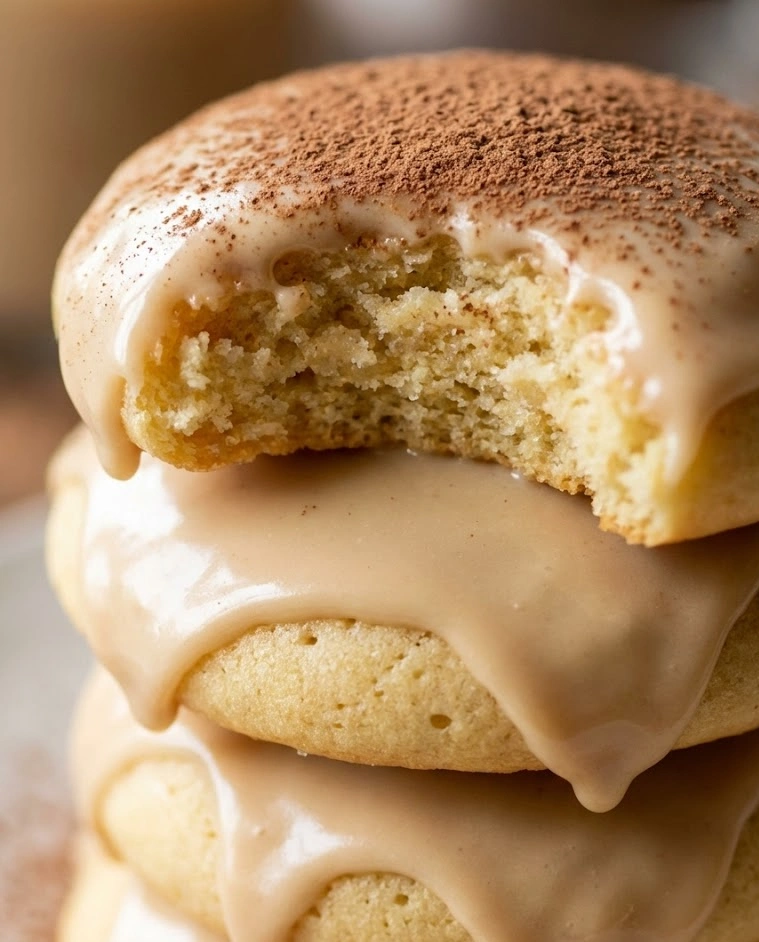
The Flavor Profile
Bailey’s Irish Cream Cookies are an adult-oriented St. Patrick’s Day indulgence that showcases the iconic liqueur’s complex flavor architecture. These cookies deliver rich, buttery sweetness punctuated by Irish whiskey’s warm oakiness and subtle vanilla-cocoa notes from the Irish cream. The alcohol content partially evaporates during baking, leaving behind concentrated flavor compounds without overwhelming boozy heat. A silky Irish cream ganache filling amplifies the liqueur’s characteristic smoothness, creating a sophisticated cookie experience that balances indulgence with restraint—sweet but not cloying, spirited but not aggressive.
Dominant Notes: Butterscotch, vanilla, whiskey warmth, cream richness
Technique Focus: Alcohol reduction for concentrated flavor; ganache emulsification for silky texture
Common Mistakes (And How to Avoid Them)
Mistake #1: Using Too Much Bailey’s in the Dough
Liqueur contains significant water content (approximately 17% alcohol, remainder is cream, sugar, and water), which disrupts dough structure when used excessively. Limit Bailey’s in cookie dough to 2-3 tablespoons maximum. For stronger flavor, reduce Bailey’s on the stovetop first—simmering 1 cup down to ¼ cup concentrates flavor compounds while removing excess moisture.
Mistake #2: Adding Bailey’s Directly to Ganache Without Tempering
Pouring cold or room-temperature Bailey’s into hot cream causes temperature shock, which can split the ganache and create a grainy, separated texture. Always warm the Bailey’s slightly (30 seconds in microwave) before adding to hot cream, and add gradually while whisking constantly.
Mistake #3: Overbaking to Compensate for Alcohol
Many bakers overbake these cookies thinking the alcohol needs to “cook off.” In reality, you want to preserve some of those volatile flavor compounds. Bake until edges are just set and centers look slightly underdone—they’ll continue cooking during the cooling phase. Overbaking creates dry, crumbly cookies that can’t support the ganache filling.
Mistake #4: Filling Cookies While Ganache Is Too Warm
Warm ganache squirts out the sides when cookies are sandwiched together, creating messy results. Refrigerate ganache until it reaches a spreadable, frosting-like consistency (about 1-2 hours), then pipe or spread onto cookies for clean, professional results.
Chef’s Notes: The Science of Baking with Alcohol
Alcohol affects baked goods in multiple ways. First, ethanol evaporates at 173°F (78°C)—well below water’s boiling point—which means it leaves the dough early during baking. This creates steam pockets that contribute to a tender, open crumb structure. However, alcohol also inhibits gluten formation, which is why excessive amounts create fragile, crumbly cookies.
The flavor compounds in Bailey’s—vanillin from vanilla, furanones from whiskey barrels, lactones from cream—have different volatility rates. Some evaporate quickly (top notes like alcohol heat), while others remain stable during baking (base notes like vanilla and caramel). This is why reduced Bailey’s (where you’ve already evaporated the alcohol on the stovetop) provides more concentrated, nuanced flavor than raw liqueur.
For the ganache, Bailey’s acts as an emulsifier due to its cream content. The milk proteins help stabilize the fat-water emulsion, creating that signature silky texture. Adding Bailey’s actually makes ganache MORE stable than using only cream, which is why these filled cookies hold up beautifully at room temperature.
Bailey’s Irish Cream Cookies Recipe
Yield: 24 sandwich cookies (48 individual cookies)
Prep Time: 30 minutes (plus 2 hours chilling/setting)
Cook Time: 10 minutes per batch
Total Time: 3 hours
Ingredients
For the Bailey’s Reduction:
- 1 cup (240ml) Bailey’s Irish Cream Original
For the Cookie Dough:
- 2¼ cups (281g) all-purpose flour
- ½ teaspoon baking powder
- ¼ teaspoon baking soda
- ½ teaspoon fine sea salt
- ¾ cup (170g) unsalted butter, room temperature
- ¾ cup (150g) granulated sugar
- ½ cup (110g) light brown sugar, packed
- 1 large egg, room temperature
- 1 large egg yolk, room temperature
- ¼ cup (60ml) Bailey’s reduction (from above)
- 1½ teaspoons pure vanilla extract
For the Irish Cream Ganache Filling:
- 8 ounces (227g) high-quality white chocolate, finely chopped
- ⅓ cup (80ml) heavy cream
- 3 tablespoons (45ml) Bailey’s Irish Cream Original, warmed
- 1 tablespoon (14g) unsalted butter, room temperature
- Pinch of fine sea salt
For Optional Garnish:
- 2 ounces (57g) semi-sweet chocolate, melted (for drizzle)
- Cocoa powder for dusting
- Gold luster dust (for elegant finish)
Instructions
Step 1: Create Concentrated Bailey’s Reduction
Pour 1 cup Bailey’s into a small saucepan over medium heat. Bring to a gentle simmer, then reduce heat to medium-low. Simmer for 12-15 minutes, stirring occasionally, until reduced to approximately ¼ cup. The mixture will thicken considerably and develop a deeper caramel color. Watch carefully during the final minutes to prevent burning—it should coat the back of a spoon when done.
Remove from heat and let cool to room temperature. This reduction intensifies all flavor components while removing excess moisture that would compromise cookie structure. Reserve ¼ cup for dough; any extra can be drizzled over ice cream.
Step 2: Prepare Dry Ingredients
Whisk together flour, baking powder, baking soda, and salt in a medium bowl. The combination of baking powder and baking soda creates optimal lift while maintaining tenderness—baking powder provides consistent rise, while baking soda contributes to browning and flavor development.
Step 3: Cream Butter and Sugars
In the bowl of a stand mixer fitted with the paddle attachment, cream butter, granulated sugar, and brown sugar on medium speed for 3 minutes until light and fluffy. The mixture should increase in volume and appear pale yellow. The brown sugar’s molasses content adds moisture retention properties that keep cookies soft for days.
Step 4: Incorporate Eggs and Flavorings
Add whole egg and beat for 30 seconds until fully incorporated. Add egg yolk (for extra richness and chewiness) and beat another 30 seconds. Add the ¼ cup cooled Bailey’s reduction and vanilla extract. Mix on low speed for 15 seconds—the mixture may look slightly curdled due to the alcohol content, but it will come together when flour is added.
Step 5: Build Dough Structure
With mixer on low speed, gradually add flour mixture in three additions, mixing only until just combined after each addition (about 10 seconds per addition). Stop mixer and use a rubber spatula to scrape bottom and sides, ensuring no flour pockets remain. The dough should be soft, aromatic, and slightly sticky.
Step 6: Chill for Proper Texture
Divide dough in half, shape into flat disks, and wrap tightly in plastic wrap. Refrigerate for at least 1 hour or up to 48 hours. Chilling is non-negotiable—it prevents spreading and allows the flour to fully hydrate, which creates cookies with defined edges and chewy centers.
Step 7: Shape and Prepare for Baking
Preheat oven to 350°F (175°C). Line two baking sheets with parchment paper. Using a 1-tablespoon cookie scoop, portion dough and roll into smooth balls. Place 2 inches apart on prepared sheets—these cookies spread moderately during baking.
For uniform sandwich cookies, try to portion dough balls as consistently as possible. Use a kitchen scale for precision: each ball should weigh approximately 18-20 grams.
Step 8: Bake to Golden Edges
Bake for 9-11 minutes, rotating pans halfway through for even baking. Cookies are done when edges are set and lightly golden, while centers appear slightly underdone and have a matte finish. They should not show significant browning—the subtle Bailey’s flavor is best showcased in tender, pale cookies.
The alcohol reduction contributes to faster browning, so watch carefully after the 8-minute mark.
Step 9: Cool Completely
Let cookies rest on baking sheets for 5 minutes to set their structure. Transfer to wire racks and cool completely—this takes approximately 30 minutes. Attempting to fill warm cookies results in melted ganache and structural failure.
While cookies cool, prepare the ganache filling.
Step 10: Create Irish Cream Ganache
Place finely chopped white chocolate in a medium heatproof bowl. In a small saucepan, heat heavy cream over medium heat until it just begins to simmer (small bubbles around edges, approximately 180°F/82°C). Do not let it boil.
Warm Bailey’s in microwave for 20-30 seconds—it should be warm to the touch but not hot. Pour hot cream over white chocolate and let stand for 1 minute without stirring. This allows the chocolate to begin melting from residual heat.
After 1 minute, add warmed Bailey’s, butter, and salt. Whisk gently from the center outward, creating a smooth emulsion. The ganache should be glossy, homogeneous, and pourable. If any chocolate chunks remain, set the bowl over a pot of barely simmering water (double boiler method) and stir until completely smooth.
Step 11: Achieve Optimal Ganache Consistency
Cover ganache with plastic wrap pressed directly against the surface (prevents skin formation) and refrigerate for 1½-2 hours, stirring every 30 minutes. The ganache is ready when it reaches a thick, spreadable consistency similar to buttercream frosting. If it becomes too firm, let it sit at room temperature for 10-15 minutes.
Step 12: Assemble Sandwich Cookies
Transfer ganache to a piping bag fitted with a medium round tip (or a zip-top bag with corner snipped). Turn half the cookies bottom-side up. Pipe approximately 1 tablespoon ganache onto the flat side of each cookie, leaving a ¼-inch border around the edges. Top with remaining cookies, flat side down, pressing gently until ganache reaches the edges.
For rustic presentation, spread ganache with an offset spatula or butter knife instead of piping.
Step 13: Optional Finishing Touches
For elegant presentation, drizzle assembled cookies with melted semi-sweet chocolate in a zigzag pattern, or dust lightly with cocoa powder through a fine-mesh sieve. For special occasions, lightly brush cookie tops with edible gold luster dust mixed with a drop of vodka for a luxurious sheen.
Let assembled cookies stand at room temperature for 30 minutes to allow ganache to set slightly before serving or storing.
Substitutions & Variations
Non-Alcoholic Version:
Replace Bailey’s with a non-alcoholic Irish cream substitute (available from brands like Bittermilk or Lyre’s). Alternatively, create a homemade substitute: combine ¾ cup heavy cream, 3 tablespoons chocolate syrup, 2 tablespoons instant coffee dissolved in 1 tablespoon hot water, 1 teaspoon vanilla extract, and ¼ teaspoon almond extract. The flavor profile will be similar but lack whiskey’s oak complexity.
Gluten-Free Option:
Use a 1:1 gluten-free baking flour blend containing xanthan gum. Increase chilling time to 2 hours minimum—gluten-free doughs require extended hydration for optimal texture. Cookies may be slightly more crumbly but remain delicious.
Dark Chocolate Variation:
Replace white chocolate in ganache with high-quality dark chocolate (60-70% cacao). Use only 6 ounces chocolate and increase heavy cream to ½ cup, as dark chocolate sets firmer than white chocolate. This creates a sophisticated, less sweet filling with pronounced chocolate notes.
Espresso Bailey’s Cookies:
Add 1 tablespoon instant espresso powder to the Bailey’s during reduction. The coffee amplifies chocolate notes and adds depth. Use espresso-chocolate chip combination for an intense mocha-Irish cream experience.
Salted Caramel Enhancement:
Add 2 tablespoons caramel sauce to the ganache along with the Bailey’s, and sprinkle assembled cookies with flaky sea salt. The salted caramel complements Bailey’s butterscotch notes while providing textural contrast.
Pairing Suggestions
Beverage Complement:
The obvious pairing is a glass of chilled Bailey’s Irish Cream over ice, creating a full-circle flavor experience. For contrast, serve with strong black coffee or espresso—the bitter notes balance the cookies’ sweetness while echoing Bailey’s coffee undertones. A robust Irish breakfast tea also pairs beautifully, especially with a splash of cream.
For elevated evening entertaining, pair with an Irish coffee (hot coffee, Irish whiskey, brown sugar, topped with cream) or a sweet dessert wine like Moscato d’Asti. The wine’s effervescence cuts through the ganache’s richness.
Dessert Spread Integration:
These cookies anchor an adult-oriented St. Patrick’s Day dessert table. Pair with Guinness chocolate cake, Irish whiskey truffles, or coffee panna cotta. The cookies’ relatively compact size and refined flavor profile make them ideal for a multi-dessert spread where guests sample multiple items.
Arrange on a dark wood board or slate plate to emphasize their golden hue, and provide small dessert forks for those who prefer not to eat with their hands.
Creative Serving Ideas:
Crumble cookies (before filling) over Bailey’s-spiked ice cream for an Irish cream sundae. Alternatively, serve whole sandwich cookies alongside a flight of Irish cream liqueurs (Bailey’s, Carolans, Saint Brendan’s) for a tasting experience that highlights subtle flavor differences between brands.
Storage & Make-Ahead Tips
Room Temperature: Store assembled sandwich cookies in an airtight container at room temperature for up to 3 days. The ganache filling remains stable due to its emulsified structure and doesn’t require refrigeration. However, in temperatures above 75°F (24°C), refrigerate to prevent ganache from becoming too soft.
Unfilled Cookies: Store unfilled cookies in an airtight container at room temperature for up to 1 week. Fill cookies the day of serving for optimal texture contrast between crisp cookie and silky ganache.
Refrigerated Storage: Assembled cookies can be refrigerated for up to 5 days but should be brought to room temperature 30 minutes before serving. Cold ganache loses its silky texture and becomes waxy; room temperature restores the proper mouthfeel.
Freezing Components: Freeze unfilled cookies in airtight containers for up to 3 months. Thaw at room temperature for 1 hour before filling. Ganache can be frozen separately for up to 2 months—thaw overnight in refrigerator, then bring to room temperature and re-whip briefly to restore texture before using.
Make-Ahead Strategy: Bake cookies up to 1 week ahead and store airtight. Prepare ganache up to 3 days ahead and refrigerate (bring to room temperature and re-whip before using). Assemble cookies up to 24 hours before serving for optimal freshness.
Bailey’s Reduction: The Bailey’s reduction can be made up to 2 weeks in advance and stored in an airtight container in the refrigerator. Bring to room temperature before incorporating into cookie dough.
Legal and Responsible Consumption Notes
These cookies contain alcohol in two forms: reduced Bailey’s in the dough (most alcohol evaporated during reduction and baking) and raw Bailey’s in the ganache filling. While the alcohol content per cookie is minimal (approximately 0.3-0.5% by volume in the ganache), they should not be served to children, pregnant individuals, or those avoiding alcohol for any reason.
Clearly label these as “adult” cookies when serving at mixed gatherings. For events with children present, consider making a parallel batch with the non-alcoholic Irish cream substitute mentioned in the substitutions section.
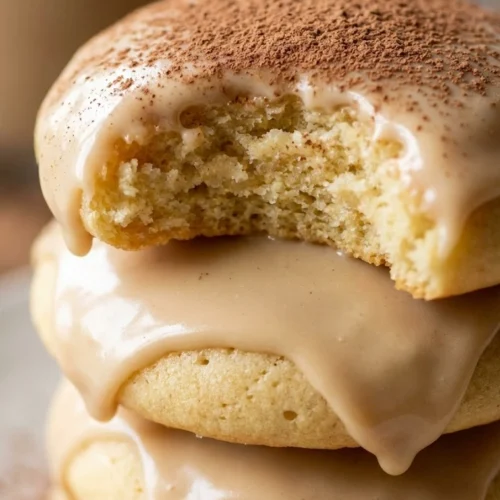
Bailey’s Irish Cream Sandwich Cookies
Equipment
- saucepan
- stand mixer or hand mixer
- mixing bowls
- baking sheets
- parchment paper
Ingredients
- 1 cup Bailey’s Irish Cream (for reduction)
- 2 1/4 cups all-purpose flour
- 1/2 tsp baking powder
- 1/4 tsp baking soda
- 1/2 tsp fine sea salt
- 3/4 cup unsalted butter, room temperature
- 3/4 cup granulated sugar
- 1/2 cup light brown sugar, packed
- 1 large egg, room temperature
- 1 large egg yolk, room temperature
- 1/4 cup Bailey’s reduction
- 1 1/2 tsp pure vanilla extract
- 8 oz white chocolate, finely chopped
- 1/3 cup heavy cream
- 3 tbsp Bailey’s Irish Cream, warmed
- 1 tbsp unsalted butter, room temperature
- 1 pinch fine sea salt
Instructions
- Simmer Bailey’s in a saucepan until reduced to about 1/4 cup. Cool completely.
- Whisk flour, baking powder, baking soda, and salt together in a bowl.
- Cream butter, granulated sugar, and brown sugar until light and fluffy.
- Add egg and egg yolk, mixing well. Add cooled Bailey’s reduction and vanilla.
- Add dry ingredients gradually, mixing just until combined.
- Wrap dough and refrigerate for at least 1 hour.
- Preheat oven to 350°F (175°C). Scoop dough into balls and place on lined baking sheets.
- Bake for 9–11 minutes until edges are set. Cool completely.
- Heat cream and pour over white chocolate. Add warmed Bailey’s, butter, and salt; whisk until smooth.
- Chill ganache until thick and spreadable.
- Pipe ganache onto half the cookies and sandwich with remaining cookies.