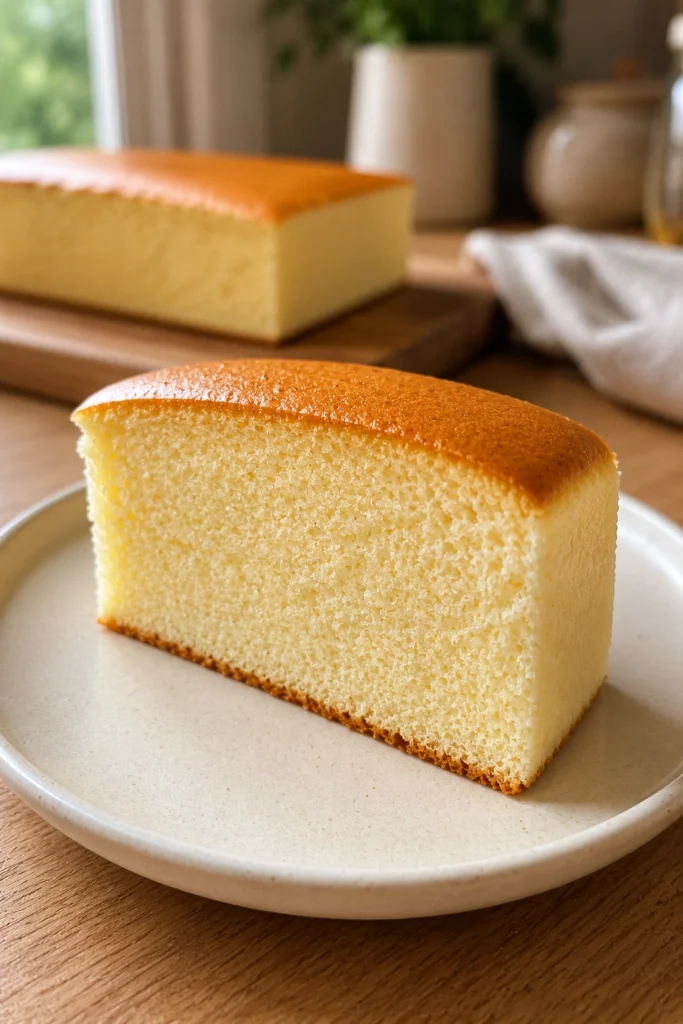
There are easy dessert recipes, and then there are dessert recipes that make people stop mid-bite and ask you what you did differently. This Soft Japanese Castella Cake is the second kind. It is impossibly light, beautifully moist, and has a delicate sweetness that makes it one of those simple bakes you will come back to again and again.
Inspired by traditional Japanese kasutera and Portuguese castella cake, this version is made with just seven pantry staples and delivers a texture somewhere between a sponge cake and a chiffon cake — only softer, airier, and more melt-in-your-mouth than either. Whether you are looking for a quick snack table idea, a yummy afternoon treat, or a simple dessert that looks and tastes fancy, this is it.
Why You’ll Love This Japanese Castella Cake
This is one of those dessert recipes that earns a permanent spot in your rotation after the very first bake.
It is incredibly simple and quick to make, with no complicated techniques and no special equipment beyond a hand mixer. The ingredient list is short and budget-friendly — eggs, sugar, milk, oil, flour, baking powder, and honey — and the result is a cake that looks and tastes like it came from a specialty bakery.
Kids are obsessed with it. The texture is so soft and pillowy that it practically dissolves on the tongue, which makes it the perfect snack for little ones and a crowd-pleasing dessert for any table. It is also endlessly versatile — serve it plain, with jam, with hazelnut spread, or alongside a cup of tea or coffee for a simple but genuinely lovely treat.
And if you are looking for a dessert that can be made ahead, stored easily, and gifted beautifully, this castella cake checks every single box.
Common Mistakes — And How to Avoid Them
This is a forgiving recipe, but a few small missteps can affect the texture or appearance of your cake. Here is what to watch out for.
Overmixing the batter after adding the flour. Once the flour goes in, you want to fold gently and deliberately, from the bottom up. Aggressive stirring knocks out the air you built into the egg whites, and that air is what gives the cake its cloud-like lift. Take your time, be gentle, and stop as soon as everything is just combined.
Not wrapping the sides of the pan with foil. This step is easy to skip, and it really does make a difference. Without it, the edges of the cake bake faster and develop a thick, dark crust that contrasts with the soft, pale interior. A layer of aluminum foil around the outside of the pan insulates the sides and gives you an even, tender result all the way through.
Baking at too high a temperature. This cake bakes low and slow at 150°C (300°F). It might feel like a long time, but the gentle heat is what gives the crumb that impossibly soft, moist texture. Rushing it with higher heat causes the outside to set before the inside is done, leading to a denser, less fluffy result.
Skipping the resting step after baking. Leaving the cake in the turned-off oven for 5 minutes, then wrapping or covering it as it cools, helps it stay soft and moist rather than drying out. Do not skip this step if you want that signature castella texture.
Key Ingredients for This Easy Dessert Recipe
Part of what makes this such a great quick and simple dessert recipe is how much each ingredient contributes to the final result.
Eggs are the backbone of this cake. The whites are whipped to a firm meringue, which acts as the leavening agent and gives the cake its lift and airy structure. The yolks add richness and a beautiful golden color to the crumb.
Honey is one of the most important ingredients here, and one of the keys to what makes this bake special. It is slightly warmed with a splash of milk before being folded into the batter, which makes it easier to incorporate without deflating the batter. Honey keeps the crumb incredibly soft, adds a subtle floral sweetness, and gives the top of the cake a gorgeous golden hue. Traditional castella uses malt syrup, but honey is a perfect and easy substitution.
Milk and vegetable oil add moisture and richness without making the cake heavy. The oil keeps the texture soft and tender even after a day or two, while the milk gives the crumb a delicate, almost creamy quality.
All-purpose flour and a small amount of baking powder give the cake structure without making it dense. Sifting the flour before folding it in is a simple but impactful step for keeping the batter light.
How to Make Soft Japanese Castella Cake
- Preheat your oven to 150°C (300°F). Grease a 23cm (9-inch) square pan and line it with parchment paper.
- Using a hand mixer, whip the 6 egg whites until foamy. Add 125g of granulated sugar in 3 gradual additions, beating until you have a firm, glossy meringue.
- Add the 6 egg yolks one at a time, mixing well after each addition.
- Add 90ml of vegetable oil gradually, then pour in most of the 130ml milk, reserving about 2 tablespoons for the honey.
- Sift together 200g all-purpose flour and 7g baking powder. Fold the flour in 3 additions using a spatula or whisk, working from the bottom up to preserve the air in the batter.
- Warm 15g of honey with the reserved 2 tablespoons of milk until just loosened. Gently fold into the batter.
- Pour the batter into the prepared pan. Tap the pan lightly on the counter to release air bubbles and smooth the surface.
- Wrap the outside sides of the pan with aluminum foil. Bake for 45 to 55 minutes, until a skewer inserted in the center comes out with just a few moist crumbs.
- Leave the cake in the turned-off oven for 5 minutes, then remove and tap the pan gently before turning out onto a wire rack.
- Place the pan back over the cake as it cools, or wrap it lightly. This keeps the surface soft and moist.
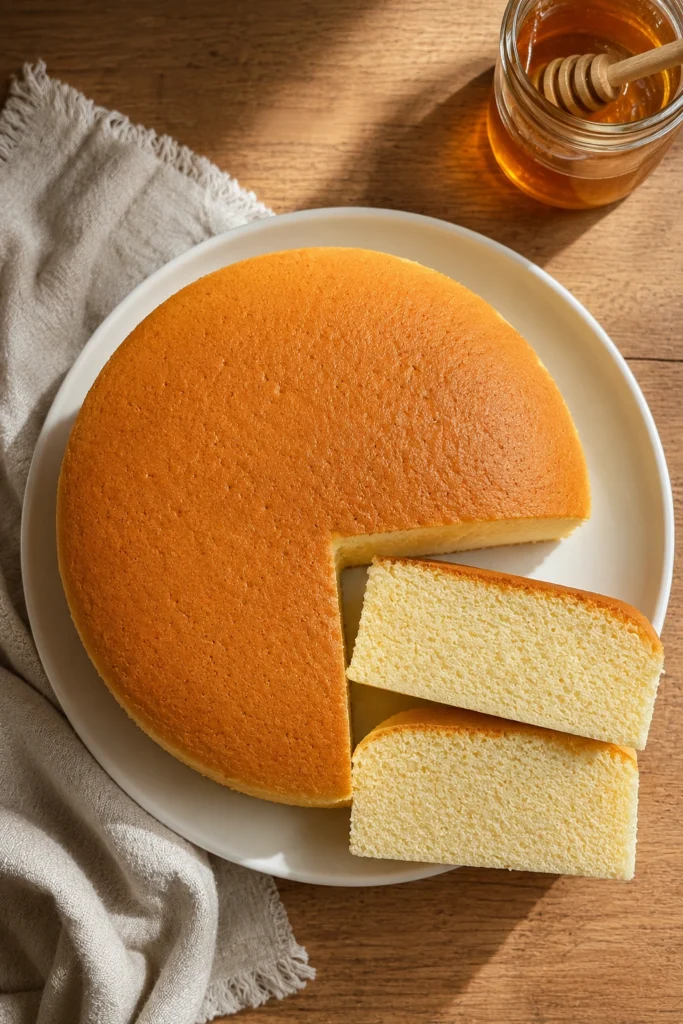
- Once fully cooled, trim the edges to reveal the pale, cloud-like interior. Slice and serve.
Variations and Tips for the Best Results
This easy dessert recipe is wonderful as written, but there are a few simple ways to make it your own.
For a dairy-free version, swap the milk for oat milk or almond milk. The texture stays soft and the flavor is still lovely. You can also replace the honey with maple syrup for a slightly different but equally delicious result.
If you want to add a subtle flavor twist, a teaspoon of vanilla extract or a pinch of matcha powder can be folded in with the flour. Matcha castella cake is a classic Japanese variation that looks stunning and tastes earthy, sweet, and sophisticated — a real conversation starter on any dessert board.
For serving, this cake is beautiful on its own but pairs wonderfully with a dollop of whipped cream, a spoonful of jam, or a drizzle of chocolate hazelnut spread for kids. It also makes a lovely base for a simple fruit shortcake if you want to dress it up.
Store wrapped at room temperature for 2–3 days, refrigerated for up to one week, or frozen for up to 2 months.
FAQs
Do I need baking powder, or can I skip it?
You can skip it. The whipped egg whites provide enough lift on their own, as they do in traditional castella recipes. The small amount of baking powder in this version simply adds an extra insurance for a reliable rise, but the cake works without it.
Can I use a round pan instead of a square one?
Yes. A 23cm round cake tin works well. The baking time remains roughly the same, so keep an eye on it from the 40-minute mark and test with a skewer.
Why do I need to trim the edges?
Trimming the edges is a classic part of serving castella cake. The outer crust is slightly firmer and darker than the interior, and removing it reveals the soft, even, pale crumb underneath — which is also what makes it look so beautiful and aesthetic on a dessert table or board.
Can kids eat this cake?
Absolutely — this is one of the most kid-friendly dessert recipes around. It has a gentle sweetness, a soft texture that is easy to eat, and no strong flavors. It is a great lunchbox treat, after-school snack, or simple birthday-table addition that both children and adults love equally.
Soft Japanese Castella Cake
Equipment
- 9-inch square baking pan
- hand mixer
- mixing bowls
- rubber spatula
- fine mesh sieve
- wire cooling rack
- parchment paper
- aluminum foil
Ingredients
- 6 large eggs, separated
- 125 g granulated sugar
- 90 ml vegetable oil
- 130 ml milk
- 200 g all-purpose flour
- 7 g baking powder
- 15 g honey
Instructions
- Preheat the oven to 150°C (300°F). Grease a 23 cm (9-inch) square pan and line it with parchment paper.
- Whip the egg whites until foamy. Gradually add the sugar in three additions and beat until a firm glossy meringue forms.
- Add the egg yolks one at a time, mixing well after each addition.
- Slowly add the vegetable oil followed by most of the milk, reserving about 2 tablespoons for the honey.
- Sift together the flour and baking powder. Fold into the batter in three additions using gentle upward motions.
- Warm the honey with the reserved milk until loosened, then gently fold into the batter.
- Pour the batter into the prepared pan, tap gently to remove air bubbles, smooth the top, and wrap the outside of the pan with aluminum foil.
- Bake for 45 to 55 minutes until a skewer inserted into the center comes out with a few moist crumbs.
- Leave the cake in the turned-off oven for 5 minutes, then remove and gently tap the pan before unmolding.
- Cover the cake with the pan or wrap lightly while cooling to retain moisture. Trim the edges once cool, slice, and serve.