
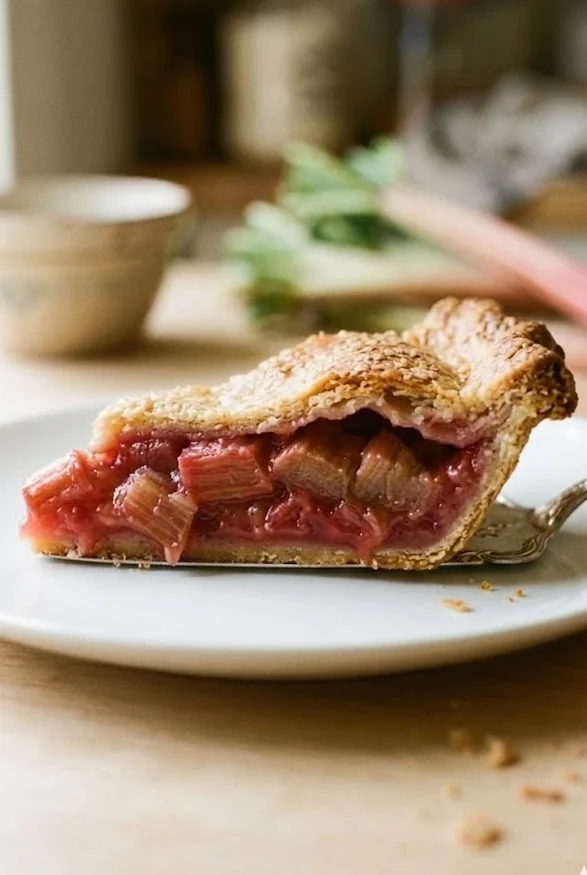
One of the quiet frustrations of baking for a mixed crowd is finding a recipe that genuinely works for everyone at the table – not a compromise version, not a dish that signals its dietary accommodation in every bite, but something that is simply and straightforwardly delicious regardless of who is eating it.
This Gluten-Free Rhubarb Pie is exactly that recipe. The filling is everything a great rhubarb pie filling should be – bubbling, tangy, perfectly thickened, and deeply flavored. The crust is genuinely flaky, properly golden, and holds its structure from the first slice to the last.
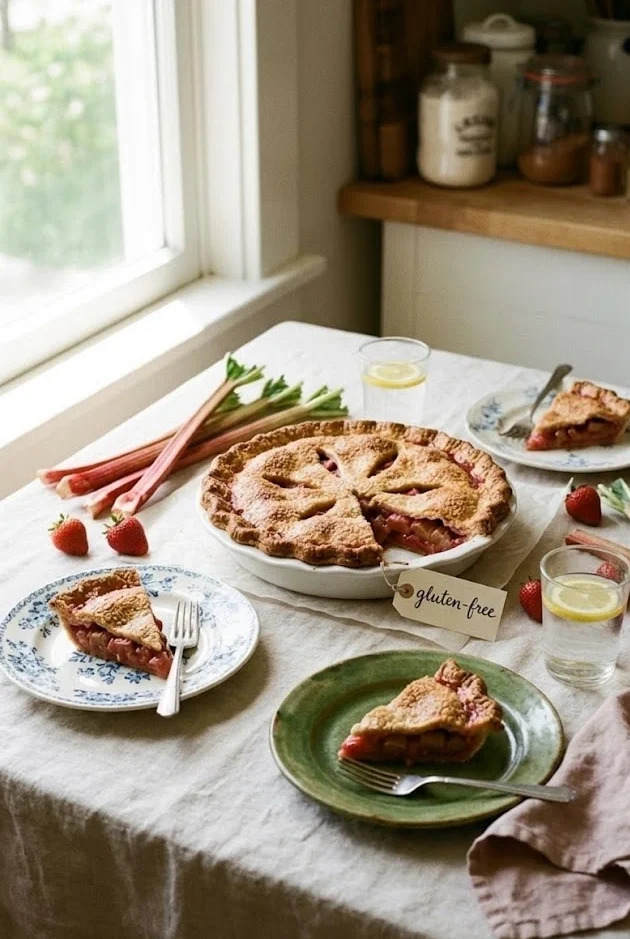
Among all the rhubarb recipes this season offers, this one carries an extra layer of meaning. It is the recipe that means nobody has to sit out dessert, nobody has to eat a sad alternative, and everyone at the table gets the real thing.
Why You’ll Love This Gluten-Free Rhubarb Pie
The biggest fear with any gluten-free pie crust is texture. Traditional pie pastry depends on gluten development to create its characteristic flaky, layered structure, and replicating that without wheat flour requires understanding what actually makes a great crust work at a technical level.
This recipe solves that problem with a carefully balanced gluten-free flour blend combined with cold butter and a small addition of xanthan gum where needed. The result is a crust that bakes up genuinely flaky, holds its crimp during baking, and browns beautifully – indistinguishable from a traditional wheat crust in both appearance and texture.
It also sits comfortably among healthy rhubarb recipes. Rhubarb itself is low in calories and sugar, the filling uses a modest amount of sweetener, and the gluten-free format opens this recipe to a much wider audience including those managing celiac disease, gluten sensitivity, or those simply exploring cleaner ingredient approaches to classic rhubarb recipes desserts.
Common Mistakes When Making a Gluten-Free Rhubarb Pie (And How to Avoid Them)
Using a gluten-free flour blend without xanthan gum. Xanthan gum is what replaces the binding and elasticity that gluten provides in traditional pastry. Without it, a gluten-free crust crumbles the moment you try to roll it, cracks when you fold it over the filling, and falls apart completely when sliced. If your flour blend does not already contain xanthan gum, add half a teaspoon per cup of flour used in the pastry.
Not chilling the dough long enough. Gluten-free pastry dough is significantly more fragile than traditional dough at room temperature because it lacks the gluten network that gives wheat pastry its structural integrity. Where traditional pie dough needs 30 minutes of chilling, gluten-free dough benefits from at least one full hour – and two hours is better. Do not rush this step.
Rolling the dough directly on the counter. Gluten-free pastry tears and sticks far more readily than wheat pastry. Always roll it between two sheets of parchment paper or plastic wrap. This allows you to lift and transfer it without handling it directly, which is the single most effective technique for preventing cracks and tears.
Not thickening the filling sufficiently. Rhubarb releases enormous amounts of liquid during baking. This is true in any rhubarb pie recipe but the stakes are higher in a gluten-free version because a soggy bottom is harder to recover from when the crust lacks gluten’s resilience. Use the full amount of thickener specified and do not reduce it.
Key Ingredients for This Gluten-Free Easy Rhubarb Recipe
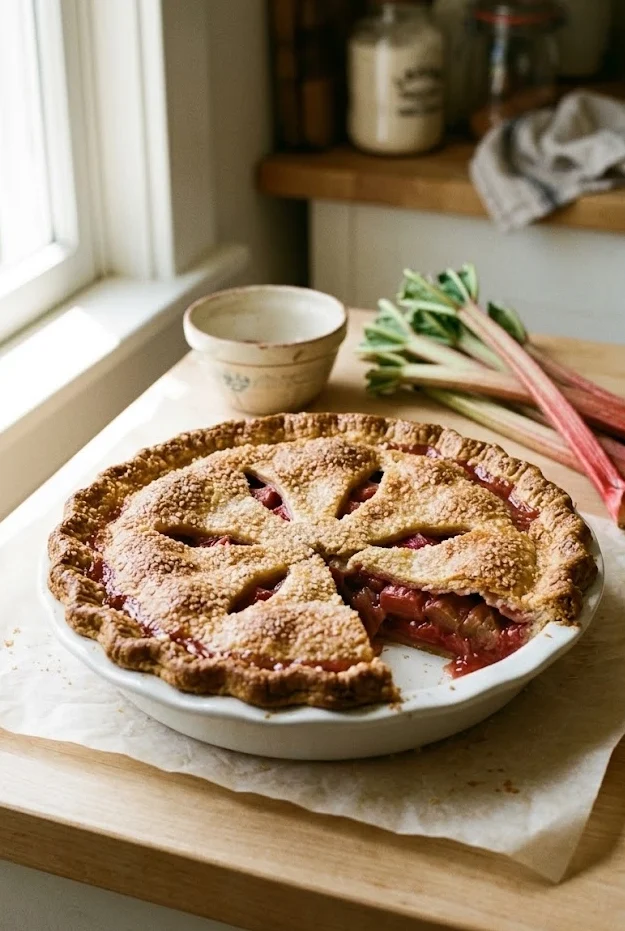
Fresh rhubarb: Firm, brightly colored stalks are the non-negotiable foundation of a great filling. The deeper the color, the more vivid and visually striking the finished pie will be. Rhubarb’s natural tartness requires no enhancement – it simply needs the right amount of sweetener to bring it into balance. As an ingredient, rhubarb is one of the most naturally diet-friendly elements in any rhubarb recipes desserts context, contributing fiber, vitamin K, and negligible sugar.
Gluten-free 1-to-1 flour blend: The cornerstone of the crust. A quality 1-to-1 gluten-free blend is formulated to replace all-purpose flour directly in most baking applications. Brands that include xanthan gum in their formulation are ideal for pastry. Rice flour-based blends tend to produce the most neutral flavor and the most pastry-like texture in a pie crust context.
Cold unsalted butter: The technique for incorporating butter into gluten-free pastry is identical to traditional pastry – cold, cubed butter worked into the flour until pea-sized pieces remain, creating steam pockets during baking that produce flakiness. Vegan butter works as a direct substitute for a fully dairy-free version. Do not use oil in place of butter – the texture result is categorically different and not suitable for a flaky crust.
Cornstarch or tapioca starch: The thickener for the filling. Both are naturally gluten-free and both produce a glossy, well-set filling that holds its shape when sliced. Tapioca starch produces a slightly more elastic, glossy result while cornstarch gives a cleaner, more neutral finish. Either is excellent in this rhubarb pie recipe.
Granulated sugar: Used in both the filling and the crust. The amount in the filling is calibrated to balance rhubarb’s tartness without eliminating it – the characteristic sharpness of rhubarb is what defines it as an ingredient and should never be completely sweetened away. For diabetic-friendly rhubarb recipes adaptations, a tested baking sweetener can be substituted at an equal ratio.
Apple cider vinegar: A small addition to the pastry dough that serves a specific technical purpose. The acidity interferes with gluten development in traditional pastry – but in a gluten-free context, it helps tenderize the dough and improves its workability and elasticity marginally. One teaspoon in the dough makes a meaningful difference to how the finished crust handles.
Vanilla extract and lemon zest: Two quiet ingredients that do important work in the filling. Vanilla softens and rounds the overall flavor while lemon zest amplifies the brightness of the rhubarb and adds a citrus note that makes the filling taste more vibrant and complex than it would with rhubarb and sugar alone.
Egg for egg wash: The same egg wash technique used in traditional pies applies here – one beaten egg brushed over the top crust and crimped edges before baking produces the signature golden, glossy, bakery-quality finish. Coarse sugar scattered over the egg wash adds crunch and visual appeal.
How to Make Gluten-Free Rhubarb Pie
Step 1 – Make the gluten-free pie crust dough. Combine 2 and a half cups of gluten-free 1-to-1 flour blend with one teaspoon of fine salt and one tablespoon of granulated sugar in a large bowl. If your blend does not contain xanthan gum, add one teaspoon now. Add one cup of cold, cubed unsalted butter and work it into the flour using your fingertips or a pastry cutter until the mixture resembles coarse crumbs with visible pea-sized butter pieces throughout. Add one teaspoon of apple cider vinegar to 6 tablespoons of ice-cold water and add this mixture one tablespoon at a time, stirring gently after each addition, until the dough just comes together when pressed. It will feel slightly stickier than traditional pastry dough – this is normal. Divide into two equal portions, flatten each into a disc, wrap tightly in plastic wrap, and refrigerate for a minimum of one hour, or up to overnight.
Step 2 – Prepare the rhubarb filling. Combine 4 cups of fresh rhubarb cut into half-inch pieces with one cup of granulated sugar, 4 tablespoons of cornstarch or tapioca starch, one teaspoon of vanilla extract, the zest of half a lemon, and a pinch of fine salt in a large bowl. Toss until the rhubarb is evenly coated. For a strawberry rhubarb recipe variation, replace one and a half cups of the rhubarb with hulled and quartered fresh strawberries. Allow the filling to rest for 15 minutes while you prepare the crust.
Step 3 – Roll out the bottom crust. Remove one disc of chilled dough from the refrigerator. Place it between two sheets of parchment paper and roll carefully into a circle approximately 13 inches in diameter, working from the center outward and rotating the parchment frequently to maintain an even thickness. Peel away the top sheet of parchment, then use the bottom sheet to lift and invert the dough into a 9-inch pie dish. Peel away the remaining parchment carefully. Press the dough gently into the base and sides of the dish and trim the overhang to approximately one inch. Refrigerate while you roll the top crust.
Step 4 – Fill the pie. Pour the rhubarb filling into the prepared gluten-free pie shell, mounding it slightly in the center. Dot the surface of the filling with 2 tablespoons of cold butter cut into small pieces. This enriches the filling and encourages better browning at the steam vents during baking.
Step 5 – Apply the top crust. Roll the second disc of dough between parchment sheets to the same size as the first. Invert it carefully over the filled pie and peel away the parchment. Trim the edges to match the bottom crust and fold both layers under together, pressing firmly all the way around to create a sealed edge. Crimp using a fork or your fingers. Gluten-free dough is more prone to cracking at the crimp – if cracks appear, simply press them back together gently with dampened fingers. Cut at least six generous steam vents in the top crust using a sharp knife.
Step 6 – Egg wash, sugar, and chill. Brush the entire top crust and crimped edges with a beaten egg. Scatter coarse sugar generously over the surface. Place the assembled pie in the refrigerator for 15 minutes before baking – this firms up the butter in the crust one final time and helps the crimped edges hold their shape in the oven.
Step 7 – Bake. Place the pie on a foil-lined baking sheet to catch any drips. Bake in a preheated oven at 425 degrees Fahrenheit (220 degrees Celsius) for 20 minutes, then reduce the temperature to 375 degrees Fahrenheit (190 degrees Celsius) and continue baking for 40 to 45 minutes until the crust is deeply golden all over and the filling is visibly bubbling through the steam vents. Shield the edges with foil or a pie shield if they begin to brown too quickly before the center is done. Allow the finished pie to cool completely on a wire rack for a minimum of two hours before slicing.
Variations and Tips for Your Gluten-Free Rhubarb Recipe
Strawberry rhubarb gluten-free pie: Replace one and a half cups of rhubarb with fresh strawberries for the most beloved of all strawberry rhubarb recipes in pie format. The strawberries sweeten and soften the filling naturally, making this version particularly approachable for those who find straight rhubarb too tart.
Dairy-free gluten-free rhubarb pie: Substitute vegan butter in the crust at an equal ratio. The technique remains identical – cold fat, worked in quickly, chilled thoroughly. Most quality vegan butters perform excellently in gluten-free pastry and produce a genuinely flaky result.
Gluten-free rhubarb crisp topping alternative: If the double crust feels ambitious for a first attempt, replace the top crust with a certified gluten-free oat and almond crumble topping. This produces a result that bridges rhubarb recipes crisp and rhubarb recipes pie, with all the flavor of a full pie and significantly less technical pastry work involved.
Diabetic-friendly gluten-free rhubarb pie: Use a tested baking sweetener in place of granulated sugar in the filling and reduce to three quarters of the standard amount – rhubarb’s natural tartness requires less sweetener than most fruits. The gluten-free crust can be made with almond flour for a lower-carbohydrate result, though the texture will be crumblier and more similar to a press-in crust than a rolled pastry.
Sourdough-inspired gluten-free crust: Add two tablespoons of gluten-free sourdough starter to the dough along with the ice water. Reduce the liquid by the same amount. This sourdough rhubarb recipe variation adds a subtle tang that elevates the crust flavor beyond standard gluten-free pastry.
Pro tip: Gluten-free pastry cracks are inevitable and completely fixable. Keep a small bowl of water nearby while assembling the pie. Any crack that appears can be patched by dampening your fingertip and pressing the dough back together gently. Once baked and golden, no repair will be visible.
Looking for more ways to bake with rhubarb this spring? Our ultimate rhubarb recipe roundup collects 20 of the best rhubarb desserts in one place — including easy rhubarb recipes, strawberry rhubarb pie, rhubarb cake, rhubarb crisp, sourdough rhubarb bread, healthy rhubarb muffins, and much more. Whether you have fresh rhubarb from the garden or a bag of frozen stalks in the freezer, this guide has the perfect recipe waiting for you. Explore all 20 rhubarb recipes here.
How to Meal Prep This Gluten-Free Rhubarb Pie
The gluten-free pie dough discs can be made up to three days in advance and stored wrapped tightly in the refrigerator. They also freeze exceptionally well for up to two months – wrap each disc in plastic wrap and then foil, and thaw overnight in the refrigerator before rolling. Having pre-made dough in the freezer transforms this from a project recipe into a genuinely accessible weeknight bake.
The rhubarb filling can be mixed and refrigerated for up to 24 hours before assembling the pie. The cornstarch will settle to the bottom during resting – stir the filling thoroughly before pouring it into the shell. The thickening will still work perfectly during baking.
The fully assembled unbaked pie freezes well for up to three months. Wrap tightly in two layers of plastic wrap followed by a layer of foil. Bake directly from frozen at the same temperatures, adding 20 to 25 minutes to the total baking time and monitoring carefully for doneness.
Baked pie keeps well loosely covered at room temperature for one day or refrigerated for up to four days. Individual slices reheat in a 325 degree Fahrenheit oven for 10 to 12 minutes, which restores the crispness of the gluten-free crust and warms the filling back to its ideal bubbling consistency.
Frequently Asked Questions
Which gluten-free flour blend works best for pie crust? Rice flour-based 1-to-1 blends that already contain xanthan gum consistently produce the best results for gluten-free pie pastry. They have a neutral flavor, a fine texture that mimics all-purpose flour closely, and they respond well to the cold butter technique that creates flakiness. Almond flour and coconut flour alone are not suitable for a rolled pastry crust – they work better in press-in crust applications.
Can I use frozen rhubarb in a gluten-free rhubarb pie? Yes, with the same preparation required in any rhubarb pie recipe. Thaw completely, drain all liquid thoroughly, and pat very dry before mixing with the other filling ingredients. Increase the cornstarch by one tablespoon to account for the additional moisture frozen rhubarb releases during baking. The flavor is excellent and the finished pie is virtually indistinguishable from one made with fresh rhubarb.
Is this pie suitable as a diabetic-friendly rhubarb recipe? With the modifications noted in the variations section, yes. Rhubarb contributes negligible sugar and the filling’s sweetness can be meaningfully reduced using a tested baking sweetener. An almond flour press-in crust reduces the carbohydrate content further and produces a genuinely lower-glycemic result. Always consult your healthcare provider regarding specific dietary management.
How do I prevent my gluten-free pie crust from cracking when I transfer it? Rolling between parchment sheets and using the parchment to lift and invert the dough rather than handling it directly is the single most effective technique. Keeping the dough well chilled, working quickly, and patching any cracks with dampened fingers before baking ensures a clean, intact result. With gluten-free pastry, speed and cold temperatures are your two most important tools.
Cultural Context: Gluten-Free Baking and the Evolution of Inclusive Desserts
The gluten-free baking movement has undergone a remarkable transformation over the past two decades. Early gluten-free baked goods were defined by what they lacked – dense, crumbly, and texturally unsatisfying in ways that made the dietary accommodation feel punishing rather than inclusive. The gluten-free flour blends available to home bakers today are a genuinely different category of ingredient, engineered to produce results that stand alongside their wheat-flour counterparts without apology.
Pie, perhaps more than any other baked good, represents the frontier of that progress. A great pie crust demands things from flour that are deeply tied to gluten – extensibility, flakiness, the ability to hold a crimp and survive a transfer without tearing. Achieving all of that without wheat is a genuine technical accomplishment, and the fact that it is now accessible to home bakers with a standard 1-to-1 flour blend reflects how far the field has come.
Rhubarb, as an ingredient, has always been associated with straightforward, unpretentious baking. It does not need elaborate technique or expensive components to taste extraordinary – it needs respect for what it actually is and a willingness to let its flavor lead. In a gluten-free context, that same philosophy applies. This Gluten-Free Rhubarb Pie is not a lesser version of a rhubarb pie. It is a rhubarb pie, made thoughtfully, that happens to be accessible to everyone at the table. Among all the rhubarb recipes this season offers, that might be its most meaningful quality.
Gluten-Free Rhubarb Pie
Equipment
- mixing bowls
- Rolling Pin
- parchment paper
- 9-inch pie dish
- pastry cutter
- baking sheet
Ingredients
- 2 1/2 cups gluten-free 1-to-1 flour blend
- 1 tsp fine salt
- 1 tbsp granulated sugar
- 1 cup cold unsalted butter, cubed
- 1 tsp apple cider vinegar
- 6 tbsp ice-cold water
- 4 cups fresh rhubarb, chopped
- 1 cup granulated sugar
- 4 tbsp cornstarch or tapioca starch
- 1 tsp vanilla extract
- 1/2 lemon zest
- 1 pinch salt
- 2 tbsp cold butter (for filling)
- 1 egg (for egg wash)
- coarse sugar (for topping)
Instructions
- In a large bowl, combine gluten-free flour, salt, and sugar. Cut in cold butter until crumbly. Mix vinegar with ice water and add gradually until dough forms. Divide into two discs, wrap, and chill for at least 1 hour.
- In a bowl, mix rhubarb, sugar, cornstarch, vanilla, lemon zest, and salt. Toss well and let rest for 15 minutes.
- Roll one dough disc between parchment into a 13-inch circle. Transfer to a 9-inch pie dish, press gently, and trim edges. Chill while preparing top crust.
- Pour filling into crust and dot with small pieces of butter.
- Roll second dough disc and place over filling. Trim, seal, and crimp edges. Cut steam vents in the top.
- Brush with beaten egg, sprinkle with coarse sugar, and chill for 15 minutes.
- Bake at 425°F (220°C) for 20 minutes, then reduce to 375°F (190°C) and bake 40–45 minutes until golden and bubbling. Cool at least 2 hours before slicing.