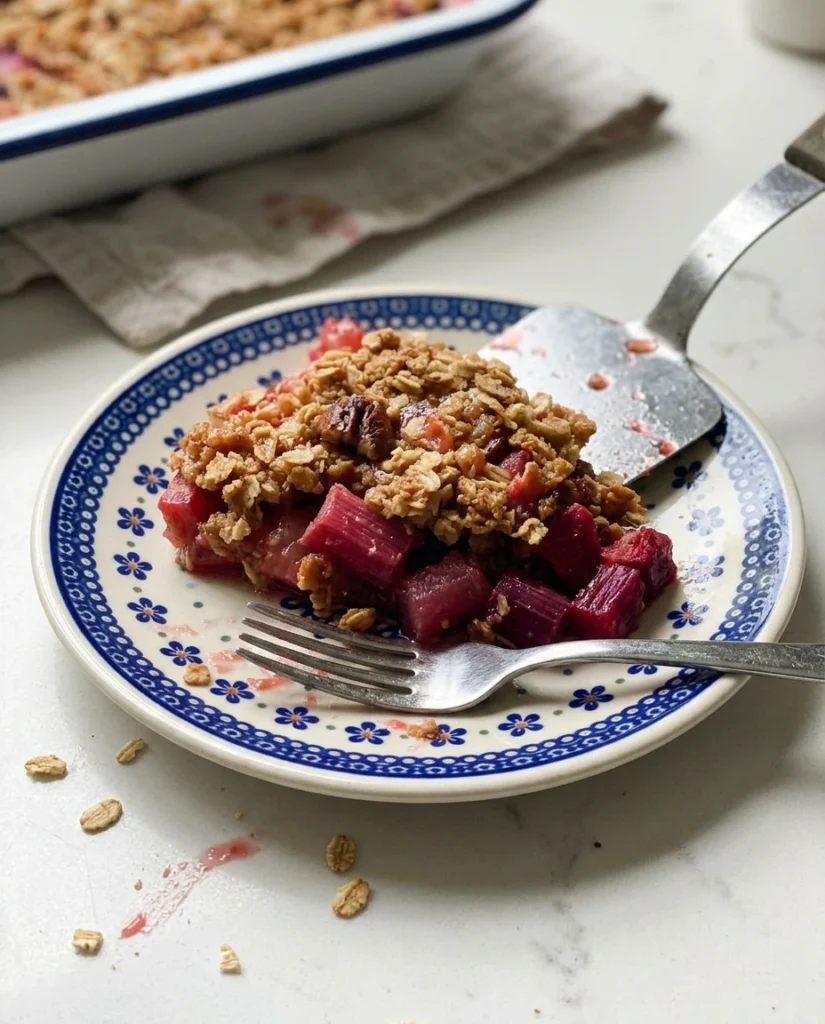
Most people think of rhubarb recipes as a spring affair. The stalks appear at the farmers market in April, disappear by July, and that is supposed to be the end of it until next year. But here is the thing: if you have a bag of frozen rhubarb in your freezer — from last season’s haul, from the grocery store’s frozen aisle, or from a neighbor’s generous garden — you are never more than an hour away from one of the best rhubarb recipes crisp lovers can make.
This classic rhubarb crisp with frozen rhubarb is the recipe that proves rhubarb season never has to end. The filling bubbles up tart and jammy. The oat topping bakes golden and slightly crunchy. And the whole dish comes together in about fifteen minutes of hands-on work before the oven takes over. No fresh rhubarb required. No special equipment. Just a casserole dish, a bowl, and ingredients you almost certainly already have.
Why You’ll Love This Frozen Rhubarb Crisp
Among all the easy rhubarb recipes in the world, this one earns a special place for a reason that goes beyond flavor: it is genuinely available to you on any day of the year. Frozen rhubarb is increasingly easy to find in the freezer section of most grocery stores, and if you grow your own or receive an annual surplus from a generous neighbor, freezing the excess takes about five minutes and extends your rhubarb season by twelve full months.
The recipe itself is also among the most forgiving of all rhubarb recipes. It does not require precision the way a rhubarb pie or a rhubarb muffin recipe does. The filling is mix-and-pour. The topping is mix-and-scatter. The ratio of tart to sweet, of soft to crunchy, of warm fruit to cold ice cream — all of it works out beautifully with very little effort on your part.
It is exactly the kind of rhubarb recipe that gets made on a Wednesday night because someone wanted dessert and there happened to be a bag of frozen rhubarb in the back of the freezer.
Common Mistakes (And How to Avoid Them)
Not draining the frozen rhubarb properly. This is the most consequential decision in the entire recipe. Frozen rhubarb holds significantly more water than fresh because the freezing process ruptures the cell walls of the stalks, releasing liquid that would not otherwise be present. If that liquid goes directly into your baking dish, it overwhelms the cornstarch, prevents the filling from setting, and turns your crisp into something closer to a watery rhubarb soup with a topping floating on the surface. The fix is simple: thaw your frozen rhubarb completely in a colander set over a bowl, and allow the liquid to drain away for at least 20 to 30 minutes before using. Do not squeeze it — just let gravity do the work.
Skipping or under-measuring the cornstarch. Even well-drained frozen rhubarb releases more liquid during baking than fresh. The cornstarch in the filling is what binds those juices into a glossy, cohesive filling. A quarter cup for two pounds of rhubarb is the baseline — if your drained rhubarb still feels quite wet, add an extra tablespoon for insurance.
Using warm or softened butter in the topping. Cold butter is what creates the layered, crumbly texture that makes a crisp topping worth eating. When cold butter melts in the oven, it creates steam pockets that produce a light, irregular crumble with real crunch. Softened butter just produces a dense, greasy, uniform mass that bakes into something flat and disappointing. Keep the butter in the refrigerator until the exact moment you need to cut it in.
Pulling it out of the oven too early. The crisp is done when the topping is deep golden — not just lightly golden — and the filling is actively bubbling around the edges of the dish. Pale topping and still liquid means it needs more time, regardless of what the timer says. Budget 35 to 50 minutes and use visual cues rather than the clock.
Serving it immediately out of the oven. Allow the crisp to rest for at least 20 minutes after baking. This cooling period allows the cornstarch-thickened filling to set into a scoopable, cohesive consistency. Serving it straight from the oven means hot, runny fruit pouring across the plate — delicious in flavor, chaotic in presentation.
Chef’s Notes
The question of whether to thaw frozen rhubarb before using it in a crisp is genuinely debated among home bakers, and the answer depends entirely on how much control you want over the final result. Adding frozen rhubarb directly to the dish — without thawing — works, but it releases all of its extra water during baking and puts significant pressure on your thickener to absorb it all. Thawing and draining first gives you a more predictable, reliably set filling with less guesswork involved.
If you do add rhubarb frozen, increase the cornstarch by one additional tablespoon and add five to ten minutes to the baking time. Watch the filling carefully — you want it bubbling actively around all the edges before you pull it from the oven.
Cinnamon appears in both the filling and the topping in this recipe, which is a detail worth noting. Most rhubarb crisp recipes include it only in the topping. Using it in both layers creates a through-line of warm spice that unifies the dish and makes the tart rhubarb feel even more like a classic, comforting dessert rather than something challengingly sharp and unfamiliar.
Key Ingredients
Frozen rhubarb is the entire premise of this recipe and one of the great overlooked conveniences in home baking. Commercially frozen rhubarb is typically cut into one-inch pieces and individually quick frozen, which means it thaws evenly, drains cleanly, and behaves very similarly to fresh in the oven. The flavor is indistinguishable from fresh in a cooked application like this one — the high heat of baking erases any textural difference entirely.
Cornstarch is the thickener that makes this crisp work with frozen rhubarb. It binds the released juices during baking into a glossy, jammy filling that holds its shape when scooped. It also produces a cleaner, clearer result than flour — no starchy cloudiness, just bright, vivid rhubarb flavor in a cohesive sauce.
Old-fashioned rolled oats are the backbone of the topping. They provide more texture and chew than quick oats, producing a topping that is simultaneously crunchy and slightly chewy — the two-part texture that defines a great crisp. Quick oats work in a pinch but produce a finer, more uniform crumble with less character.
Cold unsalted butter is the fat that transforms the dry topping ingredients into a crumble. Cutting it in by hand produces irregular pieces of varying sizes — some sandy, some pea-sized, some larger — and that variation is exactly what you want. Each piece melts at a slightly different rate in the oven, producing the layered, uneven crunch that distinguishes a great crisp topping from a mediocre one.
Cinnamon in both layers adds warmth and bridges the gap between the sharp tartness of the rhubarb and the sweetness of the sugar. It is not dominant — just present enough to make every bite feel rounded and complete.
Sugar does two separate jobs here. In the filling, it draws moisture from the rhubarb and sweetens the sauce as it forms. In the topping, it caramelizes lightly in the oven and contributes to the golden color and slight crunch of the finished crust.
How to Make Rhubarb Crisp with Frozen Rhubarb
- If using frozen rhubarb, place it in a colander set over a bowl and thaw completely at room temperature, about one to two hours. Once thawed, allow excess liquid to drain away without squeezing. Set the drained rhubarb aside.
- Preheat your oven to 400°F (200°C). Lightly butter a 2-quart casserole dish and set aside.
- In a large bowl, combine the drained rhubarb with the sugar, cornstarch, and cinnamon. Toss until every piece is evenly coated. If the rhubarb still looks quite wet after draining, add one extra tablespoon of cornstarch.
- Spread the rhubarb filling evenly in the prepared casserole dish and smooth the surface.
- In a separate large bowl, combine the old-fashioned oats, all-purpose flour, sugar, cinnamon, and a pinch of salt. Stir to distribute the dry ingredients evenly.
- Add the cold cubed butter to the dry topping mixture. Using clean fingertips, rub and press the butter into the dry ingredients until the mixture clumps into irregular crumbles ranging from sandy bits to pieces the size of a small pea. The texture should vary — that variation is what creates a great topping.
- Scatter the crumble topping evenly over the rhubarb filling, covering the surface all the way to the edges of the dish.
- Bake for 35 to 50 minutes, until the topping is deep golden brown and the filling is actively bubbling around all the edges of the dish.
- Remove from the oven and allow to rest on the counter for at least 20 minutes before serving. This rest is essential for the filling to set.
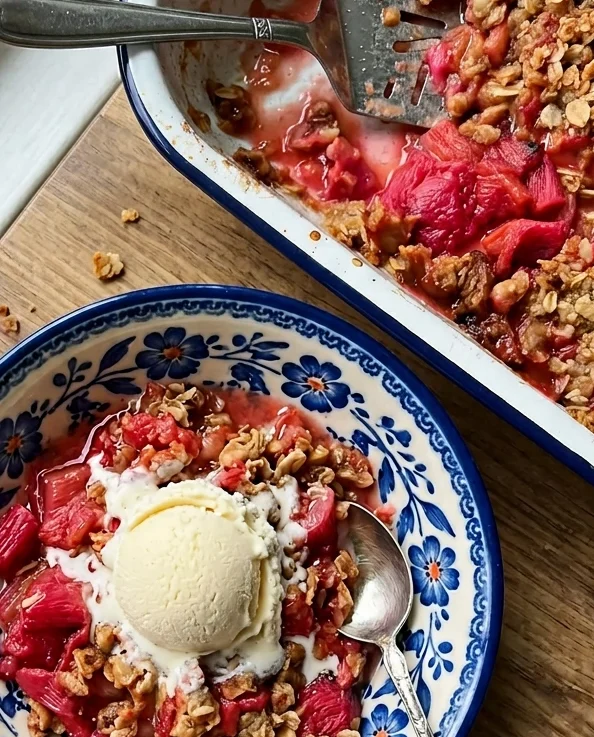
- Serve warm in bowls with a generous scoop of vanilla ice cream or a dollop of freshly whipped cream.
Looking for more ways to bake with rhubarb this spring? Our ultimate rhubarb recipe roundup collects 20 of the best rhubarb desserts in one place — including easy rhubarb recipes, strawberry rhubarb pie, rhubarb cake, rhubarb crisp, sourdough rhubarb bread, healthy rhubarb muffins, and much more. Whether you have fresh rhubarb from the garden or a bag of frozen stalks in the freezer, this guide has the perfect recipe waiting for you. Explore all 20 rhubarb recipes here.
Variations and Tips
Strawberry rhubarb crisp: Replace one pound of the frozen rhubarb with an equal weight of frozen strawberries. Thaw and drain both together before mixing with the filling ingredients. This produces one of the most universally loved strawberry rhubarb recipes in crisp form — sweeter, more colorful, and ideal for serving to anyone who finds plain rhubarb too aggressively tart.
Apple rhubarb crisp: Replace half the rhubarb with peeled, diced tart apples such as Granny Smith. The apple adds body and sweetness and extends the season of this recipe even further into fall and winter territory.
Gluten-free rhubarb crisp: Substitute the all-purpose flour in the topping with a certified gluten-free oat flour or a 1:1 gluten-free baking blend. Make sure your oats are certified gluten-free as well. The topping texture will be slightly more tender but entirely satisfying.
Rhubarb crisp for diabetics: Replace the granulated sugar in both the filling and the topping with a 1:1 granulated erythritol or monk fruit blend. The filling will still bubble and thicken correctly with the cornstarch, and the topping will still brown, though slightly less aggressively. This adaptation makes the recipe accessible as one of the more practical rhubarb recipes for diabetics without requiring any structural changes.
Brown sugar topping: Swap the white sugar in the topping for packed brown sugar. It caramelizes more deeply in the oven and adds a toffee-like richness to the crust that pairs beautifully with the tart rhubarb filling below.
How to Meal Prep
This rhubarb crisp is one of the most meal-prep-friendly rhubarb recipes you can keep in rotation. The assembled, unbaked crisp can be covered tightly with plastic wrap and refrigerated for up to 24 hours before baking — slide it directly into a preheated oven and add five to eight minutes to the bake time for the cold start.
The topping can also be prepared independently and stored in an airtight container in the refrigerator for up to five days, or frozen in a zip-lock bag for up to three months. Having a ready-made topping in the freezer means you are always about 45 minutes from a finished crisp, with almost no active work required.
The baked crisp keeps in the refrigerator for up to five days, covered. Reheat individual portions in the microwave in 30-second intervals, or warm the entire dish in a 350°F oven for 15 to 20 minutes to restore some of the topping’s crunch. The unbaked assembled crisp can also be frozen for up to three months — bake directly from frozen at 400°F, adding 15 to 20 minutes to the normal bake time.
Cultural Context
The practice of freezing rhubarb for year-round use is deeply embedded in the domestic traditions of the regions where rhubarb grows most abundantly — the northern United States, Canada, Scandinavia, and the British Isles. In these places, the rhubarb season is brief but explosive. A single established crown can produce more rhubarb than most families can use in weeks, and generations of home cooks developed the habit of cutting and freezing the surplus as a matter of course.
This made rhubarb recipes, particularly easy rhubarb recipes like crumbles and crisps, genuinely year-round affairs long before anyone marketed them as such. The frozen rhubarb crisp was not a modern convenience-food innovation — it was simply what you made in January when you missed spring and the freezer was full.
Today, with frozen rhubarb available in most major grocery stores and the growing interest in reducing food waste and cooking seasonally throughout the year, this tradition has found a new and wider audience. The frozen rhubarb crisp is, in many ways, the most honest version of a beloved recipe: practical, unpretentious, available in every season, and every bit as delicious as the version made in May with stalks cut fresh from the garden that morning.
Classic Rhubarb Crisp with Frozen Rhubarb
Equipment
- 2-quart baking dish
- mixing bowls
- spoon or spatula
- colander
Ingredients
- 2 lb frozen rhubarb, thawed and drained
- 0.75 cup granulated sugar
- 0.25 cup cornstarch
- 0.5 tsp cinnamon
- 1 cup old-fashioned rolled oats
- 0.5 cup all-purpose flour
- 0.5 cup granulated sugar (for topping)
- 0.5 tsp cinnamon (for topping)
- 1 pinch salt
- 0.5 cup cold unsalted butter, cubed
Instructions
- Thaw frozen rhubarb in a colander for at least 20 minutes, allowing excess liquid to drain.
- Preheat oven to 400°F (200°C) and butter a 2-quart baking dish.
- In a large bowl, mix rhubarb, sugar, cornstarch, and cinnamon until evenly coated.
- Spread the rhubarb mixture evenly in the prepared dish.
- In another bowl, combine oats, flour, sugar, cinnamon, and salt.
- Cut in cold butter until the mixture forms coarse crumbs.
- Sprinkle the topping evenly over the rhubarb filling without pressing down.
- Bake for 35 to 40 minutes until topping is golden and filling is bubbling.
- Remove from oven and let rest for 15 to 20 minutes before serving.
- Serve warm with ice cream or whipped cream if desired.