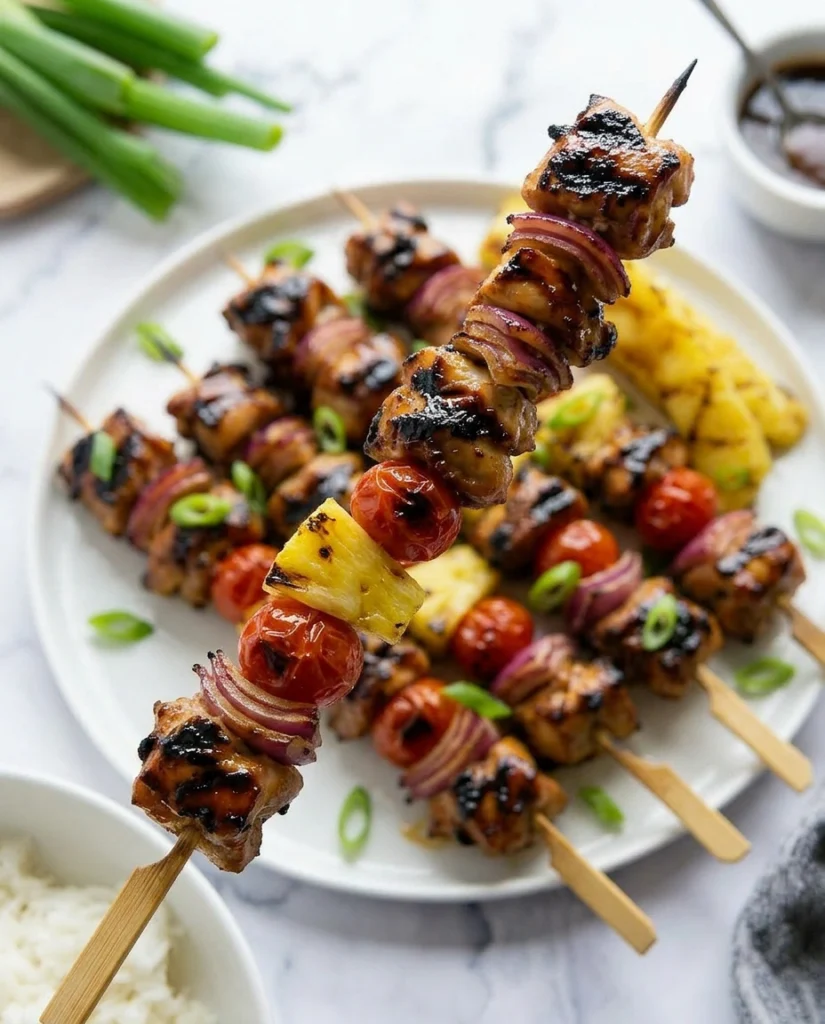
There are grilling recipes for dinner that feed people and there are grilling recipes for dinner that transport them — dishes so vivid in their flavor, so immediate in their pleasure, so unambiguous in their happiness that the table goes quiet for a moment while everyone processes exactly how good what they are eating actually is.
Grilled pineapple teriyaki chicken is that dish.
It is built on one of the most instinctively correct flavor combinations in the grilling recipes chicken universe — the deep, savory, umami-rich complexity of a properly made teriyaki glaze meeting the bright, tropical sweetness of fresh pineapple over live fire. The pineapple does not merely garnish this grilling recipe. It is a structural flavor component in the glaze itself, where its bromelain enzyme tenderizes the chicken from the outside in during marination, its natural sugars caramelize into the lacquered, sticky glaze on the grill, and its acidity cuts through the richness of the soy-mirin base with a tropical brightness that no other fruit in the grilling recipes pantry can replicate.
This is grilling recipes easy cooking with a result that feels anything but.
Why You’ll Love This Grilling Recipe
The pineapple works on three levels simultaneously. Fresh pineapple juice in the marinade tenderizes the chicken through bromelain — a proteolytic enzyme that gently breaks down surface muscle fibers, producing a texture that is noticeably more tender than untreated chicken. Pineapple juice reduced into the teriyaki glaze concentrates its sugars and acids into a caramelizing force that lacquers the chicken with extraordinary depth and complexity. And grilled pineapple rings — caramelized directly on the grates alongside the chicken until deeply golden and slightly charred at the edges — serve as the finishing garnish that ties the entire grilling recipe together visually and texturally.
It is one of the most reliable crowd-pleasing grilling recipes chicken dishes in existence. The sweet-savory-smoky flavor profile of pineapple teriyaki grilled chicken occupies a flavor register that is universally appealing — it is bold enough to be interesting and familiar enough to be immediately loved. Children eat it enthusiastically. Adults who consider themselves sophisticated eaters find it compelling. It is the rare grilling recipes for dinner centerpiece that requires no explanation, no acquired taste, and no asterisk.
The homemade pineapple teriyaki glaze is a revelation. Every bottled teriyaki sauce in existence is a flat, over-sweetened approximation of what teriyaki actually tastes like when properly made. This glaze — built from soy sauce, mirin, sake, fresh pineapple juice, brown sugar, ginger, and garlic, reduced slowly until thick and glossy — has a complexity and depth that the bottled version cannot approach. It is also, despite its extraordinary flavor, one of the grilling recipes easy preparations that requires nothing beyond a saucepan, ten minutes, and attention.
Common Mistakes (And How to Avoid Them)
Using canned pineapple instead of fresh. The difference between fresh and canned pineapple in this grilling recipe is not merely a matter of flavor preference — it is a matter of function. Fresh pineapple contains active bromelain enzyme that tenderizes the chicken during marination and provides the bright, tropical acidity that gives the glaze its character. Canned pineapple has been heat-processed during canning, which deactivates the bromelain entirely and cooks away much of the fresh flavor. The result is a flatter, sweeter, less complex marinade and a glaze that lacks the bright, tropical dimension that makes this grilling recipe extraordinary. Use fresh pineapple without exception.
Marinating the chicken too long in pineapple-based marinade. The same bromelain enzyme that tenderizes chicken beautifully in a 30–60 minute marination window becomes a liability at extended exposure times. Beyond 2 hours, bromelain continues breaking down muscle fibers aggressively — producing chicken that has a slightly mushy, mealy texture at the surface by the time it reaches the grill. This is one of the few grilling recipes chicken preparations where shorter marination is technically superior to longer. Set a timer and honor the 30–60 minute window.
Applying the teriyaki glaze in a single thick coat. The sugars in teriyaki — from the brown sugar, mirin, and fresh pineapple juice — burn rapidly over direct grill heat. A single thick application of glaze over direct flame produces a bitter, carbon-black exterior rather than the deep, caramelized, sticky lacquer that defines great teriyaki grilling. Apply the glaze in multiple thin layers during the final phase of cooking over indirect heat — each layer sets before the next is applied, building a complex, multi-dimensional lacquer that is simultaneously sweet, savory, and deeply caramelized.
Grilling pineapple rings on a poorly oiled grate. Fresh pineapple contains natural sugars that caramelize immediately on contact with a hot grill — and stick with equivalent enthusiasm to any grate surface that is not meticulously clean and generously oiled. A pineapple ring that sticks and tears when flipped is both a visual disappointment and a flavor loss — the caramelized surface that was developing on the grill stays on the grate rather than on the fruit. Clean and oil the grates twice before the pineapple goes on — once during preheating and once immediately before placing the rings.
Not reducing the glaze sufficiently. An under-reduced pineapple teriyaki glaze runs off the chicken rather than adhering to it, creates excessive flare-ups as it drips through the grates, and produces a pale, watery result instead of the deeply lacquered finish that defines the recipe. The properly reduced glaze should coat the back of a spoon thickly and hold a clean line when you drag a finger through it. It will continue to thicken slightly as it cools — factor this into your reduction judgment and remove it from heat slightly before it reaches the final desired consistency.
Chef’s Notes
The most underappreciated technique in this grilling recipe — and the one that produces the most dramatic visual and flavor result — is allowing the pineapple rings to grill long enough to develop deep, dark caramelization at the edges. Most cooks pull the pineapple off the grill the moment they see golden color developing, which produces a pleasantly warm, lightly marked fruit. The truly extraordinary result comes from leaving the rings until the edges are beginning to turn amber-to-dark brown and the cut surfaces are deeply caramelized — almost threatening to burn but not quite. At that point, the natural sugars of the pineapple have concentrated and transformed into something with a deep, complex, almost toffee-like sweetness that is completely different from raw pineapple and infinitely more interesting as a component of this grilling recipe.
For a grilling recipes for two presentation that is genuinely spectacular, butterfly the chicken thighs before marinating — opening them flat like a book to create a more uniform, even surface for the glaze to lacquer. Grill them flat, glaze generously, and serve each thigh topped with a single, deeply caramelized pineapple ring and a spoonful of the remaining warm glaze. The visual — golden, lacquered chicken, amber caramelized pineapple ring, sesame seeds, sliced green onion — is restaurant-caliber and costs the price of a weeknight dinner.
Key Ingredients — And Why They Work
Boneless, skinless chicken thighs: The grilling recipes chicken cut that makes this recipe work reliably and repeatedly. Boneless thighs have enough fat to stay moist through the two-phase cooking process — direct heat for searing, indirect heat for glazing — and enough surface area in their natural, slightly irregular shape to hold the teriyaki glaze in the small valleys and ridges of the meat surface. They cook faster than bone-in thighs — an asset in a recipe where the glazing phase requires extended indirect heat time — and their mild, rich flavor is the perfect foil for the bold, sweet-savory teriyaki.
Fresh pineapple (juice for glaze and marinade, rings for grilling): The flavor and functional star of this grilling recipe. Fresh pineapple juice pressed from approximately ¼ of a ripe pineapple provides the bromelain tenderizing enzyme for the marinade, the tropical acidity and natural sugar for the glaze reduction, and the foundational tropical flavor character that differentiates this teriyaki preparation from every other version. The remaining pineapple is sliced into rings — approximately ½ inch thick — and grilled alongside the chicken where their sugars caramelize into the deeply complex, fire-kissed garnish that makes the dish visually and texturally complete.
Soy sauce: The umami and salt backbone of the teriyaki glaze — identical in function to its role in the classic teriyaki preparation. In this pineapple variation, the soy sauce plays an additional role — its natural glutamates interact with the bromelain in the fresh pineapple juice during the glaze reduction, producing a depth of savory complexity that straight soy-mirin teriyaki cannot achieve. Use naturally brewed soy sauce exclusively — the difference in depth and complexity compared to chemically produced soy is significant in a preparation where soy is a primary ingredient.
Mirin: The sweet Japanese rice wine that provides teriyaki’s characteristic glossy sheen and caramelizing capacity. In combination with the natural sugars of the fresh pineapple juice, mirin creates a glaze with a sugar content precisely calibrated for the caramelization temperatures of a grill — producing that deep, lacquered, sticky finish that defines great teriyaki without burning at the grill’s direct heat.
Fresh ginger (grated): The aromatic element that connects the soy-mirin teriyaki tradition with the tropical character of the pineapple. Fresh ginger has a bright, warm, slightly citrusy heat that complements pineapple’s tropical sweetness in a way that is culturally and culinarily consistent — ginger and pineapple are paired across Pacific Rim cuisines from Hawaii to Southeast Asia precisely because the combination is instinctively correct. Grated on a microplane for maximum surface area and flavor release into the glaze.
Garlic (grated): The savory depth provider that prevents the glaze from becoming too sweet or too one-dimensional. In the context of a pineapple teriyaki preparation, garlic is the balancing agent — its pungent, savory intensity keeps the abundant sweetness of the pineapple and mirin in check and ensures the glaze tastes complex and interesting rather than simply sugary.
Brown sugar: The additional caramelization fuel that, combined with the natural sugars in the pineapple juice and mirin, gives the glaze its extraordinary depth of color and flavor. Brown sugar’s molasses content contributes a dark, slightly bitter caramel note to the charred edges of the glaze — the flavor equivalent of the Maillard reaction applied to sugar — that is one of the most compelling elements of properly grilled teriyaki chicken.
Rice vinegar: The acid balancer that prevents the glaze from tasting flat or cloying. In a preparation with the natural sugar load of fresh pineapple juice, mirin, and brown sugar, rice vinegar’s mild acidity is essential — it keeps every other flavor vivid and in proper proportion, functioning as the invisible moderating hand that makes the entire glaze taste brighter and more complex than it would without it.
Sesame oil (finishing): Added off heat after the glaze has been removed from the stovetop, sesame oil provides the deep, nutty, toasty aromatic finish that signals authenticity in any teriyaki preparation. Its low smoke point makes it unsuitable for cooking — applied as a finishing element, it delivers its aromatics intact and undegraded, contributing the final olfactory layer that makes the glaze smell as extraordinary as it tastes.
Fresh lime (finishing): The final brightness element applied at the table — a squeeze of fresh lime over the finished, glazed, plated chicken. Lime’s acidity cuts through the richness of the teriyaki glaze and the fat of the chicken, waking up every flavor simultaneously and providing the bright, tropical citrus punctuation that the pineapple in the glaze anticipates but cannot fully deliver after cooking.
How to Make Grilled Pineapple Teriyaki Chicken
Serves: 4 | Prep Time: 20 min (+ 30–60 min marinating) | Cook Time: 20–25 min
Ingredients:
For the chicken and pineapple:
- 2 lbs boneless, skinless chicken thighs
- 1 ripe fresh pineapple — ¼ juiced for marinade and glaze, remainder cut into ½-inch rings for grilling
- 1 tbsp neutral oil for brushing
For the pineapple teriyaki marinade:
- 3 tbsp fresh pineapple juice
- 3 tbsp soy sauce
- 1 tbsp neutral oil
- 1 tsp fresh ginger, grated on microplane
- 2 cloves garlic, grated on microplane
- ½ tsp black pepper
For the pineapple teriyaki glaze:
- ½ cup soy sauce (use tamari for gluten-free)
- ¼ cup mirin
- ¼ cup sake (or dry sherry)
- ½ cup fresh pineapple juice
- 3 tbsp brown sugar
- 1 tbsp fresh ginger, grated on microplane
- 3 cloves garlic, grated on microplane
- 1 tsp rice vinegar
- 1 tsp sesame oil (added off heat)
- 1 tsp cornstarch mixed with 1 tbsp cold water (optional — for extra thickness)
To finish and serve:
- 1 tbsp toasted sesame seeds
- 3 green onions, thinly sliced on the diagonal
- Fresh cilantro leaves
- Fresh lime wedges
- Steamed jasmine rice or coconut rice for serving
- Quick-pickled red onion or cucumber for alongside
Suggested grilling recipes side dishes:
- Coconut jasmine rice with fresh lime zest
- Grilled bok choy with sesame and soy
- Asian cucumber salad with rice vinegar and sesame
- Grilled corn with chili lime butter
- Edamame with flaky sea salt and sesame oil
- Mango avocado salad with lime dressing
Instructions:
- Juice and prep the pineapple. Cut the fresh pineapple — removing the top, skin, and core. Set aside the core and approximately ¼ of the pineapple flesh for juicing. Press through a fine mesh strainer or blitz briefly in a blender and strain — you need approximately ¾ cup of fresh pineapple juice total (3 tbsp for the marinade, ½ cup for the glaze). Slice the remaining pineapple into ½-inch rings, removing the core section from each ring with a small round cutter or knife. Set the rings aside.
- Make the pineapple teriyaki glaze. Combine soy sauce, mirin, sake, fresh pineapple juice, brown sugar, grated ginger, and grated garlic in a small saucepan over medium heat. Stir to dissolve the sugar completely. Bring to a gentle simmer and cook, stirring occasionally, for 10–12 minutes until reduced by approximately one-third and thick enough to coat the back of a spoon with a clean, glossy layer. If using the cornstarch slurry, whisk it in during the final 2 minutes of reduction and cook until the glaze is visibly thicker and more glossy. Remove from heat immediately. Stir in rice vinegar and sesame oil. Divide — reserve one-third in a separate small bowl as finishing glaze (never to contact raw chicken). The remaining two-thirds is your glazing portion for the grill.
- Make the marinade and marinate the chicken. In a bowl or zip-lock bag, combine the 3 tablespoons of fresh pineapple juice with soy sauce, neutral oil, grated ginger, grated garlic, and black pepper. Pat the chicken thighs completely dry and add to the marinade. Toss to coat every surface. Refrigerate for 30–60 minutes — set a timer and do not exceed 60 minutes. The bromelain in the fresh pineapple juice tenderizes effectively within this window and becomes damaging to texture beyond it.
- Bring chicken to room temperature. Remove the marinated chicken from the refrigerator 20 minutes before grilling. Cold chicken on a hot grill creates uneven cooking — room temperature chicken cooks evenly from edge to center.
- Preheat the grill for two-zone cooking. For gas: set one side to high and one side to medium-low. For charcoal: bank coals to one side. Target 400–425°F on the direct side — slightly lower than maximum temperature to manage the teriyaki glaze’s high sugar content and prevent premature burning. Clean grates thoroughly and oil generously immediately before the chicken goes on.
- Grill the chicken over direct heat. Remove chicken from the marinade, shaking off excess. Place on the direct heat zone. Close the lid and grill for 4–5 minutes per side — developing deep golden color and char marks on both sides without glazing during this phase. The chicken does not need to be cooked through at this point — you are building color and sear, not finishing the interior.
- Move to indirect heat and begin glazing. Transfer all chicken thighs to the indirect heat zone. Using a pastry brush, apply a generous first layer of the pineapple teriyaki glazing portion over all surfaces. Close the lid and cook for 3 minutes. Apply a second layer of glaze. Close the lid for another 3 minutes. Apply a third and final layer — at this point the glaze should be visibly setting into a lacquered, slightly sticky coat on the surface of the chicken. Close the lid for 3–4 more minutes until the chicken reaches an internal temperature of 165°F and the glaze is caramelized, deeply colored, and glossy.
- Grill the pineapple rings. During the final 8–10 minutes of the chicken’s indirect cook, brush the pineapple rings lightly with neutral oil on both sides. Place on the direct heat zone. Grill for 3–4 minutes per side — resist pulling them at the first sign of color. Wait until the edges are beginning to turn deep amber and the cut surface shows dark caramelization marks. The deeper the caramelization, the more complex and extraordinary the pineapple flavor becomes.
- Final direct heat flash (optional). For extra caramelization and char on the glaze, move the glazed chicken back to direct heat for 60–90 seconds per side immediately before pulling — watching carefully to ensure the glaze does not cross from caramelized to burnt. This final flash is optional but produces the most visually spectacular, deeply lacquered result.
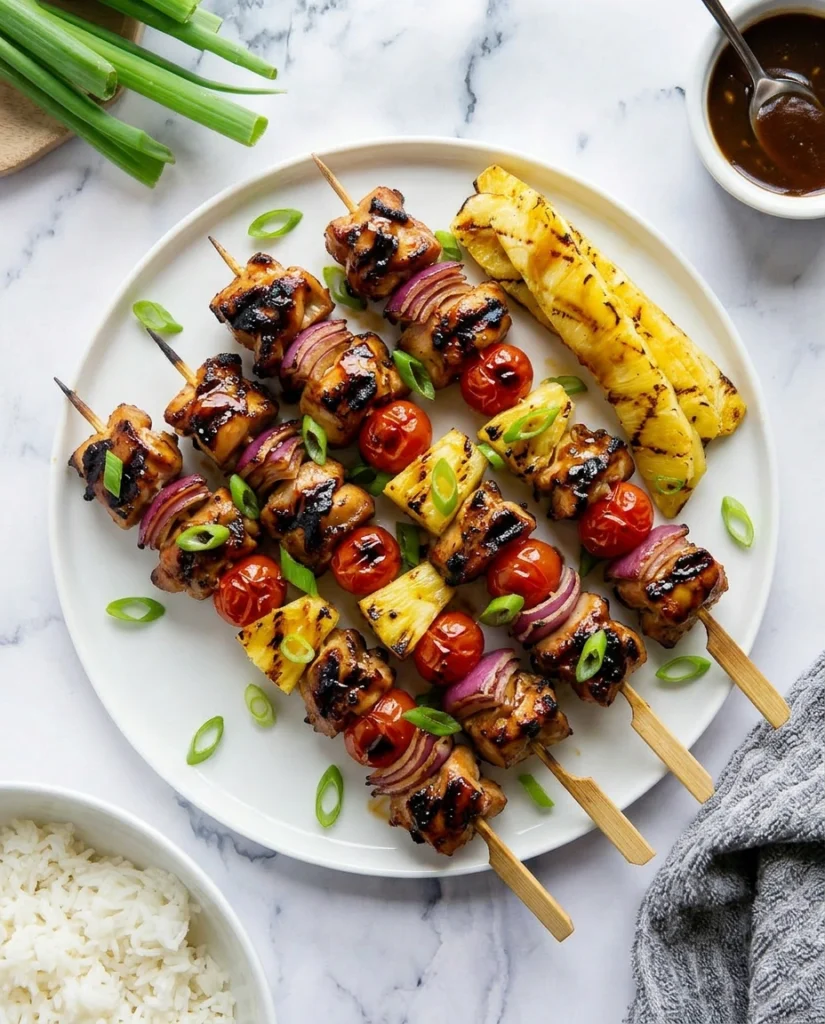
- Rest and finish. Remove the chicken and pineapple rings from the grill. Rest the chicken for 4 minutes. Arrange the rested chicken thighs on a serving platter and top each thigh with a caramelized pineapple ring. Drizzle the reserved finishing glaze generously over the entire platter. Scatter toasted sesame seeds, diagonally sliced green onions, and fresh cilantro leaves over everything. Serve immediately with lime wedges and your chosen grilling recipes side dishes.
Variations & Tips
Make it a grilling recipes for two dinner: Two butterflied chicken thighs, two deeply caramelized pineapple rings, a generous drizzle of finishing glaze, coconut jasmine rice alongside, and a chilled Riesling or a tropical cocktail — this grilling recipes for two presentation is one of the most visually beautiful and flavor-complete quick dinners in the entire grilling recipes for dinner collection. The effort investment is minimal. The result is genuinely memorable.
Grilling recipes Blackstone pineapple teriyaki chicken: Heat the Blackstone flat top to medium-high and add a thin layer of neutral oil. Cook the marinated chicken thighs flat on the surface for 4–5 minutes per side until deeply golden, then reduce heat to medium-low and glaze repeatedly in the same multi-layer fashion as described above — allowing each layer to set before the next is applied. Grill the pineapple rings directly on the flat top surface alongside for 3 minutes per side. The grilling recipes Blackstone approach produces an extraordinarily even, golden-brown sear across the entire chicken surface with none of the uneven heating that can occur between grill grates.
Grilling recipes chicken breast variation: Pound chicken breasts to an even ¾-inch thickness before marinating to equalize cooking time and prevent the thin end from overcooking before the thick end is done. Reduce marination time to 20–30 minutes maximum — chicken breast has a more delicate protein structure than thigh and over-tenderizes faster in the pineapple marinade. Grill over direct medium-high heat for 5–6 minutes per side and glaze during the final 4 minutes only.
Grilling recipes pork tenderloin teriyaki: Slice pork tenderloin into 1.5-inch medallions and marinate in the pineapple teriyaki marinade for 1–2 hours. Thread onto skewers alternating with pineapple chunks — cut from the rings before grilling. Grill over direct high heat for 3–4 minutes per side, glazing in the final minutes, to an internal temperature of 145°F. This grilling recipes pork adaptation is one of the most elegant and underappreciated teriyaki variations — the pork’s natural sweetness harmonizes with the pineapple in a way that is particularly compelling and completely distinct from the chicken version.
Hawaiian plate lunch version: Serve the glazed chicken and caramelized pineapple over two scoops of steamed white rice alongside a simple macaroni salad dressed with mayonnaise, rice vinegar, and a pinch of sugar. This is the classic Hawaiian plate lunch format — one of America’s most underappreciated regional food traditions — adapted for the backyard grill. It is the grilling recipes for dinner presentation that most directly honors the cultural context of this recipe and produces the most immediately joyful eating experience.
Grilling recipes healthy lighter bowl: Replace the jasmine rice with cauliflower rice, reduce the glaze by half, and serve the chicken sliced over a bowl of shredded cabbage, edamame, sliced avocado, shredded carrot, and cucumber with a light sesame-ginger dressing. The pineapple teriyaki flavor profile is vivid enough to carry a significantly lighter preparation without losing its essential character — making this one of the most satisfying grilling recipes healthy adaptations in the entire summer collection.
Pro tip: Add 1 tablespoon of sriracha or sambal oelek to the pineapple teriyaki glaze during reduction for a sweet-heat version that introduces a building, layered chili warmth beneath the tropical sweetness. The heat and the pineapple are a natural combination — bright, tropical, and spicy simultaneously — and the resulting glaze occupies a flavor register that is even more compelling and addictive than the straight teriyaki version. Adjust the quantity to your audience’s heat preference and introduce it gradually — it is easier to add heat than to remove it.
How to Meal Prep
The pineapple teriyaki glaze is the foundational make-ahead preparation of this grilling recipe and one of the highest-value condiment-level investments a home cook can make at the beginning of the grilling week. Made in double or triple batches and stored in a sealed jar in the refrigerator for up to 2 weeks, it functions as a glaze for grilling recipes chicken breasts and thighs, a finishing sauce for grilling recipes pork tenderloin, a dipping sauce for grilled vegetables and spring rolls, a drizzle for grilling recipes side dishes of steamed rice and roasted broccoli, and a marinade base for salmon and shrimp that produces results equal in quality to the dedicated teriyaki glaze in the earlier salmon recipe. It is the preparation that earns the most use per minute of effort invested of anything in this entire grilling recipes for dinner series.
The chicken can be marinated up to 60 minutes in advance — not longer, as established — and the pineapple rings can be sliced and stored separately in the refrigerator up to 24 hours before grilling with no quality loss. Threading all the prep into the beginning of the day leaves the actual cooking as a purely spontaneous, fifteen-minute active-work affair — the kind of grilling recipes easy weeknight execution that feels effortless because it genuinely is.
Leftover grilled pineapple teriyaki chicken — stored in an airtight container for up to 3 days — is one of the most versatile and delicious next-day proteins in the grilling recipes canon. Slice cold and layer over a grain bowl with brown rice, shredded cabbage, sliced avocado, and a drizzle of the remaining teriyaki glaze for an exceptional next-day lunch that requires zero reheating and zero additional preparation. Chop and fold into fried rice with egg, edamame, and green onion for one of the most satisfying leftover transformations possible. Warm gently in a skillet with a splash of pineapple juice and a spoonful of glaze and serve over noodles with sesame oil and fresh cilantro for a dinner that is completely different from the original grilling recipes for dinner preparation and equally worth making in its own right.
Cultural Context
The flavor combination at the heart of this grilling recipe — pineapple and soy, tropical sweetness and fermented umami depth, the Pacific meeting Asia — is not a modern fusion invention. It is the product of one of the most remarkable and overlooked chapters in American culinary history: the food culture of Hawaii, where the overlapping culinary traditions of Native Hawaiian, Japanese, Chinese, Filipino, Korean, Portuguese, and American mainland cultures created, over the course of more than a century of immigration and cultural exchange, something genuinely new and genuinely extraordinary.
The pineapple itself arrived in Hawaii — or more precisely, was commercially cultivated there at industrial scale — through the efforts of James Dole, whose Hawaiian Pineapple Company, founded in 1901, transformed the island’s agricultural economy and made Hawaiian pineapple a globally recognized ingredient by the mid-20th century. At the same time, the massive influx of Japanese immigrant workers to Hawaii’s sugar and pineapple plantations beginning in the 1880s brought with them the teriyaki tradition — soy, mirin, sake, ginger, and garlic applied to protein over fire — that would eventually merge with the local abundance of pineapple into the specific flavor combination this grilling recipe celebrates.
The Hawaiian plate lunch — rice, macaroni salad, and a protein, often teriyaki chicken, sold from lunch wagons to plantation workers who needed a substantial, affordable, portable midday meal — became the vehicle through which this pineapple teriyaki flavor combination reached the American mainland and eventually the world. What began as the practical food of immigrant laborers working in tropical heat became, through the particular alchemy of cultural exchange that happens when many culinary traditions occupy the same small island, one of the most beloved and widely recognized flavor combinations in the modern American grilling recipes for dinner canon. It carries that history in every bite — the pineapple, the soy, the grill, the sweetness, the depth — and it tastes like exactly what it is: a meeting of cultures over fire that produced something greater than any single tradition could have created alone.
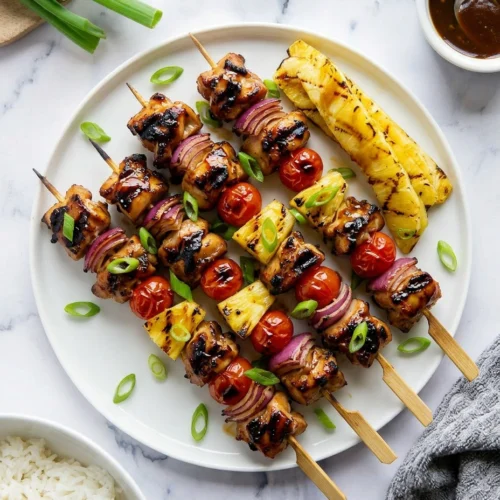
Grilled Pineapple Teriyaki Chicken
Equipment
- grill
- saucepan
- mixing bowls
- tongs
- basting brush
Ingredients
- 2 lbs boneless skinless chicken thighs
- 1 fresh pineapple
- 3 tbsp pineapple juice
- 3 tbsp soy sauce (marinade)
- 1 tbsp neutral oil
- 1 tsp fresh ginger, grated
- 2 cloves garlic, grated
- 0.5 tsp black pepper
- 0.5 cup soy sauce (glaze)
- 0.25 cup mirin
- 0.25 cup sake
- 0.5 cup pineapple juice (glaze)
- 3 tbsp brown sugar
- 1 tbsp fresh ginger (glaze)
- 3 cloves garlic (glaze)
- 1 tsp rice vinegar
- 1 tsp sesame oil
- 1 tsp cornstarch slurry (optional)
- 1 tbsp sesame seeds
- 3 green onions
- 1 handful fresh cilantro
- 1 lime wedges
Instructions
- Prepare pineapple by cutting, juicing part of it, and slicing the rest into rings.
- Simmer soy sauce, mirin, sake, pineapple juice, sugar, ginger, and garlic to make glaze until thickened. Stir in vinegar and sesame oil.
- Mix marinade ingredients and coat chicken. Refrigerate for 30–60 minutes.
- Preheat grill to medium-high and set up two-zone cooking.
- Grill chicken over direct heat for 4–5 minutes per side to develop char.
- Move chicken to indirect heat and brush with glaze in layers, cooking until fully caramelized.
- Grill pineapple rings over direct heat until deeply caramelized.
- Optional: return chicken briefly to direct heat for extra caramelization.
- Rest chicken for 4 minutes before serving.
- Top with pineapple rings, drizzle glaze, and garnish with sesame seeds, green onions, cilantro, and lime.