
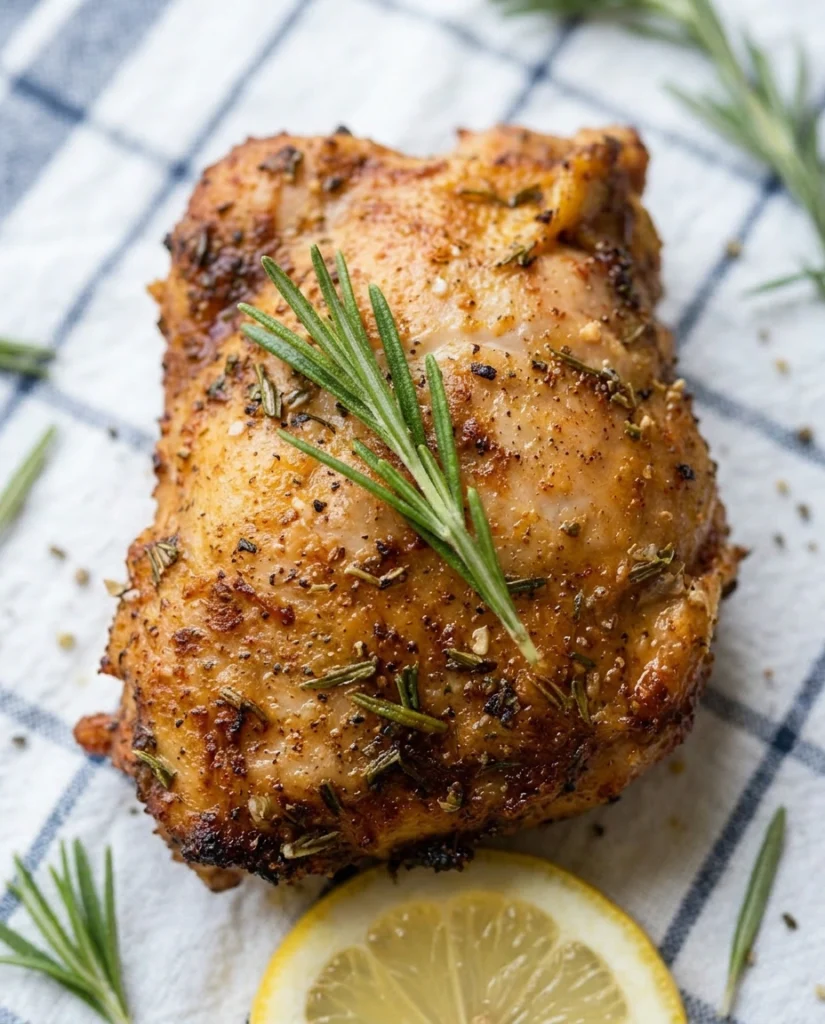
There is a particular kind of culinary confidence that comes from understanding that the greatest grilling recipes for dinner are not built on complexity — they are built on clarity. The clearest possible expression of the best possible ingredients, treated with enough respect to let them speak for themselves over live fire.
These lemon rosemary grilled chicken thighs are that philosophy made edible.
A bone-in, skin-on chicken thigh is arguably the single greatest grilling recipes chicken cut in existence — a self-basting, self-protecting, fat-rich piece of meat that the grill transforms more dramatically and more reliably than any other part of the bird. The skin renders into a lacquered, deeply golden, shatteringly crispy shell. The bone conducts heat through the center of the meat, ensuring even cooking from the inside out. The fat matrix throughout the thigh meat keeps it moist and forgiving across a wide range of temperatures and timing variations.
Give that chicken thigh a marinade of fresh rosemary, lemon, garlic, and good olive oil — and grilling recipes easy does not begin to describe how straightforward the path to an extraordinary result becomes.
Why You’ll Love This Grilling Recipe
Crispy skin on a grill is one of the great achievements of backyard cooking. Achieving the crackling, deeply golden, rendered skin that defines a great grilled chicken thigh requires understanding one principle — dry skin plus high direct heat equals crispiness — and this grilling recipe is built entirely around that principle. The dry brine step removes surface moisture. The high initial direct heat renders the fat and sets the skin. The indirect finishing phase cooks the meat through without burning the already-crisped surface. The result is skin that shatters audibly when you bite through it, giving way to juicy, herb-infused meat underneath.
Rosemary is the perfect grilling herb. This is not a coincidence — it is a physical and chemical property of the herb itself. Rosemary’s aromatic compounds are bound in a resinous oil that is extraordinarily stable at high temperatures. Where delicate herbs like basil, tarragon, and chives volatilize and lose their character the moment they contact a hot grill, rosemary’s robust essential oils survive direct flame, bloom under heat, and permeate the fat of the chicken skin with a deeply fragrant, slightly piney, resinous intensity that no other herb can replicate in a grilling recipes chicken preparation.
It is one of the most endlessly versatile grilling recipes for dinner anchor dishes. Lemon rosemary chicken thighs speak the same culinary language as virtually every grilling recipes side dish in the Mediterranean and American backyard grilling traditions simultaneously. Grilled corn. Roasted potatoes. Caesar salad. Grilled asparagus. Herbed couscous. Caprese. This is a grilling recipe that never needs to ask permission to belong at the table — it is already at home beside everything.
Common Mistakes (And How to Avoid Them)
Grilling cold chicken straight from the refrigerator. This is the single most common source of uneven grilling results in the entire grilling recipes chicken category — and one of the most easily preventable. Cold chicken placed directly on a hot grill creates a dramatic temperature differential between the cold interior and the hot exterior. The surface chars and the skin renders before the interior has warmed sufficiently to begin cooking through — producing chicken that is simultaneously over-charred on the outside and undercooked at the bone. Always remove chicken thighs from the refrigerator 30 full minutes before they go on the grill. Room temperature chicken cooks evenly from edge to center.
Skipping the dry brine. The dry brine — salt applied directly to the chicken and allowed to work uncovered in the refrigerator — is the professional kitchen technique responsible for the crackling, deeply rendered skin on a properly grilled chicken thigh. Salt draws moisture from the skin surface through osmosis, that moisture then dissolves the salt and gets reabsorbed into the meat — seasoning it deeply from the inside while simultaneously drying the skin surface to a near-paper-like texture that crisps magnificently on the grill. Skip this step and you have a good grilled chicken thigh. Include it and you have an extraordinary one.
Using exclusively direct heat for the entire cook. Bone-in chicken thighs — unlike boneless thighs, shrimp, or thin fish fillets — require a two-zone cooking approach without exception. Direct high heat for the first phase renders the skin and develops char and color on the exterior. Indirect medium heat for the second phase cooks the meat adjacent to the bone through to the required 165°F internal temperature without the exterior burning to carbon in the time required. A chicken thigh cooked entirely over direct heat will have burnt skin and raw meat at the bone — one of the most reliable disappointing outcomes in grilling recipes chicken history.
Not scoring the skin. A simple technique borrowed from professional kitchens that dramatically improves this grilling recipe — use a sharp knife to make 2–3 shallow diagonal cuts through the skin and into the top layer of meat of each thigh before marinating. This does three things simultaneously: it allows the marinade to penetrate below the skin barrier into the meat itself, it provides channels through which the rendering fat can escape the skin during grilling rather than pooling and steaming beneath it, and it creates additional surface area for char and caramelization to develop. It takes thirty seconds per thigh and produces a measurably superior result.
Constantly moving the chicken. Chicken thighs need extended, uninterrupted contact with the hot grill surface to develop their crust, render their fat, and caramelize properly. Every time you lift, rotate, or reposition a thigh that is not yet ready to move, you interrupt the Maillard reaction mid-development, tear the forming crust from the grates, and reset the caramelization clock back to zero. Place the chicken on the grill, close the lid, and do not touch it until it is ready to flip — which it will announce by releasing cleanly from the grates without resistance.
Chef’s Notes
Fresh rosemary in this grilling recipe performs double duty that most cooks do not take full advantage of. Beyond its role in the marinade, fresh rosemary branches — stripped of most of their leaves but with a few remaining at the tip — make extraordinary basting brushes for the grill. Tie four or five stripped branches together at the base with kitchen twine, dip the leafy tips into the reserved finishing marinade or melted herb butter, and use the bundle to baste the chicken as it grills. The rosemary leaves singe slightly against the hot chicken skin and grill surface, releasing their essential oils directly onto the meat in a way that even the best marinade cannot fully replicate. It is the kind of technique that requires almost no effort and produces a result that experienced diners notice immediately — an intensity of rosemary flavor that tastes like the herb was cooked into the chicken rather than merely applied to its surface.
For a grilling recipes for two presentation that elevates this preparation to genuinely memorable, serve the thighs over a pool of warm white bean puree — cannellini beans blended with roasted garlic, good olive oil, fresh lemon juice, and fresh rosemary — with a handful of dressed arugula alongside and a drizzle of the best olive oil you own. The white bean puree and the crispy-skinned lemon rosemary chicken is a combination of flavors and textures that belongs in a Tuscan restaurant and costs the price of a weeknight dinner at home.
Key Ingredients — And Why They Work
Bone-in, skin-on chicken thighs: The architecture of this cut is what makes it the undisputed king of grilling recipes chicken preparations. The bone is not merely structural — it conducts heat from the grill through its mineral interior into the center of the meat, cooking the thigh from the inside out simultaneously with the grill’s heat cooking it from the outside in. The skin is the natural basting and crisping system — as its fat renders under the grill’s heat, it continuously bastes the meat below it while simultaneously crisping into the golden, crackling exterior that defines a great grilled chicken thigh. No other cut of chicken offers this combination of self-protection, self-basting, and textural potential.
Fresh rosemary: The herb that was practically engineered by nature for live-fire cooking. Rosemary’s flavor compounds — primarily borneol, camphor, and pinene — are carried in a dense, heat-stable resinous oil that does not volatilize at normal grilling temperatures. This means that unlike soft herbs that burn and disappear, rosemary’s aromatics survive the grill’s heat, bloom and intensify under it, and penetrate the fat of the chicken skin during the rendering process — producing a depth of herb flavor that you can taste all the way through to the bone. Use fresh rosemary exclusively — dried rosemary has a dusty, slightly medicinal quality that does not translate well to live-fire cooking.
Fresh lemon (juice, zest, and slices): Three different expressions of lemon performing three different functions in this grilling recipe. The juice provides the marinade’s acidic tenderizing component. The zest provides the intensely aromatic essential oils that penetrate the chicken during marination and survive the grill’s heat partially intact. And lemon slices — placed directly on the grill alongside the chicken and allowed to char — develop a deep, caramelized, slightly bitter citrus flavor that is entirely different from fresh lemon and serves as a stunning, functional garnish that guests can squeeze over their finished chicken for a hit of complex, fire-kissed citrus.
Extra virgin olive oil: The fat carrier and flavor contributor that defines the Mediterranean character of this preparation. In this grilling recipe specifically, olive oil performs an additional function beyond marinade carrier — it is the fat medium in which the rosemary aromatics bloom during marination. When fresh rosemary is steeped in olive oil for 4–8 hours, the oil absorbs the herb’s essential oils through a gentle infusion process, creating a rosemary-infused olive oil that distributes the herb’s flavor evenly across every surface of the chicken rather than concentrating it only where sprigs make direct contact.
Garlic (crushed and sliced rather than grated): In this particular grilling recipe, crushed and sliced garlic — rather than the grated garlic preferred in quicker marinades — is the correct preparation. The longer marination time of this recipe allows crushed and sliced garlic pieces to release their flavor compounds slowly and gently into the olive oil, creating a mellow, sweet, fully integrated garlic infusion rather than the sharp, immediate punch of grated garlic. The result is a marinade in which garlic is present as a foundational depth note rather than a dominant flavor — supporting the rosemary and lemon without competing with them.
Dijon mustard (small amount, in the marinade): This is the technique ingredient that most grilling recipes chicken preparations omit and should not. A tablespoon of Dijon mustard in the marinade serves as an emulsifier — binding the olive oil and lemon juice into a cohesive, stable coating that adheres to the chicken skin rather than running off into the grill. It also provides a subtle, sharp, slightly vinegary depth that is imperceptible as mustard in the finished dish but makes every other flavor more vivid and integrated. It is the invisible hand behind the scenes making the marinade work better.
Honey (small amount): A teaspoon of honey in the marinade provides caramelization fuel for the chicken skin — its natural sugars react with the proteins in the skin during grilling, producing the deep mahogany color and complex caramelized flavor that distinguishes a great grilled chicken thigh from a merely properly cooked one. It also provides a gentle sweetness that balances the sharp acidity of the lemon and the pungency of the garlic without making the chicken taste sweet.
Fresh thyme (supporting herb): The quieter, more delicate aromatic companion to the bold rosemary. Fresh thyme provides a lighter, slightly lemony herbal note that lifts the marinade and prevents the rosemary from becoming overwhelming — acting as the moderating voice in a marinade that could otherwise be dominated entirely by a single strong personality. Strip the thyme leaves from their woody stems before adding to the marinade — the stems have minimal flavor and create a stringy texture in the marinade that serves no purpose.
Red pepper flakes: A small amount provides background warmth that builds very gently over the course of eating the chicken — present as a pleasant heat in the aftertaste rather than a dominant front-of-palate spice. In a grilling recipe built around herb and citrus brightness, heat is a supporting character that adds dimension without redirecting the flavor narrative.
How to Make Lemon Rosemary Grilled Chicken Thighs
Serves: 4 | Prep Time: 20 min (+ 1 hr dry brine + 4–8 hrs marinating) | Cook Time: 30–35 min
Ingredients:
For the chicken:
- 4 bone-in, skin-on chicken thighs (approximately 8–10 oz each)
- 1 tsp kosher salt (for dry brine)
- ½ tsp black pepper (for dry brine)
For the lemon rosemary marinade:
- 5 tbsp extra virgin olive oil
- Zest and juice of 2 large lemons (approximately 5 tbsp juice total)
- 4 sprigs fresh rosemary, leaves stripped and finely chopped (approximately 2 tbsp)
- 2 additional whole rosemary sprigs (for the marinade bag — flavor infusion)
- 1 tbsp fresh thyme leaves, stripped from stems
- 5 cloves garlic, crushed and roughly sliced
- 1 tbsp Dijon mustard
- 1 tsp honey
- ½ tsp red pepper flakes
- ½ tsp kosher salt
- ¼ tsp black pepper
For the rosemary basting brush and butter (optional but highly recommended):
- 4–5 fresh rosemary branches, most leaves stripped (leave a few at the tip)
- 3 tbsp unsalted butter, melted
- 1 tbsp reserved marinade (reserved before raw chicken contact)
- 1 clove garlic, grated
- Pinch of flaky sea salt
To finish and serve:
- 2 lemons, halved and grilled cut-side down until deeply charred
- Fresh rosemary sprigs for garnish
- Fresh flat-leaf parsley, roughly chopped
- Flaky sea salt
- Extra virgin olive oil for drizzling
Suggested grilling recipes side dishes:
- White bean puree with roasted garlic and rosemary
- Grilled asparagus with lemon and parmesan
- Herbed couscous with preserved lemon and fresh herbs
- Grilled zucchini with olive oil and sea salt
- Simple arugula salad with shaved parmesan and lemon dressing
- Roasted cherry tomatoes with fresh basil and good olive oil
Instructions:
- Score and dry brine the chicken. Using a sharp knife, make 2–3 shallow diagonal cuts through the skin and into the top layer of meat of each thigh — cuts approximately ½ inch deep and 1.5 inches long. These scoring cuts allow the marinade to penetrate below the skin barrier and provide channels for fat to render and escape during grilling. Pat the thighs completely dry on all surfaces with paper towels. Season generously with the dry brine kosher salt and black pepper on all sides, including under the skin where possible — slide your fingers gently between the skin and the meat and season the meat directly. Arrange skin-side up on a wire rack set over a baking sheet. Refrigerate uncovered for a minimum of 1 hour — overnight is ideal for maximum skin drying and seasoning depth.
- Make the lemon rosemary marinade. Combine olive oil, lemon zest and juice, finely chopped rosemary leaves, fresh thyme leaves, crushed and sliced garlic, Dijon mustard, honey, red pepper flakes, salt, and black pepper in a bowl or large zip-lock bag. Whisk or shake until fully combined and slightly emulsified — the Dijon mustard helps the oil and lemon juice bind into a cohesive marinade. Immediately reserve 2 tablespoons of the marinade in a separate small container before the raw chicken ever touches the bowl — this reserved portion is for the basting butter and finishing drizzle.
- Marinate the chicken. Add the dry-brined chicken thighs to the marinade along with the two whole rosemary sprigs. Turn to coat every surface thoroughly, pressing the marinade into the scoring cuts. If using a zip-lock bag, press out all the air before sealing — maximum marinade contact with minimum air exposure. Refrigerate for 4–8 hours — overnight produces the best result. Remove from the refrigerator 30 full minutes before grilling to return to room temperature.
- Make the rosemary basting brush and butter. Tie the stripped rosemary branches together at the base with kitchen twine to create a basting brush — ensure the leafy tips are free and loose. In a small bowl, combine melted butter, the reserved 1 tablespoon of marinade, and the grated garlic clove. Whisk to combine. This is your basting butter — keep it warm by setting the bowl over a pan of warm water, or reheat gently on the indirect zone of the grill during cooking.
- Prepare the grill for two-zone cooking. For gas: set one or two burners to high and the remaining burner(s) to medium-low, creating a hot direct zone and a cooler indirect zone. For charcoal: bank all the coals to one side of the grill, leaving the other side coal-free. Target 425–450°F on the direct heat side. Clean the grates thoroughly and oil generously — chicken skin is notoriously prone to sticking, particularly at the beginning of the cook before the fat renders and the crust forms.
- Grill skin-side down over direct heat. Remove the chicken thighs from the marinade, shaking off excess. Place skin-side down on the direct heat zone. Close the lid. Grill undisturbed for 6–8 minutes — this extended uninterrupted period is what renders the fat and develops the crust. You will hear the fat rendering — a steady, enthusiastic sizzle is normal and desirable. You will see some smoke and occasional flare-ups from dripping fat — move the chicken briefly to the indirect zone to manage severe flare-ups, then return to direct heat. When the skin releases cleanly from the grates and is deeply golden with defined char marks, it is ready to flip.
- Flip and grill flesh-side down over direct heat. Flip the thighs to flesh-side down. Grill over direct heat for 3–4 minutes until the flesh side develops color and char marks. During this phase, use the rosemary basting brush to apply the herb butter generously to the now-upward-facing skin side — dipping the rosemary tip bundle into the butter and sweeping it across the golden skin. The rosemary leaves will singe slightly against the hot skin and release their essential oils directly onto the surface.
- Move to indirect heat and finish. Transfer all thighs skin-side up to the indirect heat zone. Close the lid. Cook for 15–20 minutes, basting once more with the rosemary butter brush at the halfway point, until an instant-read thermometer inserted into the thickest part of the thigh — without touching the bone — reads 165°F. The skin should remain golden and crispy throughout this indirect phase — if it begins to lose its crispiness from steam, open the lid for the final 5 minutes of indirect cooking to allow moisture to escape.
- Grill the lemon halves. During the last 5 minutes of the chicken’s indirect cook, place the lemon halves cut-side down on the direct heat zone. Grill undisturbed for 4–5 minutes until the cut surface is deeply charred and caramelized — almost black at the edges. Remove and set aside for serving. Charred lemon is a garnish that functions as an ingredient — its juice, squeezed over the finished chicken at the table, delivers a complex, fire-kissed citrus flavor that is entirely different from fresh lemon.
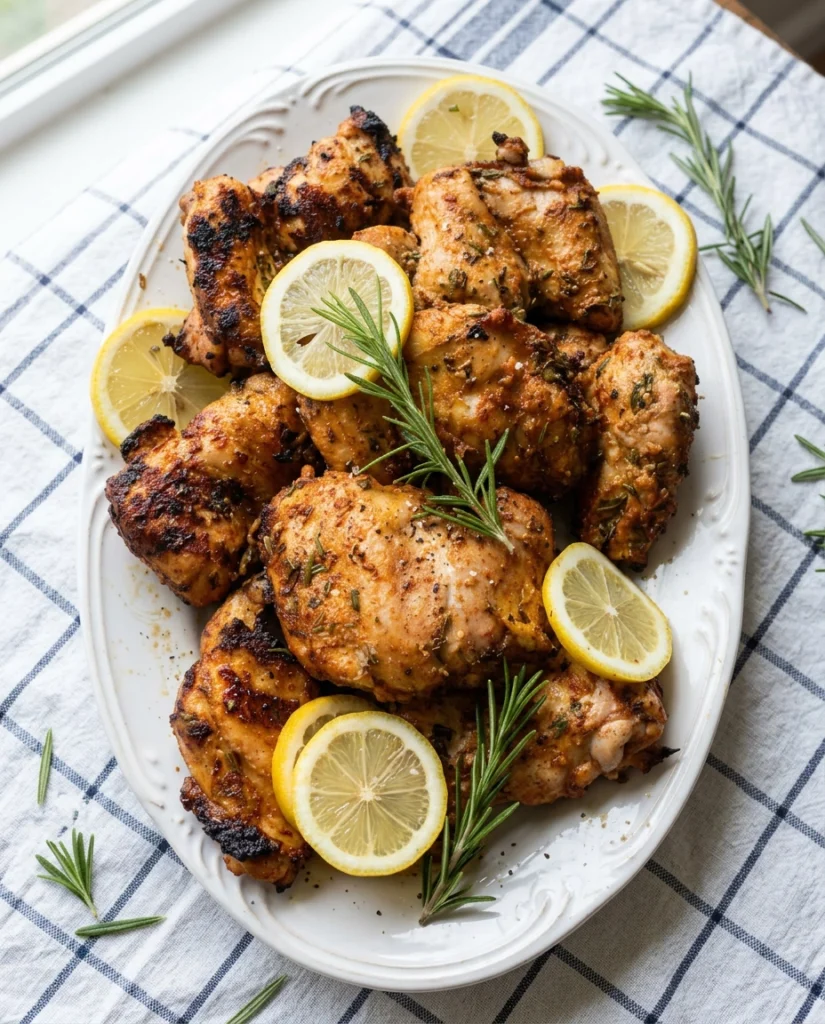
- Rest and serve. Remove the chicken from the grill and rest on a clean board for 5 full minutes — bone-in thighs benefit from a longer rest than boneless cuts. The internal temperature will rise another 3–5 degrees during resting and the juices will redistribute throughout the meat. Arrange on a serving platter, drizzle with a small amount of extra virgin olive oil, scatter fresh parsley and rosemary sprigs over the top, and finish with a pinch of flaky sea salt. Serve with the charred lemon halves alongside and your chosen grilling recipes side dishes.
Variations & Tips
Make it a grilling recipes for two dinner: Two bone-in thighs, the white bean puree from Chef’s Notes, a handful of dressed arugula, two charred lemon halves, and the best olive oil you own — this grilling recipes for two dinner is one of the most quietly elegant preparations in the entire summer grilling recipes for dinner collection. The investment is minimal. The result is genuinely restaurant-caliber. Scale the marinade to half quantities, invest the time saved in setting a proper table, and open a bottle of white Burgundy or a crisp, herb-forward Vermentino.
Grilling recipes Blackstone lemon rosemary chicken: Heat the Blackstone flat top to medium-high and add a generous layer of olive oil. Place the marinated thighs skin-side down and cook for 6–8 minutes until the skin is deeply golden and rendered — the flat top’s full-surface contact produces an extraordinarily even golden-brown crust across the entire skin surface rather than defined grill marks. Flip and cook flesh-side down for 4 minutes, then continue cooking skin-side up with the lid of a large dome or aluminum foil tent over the top to trap heat and cook the interior through to 165°F. This grilling recipes Blackstone approach produces exceptional results for this cut specifically — the even surface contact renders the skin more completely than grill grates can.
Grilling recipes pork loin chops with lemon rosemary: The identical marinade works magnificently on thick-cut bone-in pork loin chops — one of the most underrated grilling recipes pork preparations in the herb and citrus tradition. Marinate for 2–4 hours, grill over direct high heat for 4–5 minutes per side to develop char, then finish over indirect heat to an internal temperature of 145°F. Rest for 5 minutes before serving. The lemon rosemary combination is one of the most classically suited flavor pairings for grilling recipes pork — the acidity of the lemon cuts through the fat of the pork chop while the rosemary’s resinous intensity matches and complements the richness of the meat.
Spatchcock whole chicken version: For a spectacular weekend grilling recipes for dinner centerpiece, apply this exact marinade to a spatchcocked whole chicken — backbone removed and flattened. Dry brine overnight, marinate for 4–8 hours, and grill over two-zone heat with the skin side starting over direct heat for 10 minutes before transferring entirely to the indirect zone for 35–45 minutes until the thickest part of the thigh reads 165°F. The result is a whole grilled chicken with crispy, herb-infused skin across every surface that serves four people and announces itself as an occasion rather than a weeknight dinner.
Grilling recipes healthy lighter version: Replace half the olive oil in the marinade with low-sodium chicken broth and reduce the honey to ½ teaspoon. The marinade will be slightly thinner and less rich but equally flavorful — the lemon and rosemary carry the flavor completely independently of the oil volume. For a grilling recipes healthy complete meal, serve over a large salad of baby spinach, shaved fennel, white beans, and cherry tomatoes dressed with lemon vinaigrette rather than a starch-based grilling recipes side dish.
Pro tip: If your chicken skin is not achieving the level of crispiness you want despite proper dry brining and direct heat — a problem that occasionally occurs on gas grills that cannot reach true high heat — finish the thighs in a cast iron skillet over the highest possible stovetop heat for 2–3 minutes skin-side down immediately after they come off the grill. The cast iron’s intense, even conductive heat will render any remaining fat from the skin and produce the shatteringly crispy result that the grill alone occasionally falls short of delivering.
How to Meal Prep
The dry brine and marinade preparation for this grilling recipe is designed almost entirely around advance work — making this one of the most meal-prep-optimized grilling recipes chicken preparations in the summer dinner toolkit. Score and dry brine the thighs up to 24 hours in advance. Marinate for up to 8 hours. The active prep on the day of cooking is reduced to threading onto a platter, bringing to room temperature, and grilling — approximately 40 minutes of active time for a preparation that tastes like it required considerably more.
The lemon rosemary marinade — made in large batches and stored in a sealed jar in the refrigerator for up to 1 week — is one of the most broadly useful preparations in the grilling recipes for dinner toolkit. Beyond its primary application in this recipe, it functions as a finishing drizzle for grilled fish, a dressing for warm potato salad or white bean salad, a sauce for grilling recipes side dishes of roasted vegetables, and a marinade for grilling recipes pork tenderloin that produces outstanding results with minimal additional effort. Making a large batch at the beginning of the week means the most flavor-intensive preparation in multiple recipes is already complete before the grilling even begins.
Leftover lemon rosemary grilled chicken thighs — stored in an airtight container for up to 3 days — are among the most versatile next-day proteins that any grilling recipes for dinner session can produce. Pull the meat from the bone and shred it over a warm grain bowl with roasted vegetables, white beans, and a drizzle of the remaining marinade as a dressing. Slice cold over a simple arugula and shaved parmesan salad with lemon vinaigrette for an exceptional next-day lunch that requires zero reheating. Warm gently in a skillet with a splash of white wine and a knob of butter, then serve over creamy polenta with fresh herbs for a dinner that is as satisfying as the original grilling recipes for dinner preparation — and requires considerably less than half the effort.
Cultural Context
The pairing of rosemary and lemon with grilled chicken is not a modern flavor combination that food magazines invented and home cooks adopted. It is one of the oldest and most geographically consistent flavor pairings in the Western culinary tradition — appearing with remarkable consistency across Italian, Greek, French Provençal, and Spanish cooking for centuries, and finding its fullest, most natural expression over live fire in each of those traditions independently.
Rosemary — Rosmarinus officinalis, from the Latin ros marinus, meaning dew of the sea — is native to the Mediterranean basin, where it grows wild on rocky hillsides and coastal cliffs throughout Italy, Greece, southern France, and Spain. It has been used in cooking and medicine in those regions for at least 2,000 years, with references to its culinary use appearing in ancient Roman texts. Its association with grilled meat specifically is ancient — Roman cooks used rosemary branches as both a flavoring and a practical basting tool over open fires, a technique we have rediscovered and formalized in the rosemary basting brush described in this recipe.
The specific combination of rosemary, lemon, garlic, and olive oil over grilled chicken that this recipe expresses most directly descends from the Tuscan tradition of pollo al mattone — chicken cooked under a brick over a wood fire — and the broader Provençal tradition of poulet grillé aux herbes de Provence, in which the wild herbs of the Provençal hillside — rosemary, thyme, lavender, oregano — are applied to chicken before grilling in combinations that have varied from cook to cook and village to village for generations. Both traditions share the same foundational logic — that the resinous, heat-stable herbs of the Mediterranean hillside, combined with the acid brightness of lemon and the richness of olive oil, create a flavor system for grilled chicken that is simultaneously simple and complete, requiring nothing added and nothing removed.
What the modern backyard grill brings to this ancient preparation is access — the ability for any home cook, with any grill, in any backyard, to participate in a culinary tradition that stretches back to the earliest days of Mediterranean cooking and produces, with remarkable consistency and minimal complexity, one of the most satisfying and enduring meals that cooking over live fire has ever produced.
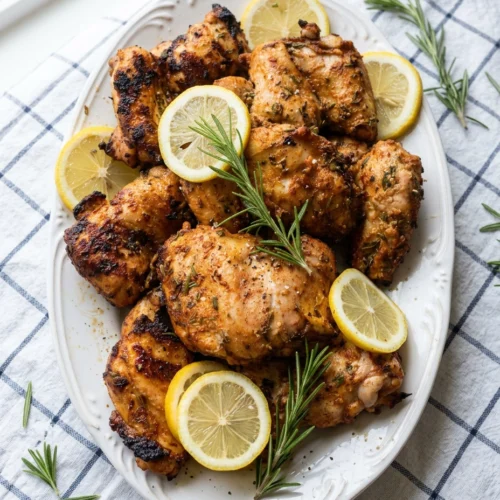
Lemon Rosemary Grilled Chicken Thighs
Equipment
- grill
- tongs
- mixing bowl
- knife
- basting brush optional rosemary brush
Ingredients
- 4 bone-in skin-on chicken thighs
- 1 tsp kosher salt (dry brine)
- 0.5 tsp black pepper (dry brine)
- 5 tbsp extra virgin olive oil
- 2 large lemons (zest and juice)
- 4 sprigs fresh rosemary, chopped
- 1 tbsp fresh thyme leaves
- 5 cloves garlic, crushed
- 1 tbsp Dijon mustard
- 1 tsp honey
- 0.5 tsp red pepper flakes
- 0.5 tsp kosher salt
- 0.25 tsp black pepper
- 3 tbsp unsalted butter (optional)
- 1 clove garlic (basting)
- 2 lemons, halved (for grilling)
- 1 handful fresh parsley
Instructions
- Score the chicken skin and pat dry. Season with salt and pepper, then refrigerate uncovered for at least 1 hour.
- Mix olive oil, lemon zest and juice, rosemary, thyme, garlic, mustard, honey, chili flakes, salt, and pepper to make the marinade.
- Coat chicken thoroughly in marinade and refrigerate for 4–8 hours.
- Preheat grill to medium-high and set up two-zone cooking.
- Place chicken skin-side down over direct heat and grill undisturbed for 6–8 minutes.
- Flip and grill the other side for 3–4 minutes, optionally basting with herb butter.
- Move chicken to indirect heat and cook for 15–20 minutes until internal temperature reaches 165°F.
- Grill lemon halves cut-side down until charred.
- Rest chicken for 5 minutes before serving.
- Garnish with parsley, drizzle olive oil, and serve with charred lemons.