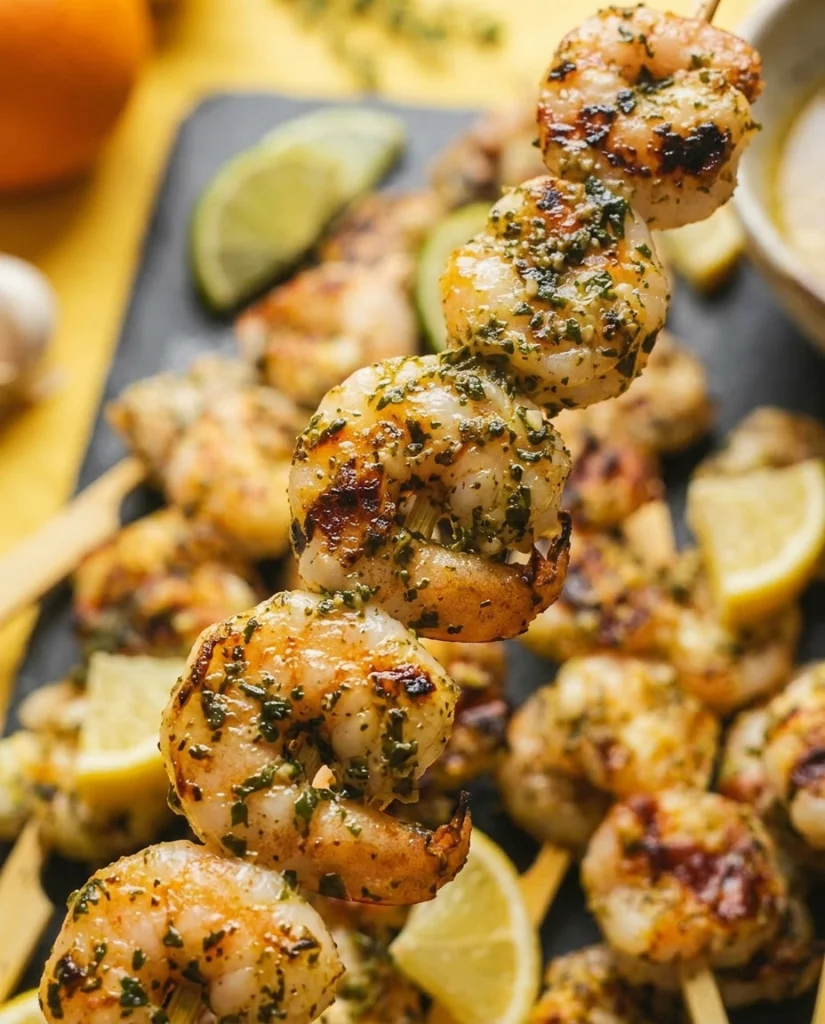
If there is one grilling recipe that captures the essential spirit of summer cooking — fast, bright, effortless, and deeply satisfying — it is a perfectly grilled shrimp skewer. And if there is one flavor combination that elevates that shrimp skewer from simply good to genuinely memorable, it is the marriage of citrus and garlic applied to shrimp over live fire.
These grilled citrus garlic shrimp skewers are everything a great grilling recipes for dinner centerpiece should be. The marinade is built from fresh orange, lemon, and lime — three citrus expressions that together create a flavor more complex and layered than any single citrus could produce alone. Garlic provides the savory foundation. Fresh herbs provide aromatic lift. And the grill provides the char, the smoke, and the caramelization that transforms a simple marinade into something that tastes like it took considerably more effort than it actually did.
This is grilling recipes easy cooking at its most confident and its most rewarding.
Why You’ll Love This Grilling Recipe
The three-citrus marinade is a revelation. Most citrus shrimp grilling recipes lean on lemon alone — clean, bright, and one-dimensional. This recipe uses orange for sweetness and floral complexity, lemon for sharp acidity and clean brightness, and lime for tropical tartness and depth. The combination creates a marinade that is citrusy without being sour, bright without being sharp, and complex enough to stand up to the char and smoke of the grill without being overwhelmed.
It is one of the fastest grilling recipes for dinner in existence. The marinade takes five minutes to assemble. The shrimp need only 20–30 minutes of marinating time — any longer and the citrus acid begins to chemically cook them before they ever reach the grill. On the grill, they cook in 2–3 minutes per side. From opening the refrigerator to sitting at the table, you are looking at under an hour — with most of that time completely hands-off.
It functions as both a grilling recipes side dish and a main. Serve the skewers over rice or pasta for a complete dinner. Pull the shrimp off the sticks and fold them into tacos with avocado and slaw. Thread them over a summer salad. Arrange them alongside grilled vegetables as a grilling recipes side dishes complement to a larger spread. This is one of those rare grilling recipes whose versatility matches its flavor — it belongs everywhere on the summer table.
Common Mistakes (And How to Avoid Them)
Over-marinating in citrus. This is the cardinal error of citrus shrimp grilling recipes and the one with the most immediately visible consequences. Citric acid denatures the proteins in shrimp rapidly — within 30–45 minutes in a highly acidic marinade, the exterior of the shrimp begins to turn opaque and firm, texturally indistinguishable from cooked shrimp, before a single flame has touched them. By the time they reach the grill, they are effectively pre-cooked and will turn rubbery and tough in the brief time it takes to develop char. Set a timer — 20 minutes is ideal, 30 is the absolute maximum.
Using pre-cooked shrimp. An astonishing number of grilling recipes for dinner call for pre-cooked shrimp on skewers — a preparation that is texturally self-defeating. Pre-cooked shrimp on a hot grill go from already-cooked to catastrophically overcooked in the 2–3 minutes required to develop any color or char whatsoever. Always start with raw shrimp — the color change from gray-translucent to pink-opaque is your visual doneness indicator, and it only works if you begin with raw protein.
Neglecting to dry the shrimp before marinating. Counterintuitively, patting shrimp dry before adding them to the marinade actually improves marinade adhesion rather than reducing it. Excess surface moisture dilutes the marinade, preventing it from penetrating the surface of the shrimp effectively. Dry shrimp absorbs the citrus garlic marinade more efficiently, resulting in deeper flavor penetration in the same 20–30 minute window.
Grilling on medium heat instead of high. Shrimp are small, cook fast, and benefit enormously from the high-heat caramelization that only a properly preheated, screaming-hot grill can provide. A medium-heat grill steams the shrimp rather than searing them — producing pale, soft, slightly rubbery results with none of the char and caramelization that make grilled shrimp extraordinary. Preheat to 425–450°F and do not compromise on this.
Using thin metal skewers that allow shrimp to spin. Round metal skewers — particularly thin ones — allow each shrimp to rotate independently when you attempt to flip. The double-skewer technique, threading each shrimp through two parallel flat skewers simultaneously, locks every piece in place and allows the entire skewer to flip as a single rigid unit. This is not a minor convenience upgrade — it is the difference between a confident, clean flip and a frustrating, chaotic individual-shrimp-wrestling situation at 450°F.
Chef’s Notes
The finishing move that transforms this grilling recipe from excellent to extraordinary costs nothing and takes ten seconds — a brush of fresh, uncooked citrus garlic marinade applied the moment the skewers leave the grill, while the shrimp are still at their absolute hottest. The heat of the just-grilled shrimp blooms the raw garlic and citrus in the fresh marinade without cooking it, releasing a wave of bright, aromatic intensity that is entirely distinct from the deeper, caramelized citrus-garlic flavor that developed during grilling. Two layers of the same flavor — one deep and caramelized, one bright and fresh — in the same bite.
Always reserve a portion of the marinade before the raw shrimp ever touch it. Once the marinade has been in contact with raw shellfish it must be treated as a contaminated product and cannot be used as a finishing sauce. Make a slightly larger batch, divide it immediately — glazing portion into the bowl with the shrimp, finishing portion into a separate container in the refrigerator — and you have both the marinade and the finishing sauce handled in a single step.
For a grilling recipes for two presentation that feels genuinely restaurant-caliber, serve the skewers over a pool of citrus-herb butter sauce — reduce the finishing marinade briefly in a small saucepan with a tablespoon of cold butter whisked in off the heat — and plate alongside a simple arugula salad dressed with lemon and olive oil. The contrast of the hot, charred, garlicky shrimp against the peppery cold greens dressed in complementary citrus is one of the most instinctively satisfying flavor and temperature contrasts in summer grilling recipes for dinner.
Key Ingredients — And Why They Work
Large shrimp (21–25 count, peeled and deveined, tails on): Size is the single most important variable in shrimp grilling recipes. Large shrimp at 21–25 count give you a cooking window wide enough to develop proper char and caramelization on the exterior before the interior overcooks. The tail-on presentation is both aesthetic and functional — the tail shell releases flavor compounds into the marinade and, during grilling, chars slightly at the very tip, adding a subtle toasted shellfish note to the overall flavor of the skewer.
Fresh orange juice and zest: Orange contributes the sweet, floral, complex citrus note that makes this marinade broader and more rounded than a lemon-only preparation. Orange juice contains significantly more natural sugar than lemon or lime, which means it contributes directly to the caramelization on the grill surface — producing those beautiful amber-gold char marks that are as visually compelling as they are flavorful. The zest carries the essential oils of the orange peel — intensely aromatic compounds that survive the grill’s heat far better than the juice alone.
Fresh lemon juice and zest: The sharp, clean acid backbone of the marinade. Lemon provides the brightness and clarity that cuts through both the sweetness of the orange and the richness of the olive oil, keeping the marinade tasting vivid and fresh rather than sweet or heavy. Its zest contributes a more assertive, slightly resinous citrus note that grounds the floral sweetness of the orange.
Fresh lime juice and zest: The tropical, tart counterpoint that gives the marinade its most interesting dimension. Lime is more acidic than lemon and more intensely flavored than orange — it provides the edge, the liveliness, and the slightly grassy tropical note that makes the three-citrus combination more than the sum of its parts. Applied as a final squeeze at the table, fresh lime makes every other flavor in the dish more vivid and alive.
Fresh garlic (grated on a microplane): Grated garlic — rather than minced or sliced — releases maximum allicin, the compound responsible for garlic’s characteristic pungent, savory intensity. In a marinade with only 20–30 minutes of contact time, maximum surface area and flavor release from the garlic is essential. Grated garlic on a microplane produces a paste-like consistency that distributes evenly through the marinade and adheres to every surface of the shrimp rather than clumping in pieces that fall off before the shrimp reaches the grill.
Good quality olive oil: The fat carrier of the marinade — dissolving the oil-soluble aromatic compounds from the garlic, citrus zest, and herbs and distributing them evenly across the surface of every shrimp. Olive oil also has a high enough smoke point to withstand the grill’s heat without burning while the shrimp cook, and its fruity, slightly peppery flavor contributes a Mediterranean character that suits the citrus-garlic flavor profile of this grilling recipe perfectly.
Fresh herbs (flat-leaf parsley, fresh thyme, and fresh oregano): Three herbs doing three distinct jobs. Parsley provides bright, clean, slightly bitter green freshness — it is the primary finishing herb, applied generously after grilling where its volatile aromatics remain intact. Fresh thyme contributes a warm, resinous, slightly floral note that integrates into the marinade and survives brief contact with the grill’s heat. Fresh oregano adds earthy, slightly peppery Mediterranean depth that grounds the brightness of the citrus and complements the char of the grill.
Red pepper flakes: A small amount provides gentle background heat that warms the finish of each bite without competing with the citrus brightness at the front of the palate. In a grilling recipe built around bright, fresh flavors, heat is a supporting character — present and welcome, but never dominant.
Honey (small amount): A single teaspoon in the marinade serves two functions simultaneously — it adds a subtle sweetness that balances the acidity of three citrus varieties, and its natural sugars contribute additional caramelization fuel on the grill surface, deepening the color and complexity of the char on the shrimp. Do not increase beyond one teaspoon — the goal is balance and caramelization assistance, not sweetness.
How to Make Grilled Citrus Garlic Shrimp Skewers
Serves: 4 | Prep Time: 15 min (+ 20–30 min marinating) | Cook Time: 6–8 min
Ingredients:
For the shrimp:
- 2 lbs large shrimp (21–25 count), peeled and deveined, tails on
- Metal flat skewers or wooden skewers soaked 30 min (two per set for double-skewer technique)
For the citrus garlic marinade:
- Zest and juice of 1 large navel orange (approximately ¼ cup juice)
- Zest and juice of 1 large lemon (approximately 3 tbsp juice)
- Zest and juice of 2 limes (approximately 3 tbsp juice)
- 5 cloves garlic, grated on a microplane
- 4 tbsp good quality olive oil
- 1 tsp honey
- 1 tbsp fresh thyme leaves
- 1 tbsp fresh oregano leaves, roughly chopped
- ½ tsp red pepper flakes
- ½ tsp kosher salt
- ¼ tsp black pepper
For the citrus garlic finishing butter (optional but extraordinary):
- 3 tbsp unsalted butter
- 2 tbsp reserved citrus garlic marinade (reserved before raw shrimp contact)
- 1 tbsp fresh flat-leaf parsley, finely chopped
- Pinch of flaky sea salt
To finish and serve:
- 3 tbsp fresh flat-leaf parsley, roughly chopped
- 1 tbsp fresh chives, thinly sliced
- Flaky sea salt
- Extra lime wedges for squeezing
- Extra lemon wedges for squeezing
- Grilled garlic naan or crusty bread for serving
Suggested grilling recipes side dishes accompaniments:
- Herb-dressed arugula salad with shaved parmesan
- Cilantro lime rice or herbed couscous
- Grilled zucchini with lemon and olive oil
- Corn salad with feta and fresh herbs
Instructions:
- Make and divide the citrus garlic marinade. In a medium bowl, combine the zest and juice of the orange, lemon, and limes. Add the grated garlic, olive oil, honey, fresh thyme, fresh oregano, red pepper flakes, salt, and black pepper. Whisk vigorously until fully emulsified — the oil and citrus juice should be completely combined into a cohesive, fragrant marinade. Immediately divide the marinade — pour approximately one-third into a separate small container or jar and refrigerate. This is your reserved finishing portion and it must never come into contact with the raw shrimp. The remaining two-thirds goes into the marinating bowl.
- Prep and marinate the shrimp. Pat the raw shrimp completely dry on both sides with paper towels. Add to the bowl with the two-thirds marinade portion. Toss thoroughly to coat every surface of every shrimp. Cover and refrigerate for exactly 20 minutes — set a timer and honor it. Do not exceed 30 minutes under any circumstances.
- Make the citrus garlic finishing butter (if using). In a very small saucepan over the lowest possible heat, melt the butter gently until just liquid — do not allow it to sizzle or brown. Remove from heat immediately and whisk in the 2 tablespoons of reserved citrus garlic marinade and the chopped fresh parsley. The butter will emulsify slightly with the citrus juice — whisk continuously until smooth. Keep warm by setting the saucepan in a larger pan of warm water, or reheat very gently just before serving.
- Thread the skewers. Remove the shrimp from the marinade, shaking each piece firmly to remove excess marinade — you want a thin, even coating, not dripping liquid that will cause flare-ups. Using the double-skewer technique, thread each shrimp through two parallel flat skewers — one near the tail, one through the thicker body section — so the shrimp lies flat and parallel to the skewers. Aim for 5–6 shrimp per double-skewer set, leaving a small gap between each piece for heat circulation.
- Preheat and prepare the grill. Heat the grill to high — 425–450°F. Allow at least 10–12 minutes of preheating with the lid closed to ensure the grates are genuinely at temperature throughout. Scrub the grates clean and oil them generously — two passes with an oil-soaked paper towel held in tongs — immediately before the skewers go on. Hot, clean, well-oiled grates are the single most important preparation step for shrimp grilling recipes.
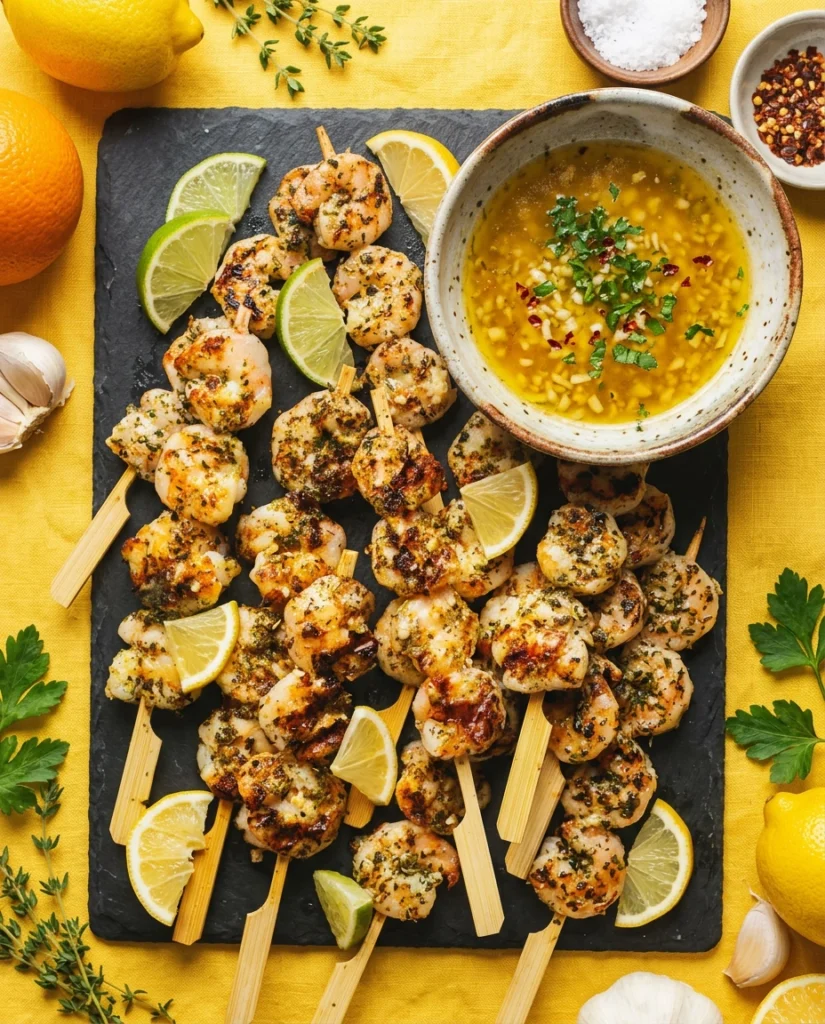
- Grill the first side. Lay the skewer sets on the grill perpendicular to the grates. Close the lid immediately. Grill undisturbed for 2–3 minutes — resist every impulse to peek or nudge. Watch for the color change: the shrimp should be turning pink from the bottom up, with the marinade caramelizing into amber-gold char marks on the grill side. When the shrimp releases cleanly from the grates and the bottom is caramelized and charred, it is ready to flip.
- Flip and finish the second side. Flip each double-skewer set as a single unit — the double-skewer technique makes this a clean, confident movement. Grill the second side for 2–3 minutes. The shrimp is perfectly cooked when it has curled into a firm C-shape, is completely pink and opaque throughout, and both sides show char and caramelization from the citrus sugars in the marinade. Remove immediately — do not allow them to reach the tight O-shape that signals overcooking.
- Apply the finishing elements immediately. The moment the skewers leave the grill — while the shrimp are still at their absolute hottest — brush or drizzle the reserved citrus garlic finishing butter generously over every skewer. If not making the butter, brush with the reserved plain citrus garlic marinade instead. The heat of the shrimp blooms the raw garlic and citrus immediately, releasing a wave of bright, aromatic flavor that layers over the deeper caramelized notes from the grill.
- Rest briefly and garnish. Let the skewers rest for 90 seconds — just enough time for the juices to settle and the finishing butter to set slightly on the surface. Scatter fresh flat-leaf parsley and thinly sliced chives generously over the platter. Finish with a pinch of flaky sea salt over everything. Arrange extra lime and lemon wedges alongside.
- Serve immediately. Grilled citrus garlic shrimp skewers demand immediacy — they are a dish built for eating the moment they leave the grill, when the char is at its most vivid, the citrus is at its most aromatic, and the shrimp are at their most perfectly tender. Serve with grilling recipes side dishes of your choice and enough crusty bread or grilled naan to mop every drop of the citrus garlic butter from the plate.
Variations & Tips
Make it a grilling recipes for two dinner: Build two generous double-skewer sets — 10–12 shrimp total — and plate them over a pool of the citrus garlic finishing butter on a shared board with a simple arugula salad and grilled naan alongside. This grilling recipes for two presentation is one of the most effortlessly elegant quick dinners in the summer grilling recipes for dinner repertoire — bright, light, and completely satisfying without feeling heavy.
Grilling recipes chicken variation: This three-citrus garlic marinade is equally extraordinary on boneless chicken thighs — one of the best grilling recipes chicken preparations in the citrus family. Marinate for 2–4 hours rather than 20–30 minutes, grill over two-zone heat to an internal temperature of 165°F, and finish with the citrus garlic butter exactly as directed for the shrimp. The caramelization of the orange sugar on chicken thigh skin is breathtaking.
Grilling recipes pork adaptation: Thread 1.5-inch cubes of pork tenderloin onto skewers with chunks of red onion and orange segments. Marinate in the same citrus garlic mixture for 1–2 hours and grill over direct high heat for 3–4 minutes per side to an internal temperature of 145°F. This grilling recipes pork skewer is one of the most underrated citrus-pork combinations in the summer grilling recipes for dinner lineup — the orange in the marinade harmonizes with pork’s natural sweetness in a way that is particularly compelling.
Grilling recipes Blackstone flat top version: Heat the Blackstone to high and add a thin film of olive oil to the surface. Cook the marinated shrimp in a single layer — no skewers required — for 2 minutes per side, working in batches to avoid crowding and steaming. The full-surface contact of the flat top creates an even, golden-brown sear across the entire surface of each shrimp. Finish with the citrus garlic butter directly on the flat top, tossing the shrimp in the melting butter for 30 seconds before plating. This grilling recipes Blackstone approach is particularly efficient for large quantities and produces an extraordinarily even, consistent result.
Grilling recipes healthy bowl version: Serve the citrus garlic shrimp over cauliflower rice or brown rice with sliced avocado, thinly shaved fennel dressed in olive oil and lemon, and a handful of fresh arugula wilted slightly by the heat of the shrimp. Drizzle the citrus garlic finishing butter over everything. This grilling recipes healthy bowl delivers complete protein, healthy fats, and a full vegetable serving in a single, deeply satisfying meal that manages to feel simultaneously light and substantial.
Grilling recipes side dishes pairing guide: These shrimp skewers pair beautifully with virtually every summer grilling recipes side dish — grilled corn with herb butter, simple couscous with lemon and fresh herbs, roasted cherry tomatoes with garlic and basil, or a chilled cucumber and avocado salad with lime dressing. The citrus-forward flavor profile is broad enough to complement almost any grilling recipes sides direction you choose to take the meal.
Pro tip: For an extra dimension of caramelization and color on the shrimp, add one tablespoon of low-sodium soy sauce to the marinade. The amino acids in the soy sauce react with the natural sugars in the citrus during grilling — producing deeper, more complex Maillard browning on the shrimp surface than citrus and honey alone can achieve, while the soy flavor itself remains completely imperceptible beneath the dominant citrus-garlic profile.
How to Meal Prep
The three-citrus garlic marinade is the foundational make-ahead preparation of this grilling recipe and one of the most broadly useful condiment-level preparations in the summer grilling recipes for dinner toolkit. Made in double or triple batches and stored in a sealed jar in the refrigerator, it keeps for up to 5 days and functions as a salad dressing, a sauce for grilled fish, a marinade for grilling recipes chicken thighs, a finishing drizzle for grilling recipes side dishes of roasted vegetables, and a bright, citrusy base for a quick pan sauce. Having it pre-made in the refrigerator during grilling season means the most flavor-intensive preparation in this recipe is already complete before you have even decided what you are cooking for dinner.
The citrus garlic finishing butter — made in advance and stored in the refrigerator for up to 5 days or the freezer for up to 2 months — is one of the highest-return-on-investment preparations in the grilling recipes playbook. Beyond its primary role in this recipe, it is extraordinary melted over grilled corn, tossed with grilled asparagus, spread on grilled naan, finished on grilled grilling recipes chicken breasts, and stirred into pasta with leftover grilled shrimp. Make a large batch, roll it in plastic wrap as a log, and slice off rounds throughout the summer grilling season.
Leftover grilled citrus garlic shrimp — stored in an airtight container for up to 2 days — make one of the most versatile next-day proteins in the grilling recipes for dinner canon. Chop and fold into a bright citrus-dressed pasta salad with cherry tomatoes, capers, and fresh basil. Warm gently in a skillet with a splash of white wine and spoon over grits with a drizzle of hot sauce for a deeply satisfying Cajun-influenced bowl. Layer cold into a wrap with avocado, shredded cabbage, and the remaining citrus garlic marinade as a dressing for one of the best packed lunches a grilling recipes dinner can possibly produce the following day.
Cultural Context
The combination of citrus, garlic, and shellfish is not a modern flavor invention — it is one of the oldest and most geographically widespread flavor instincts in the history of cooking. From the gambas al ajillo of coastal Spain — shrimp cooked in olive oil with garlic and dried chili — to the camarones al mojo de ajo of Mexico’s Gulf and Pacific coasts — shrimp bathed in a slow-cooked garlic and citrus oil — to the aglio e olio preparations of southern Italy where lemon and garlic have adorned seafood for centuries, the instinct to pair the oceanic sweetness of shellfish with the aromatic punch of garlic and the brightness of citrus acid appears independently across virtually every Mediterranean and Latin coastal culinary tradition.
This particular three-citrus approach draws most directly from the mojo tradition of the Spanish Caribbean — particularly Cuba and the Canary Islands — where mojo (from the Portuguese molho, meaning sauce) denotes a family of citrus, garlic, and olive oil-based marinades and finishing sauces that have been applied to grilled proteins across centuries of coastal cooking. Cuban mojo criollo — made with sour orange, garlic, cumin, and olive oil — is arguably the most direct ancestor of the marinade in this grilling recipe, with the addition of lemon and lime expanding the citrus vocabulary beyond the sour orange that is the mojo tradition’s single signature ingredient.
What makes this grilling recipes for dinner preparation feel so instinctively correct — so immediately satisfying in a way that feels almost pre-rational — is precisely this deep cultural history. When you marinate shrimp in citrus and garlic and cook them over live fire, you are participating in a culinary practice that coastal cooks on three continents arrived at independently over thousands of years because the combination of those specific flavors with the specific sweetness of shellfish and the specific char of fire is simply, fundamentally, and enduringly one of the best flavor combinations that cooking has ever produced. Some things are popular because they are fashionable. This is popular because it is correct.
Grilled Citrus Garlic Shrimp Skewers
Equipment
- grill
- skewers (metal or wooden) use double skewers for stability
- mixing bowl
- whisk
- tongs
Ingredients
- 2 lbs large shrimp (21–25 count), peeled and deveined, tails on
- 1 zest and juice of 1 large orange (about 1/4 cup juice)
- 1 zest and juice of 1 large lemon (about 3 tbsp juice)
- 2 zest and juice of 2 limes (about 3 tbsp juice)
- 5 cloves garlic, grated
- 4 tbsp olive oil
- 1 tsp honey
- 1 tbsp fresh thyme leaves
- 1 tbsp fresh oregano, chopped
- 1/2 tsp red pepper flakes
- 1/2 tsp kosher salt
- 1/4 tsp black pepper
- 3 tbsp unsalted butter (optional)
- 3 tbsp fresh parsley, chopped
- 1 tbsp fresh chives, sliced
- lime and lemon wedges for serving
Instructions
- In a bowl, whisk together orange, lemon, and lime zest and juice, garlic, olive oil, honey, thyme, oregano, red pepper flakes, salt, and black pepper until emulsified. Reserve one-third of the marinade separately for finishing.
- Pat the shrimp dry and toss with the remaining marinade. Cover and refrigerate for 20 minutes, no longer than 30 minutes.
- If making finishing butter, gently melt butter and mix with reserved marinade and chopped parsley. Keep warm.
- Thread shrimp onto skewers using a double-skewer method to keep them secure and flat. Shake off excess marinade.
- Preheat grill to high (425–450°F). Clean and oil the grates היטely before cooking.
- Place skewers on the grill and cook for 2–3 minutes on the first side until charred and releasing easily.
- Flip skewers and grill for another 2–3 minutes until shrimp are opaque, pink, and lightly charred.
- Remove from grill and immediately brush with reserved marinade or citrus butter.
- Rest briefly, then garnish with parsley, chives, and flaky salt. Serve with citrus wedges.