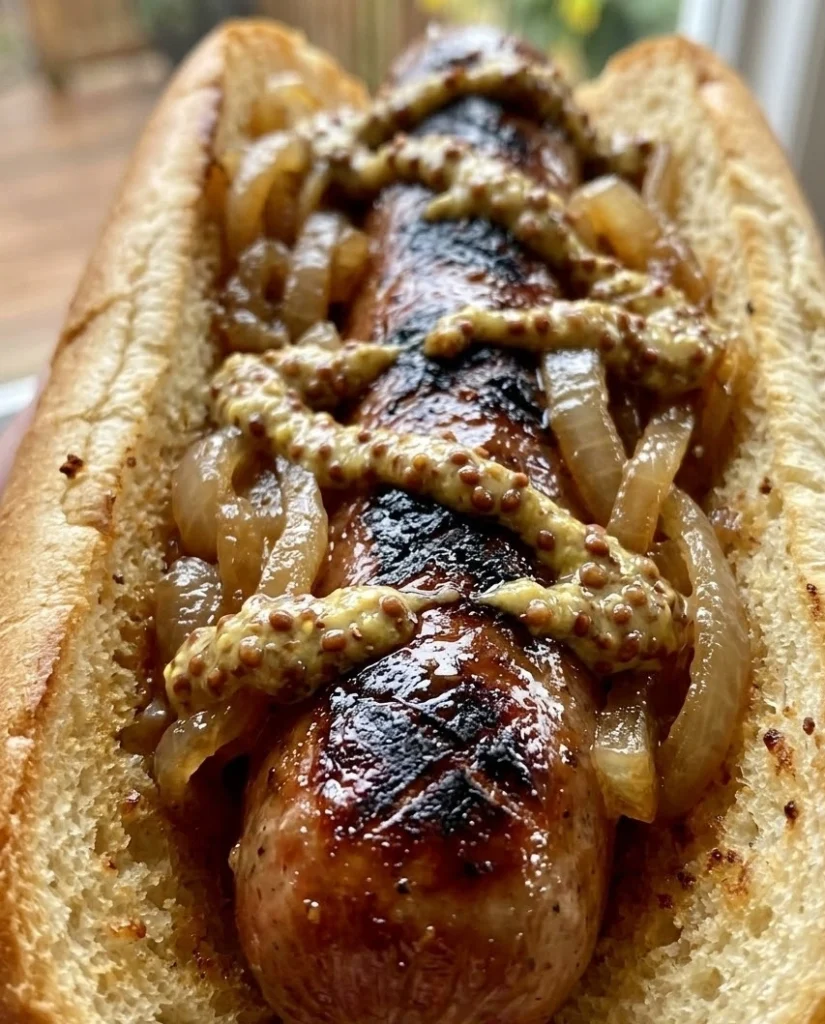
There are grilling recipes, and then there are events. Beer Brats are firmly in the second category. The moment you set up a pot of beer and onions on the side of the grill and start simmering bratwurst, something shifts in the atmosphere. People gravitate toward the smell. Conversations start. Someone hands you a cold drink. The cookout has officially begun.
Beer Brats are the unofficial mascot of Midwestern American grilling culture — specifically Wisconsin, where the combination of German immigrant bratwurst tradition and a deep appreciation for cold lager produced one of the greatest cookout foods ever conceived. Once you understand the two-stage cooking method, you’ll never grill a plain brat again.
Why You’ll Love This Recipe
The two-stage method is genius. Simmering the brats in beer first solves the eternal sausage grilling problem: the outside burns before the inside cooks through. The beer bath gently brings the internal temperature up so the grill is only responsible for finishing — creating color, crust, and smoky depth without any split casings or raw centers.
The flavor is layered and complex. Beer, onion, butter, and garlic in the simmering liquid create an aromatic bath that penetrates the sausage casing and infuses the meat. Then the grill adds char and smoke. The result is something you simply cannot achieve by grilling from raw.
The beer-caramelized onions are a bonus dish. The onions that simmer in the beer alongside the brats become impossibly sweet, tender, and deeply flavored. They’re the topping that elevates a good brat to an extraordinary one.
Common Mistakes — And How to Avoid Them
Boiling the brats instead of simmering. There’s a critical difference. A hard boil is too aggressive — it can split the casings before they even reach the grill and creates a waterlogged, texture-less interior. A gentle simmer, where the liquid is just barely bubbling, is what you want. Low and slow in the beer bath, then hot and fast on the grill.
Pricking the brats before cooking. Never prick a bratwurst. The casing holds in the fat and juices. Puncture it and those juices drain into the fire, creating flare-ups and leaving you with a dry sausage. The casing is there for a reason.
Using a light beer. This is not the moment for your lightest lager. A medium-bodied beer — a pilsner, a märzen, a German lager, even an amber ale — contributes actual flavor to the simmer liquid. Light beer mostly contributes water with a faint ghost of flavor. Use something with body.
Skipping the butter in the simmer. A tablespoon of butter in the beer bath might seem unnecessary, but it rounds out the bitterness of the hops, adds richness to the simmer liquid, and helps the flavors meld together. It’s a small addition with a meaningful impact.
Chef’s Notes
After simmering and grilling, I always return the brats to the beer-onion bath for 5 minutes before serving. This “holding” step keeps them warm and moist for guests serving themselves at different times, and it allows the grilled exterior to soak up just a tiny amount of that beer-onion liquid — adding a final layer of flavor that ties the whole thing together.
The topping I serve alongside every time: stone-ground mustard. Not yellow mustard (though there’s no judgment). Stone-ground has a coarser texture, more complex flavor, and a pleasant heat that cuts through the richness of the pork perfectly.
And the bun matters more than people think. A sturdy, slightly crusty hoagie-style roll holds up to the juicy brat and wet onions far better than a standard hot dog bun, which disintegrates almost immediately.
Key Ingredients — And Why They Matter
Fresh bratwurst (6 links): Seek out fresh, uncooked bratwurst from a butcher if possible. Pre-cooked brats exist but they won’t absorb the beer simmer the same way — the casings are already set. Fresh brats are porous, receptive, and they absorb the aromatics from the beer bath beautifully.
German lager or pilsner (2 cans/bottles, 710ml total): The simmering medium and primary flavor driver. The maltiness of the beer adds depth to the sausage. The alcohol carries aromatic compounds from the onion and garlic into the meat. Choose something you’d enjoy drinking.
Yellow onion (2 large, sliced): These become the topping. They spend the entire simmer time breaking down in beer and butter, transforming into incredibly sweet, deeply savory, almost jammy caramelized rings that are arguably the best part of the whole dish.
Butter (2 tbsp): Rounds the bitterness of the beer, adds richness to the simmer liquid, and helps the onions soften evenly without drying out.
Garlic (3 cloves, smashed): Aromatic backbone that subtly infuses both the simmer liquid and the sausage itself.
Bratwurst buns (6, sturdy): The vehicle. Choose something that can handle the weight and moisture of a beer brat plus a pile of caramelized onions.
Stone-ground mustard, sauerkraut (for serving): The classic accompaniments. The acidity of both cuts through the fat of the pork and provides the brightness that makes every bite feel fresh and balanced.
How to Make Beer Brats
- Set up your simmer station. On your grill’s side burner, or on a stovetop, place a large, heavy pot or disposable aluminum pan over medium heat.
- Build the beer bath. Add sliced onions, smashed garlic, and butter to the pot. Pour in both cans of beer. Bring to a gentle simmer.
- Add the brats. Place bratwurst in the simmering beer. They should be mostly submerged. Simmer gently for 20–25 minutes — do not boil.
- Preheat your grill. While the brats simmer, heat the grill to medium-high.
- Grill the brats. Remove from beer bath and place on the grill. Cook 5–7 minutes, turning occasionally, until the casings are deeply golden, slightly charred, and snapping with each turn.
- Return to the bath. Place grilled brats back into the beer-onion bath to hold until serving.
- Toast the buns. Thirty seconds cut-side down on the grill. This is mandatory.
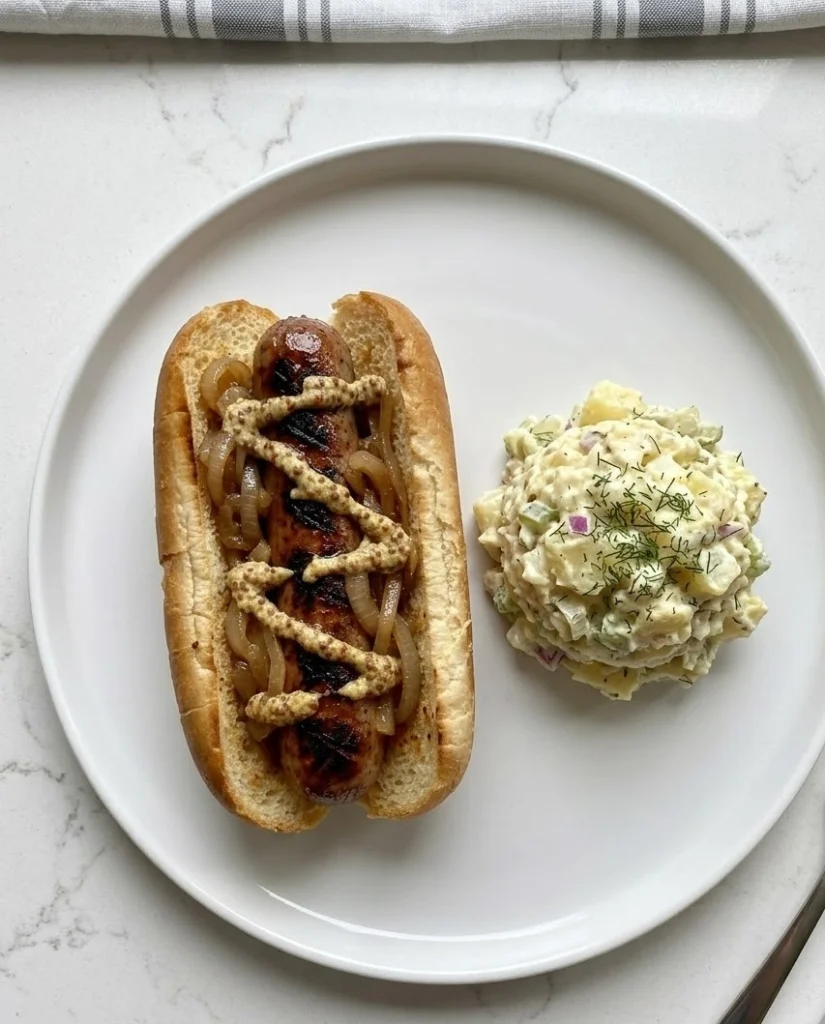
- Serve. Place a brat in each toasted bun, pile on the beer-caramelized onions, and add stone-ground mustard and sauerkraut.
Variations & Tips
Cheddar beer brats: Add a slice of sharp cheddar inside the bun before the brat. The residual heat melts it into a creamy layer beneath the sausage. Outrageously good.
Spicy variation: Add 1 sliced jalapeño and ½ tsp red pepper flakes to the beer bath. Thread the grilled jalapeño onto the brat as a topping.
Non-alcoholic version: Substitute the beer with a non-alcoholic German-style lager or chicken broth with a splash of apple cider vinegar to replicate the acidity. The result is different but still excellent.
Pro tip — match your beer to your brat. Pork brats love malty lagers. Chicken brats do well with wheat beer. If you’re using a more aggressively seasoned brat (like a jalapeño cheddar variety), a lighter beer won’t compete with the existing flavors.
How to Meal Prep
Beer brats are ideal for large-scale prep. The beer-onion simmer can be done hours ahead and held at a low temperature — brats can sit in the warm bath for up to 2 hours before grilling. This makes them one of the easiest grilling recipes for feeding large groups, as you can stagger grilling the brats while guests are still arriving.
Leftover brats reheat brilliantly: slice them and pan-fry in a little butter for a quick weeknight meal over mashed potatoes, or slice into pasta with sautéed peppers and onions. They keep refrigerated for 3–4 days.
Cultural Context
Bratwurst traces its roots to Germany, with records of the sausage appearing as far back as the 14th century in the Franconia region of Bavaria. German immigrants brought their bratwurst traditions to the American Midwest in the 19th century, settling heavily in Wisconsin, Illinois, and Minnesota — regions that remain the heartland of American brat culture to this day.
The beer brat specifically is believed to have been popularized in Sheboygan, Wisconsin, a city so devoted to bratwurst that it hosts an annual Bratwurst Day celebration and refers to itself as the Bratwurst Capital of the World. The combination of simmering in local lager before grilling became standard practice there, producing the definitive American interpretation of a centuries-old German tradition.
Every Beer Brat you grill carries that history in every bite. Fire it up.
Beer Brats
Equipment
- grill
- large pot or aluminum pan for simmering brats in beer
- tongs
- knife
- cutting board
- grill brush to clean grill grates before cooking
Ingredients
- 6 fresh bratwurst sausages
- 2 cans German lager or pilsner beer
- 2 yellow onions, sliced
- 2 tbsp butter
- 3 cloves garlic, smashed
- 6 bratwurst buns or hoagie rolls
- 3 tbsp stone-ground mustard (for serving)
- 1/2 cup sauerkraut (optional for serving)
Instructions
- Place a large pot or aluminum pan over medium heat on a grill side burner or stovetop.
- Add sliced onions, smashed garlic, butter, and the beer to the pot. Bring the mixture to a gentle simmer.
- Add the bratwurst to the beer bath so they are mostly submerged. Simmer gently for 20–25 minutes, ensuring the liquid does not boil.
- While the brats simmer, preheat the grill to medium-high heat.
- Remove the brats from the beer bath and place them on the grill. Cook for 5–7 minutes, turning occasionally until evenly browned and lightly charred.
- Return the grilled brats to the beer and onion bath to keep them warm until ready to serve.
- Toast the buns cut-side down on the grill for about 30 seconds until lightly golden.
- Place each bratwurst into a toasted bun and top with the beer-caramelized onions, stone-ground mustard, and sauerkraut if desired. Serve immediately.