
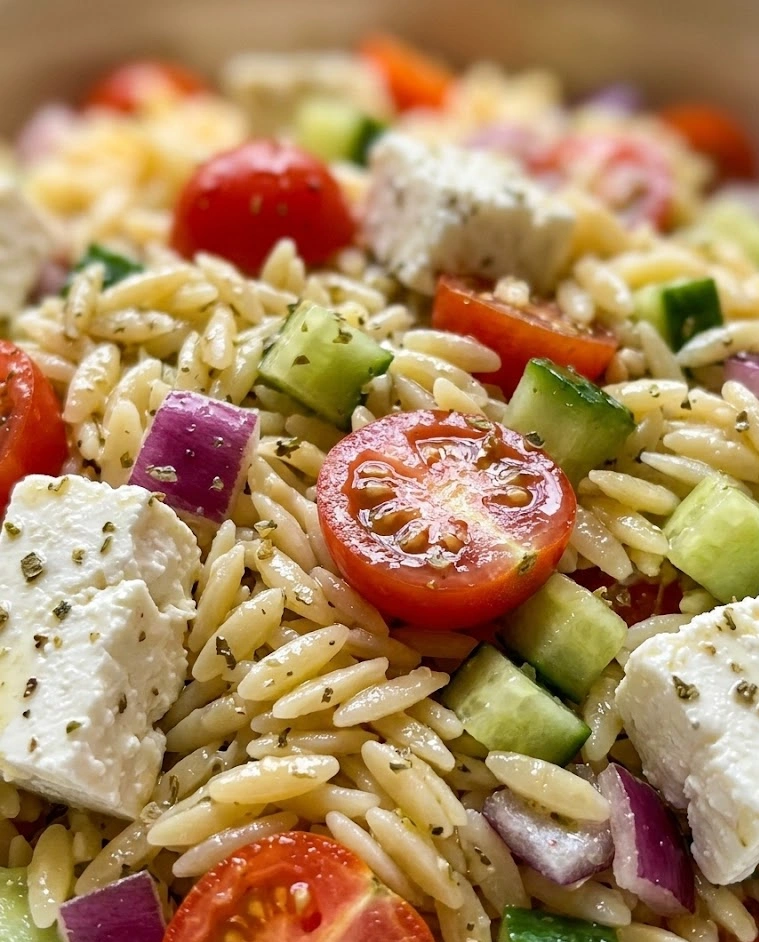
There is a very specific problem with most salads served as spring dinner ideas — they look beautiful, they taste fresh, and then thirty minutes later you’re standing in front of the fridge looking for something else to eat. The Greek Orzo Pasta Salad solves that problem completely. It has the brightness and freshness of a great spring salad and the substance of a proper pasta dish, which means it satisfies in a way that lettuces and vinaigrettes alone simply cannot.
Orzo is the secret weapon here. This small, rice-shaped pasta has a tender, slightly chewy bite that absorbs dressing beautifully without becoming waterlogged, holds its shape over multiple days in the fridge, and creates a satisfying, grain-like base that makes the whole bowl feel genuinely complete. Pair it with the bright, briny, herbaceous flavor world of Greek cuisine — lemon, olive oil, oregano, feta, olives, cucumber, tomato — and you have a dish that tastes like a Mediterranean vacation in a bowl.
Twenty-five minutes from start to finish. No oven required beyond boiling pasta water. Ingredients that are available year-round but taste particularly alive in spring. This is the spring dinner idea that earns permanent residency in your recipe rotation.
Why You’ll Love This Spring Dinner Idea
The first reason is that it hits the exact intersection of easy and impressive. The ingredient list reads like a simple Greek salad, but the addition of orzo transforms it into something with real heft and complexity — a dish that works as a standalone dinner, a potluck centerpiece, or a side for grilled protein. It looks like effort. It takes almost none.
The second reason is its extraordinary keeping quality. Where most spring salads wilt and suffer after a few hours, Greek Orzo Pasta Salad holds beautifully for up to four days in the fridge, developing deeper, more integrated flavor as the orzo absorbs the vinaigrette and every component marinates together. It is one of the very few spring dinner ideas that is genuinely better on day two than day one.
The third reason is crowd universality. This is the rare dish that vegetarians, pasta lovers, Mediterranean food enthusiasts, and skeptical picky eaters all find something to love in. The flavors are bold but familiar. The textures are varied but approachable. There is nothing confrontational about it — just clean, confident, delicious cooking that pleases almost everyone at the table.
Common Mistakes — And How to Avoid Them
Mistake 1: Cooking the Orzo Without Salt
Orzo, like all pasta, absorbs its cooking water completely during boiling. Unseasoned water produces bland orzo that no amount of vinaigrette applied afterward can fully remedy — the neutrality is baked in from the inside. Your pasta water should taste assertively salty, like well-seasoned broth. This is the single most impactful thing you can do for the flavor of the finished salad before you’ve added a single other ingredient.
Mistake 2: Rinsing the Orzo with Cold Water Immediately
The conventional wisdom of rinsing pasta under cold water to stop cooking and prevent sticking is actively harmful here. Rinsing washes away the surface starch that helps the vinaigrette cling to each piece of orzo. Instead, drain the orzo, toss it immediately with a drizzle of olive oil to prevent sticking, spread it on a baking sheet or large plate, and let it cool naturally. The result is orzo with better texture and dramatically better dressing adhesion.
Mistake 3: Using Pre-Crumbled Feta
This mistake appears in every Mediterranean salad article for good reason because it matters enormously. Pre-crumbled feta from a bag is drier, saltier, and considerably less flavorful than block feta packed in brine. Block feta is creamy, complex, and crumbles into irregular pieces that create pockets of intense flavor throughout the salad. It is worth finding in every single case.
Mistake 4: Dressing the Salad When the Orzo Is Still Hot
Hot orzo will absorb every drop of vinaigrette immediately, leaving the salad dry and the vegetables underdressed. The technique that works best is a two-stage dressing — a light coat while the orzo is warm to season from within, and the remainder of the vinaigrette added just before serving. This gives you deeply seasoned orzo and vibrant, properly dressed vegetables and herbs simultaneously.
Mistake 5: Under-dressing Out of Caution
The most common mistake home cooks make with pasta salads is timidity with the dressing. Orzo is absorbent and the salad will be eaten cold or at room temperature, both of which mute flavors compared to hot food. The dressing needs to be more assertive than feels comfortable when you taste it warm — brighter on the lemon, more forward on the oregano, slightly more salty than seems right. Trust the process. The flavors will mellow and balance once chilled and assembled.
Chef’s Notes
Orzo occupies an interesting category in the pasta world — it looks like a grain, behaves somewhat like a grain in salads, but is made entirely from semolina wheat and cooks with the satisfying chew of pasta. The word orzo means “barley” in Italian, which explains its appearance, but culinarily it behaves closer to a small pasta shape than to any actual grain. This dual identity is what makes it uniquely suited to salads — it has pasta’s substantive chew without pasta’s tendency to clump into heavy masses when cold.
For the vinaigrette, I want you to think seriously about the oregano. Dried oregano is one of the rare herbs that is actually more potent dried than fresh — the drying process concentrates its essential oils rather than degrading them, which is why it is the dominant herb in Greek and Italian cooking where it appears almost exclusively in its dried form. But the quality of dried oregano varies enormously by brand and age. Fresh, high-quality dried oregano should smell intensely herbaceous and slightly floral when you rub it between your fingers. If yours smells like dust, buy new oregano. It is the backbone of the vinaigrette and it needs to perform.
One technique that separates a good Greek pasta salad from a great one is blooming the dried oregano in the olive oil for 30 seconds before building the vinaigrette. Warm the olive oil very gently — not hot, just warm — add the dried oregano, and let it sit for 30 seconds. The heat releases the volatile essential oils from the dried herb into the fat, where they will distribute throughout the entire salad rather than sitting as dry flakes on isolated pieces of orzo.
Key Ingredients & Why They Matter
Orzo is the structural foundation of this spring dinner idea and the ingredient that elevates it from a simple Greek salad into a genuinely satisfying meal. Its small size means it distributes evenly through the other ingredients, ensuring every forkful contains a balanced combination of pasta, vegetables, and cheese rather than separate bites of each component.
Fresh Lemon Juice and Zest drive the vinaigrette with the same two-expression citrus principle at work in the Mediterranean Couscous Salad — juice for bright, sharp acidity that penetrates the orzo, zest for the aromatic essential oils that give the dressing its perfumed, vivid lemon character. Both are essential and neither fully substitutes for the other.
Extra-Virgin Olive Oil is the fat that carries every fat-soluble flavor compound — the oregano’s essential oils, the garlic’s aromatics, the lemon zest’s limonene — throughout the entire salad. Because it is never heated in the final dish, its raw character is fully present. Use the best olive oil you own. Its grassiness and peppery finish are primary flavor components here, not just cooking medium.
Dried Greek Oregano is the defining herb of this vinaigrette and the spice most responsible for the dish tasting recognizably Greek rather than generically Mediterranean. Bloom it in warm olive oil before building the dressing for a depth of oregano flavor that scattered dry flakes can never achieve.
Kalamata Olives bring brininess, umami, and a fruity, cured depth that anchors the savory character of the salad. They are not interchangeable with generic black olives, which are milder, less complex, and texturally different. Kalamata olives are a flavor identity ingredient — they are what makes this dish taste like Greece.
Block Feta in Brine contributes creamy, tangy, intensely salty richness that balances the bright lemon vinaigrette and adds a dairy depth that makes the salad feel complete and satisfying. Crumbled into irregular pieces, it creates the characteristic pockets of intense flavor throughout the dish that make every bite slightly different from the last.
English Cucumber provides cool, watery crunch that refreshes the palate and balances the richer, saltier components. Its thin skin requires no peeling and its relatively low seed content prevents the salad from becoming watery over time — an important consideration for a dish designed to improve in the fridge.
Cherry Tomatoes contribute juicy bursts of sweetness and acidity that punctuate the richness of the feta and olives. Halving them releases their juice slightly into the dressing, adding another layer of savory tomato flavor that integrates into the vinaigrette the longer the salad sits.
Red Onion adds sharp, pungent bite that cuts through the richness and prevents the salad from tasting flat or one-dimensional. A 10-minute soak in cold water before adding tames the harshest sulfur compounds while preserving the color, crunch, and underlying flavor — a technique worth the minimal effort it requires.
Fresh Parsley is the finishing herb that brings a clean, grassy brightness to the assembled salad. Added in generous quantity immediately before serving, it provides the fresh top note that signals spring and keeps the dish tasting alive rather than sitting.
How to Make Greek Orzo Pasta Salad
Ingredients
For the Salad:
- 1½ cups dry orzo pasta
- 1 English cucumber, quartered lengthwise and diced
- 1½ cups cherry tomatoes, halved
- ½ cup kalamata olives, pitted and halved
- ½ red onion, finely diced (soaked 10 minutes in cold water, drained)
- 6 oz block feta cheese, crumbled into irregular pieces
- ½ cup jarred roasted red peppers, drained and roughly chopped
- ¼ cup sun-dried tomatoes, roughly chopped
- ½ cup fresh flat-leaf parsley, roughly chopped
- ¼ cup fresh mint leaves, roughly torn
- 3 tbsp toasted pine nuts or slivered almonds (optional, for crunch)
For the Lemon-Oregano Vinaigrette:
- Juice of 2 large lemons
- Zest of 1 lemon
- 5 tbsp extra-virgin olive oil
- 1½ tsp dried Greek oregano
- 2 cloves garlic, finely grated
- 1 tsp Dijon mustard
- 1 tsp honey
- ½ tsp salt
- ¼ tsp black pepper
- Pinch of red pepper flakes
- Bloom the oregano. In a small saucepan, warm 2 tablespoons of the olive oil over the lowest possible heat — you want barely warm, not hot. Add the dried oregano and let it steep for 30 seconds, swirling once. Remove from heat immediately and allow to cool. This single step amplifies the oregano flavor in the entire vinaigrette dramatically.
- Cook the orzo. Bring a large pot of water to a boil and salt it aggressively — it should taste pleasantly salty. Add the orzo and cook according to package directions, usually 8–10 minutes, until al dente — tender but with a distinct chew remaining. Do not overcook. Drain well but do not rinse.
- Cool the orzo properly. Transfer the drained orzo to a large mixing bowl and toss immediately with 1 tablespoon of olive oil to prevent clumping. Spread it out slightly with a spoon and allow it to cool to room temperature, about 10 minutes. Stir occasionally to release steam and prevent sticking.
- Make the vinaigrette. Whisk together the bloomed oregano oil with the remaining olive oil, lemon juice, lemon zest, grated garlic, Dijon mustard, honey, salt, pepper, and red pepper flakes until fully emulsified. Taste it — it should be assertively bright, herby, and slightly more forward than feels right. It will mellow considerably once it meets the orzo and feta.
- First dress of the orzo. While the orzo is still slightly warm, pour about one-third of the vinaigrette over it and toss well. The warm orzo will absorb this initial coat from within, building a base layer of seasoning throughout every piece.
- Prepare the vegetables. Dice the cucumber, halve the cherry tomatoes, slice the olives, drain and chop the roasted red peppers, roughly chop the sun-dried tomatoes, and soak and drain the red onion. Chop the parsley and tear the mint and set both aside separately to add at the end.
- Assemble the salad. Once the orzo has cooled completely, add the cucumber, cherry tomatoes, kalamata olives, roasted red peppers, sun-dried tomatoes, and red onion. Pour over the remaining vinaigrette and toss everything together gently but thoroughly, making sure the dressing reaches every component.
- Add the feta. Crumble the block feta over the top in generous, irregular pieces. Fold in gently with a large spoon — two or three turns maximum. You want feta distributed throughout but not pulverized into a paste from aggressive mixing.
- Taste and calibrate. This is the most important step and the one most home cooks skip. Taste the salad and ask what it needs. More lemon? Add a fresh squeeze. More richness? A small drizzle of olive oil. More salt? Go carefully — the feta and olives are already salty. Flat overall? A pinch more oregano. The goal is a salad where no single element dominates and everything tastes balanced and alive.
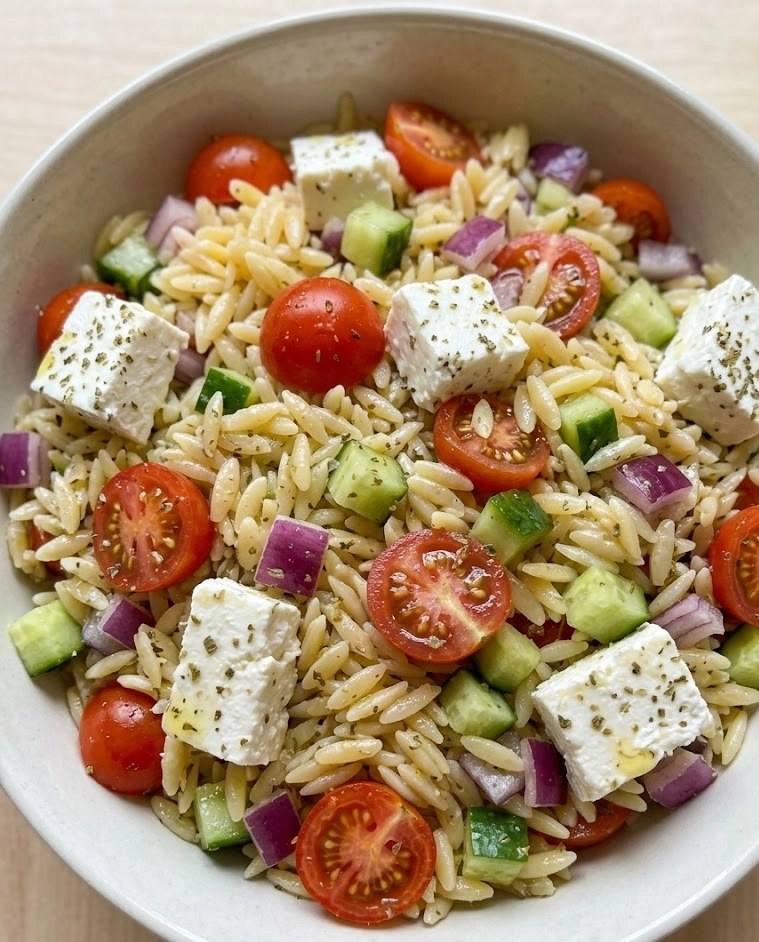
- Rest, then finish and serve. If time allows, let the assembled salad rest for 20–30 minutes before serving — the flavor integration during this window is significant. Just before bringing it to the table, fold in the fresh parsley and mint, scatter the toasted pine nuts over the top, and finish with a final crack of black pepper and a small drizzle of your best olive oil.
Variations & Tips
Add Grilled Protein for a Complete Spring Dinner: This salad pairs beautifully with grilled lemon-herb chicken, grilled shrimp marinated in lemon and garlic, or seared salmon with a crust of dried oregano and lemon zest. The vinaigrette doubles as a quick marinade for any of these — marinate for 30 minutes and cook over high heat for a cohesive, fully integrated spring dinner idea.
Make It Vegan: The only non-vegan component is the feta. Replace it with marinated white beans tossed in lemon, olive oil, garlic, and a pinch of salt — they provide a similar creamy, protein-rich element without dairy. A high-quality vegan feta works equally well if you can find one with a convincing texture.
Add Artichoke Hearts: Jarred or canned artichoke hearts, drained and roughly chopped, fold into this salad beautifully. Their tender, slightly briny flavor is completely at home in the Greek flavor world and adds an ingredient that feels both rustic and a little bit special.
Make It Gluten-Free: Swap the orzo for cooked chickpeas, cooked lentils, or a gluten-free small pasta shape. The chickpea version is particularly good — it adds protein, a slightly nutty flavor, and holds the vinaigrette just as well as the orzo while making the dish entirely plant-based and gluten-free simultaneously.
Pro Tip — The Olive Oil Finish: Always finish the assembled salad with a small, deliberate drizzle of your best extra-virgin olive oil immediately before serving. This last drizzle sits on the surface rather than being absorbed, delivering the full, raw character of the oil — its grassiness, its pepper, its freshness — in a way that oil mixed into the dressing cannot. It is the difference between a good pasta salad and one that tastes like it came from a very good restaurant.
How to Meal Prep Greek Orzo Pasta Salad
Greek Orzo Pasta Salad is among the most meal-prep-friendly spring dinner ideas in this entire collection — more forgiving than the Crying Tiger Beef Noodle Salad, and holding up even better over time than the Mediterranean Couscous Salad thanks to orzo’s superior structural resilience compared to pearl couscous.
The Fully Assembled Method: Dress the complete salad — orzo, vegetables, olives, roasted peppers, and vinaigrette — and store in an airtight container in the fridge for up to 4 days. The flavor genuinely improves through day two and holds well through day three. On day four it is still good but the cucumber softens noticeably. Add fresh parsley, mint, and the olive oil finish at each serving.
The Component Method for Maximum Longevity: Store the cooked, oil-tossed orzo separately from the chopped vegetables, and the vinaigrette in its own jar. Everything holds for 5 days this way. Combine each portion as needed — the full assembly takes about 3 minutes and gives you a salad that tastes freshly made every single time.
Keep the Feta and Fresh Herbs Separate: Even in the fully assembled version, storing the crumbled feta and fresh herbs in a small separate container and adding them at serving time makes a noticeable difference in quality on days three and four. The feta stays firm and distinct rather than dissolving into the dressing, and the herbs stay bright rather than wilting into olive-drab softness.
Scale Generously: This recipe scales effortlessly — double or triple it with no adjustment to technique or timing. A tripled batch feeds a crowd at a potluck or provides a week of lunches and dinners for a family of four. It is one of the most economical and efficient spring dinner ideas to batch-cook, with a cost-per-serving that drops dramatically with scale.
Cultural Context: Orzo, Greece, and the Ancient Art of Simple Food Done Well
Greek cuisine is one of the oldest continuously practiced food cultures in the world, with written culinary records stretching back over 2,500 years. And yet for all of its antiquity, its foundational principles remain strikingly consistent and strikingly modern: high-quality olive oil, fresh vegetables, legumes, grains, cheese made from local milk, and the sea’s bounty, seasoned with wild herbs gathered from hillsides and dressed with lemon from trees that have grown in the same groves for centuries.
Orzo — known in Greece as kritharaki, meaning “little barley” — has been a staple of Greek cooking for generations, used in everything from soups and stews to baked preparations like giouvetsi, a classic slow-cooked lamb and orzo dish that is one of the great comfort foods of the Greek kitchen. Its small, compact shape makes it ideal for absorbing the flavors of the liquids and sauces it cooks in — a characteristic that translates perfectly to the vinaigrette-based salad format.
Feta cheese holds a Protected Designation of Origin status in the European Union, legally defined as a cheese that can only be produced in specific regions of Greece using milk from Greek sheep and goats. Its history stretches back at least 8,000 years — some archaeological evidence suggests cheese-making in the Greek islands dates to the Neolithic period. When you crumble authentic block feta over this salad, you are using an ingredient whose production method has been refined across millennia.
The lemon-olive oil dressing tradition is perhaps the most ancient of all the elements on this plate. Ancient Greek and Roman texts describe the combination of acid and fat as a fundamental flavoring technique — not yet understood through the lens of food science, but recognized through centuries of accumulated cooking knowledge as the combination that makes everything taste more fully itself. The Greeks called it ladolemono — olive oil and lemon — and it remains today exactly what it was then: the simplest, most honest, and most effective dressing in the Mediterranean kitchen.
So when you toss this Greek Orzo Pasta Salad together on a spring evening, you are not just executing a recipe. You are participating in one of humanity’s oldest and most refined culinary traditions — one that figured out thousands of years ago that the best spring dinner ideas are built not on complexity and technique, but on exceptional ingredients treated with clarity, confidence, and respect. That is a lesson worth tasting.
Greek Orzo Pasta Salad
Equipment
- large pot
- Large Mixing Bowl
- whisk
- small saucepan
- chef’s knife
Ingredients
- 1 1/2 cups dry orzo pasta
- 1 English cucumber, diced
- 1 1/2 cups cherry tomatoes, halved
- 1/2 cup kalamata olives, pitted and halved
- 1/2 red onion, finely diced
- 6 oz block feta cheese, crumbled
- 1/2 cup jarred roasted red peppers, chopped
- 1/4 cup sun-dried tomatoes, chopped
- 1/2 cup fresh flat-leaf parsley, chopped
- 1/4 cup fresh mint leaves, torn
- 3 tbsp toasted pine nuts or slivered almonds (optional)
- 2 large lemons, juiced
- 1 lemon, zested
- 5 tbsp extra-virgin olive oil
- 1 1/2 tsp dried Greek oregano
- 2 cloves garlic, grated
- 1 tsp Dijon mustard
- 1 tsp honey
- 1/2 tsp salt
- 1/4 tsp black pepper
- pinch red pepper flakes
Instructions
- Warm 2 tablespoons olive oil gently and steep dried oregano for 30 seconds. Remove from heat and cool.
- Boil heavily salted water. Cook orzo 8–10 minutes until al dente. Drain but do not rinse.
- Toss hot orzo with 1 tablespoon olive oil and cool to room temperature.
- Whisk bloomed oregano oil with remaining olive oil, lemon juice, zest, garlic, Dijon, honey, salt, pepper, and red pepper flakes.
- Toss one-third of vinaigrette with slightly warm orzo.
- Add cucumber, tomatoes, olives, roasted red peppers, sun-dried tomatoes, and red onion. Pour remaining vinaigrette and toss gently.
- Fold in feta gently to keep large, irregular pieces intact.
- Rest 20 minutes if possible. Fold in parsley and mint just before serving. Finish with nuts, black pepper, and a drizzle of olive oil.