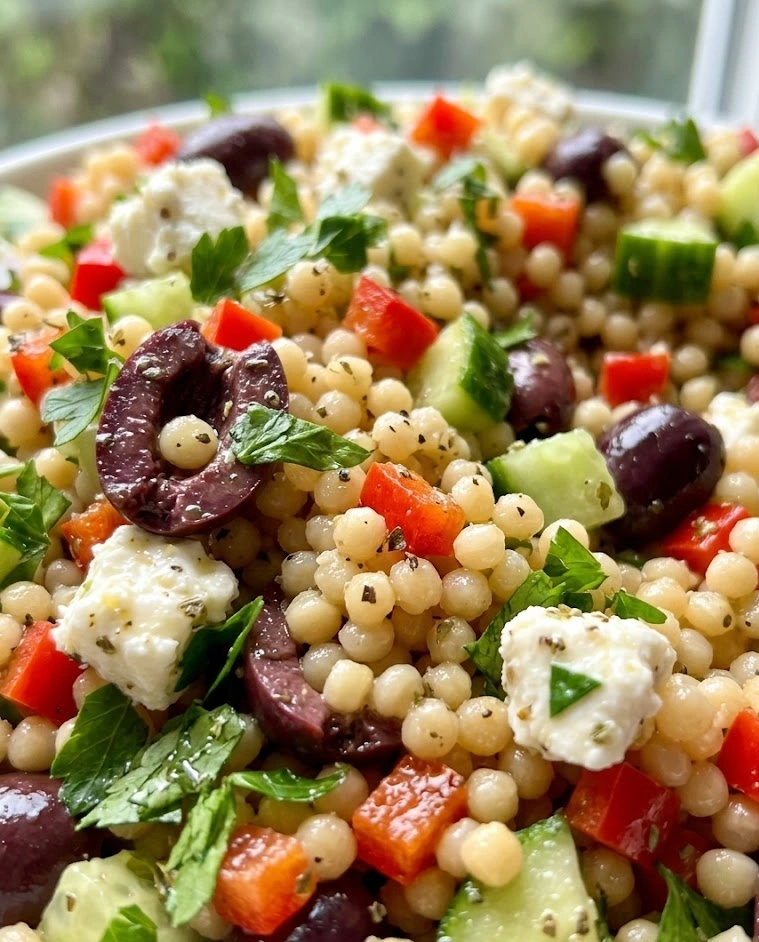
There’s a particular kind of spring dinner idea that doesn’t ask much of you — no preheating, no hovering over a hot stove, no timing three things at once. It just comes together, tastes impossibly fresh, and makes you feel like you’ve been cooking Mediterranean food your whole life. This Mediterranean Couscous Salad is exactly that dish.
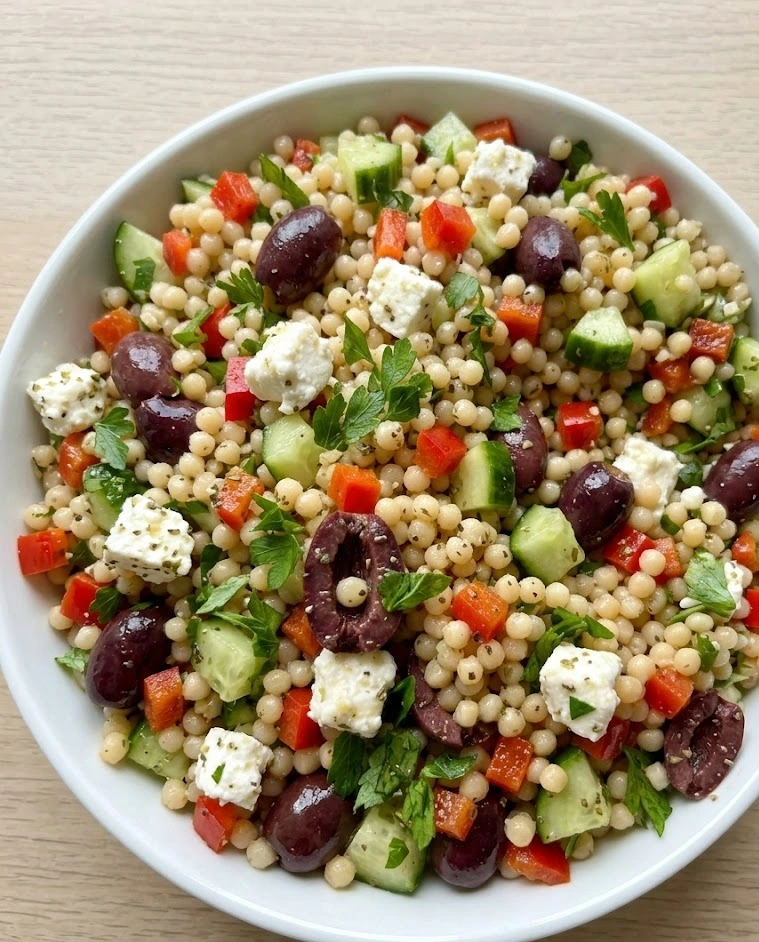
At its core, this is a celebration of what happens when simple, high-quality ingredients are treated with respect and dressed with acid and good olive oil. Fluffy pearl couscous, crisp cucumber, bursting cherry tomatoes, briny kalamata olives, creamy feta, fresh herbs, and a lemon vinaigrette that ties everything together with brightness and depth. Twenty minutes from pantry to table. No oven required.
The flavor principle at work here is contrast — soft against crisp, salty against bright, rich against fresh. Every forkful delivers something slightly different, which is why this salad is genuinely more interesting to eat than it has any right to be for something this easy. This is spring dinner ideas at their most honest and most delicious.
Why You’ll Love This Spring Dinner Idea
The first reason is the speed. Couscous is the fastest-cooking grain in your pantry — it needs nothing more than boiling water and 5 minutes of covered resting time. While it hydrates, you chop the vegetables. By the time you’re done chopping, the couscous is ready to fluff. The whole dish is assembled in 20 minutes flat.
The second reason is that it genuinely improves as it sits. Unlike most salads that wilt and suffer in the fridge, this one gets better after an hour of resting as the couscous absorbs the vinaigrette and every ingredient marinates together. This makes it one of the rare spring dinner ideas that is actually more delicious the next day — which makes it extraordinary for meal prep.
The third reason is its sheer adaptability. This salad plays equally well as a standalone vegetarian dinner, a side dish alongside grilled chicken or fish, a packed lunch, or the centerpiece of a spring potluck spread. Master the base recipe and you have a formula you can riff on endlessly through the entire season.
Common Mistakes — And How to Avoid Them
Mistake 1: Using Regular Couscous When Pearl Couscous Is Available
These are two very different products that behave completely differently. Regular couscous is tiny and fine — it absorbs dressing quickly and can turn pasty and clumped if overdressed. Pearl couscous (also called Israeli couscous) is larger, chewier, and holds its texture beautifully even after hours in dressing. For a salad you want to last in the fridge and maintain textural integrity, pearl couscous is almost always the better choice.
Mistake 2: Not Seasoning the Cooking Water
Couscous absorbs its cooking liquid completely, which means unseasoned water produces bland couscous that no amount of vinaigrette can fully rescue. Salt your water generously — it should taste pleasantly salty, like properly seasoned pasta water. Adding a glug of olive oil to the water also prevents clumping and adds richness from the inside out.
Mistake 3: Dressing While Hot
Hot couscous is porous and will soak up the entire vinaigrette immediately, leaving you with heavy, saturated grains and no dressing left to brighten the vegetables and feta. Let the couscous cool to at least room temperature before dressing. For the best result, dress it in two stages — a light coating while warm to season from within, then the rest just before serving.
Mistake 4: Using Low-Quality Feta
Pre-crumbled feta from a bag and a block of authentic feta packed in brine are not the same ingredient. Block feta stored in brine is creamier, saltier, and far more flavorful. It crumbles into irregular, interesting pieces rather than uniform dry pellets. For a salad where feta is a star ingredient, the quality of the cheese matters enormously.
Mistake 5: Skipping the Herb Quantity
Fresh herbs are not a garnish in this recipe — they are a primary flavor component. A timid scatter of parsley and mint does very little. You want a generous, almost aggressive quantity of fresh herbs throughout the salad so that every forkful has green, aromatic freshness alongside the other ingredients. Be bold with the herbs.
Chef’s Notes
Let’s talk about lemon — specifically about why it does something in this salad that no other acid quite replicates. Lemon juice contains citric acid, which brightens and amplifies the flavors of everything it touches. But lemon zest contains limonene, an aromatic essential oil compound that exists only in the peel and is not present in the juice. Using both juice and zest in the vinaigrette gives you two completely different lemon expressions working in harmony — acid from the juice, perfume from the zest. Together they create a depth of citrus flavor that juice alone can never achieve.
The olive oil you choose matters here more than in a cooked dish because it is never heated. Heat transforms and mellows olive oil, masking its raw character. In a raw vinaigrette, every quality and every flaw in your olive oil shows up directly in the flavor of the dish. Use the best extra-virgin olive oil you own — one with a peppery, grassy finish will make this salad taste genuinely extraordinary.
One more technique worth adopting: toast the pearl couscous in a dry pan for 2–3 minutes before adding the water. The couscous will turn slightly golden and develop a nutty, almost toasted-bread aroma. This transforms it from a neutral starch into a flavor contributor in its own right — and it takes 2 extra minutes that are absolutely worth spending.
Key Ingredients & Why They Matter
Pearl Couscous is the textural anchor of the entire dish. Its chewy, slightly al dente bite provides satisfying substance that makes this feel like a proper meal rather than a side salad. Unlike fine couscous, pearl couscous maintains its structure in dressing and in the fridge, making it the essential choice for a salad meant to last.
Fresh Lemon Juice and Zest are the flavor engine of the vinaigrette. The juice provides brightness and acidity that lifts every other ingredient. The zest delivers the aromatic, perfumed citrus oils that give this salad its distinctly Mediterranean character. Together they create a vinaigrette that tastes alive and vibrant rather than flat.
Extra-Virgin Olive Oil is the fat that carries fat-soluble flavor compounds from the herbs and aromatics into every bite. In a raw application like this vinaigrette, its grassy, peppery finish is fully present and deeply important. This is not the place for light or refined olive oil.
Kalamata Olives contribute brininess, umami depth, and a meaty chewiness that provides savory contrast against the bright lemon and fresh vegetables. Their cured, fruity flavor is distinctly Greek and fundamentally Mediterranean — they anchor the flavor identity of this dish in a way that no other olive variety quite replicates.
Block Feta in Brine brings creamy, salty richness that balances the acidity of the vinaigrette and adds a dairy depth that makes the whole salad feel more complete and satisfying. The irregular crumbles create pockets of intense saltiness throughout — a textural and flavor variation that pre-crumbled feta simply cannot deliver.
English Cucumber provides cool, watery crunch that refreshes the palate between bites of richer ingredients. Its thin skin means you don’t need to peel it, and its relatively low seed content keeps the salad from becoming watery over time — an important consideration for a make-ahead dish.
Cherry Tomatoes offer juicy bursts of sweetness and acidity that punctuate the salad and bring color. In spring, cherry tomatoes are among the best-tasting tomatoes available — sweeter and more consistent than larger varieties that are still weeks away from peak season.
Fresh Parsley and Mint are a classic Mediterranean herb pairing. Parsley brings a clean, grassy, slightly peppery freshness. Mint adds a cool, aromatic brightness that reads as distinctly spring and makes the whole salad feel lighter and more seasonal than parsley alone.
Red Onion adds sharp, pungent bite that cuts through the richness of the feta and olive oil. For a mellower result, soak the sliced red onion in cold water for 10 minutes before adding it — this removes much of the harsh sulfur compounds while preserving the flavor and color.
How to Make Mediterranean Couscous Salad
Ingredients
For the Salad:
- 1½ cups pearl couscous (Israeli couscous)
- 1¾ cups water or vegetable broth
- 1 tbsp olive oil (for cooking)
- 1 tsp salt (for cooking water)
- 1 English cucumber, diced
- 1½ cups cherry tomatoes, halved
- ½ cup kalamata olives, pitted and halved
- ½ red onion, finely diced
- 6 oz block feta cheese, crumbled
- ¼ cup fresh flat-leaf parsley, roughly chopped
- ¼ cup fresh mint leaves, roughly chopped
- ¼ cup sun-dried tomatoes, roughly chopped (optional but recommended)
- 3 tbsp toasted pine nuts (optional, for texture)
For the Lemon Herb Vinaigrette:
- Juice of 2 large lemons
- Zest of 1 lemon
- 4 tbsp extra-virgin olive oil
- 1 clove garlic, finely minced or grated
- 1 tsp dried oregano
- 1 tsp honey or maple syrup
- ½ tsp salt
- ¼ tsp black pepper
- Pinch of red pepper flakes
- Toast the couscous. Heat a medium saucepan over medium heat with no oil. Add the dry pearl couscous and toast, stirring frequently, for 2–3 minutes until lightly golden and fragrant — it should smell nutty and slightly toasted. This step is optional but genuinely transformative.
- Cook the couscous. Add the water or broth, olive oil, and salt to the pan with the toasted couscous. Bring to a boil, then reduce to a gentle simmer. Cover and cook for 8–10 minutes until the liquid is fully absorbed and the couscous is tender but still has a slight chew. Remove from heat and let rest covered for 3 minutes.
- Fluff and cool. Transfer the couscous to a large mixing bowl and fluff with a fork, breaking up any clumps. Spread it out slightly and allow it to cool to room temperature — about 10 minutes. Do not rush this step.
- Make the vinaigrette. Whisk together the lemon juice, lemon zest, extra-virgin olive oil, garlic, dried oregano, honey, salt, pepper, and red pepper flakes until fully emulsified. Taste it — it should be bright, punchy, and slightly more assertive than you think you want, because the couscous and feta will absorb and mellow it considerably.
- Dress the couscous lightly. While the couscous is still slightly warm, drizzle about one-third of the vinaigrette over it and toss gently. This first coat seasons the couscous from within as it finishes cooling.
- Prepare the vegetables. While the couscous cools, dice the cucumber, halve the cherry tomatoes, slice the olives, finely dice the red onion, and roughly chop the parsley and mint.
- Assemble the salad. Add the cucumber, cherry tomatoes, kalamata olives, red onion, sun-dried tomatoes, and most of the fresh herbs to the couscous bowl. Pour over the remaining vinaigrette and toss everything together gently but thoroughly.
- Add the feta last. Crumble the block feta over the top and fold it in gently — you want irregular pieces distributed throughout, not feta pulverized into fine powder from aggressive tossing.
- Taste and adjust. This is the most important step. Taste the salad and ask yourself what it needs. More acid? Another squeeze of lemon. More richness? A small drizzle of olive oil. More salt? Remember the feta is already salty, so add carefully. More freshness? Extra mint.
- Rest before serving. If time allows, let the assembled salad sit for 20–30 minutes before serving. The flavors meld and deepen significantly during this rest. Finish with toasted pine nuts, the remaining fresh herbs, and a final crack of black pepper at the table.
Variations & Tips
Add Protein for a Complete Spring Dinner: Top with grilled lemon-herb chicken, seared shrimp, or pan-seared salmon to turn this side salad into a full, satisfying spring dinner idea. The vinaigrette doubles beautifully as a marinade for any of these proteins — marinate for 30 minutes and grill or pan-sear over high heat.
Make It Vegan: The only non-vegan ingredient is the feta. Replace it with marinated, pressed tofu crumbled to a similar texture and seasoned with a pinch of salt and lemon zest, or use a high-quality vegan feta alternative. The vinaigrette is already fully plant-based.
Add Roasted Vegetables: Roast zucchini, eggplant, or asparagus at 425°F for 20 minutes until caramelized and tender, then fold into the salad while both are at room temperature. Roasted vegetables add a depth and sweetness that contrasts beautifully with the bright vinaigrette.
Swap the Grain: Pearl couscous can be replaced with farro, orzo, or quinoa for a different texture profile. Farro adds a deeply nutty, chewy quality. Orzo keeps it lighter and more pasta-like. Quinoa makes it gluten-free and adds a slight earthiness that works well with the Mediterranean flavors.
Pro Tip — The Two-Stage Dressing Method: Always dress in two stages. A light coat while the couscous is warm, and the remainder just before serving. This ensures the grains are seasoned throughout while the vegetables and herbs remain vibrant and undressed until the last moment.
How to Meal Prep Mediterranean Couscous Salad
This is genuinely one of the best spring dinner ideas for meal prep because it is one of the rare salads that holds — and actively improves — over multiple days in the fridge.
Store Undressed Components Separately for Maximum Longevity: If you want the salad to last 4–5 days, store the couscous, chopped vegetables, and vinaigrette in separate containers. Combine each morning or evening as needed. The couscous alone keeps for 5 days. The vinaigrette keeps for 2 weeks in the fridge.
Dress and Store for Convenience: If you prefer the grab-and-go convenience of a fully assembled salad, dress it completely and store in an airtight container for up to 3 days. The couscous will continue absorbing the dressing, which actually improves the flavor — just add a fresh squeeze of lemon and a drizzle of olive oil when serving to revive the brightness.
Keep the Feta and Herbs Separate: The one component that suffers most in a pre-assembled salad is the feta, which can break down into a salty, crumbly paste after 2 days, and the fresh herbs, which wilt and discolor. Store both separately and add fresh at each serving — this takes 30 extra seconds and dramatically improves the eating experience on day 3.
Scale Up Easily: This recipe doubles and triples with no adjustment to technique. A double batch feeds 8 as a side or 4 as a generous main — making it one of the most practical spring dinner ideas for feeding a group with minimal additional effort.
Cultural Context: A Salad Rooted in Thousands of Years of Flavor
The Mediterranean diet is not a modern wellness trend — it is one of the oldest and most continuously practiced ways of eating in human history, developed over millennia across the coastlines of Greece, Italy, Lebanon, Turkey, Morocco, and beyond. Its foundation has always been the same: olive oil, grains, legumes, fresh vegetables, herbs, and the sea.
Couscous itself has roots in North Africa — specifically in the Berber culinary traditions of Morocco, Algeria, and Tunisia, where it has been made from semolina for well over a thousand years. It traveled eastward and northward through trade routes and cultural exchange, becoming embedded in the cuisines of the broader Mediterranean world and eventually reaching global kitchens as one of the most beloved grains on the planet.
Feta cheese has been produced in Greece for at least 6,000 years — some historical accounts trace it back to Homer’s Odyssey, where a character is described making cheese from sheep’s milk. Today it holds Protected Designation of Origin status in the European Union, meaning that authentic feta can only legally be produced in specific regions of Greece using traditional methods.
The lemon-olive oil dressing tradition traces directly to ancient Greek and Roman cooking, where acid and fat were understood as flavor tools long before the science of flavor chemistry existed to explain why they worked. These cooks simply knew that food tasted better this way — and two thousand years of history have proven them right.
So when you toss this Mediterranean Couscous Salad together on a warm spring evening, you are drawing from one of the deepest and most flavorful culinary traditions in human history. For 20 minutes of effort, that’s a remarkable return on investment — and one of the most satisfying spring dinner ideas you’ll find anywhere this season.
Mediterranean Couscous Salad
Equipment
- medium saucepan
- Large Mixing Bowl
- whisk
- chef’s knife
Ingredients
- 1 1/2 cups pearl couscous (Israeli couscous)
- 1 3/4 cups water or vegetable broth
- 1 tbsp olive oil (for cooking)
- 1 tsp salt (for cooking water)
- 1 English cucumber, diced
- 1 1/2 cups cherry tomatoes, halved
- 1/2 cup kalamata olives, pitted and halved
- 1/2 red onion, finely diced
- 6 oz block feta cheese, crumbled
- 1/4 cup fresh flat-leaf parsley, chopped
- 1/4 cup fresh mint leaves, chopped
- 1/4 cup sun-dried tomatoes, chopped (optional)
- 3 tbsp toasted pine nuts (optional)
- 2 large lemons, juiced
- 1 lemon, zested
- 4 tbsp extra-virgin olive oil
- 1 clove garlic, minced
- 1 tsp dried oregano
- 1 tsp honey or maple syrup
- 1/2 tsp salt (for vinaigrette)
- 1/4 tsp black pepper
- pinch red pepper flakes
Instructions
- Toast pearl couscous in a dry saucepan over medium heat for 2–3 minutes until lightly golden and fragrant.
- Add water or broth, olive oil, and salt. Bring to a boil, reduce to simmer, cover, and cook 8–10 minutes until liquid is absorbed.
- Fluff couscous with a fork and allow to cool to room temperature.
- Whisk together lemon juice, lemon zest, olive oil, garlic, oregano, honey, salt, pepper, and red pepper flakes until emulsified.
- Drizzle one-third of the vinaigrette over slightly warm couscous and toss gently.
- Add cucumber, tomatoes, olives, red onion, sun-dried tomatoes, and most of the herbs. Pour remaining vinaigrette and toss thoroughly.
- Fold in crumbled feta gently to maintain texture.
- Rest 20 minutes if time allows. Garnish with remaining herbs and toasted pine nuts before serving.