The Flavor Profile
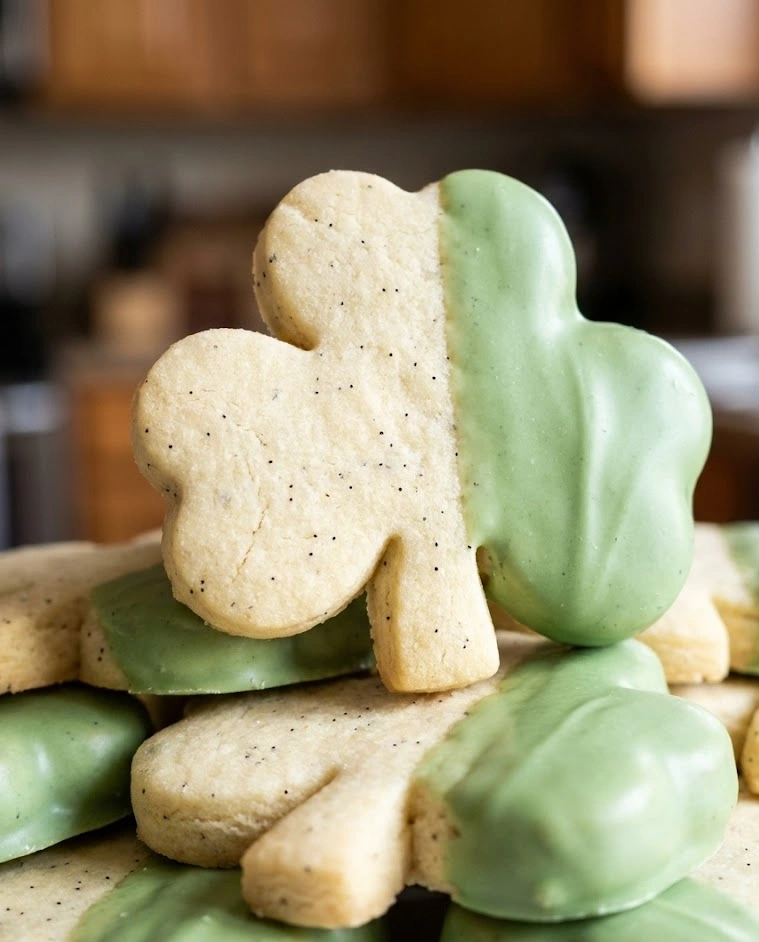
Vanilla Bean Shamrock Cookies celebrate the pure, unadulterated essence of premium Madagascar vanilla—a flavor often overshadowed by chocolate or spice but magnificent when given center stage. These cookies showcase vanilla’s complex aromatic profile: floral and sweet on the front palate, with subtle woody, almost rum-like undertones that develop as you chew. The natural green coloring from spinach or matcha (depending on your approach) adds visual festivity without artificial dyes while contributing negligible flavor impact. The result is an elegant, sophisticated cookie that appeals to purists who appreciate ingredient quality over gimmickry—sweet but balanced, buttery but refined, visually striking but naturally derived.
Dominant Notes: Pure vanilla bean, butter, subtle almond (if using extract), delicate sweetness
Technique Focus: Vanilla bean extraction maximization; natural coloring integration without flavor compromise
If you love decorated cookies, you are going to want to bookmark this collection. We rounded up 20 of our best custom decorated cookie recipes — from easy patriotic 3-ingredient sugar cookies and red white and blue M&M cookies for the 4th of July, to shamrock cookie cups, matcha butter cookies, and decorated basketball treats for game day. Every recipe on the list is beginner-friendly, festive, and made to impress.
Common Mistakes (And How to Avoid Them)
Mistake #1: Using Only Vanilla Extract Instead of Real Vanilla Beans
Vanilla extract provides vanilla flavor, but vanilla beans deliver both flavor AND visual appeal through those signature black specks (vanillin crystals). For maximum impact, use both: scrape seeds from one vanilla bean directly into the dough, then add 1 teaspoon vanilla extract. The extract contains alcohol-soluble flavor compounds that beans alone can’t provide, while beans contribute fat-soluble compounds that extract misses.
Mistake #2: Adding Spinach Puree Without Proper Moisture Compensation
Fresh spinach contains approximately 91% water. Adding spinach puree without adjusting other liquids creates wet, spreading dough. Always squeeze spinach puree through cheesecloth or a fine-mesh sieve to remove excess moisture before incorporating—you should extract at least 2-3 tablespoons liquid from a ¼ cup puree. Alternatively, use freeze-dried spinach powder, which provides color without moisture complications.
Mistake #3: Overprocessing Spinach, Creating Bitter Chlorophyll Notes
Spinach contains oxalates and other compounds that become bitter when over-blended or heated too long. Blanch spinach for exactly 30 seconds in boiling water (sets the green color), shock immediately in ice water (stops cooking), then blend briefly—just until smooth, no longer. Over-blending ruptures more cell walls, releasing bitter compounds.
Mistake #4: Baking at Too High Temperature, Causing Color Shift
Chlorophyll degrades into pheophytin (olive-brown pigment) above 350°F. For cookies colored with spinach, bake at 325°F maximum. This lower temperature requires longer baking time but preserves that vibrant green hue. Matcha-colored cookies can withstand 350°F since matcha’s color compounds are more heat-stable.
Mistake #5: Using Imitation Vanilla Instead of Pure Extract
Imitation vanilla contains synthetic vanillin (often derived from wood pulp or petroleum) that provides one-dimensional sweetness without complexity. Pure vanilla extract contains over 250 flavor compounds. In a vanilla-forward cookie, this difference is glaring. Always use pure vanilla extract or, better yet, vanilla bean paste.
Chef’s Notes: The Science of Vanilla and Natural Food Coloring
Vanilla is the second most expensive spice after saffron due to labor-intensive hand-pollination and curing processes. A single vanilla orchid produces one bean pod, which must cure for 3-6 months to develop full flavor. This curing process creates vanillin (the primary flavor compound) through enzymatic breakdown of glucovanillin precursors.
When you scrape vanilla bean seeds into cookie dough, you’re not just adding flavor—you’re incorporating hundreds of aromatic compounds including vanillin, vanillic acid, p-hydroxybenzaldehyde, and guaiacol. These compounds have different volatility rates: some evaporate during baking (creating that intoxicating aroma), while others remain stable in the baked cookie (providing lasting flavor).
For natural green coloring, you have two primary options:
Option 1: Spinach
Chlorophyll is fat-soluble, which means it integrates beautifully into butter-based cookies. However, chlorophyll is also heat-sensitive. Blanching spinach briefly denatures enzymes that would otherwise break down chlorophyll during storage, but extended heat exposure (like baking) still causes some degradation. This is why spinach-colored cookies emerge from the oven slightly less vibrant than the raw dough.
Option 2: Matcha
Matcha powder contains chlorophyll plus additional color compounds like carotenoids that provide more heat stability. The trade-off is flavor: even small amounts of matcha contribute earthy, grassy notes. For vanilla-forward cookies, use matcha sparingly (½-1 teaspoon maximum) or accept a subtle green tea undertone.
Vanilla Bean Shamrock Cookies Recipe
Yield: 36 cookies
Prep Time: 30 minutes (plus 2 hours chilling)
Cook Time: 11 minutes per batch
Total Time: 3 hours
Ingredients
For the Natural Green Coloring (Choose One Method):
Spinach Method:
- 2 cups (60g) fresh baby spinach, packed
- 2 tablespoons water
Matcha Method:
- 1-2 teaspoons culinary-grade matcha powder
For the Cookie Dough:
- 3 cups (375g) all-purpose flour
- 1 teaspoon baking powder
- ½ teaspoon fine sea salt
- 1 cup (227g) unsalted butter, room temperature
- 1 cup (200g) granulated sugar
- ½ cup (100g) superfine sugar (or additional granulated sugar)
- 2 large eggs, room temperature
- 1 vanilla bean, split and scraped (or 2 tablespoons vanilla bean paste)
- 2 teaspoons pure vanilla extract
- ½ teaspoon almond extract (optional, enhances vanilla perception)
- 3-4 tablespoons natural green coloring (prepared spinach puree or matcha dissolved in 2 tablespoons milk)
For the Vanilla Glaze:
- 2 cups (240g) powdered sugar, sifted
- 3-4 tablespoons whole milk
- 1 teaspoon vanilla bean paste (or ½ teaspoon pure vanilla extract)
- Pinch of fine sea salt
- Additional matcha or spinach powder for tinting (optional)
For Optional Decoration:
- White sanding sugar
- Edible gold leaf or gold luster dust
- Royal icing for piping shamrock details
Instructions
Step 1: Prepare Natural Green Coloring
For Spinach Method:
Bring a small pot of water to a rolling boil. Prepare an ice bath in a medium bowl. Add spinach to boiling water and blanch for exactly 30 seconds—this sets the chlorophyll and deactivates enzymes. Immediately transfer spinach to ice bath using a slotted spoon. Let cool for 1 minute.
Squeeze spinach to remove excess water, then transfer to a high-powered blender. Add 2 tablespoons fresh water and blend on high speed for 30-45 seconds until completely smooth. The puree should be vibrant green and homogeneous.
Line a fine-mesh sieve with two layers of cheesecloth and set over a bowl. Pour spinach puree into cheesecloth and squeeze firmly, extracting as much liquid as possible. You should remove 2-3 tablespoons water. Reserve the concentrated spinach paste (you’ll need 3-4 tablespoons for the recipe). Refrigerate until needed.
For Matcha Method:
Sift 1-2 teaspoons matcha powder into a small bowl. Add 2 tablespoons warm whole milk and whisk vigorously until no lumps remain. The mixture should be smooth and deep green. Set aside.
Step 2: Prepare Vanilla Bean
Using a sharp paring knife, split vanilla bean lengthwise. Hold the bean flat against a cutting board and use the back of the knife to scrape out the seeds (the sticky, caviar-like paste inside). Add seeds to the bowl where you’ll cream butter and sugar—the seeds will distribute more evenly when incorporated early. Reserve the scraped pod for another use (add to sugar jar for vanilla sugar, or simmer in milk for custards).
Step 3: Combine Dry Ingredients
Whisk together flour, baking powder, and salt in a medium bowl. Set aside.
Step 4: Cream Butter, Sugar, and Vanilla
In the bowl of a stand mixer fitted with the paddle attachment, combine butter, granulated sugar, superfine sugar, and vanilla bean seeds. Cream on medium speed for 4 minutes until light, fluffy, and increased in volume. The mixture should be pale ivory with visible vanilla bean specks throughout. Superfine sugar dissolves more readily than regular granulated sugar, creating a smoother texture, but regular granulated sugar works if superfine is unavailable.
Step 5: Incorporate Eggs and Extracts
Add eggs one at a time, beating for 20 seconds after each addition. Add vanilla extract and almond extract (if using). Beat until fully incorporated. The almond extract amplifies vanilla perception through aromatic compound interaction—a phenomenon called “flavor synergy.”
Step 6: Add Natural Coloring
Add 3 tablespoons of your chosen green coloring (spinach paste or matcha mixture). Mix on low speed for 20 seconds. Evaluate color intensity—if you want deeper green, add the remaining tablespoon. Remember that color will lighten slightly during baking, so aim for a shade slightly more saturated than your desired final result.
Step 7: Build Dough Structure
With mixer on low speed, add flour mixture in three additions, mixing only until just combined after each addition (approximately 15 seconds per addition). Stop mixer and use a rubber spatula to scrape bottom and sides, ensuring complete incorporation. The dough should be soft, uniformly green, and aromatic with vanilla.
Step 8: Chill for Optimal Handling
Divide dough in half and shape into flat disks. Wrap tightly in plastic wrap and refrigerate for at least 2 hours or up to 3 days. This chilling period is essential—it firms the butter, prevents excessive spreading, and allows flour to hydrate fully for tender texture.
Step 9: Roll and Cut Shamrock Shapes
Preheat oven to 325°F (163°C) if using spinach coloring, or 350°F (175°C) if using matcha. Line two baking sheets with parchment paper.
Remove one dough disk from refrigerator and let stand at room temperature for 5-10 minutes—it should be cold but pliable enough to roll without cracking. On a lightly floured surface (or between two sheets of parchment paper to prevent sticking), roll dough to ¼-inch thickness.
Use a shamrock-shaped cookie cutter (3-4 inch diameter works well) to cut shapes. Transfer carefully to prepared baking sheets, spacing 1½ inches apart. These cookies hold their shape beautifully during baking due to the chilling process.
Gather scraps, re-roll once, and cut additional cookies. Avoid re-rolling more than twice—excessive handling develops gluten and toughens cookies.
Step 10: Bake to Pale Perfection
Bake for 11-13 minutes, rotating pans halfway through. Cookies are done when edges are set and barely beginning to show the faintest color—they should NOT brown. Centers may appear slightly soft but will firm during cooling. For spinach-colored cookies, underbaking slightly preserves more vibrant green color.
Watch carefully: vanilla cookies can go from perfect to overbaked in 60 seconds.
Step 11: Cool Completely
Let cookies rest on baking sheets for 3 minutes to set structure. Transfer to wire racks and cool completely—approximately 30 minutes. The cookies must be completely cool before glazing or decorating.
Step 12: Prepare Vanilla Glaze
While cookies cool, prepare the glaze. Sift powdered sugar into a medium bowl (sifting eliminates lumps for smooth glaze). Add 3 tablespoons milk, vanilla bean paste, and salt. Whisk until completely smooth. The glaze should be thick enough to coat the back of a spoon but still flow freely. If too thick, add milk by the teaspoon; if too thin, add powdered sugar by the tablespoon.
For tinted glaze, divide glaze in half and add a pinch of matcha powder or reserved spinach powder to one portion, whisking until smooth and uniformly colored.
Step 13: Glaze and Decorate
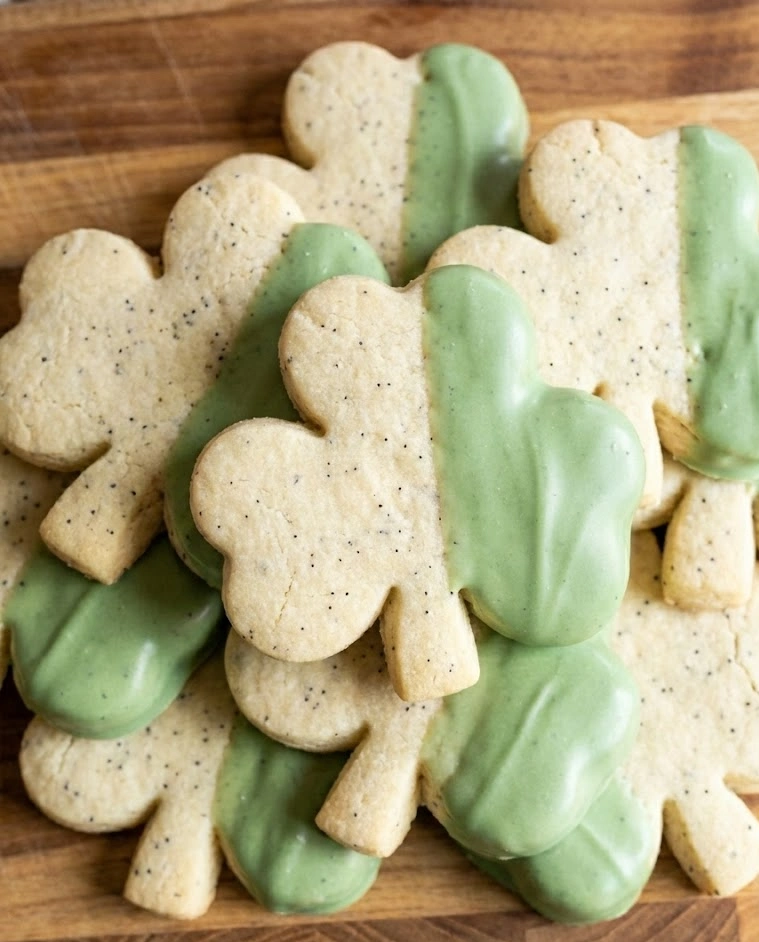
Working with one cookie at a time, dip the top surface into glaze, allowing excess to drip back into the bowl. Place on a wire rack set over parchment paper (catches drips). Immediately sprinkle with white sanding sugar, gold luster dust, or leave plain for minimalist elegance.
For two-tone effect, glaze half the cookies with white vanilla glaze and half with tinted green glaze.
Let glaze set for 30 minutes at room temperature before serving or storing.
Step 14: Optional Royal Icing Details
For bakery-style presentation, pipe shamrock outlines or Celtic knot designs using white royal icing in a piping bag fitted with a #2 round tip. Let royal icing dry completely (2-4 hours) before stacking or packaging.
Substitutions & Variations
Vegan Adaptation:
Replace butter with vegan butter (1:1 ratio—Earth Balance or Miyoko’s brands work exceptionally well). Substitute eggs with ½ cup unsweetened applesauce plus 2 tablespoons aquafaba (chickpea liquid), which provides binding and moisture. Use plant-based milk in glaze and matcha coloring method (spinach method is already vegan-friendly).
Gluten-Free Option:
Use a 1:1 gluten-free baking flour blend containing xanthan gum (Bob’s Red Mill Measure for Measure or King Arthur Gluten-Free Flour). Increase chilling time to 3 hours minimum—gluten-free doughs require extended hydration. Add 1 tablespoon additional milk to the dough if it seems dry. Cookies may be slightly more delicate but maintain excellent flavor.
Refined Sugar-Free Version:
Replace granulated sugar with coconut sugar (use ¾ cup instead of 1½ cups total, as coconut sugar is sweeter). Use maple syrup instead of powdered sugar in glaze: whisk together ½ cup maple syrup, 2 tablespoons coconut oil (melted), 1 teaspoon vanilla bean paste, and ¼ cup coconut flour to create a pourable glaze. Note that coconut sugar creates darker-colored cookies that may mask green coloring.
Lemon-Vanilla Variation:
Add 2 tablespoons fresh lemon zest to the dough along with vanilla bean seeds. Replace almond extract with ½ teaspoon lemon extract. The citrus brightens vanilla’s sweetness and adds complexity. Glaze with lemon glaze: powdered sugar + lemon juice + vanilla bean paste.
Brown Butter Depth:
Brown the butter before creaming (cook until nutty and amber-colored, approximately 5-7 minutes), then refrigerate until solid before using. This adds hazelnut-caramel notes that complement vanilla beautifully. The cookies will have deeper flavor complexity but slightly darker color.
Vanilla Bean Sugar Coating:
Instead of glazing, roll warm cookies in vanilla bean sugar (granulated sugar + scraped vanilla bean seeds) for sparkly, aromatic coating. This method preserves the cookies’ vibrant green color more effectively than glaze.
Pairing Suggestions
Beverage Complement:
Serve with Earl Grey tea, which shares vanilla’s floral aromatics through bergamot oil. The tea’s gentle tannins cleanse the palate between bites without overpowering vanilla’s delicate flavor. For coffee drinkers, pair with vanilla latte or a light-roasted coffee with vanilla notes (Ethiopian Yirgacheffe is excellent). For children’s parties, serve with vanilla-infused milk: steep a split vanilla bean in warm milk for 10 minutes, chill, and serve.
Dessert Spread Integration:
These cookies provide visual and flavor balance on a St. Patrick’s Day dessert table heavy with chocolate or rich cream-based desserts. Their delicate sweetness and pale green color create breathing room between denser offerings. Arrange on a tiered cake stand with fresh mint sprigs for natural elegance, or display in glass apothecary jars to showcase their uniform shamrock shapes.
Ice Cream Pairing:
Sandwich vanilla bean ice cream between two unglazed cookies for a sophisticated ice cream sandwich. The double vanilla reinforces flavor while the cookie’s crisp-tender texture contrasts beautifully with frozen creaminess. Alternatively, serve alongside pistachio gelato—the nut’s earthiness complements vanilla’s woody undertones.
Storage & Make-Ahead Tips
Room Temperature: Store unglazed cookies in an airtight container at room temperature for up to 2 weeks. The high butter content and vanilla’s natural antimicrobial properties preserve freshness. Layer cookies with parchment paper to prevent sticking.
Glazed Cookies: Store in a single layer or with parchment between layers for up to 1 week. The glaze creates a moisture barrier that actually keeps cookies fresher than unglazed versions, though humidity may soften the glaze in warm climates.
Freezing Dough: Wrap dough disks tightly in plastic wrap, then aluminum foil, and freeze for up to 3 months. Thaw overnight in refrigerator before rolling and cutting. Alternatively, cut shapes from rolled dough, freeze on baking sheets until solid, then transfer to freezer bags. Bake directly from frozen, adding 2-3 minutes to baking time.
Freezing Baked Cookies: Freeze unglazed cookies in airtight containers for up to 3 months. Thaw at room temperature for 1 hour, then glaze fresh for optimal appearance and texture.
Make-Ahead Strategy for Events: Bake cookies up to 2 weeks ahead and store airtight at room temperature. Glaze cookies up to 3 days before serving—the glaze sets firm enough to stack carefully. For royal icing decorations, complete all decorating 1-2 days ahead to ensure icing is fully dry before transport or display.
Vanilla Bean Pod Reuse: Don’t discard scraped vanilla bean pods. Rinse and dry them thoroughly, then add to a jar of granulated sugar to create vanilla sugar (ready in 1 week, continues to intensify for months). Alternatively, add pods to bottles of vodka or rum to create homemade vanilla extract (ready in 6-8 weeks).
Sourcing Premium Vanilla
For truly exceptional vanilla flavor, invest in quality vanilla beans. Look for:
Madagascar Bourbon Vanilla: The gold standard—creamy, sweet, classic vanilla flavor with subtle rum-like notes. Best for these cookies.
Tahitian Vanilla: Floral, fruity, with cherry-chocolate undertones. More delicate and expensive, excellent for special occasions.
Mexican Vanilla: Bold, spicy, with cinnamon-like warmth. Creates more assertive vanilla flavor.
Purchase beans that are glossy, pliable (not brittle), and highly aromatic. Avoid dry, cracked beans—they’ve lost essential oils. Store beans in an airtight container in a cool, dark place (not refrigerator—cold crystallizes vanillin). Properly stored vanilla beans last 1-2 years.
Cost Consideration: Vanilla beans range from $2-8 per bean depending on quality and origin. For budget-friendly approach, use high-quality vanilla bean paste (approximately $12 for a jar that equals 10-12 beans) which provides seeds and concentrated flavor.
Vanilla Bean Shamrock Cookies
Equipment
- stand mixer or hand mixer
- mixing bowls
- Rolling Pin
- shamrock cookie cutter
- baking sheets
Ingredients
- 3 cups all-purpose flour
- 1 tsp baking powder
- 1/2 tsp fine sea salt
- 1 cup unsalted butter, room temperature
- 1 cup granulated sugar
- 1/2 cup superfine sugar (or additional granulated sugar)
- 2 large eggs, room temperature
- 1 vanilla bean, split and scraped (or vanilla bean paste)
- 2 tsp pure vanilla extract
- 1/2 tsp almond extract (optional)
- 3–4 tbsp natural green coloring (spinach paste or matcha mixture)
- 2 cups powdered sugar, sifted (for glaze)
- 3–4 tbsp whole milk (for glaze)
- 1 tsp vanilla bean paste or vanilla extract (for glaze)
- 1 pinch fine sea salt (for glaze)
Instructions
- Prepare natural green coloring using either blanched spinach puree or matcha mixed with warm milk.
- Whisk flour, baking powder, and salt together in a bowl.
- Cream butter, sugars, and vanilla bean seeds until light and fluffy.
- Add eggs one at a time, then mix in vanilla and almond extracts.
- Mix in natural green coloring until evenly distributed.
- Add dry ingredients gradually, mixing just until combined.
- Divide dough, wrap, and refrigerate for at least 2 hours.
- Roll dough to 1/4-inch thickness and cut shamrock shapes.
- Bake at 325°F (spinach) or 350°F (matcha) until edges are set but not browned.
- Cool completely, then glaze with vanilla glaze and decorate if desired.