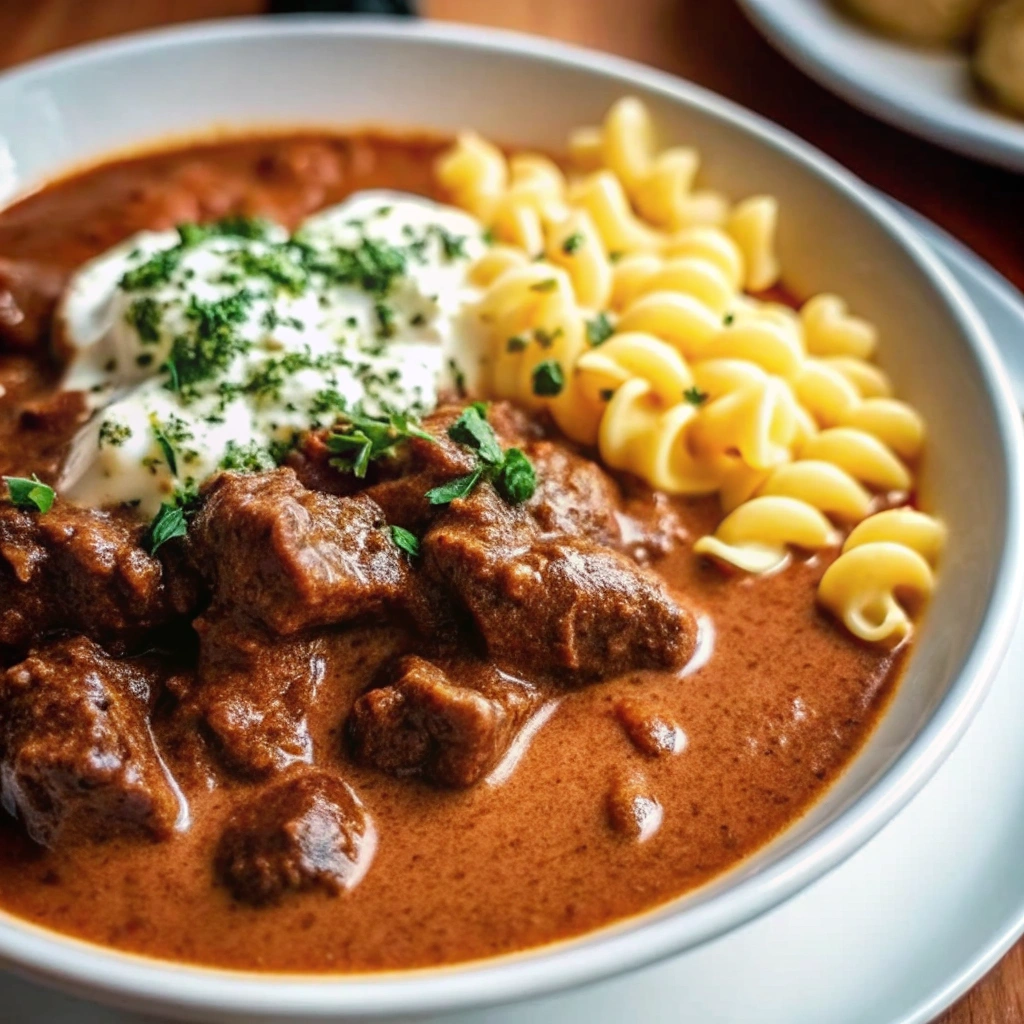
If you’re seeking a stew that is truly hearty, deeply flavorful, and embodies the ultimate winter comfort, look no further than Creamy German Goulash. Often known as Rahmgulasch or Sahnegulasch, this recipe is a world away from the familiar Hungarian version. Instead of a thick, simple tomato base, the German version features fork-tender beef, caramelized onions, and an aromatic blend of sweet and smoked paprika, all swimming in a velvety, rich sauce finished with sour cream.
This dish is a masterclass in patient, slow cooking. The secret to its incredible depth lies in the long braise, which breaks down the beef into succulent, melt-in-your-mouth pieces. We then finish the sauce with a swirl of sour cream to create a beautiful tanginess and an unbeatably creamy texture that perfectly coats traditional German egg noodles or Spätzle.
Perfect for a cozy Sunday meal or effortless entertaining, this Creamy German Goulash is guaranteed to become a cherished recipe in your home.
Why This German Goulash Stands Above the Rest
While goulash exists in many forms across Central Europe, the German Creamy Goulash achieves a unique flavor and texture profile thanks to a few crucial differences:
- Creamy Finish: Unlike Hungarian Goulash, which relies on puréed vegetables for thickness, the German version incorporates sour cream or heavy cream (added after cooking) for its signature rich, velvety texture.
- The Paprika Blend: We don’t just use one type of paprika. A blend of sweet paprika (for color and mild flavor) and smoked paprika (for depth and a subtle smoky warmth) creates a complex, savory base without being overwhelmingly spicy.
- Deep Caramelization: This recipe emphasizes caramelizing a large amount of onions before adding any liquid. As the onions slowly cook down, their sugars add a natural sweetness to the savory sauce, which is essential to balance the beef and the cream.
- Vinegar Deglaze: A splash of vinegar or lemon juice at the start helps to deglaze the pot and tenderize the beef by contributing necessary acid, which is key to breaking down the collagen during the long braise.
Ingredients
The quality of your paprika and beef is essential to the success of this creamy stew.
For the Goulash Base
- 2 pounds beef chuck roast, trimmed and cut into 1.5-inch cubes
- 1 teaspoon Kosher salt (plus more for seasoning)
- 1/2 teaspoon black pepper (plus more for seasoning)
- 2 tablespoons all-purpose flour
- 3 tablespoons olive oil or butter
- 2 large yellow onions, thinly sliced (this is a lot, and it’s key!)
- 4 cloves garlic, minced
- 2 tablespoons sweet Hungarian paprika
- 1 tablespoon smoked paprika (optional, but recommended)
- 1 teaspoon dried marjoram (traditional German herb)
- 2 tablespoons tomato paste
- 1 tablespoon red wine vinegar or white vinegar
- 4 cups beef broth (low sodium)
- 1 bay leaf
For the Creamy Finish
- 1/2 cup sour cream or crème fraîche (at room temperature)
- 1 teaspoon fresh lemon juice (for brightness)
- 1/4 cup chopped fresh parsley, for garnish
Step-by-Step Instructions: The Art of the Slow Simmer
This recipe requires two key steps: high-heat searing to lock in flavor, and low-heat braising to achieve perfect tenderness.
Part 1: Searing and Building the Base (25 Minutes)
- Prep Beef: Pat the beef cubes absolutely dry. In a bowl, toss the beef with the 2 tablespoons of flour, 1 teaspoon salt, and 1/2 teaspoon pepper until lightly coated.
- Sear Beef: Heat 2 tablespoons of oil in a large Dutch oven or heavy-bottomed pot over medium-high heat. Working in batches, sear the beef on all sides until deeply browned (about 2–3 minutes per side). Do not crowd the pot; crowding causes the beef to steam. Set all the seared beef aside.
- Caramelize Onions: Reduce the heat to medium-low. Add the remaining oil/butter to the pot. Add the sliced onions and sauté for 12–15 minutes. This long cook time is essential. Stir frequently until the onions are completely soft, translucent, and just beginning to turn golden brown.
- Bloom Spices: Add the minced garlic, sweet paprika, smoked paprika, marjoram, and tomato paste to the onions. Stir constantly for 2 minutes, cooking the tomato paste and “blooming” the spices. This enhances their flavor and color.
Part 2: Braising for Tenderness (2 – 3 Hours)
- Deglaze and Add Liquid: Stir in the red wine vinegar and scrape up any brown bits (fond) from the bottom of the pot. Stir in the beef broth and the bay leaf. Bring the liquid to a slow simmer.
- Return Beef: Nestle the seared beef (and any accumulated juices from the plate) back into the pot. The liquid should cover the meat.
- Braise Slow: Cover the pot tightly with a lid. Reduce the heat to the lowest possible setting (or transfer to a preheated 325∘F (160∘C) oven).
- Cook until Tender: Simmer gently for 2 to 3 hours, or until the beef is incredibly tender and easily pulls apart with a fork. Check every 45 minutes; if the sauce looks too thick, add a small splash of broth or water.
Part 3: Finishing the Creamy Sauce (10 Minutes)
- Remove Bay Leaf: Once the beef is tender, remove the pot from the heat and discard the bay leaf.
- Temper the Sour Cream: Place the room temperature sour cream (or crème fraîche) in a small bowl. Ladle a few tablespoons of the hot goulash sauce into the sour cream and whisk vigorously. This process (called “tempering”) prevents the cold dairy from seizing or curdling when it hits the hot liquid.
- Stir in Cream: Pour the tempered sour cream mixture back into the pot and stir until it is completely blended into the sauce.
- Final Seasoning: Stir in the 1 teaspoon of fresh lemon juice—this brightens the rich flavor beautifully. Taste and add salt or pepper if necessary.
- Serve: Garnish generously with fresh parsley and serve hot.
Pro Tips for the Ultimate Creamy Goulash
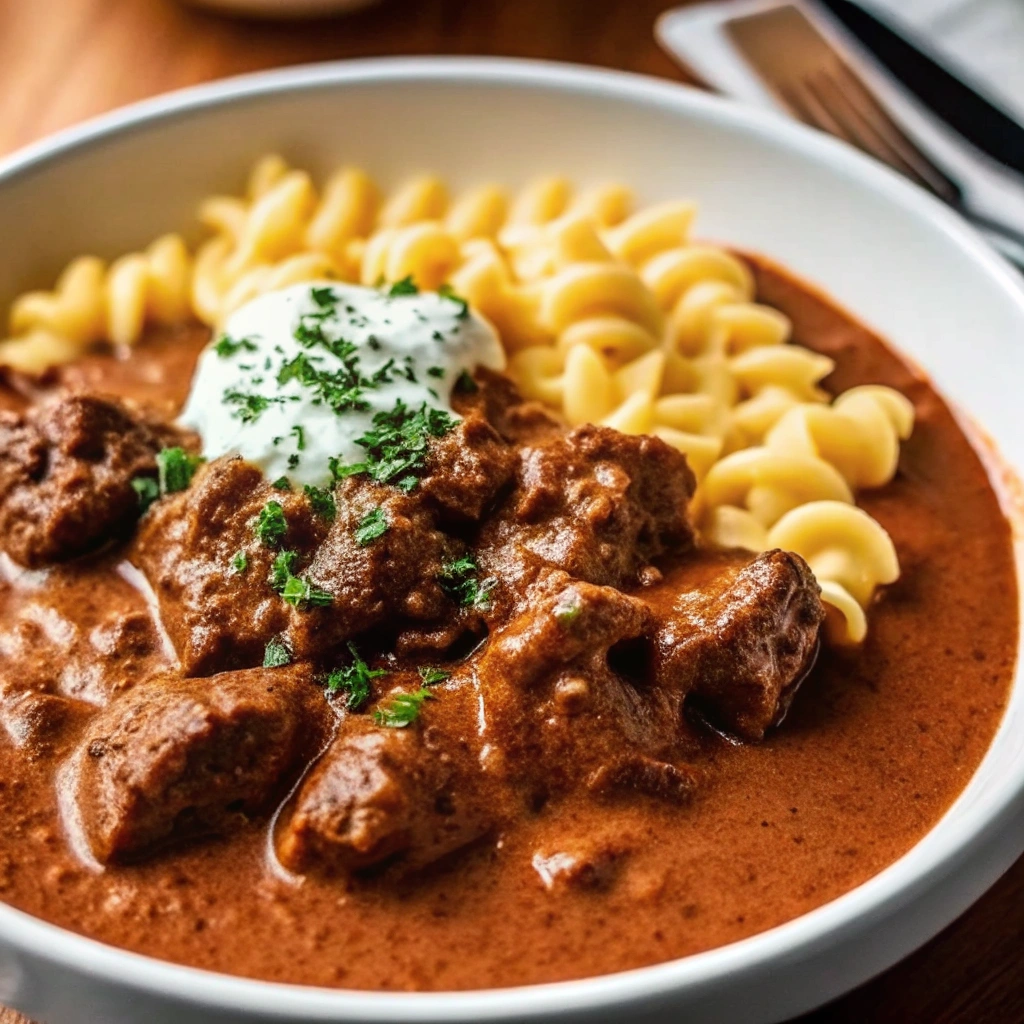
Mastering this rustic stew involves careful control of heat and attention to the dairy finish.
- Preventing Curdling: This is the most crucial step! To prevent the sour cream from separating:
- Always use full-fat sour cream or crème fraîche. Low-fat dairy curdles more easily.
- Ensure the sour cream is at room temperature.
- Temper the sour cream (mix it with a little hot liquid first) before adding it to the pot.
- Never let the soup boil once the cream is added.
- The Right Paprika: Use high-quality Hungarian or German paprika. If your paprika is old (over 6 months), it will taste flat. The blooming process (cooking the paprika in fat for 2 minutes) releases its flavor and color; do not rush this step, but do not burn it, or it will turn bitter.
- Check the Beef Tenderness: The only way to know if the goulash is truly done is by testing the beef. It should require virtually no effort to pull a piece apart with a fork. If it still resists, it simply needs more time (braising time varies depending on the cut and heat level).
- The Searing is Non-Negotiable: Just like with the Tuscan Beef Casserole, searing the beef is essential for building a deep, savory foundation (the fond) that defines the final sauce.
Serving Suggestions and Rustic Variations
Creamy German Goulash is traditionally served with starch that can soak up the luxurious sauce.
Serving Ideas
- Classic Starch: Serve over traditional German egg noodles (Eiernudeln), Spätzle (German egg dumplings), or wide egg noodles.
- Potato Base: Use fluffy mashed potatoes or simple boiled potatoes to catch the sauce.
- Tangy Side: Pair with a side of steamed green beans or a small bowl of sauerkraut (served cold or warm) to provide a necessary acidic contrast to the rich, creamy sauce.
- Bread: A crusty, rustic bread is always welcome for soaking up the remaining sauce.
Creative Variations
- Mushroom Goulash: For a vegetarian twist, use thick-cut portobello or oyster mushrooms instead of beef. The mushrooms only need to simmer for 30–40 minutes until tender, significantly reducing the cooking time.
- Pork Goulash (Schweinegulasch): Substitute the beef chuck with boneless pork shoulder, cut into cubes. The cooking time remains the same, yielding incredibly tender pork.
- Smoky Flavor: To emphasize the smoky profile, you can add 2 strips of diced bacon or pancetta to the pot with the initial oil. Render the fat, then use that fat to sear the beef.
- Slow Cooker Method: Sear the beef and sauté the onions/spices on the stovetop first (Parts 1 & 2). Transfer everything (including the broth and vinegar) to the slow cooker. Cook on LOW for 6–8 hours or HIGH for 3–4 hours. Stir in the tempered sour cream in the last 15 minutes of cooking.
Frequently Asked Questions
- What is the best cut of beef for goulash? Beef chuck roast (or stew meat cut from chuck) is the absolute best choice. It has the right amount of fat and connective tissue (collagen) that breaks down during the long braise, guaranteeing the beef becomes soft and tender.
- Can I freeze Creamy German Goulash? It is not recommended to freeze the fully finished soup. Dairy-based sauces tend to separate and become grainy once thawed. If you plan to freeze it, follow all steps up until you add the sour cream. Freeze the “base” stew, and then thaw, reheat, and stir in the tempered sour cream when you are ready to serve.
- What can I use instead of sour cream? The best substitute is crème fraîche (which is less likely to curdle). You can also use heavy cream, but the finished soup will be richer and less tangy. If you use heavy cream, add 1 tablespoon of red wine vinegar or lemon juice to the pot at the end to restore the necessary tanginess.
- Why is my sauce too thin? Since we only used a small amount of flour at the beginning, the sauce thickens naturally from the gelatin released by the beef. If it’s still too thin after the beef is tender, remove the meat, set it aside, and let the sauce simmer vigorously, uncovered, for 10–15 minutes until it reduces to your desired consistency.
- Is Marjoram necessary? Marjoram is the traditional German herb for goulash, lending a subtle floral and slightly sweet note. You can substitute it with oregano or thyme, but marjoram provides the most authentic flavor.
This Creamy German Goulash is a simple but incredibly satisfying meal that will warm you from the inside out. Enjoy the deep, comforting flavors!
Don’t forget to Pin this cozy Rahmgulasch recipe and share your favorite German comfort food in the comments below!
Creamy German Goulash

Equipment
- large Dutch oven or pot
- wooden spoon
- measuring cups and spoons
- cutting board and knife
- ladle
Ingredients
- 2 tbsp vegetable oil or butter
- 2 lb beef chuck, cut into cubes
- to taste salt and black pepper
- 2 large onions, finely chopped
- 2 cloves garlic, minced
- 2 tbsp sweet paprika
- 1 tsp smoked paprika
- 1 tbsp tomato paste
- 1 cup beef broth
- 1 cup water
- 1/2 cup sour cream or heavy cream
- 1 tsp caraway seeds (optional)
- 1 tsp marjoram (optional)
- for garnish fresh parsley
Instructions
- Heat oil or butter in a large pot over medium-high heat. Season beef with salt and pepper, then brown in batches until well-seared. Remove and set aside.
- Add onions to the pot and cook 8–10 minutes until golden brown and caramelized. Add garlic and cook 30 seconds more.
- Stir in both paprikas and tomato paste; cook for 1–2 minutes to bloom the spices.
- Return beef to the pot, add beef broth, water, caraway seeds, and marjoram if using. Stir well, cover, and simmer gently for 1.5 to 2 hours, or until beef is tender.
- Stir in sour cream or heavy cream and simmer briefly over low heat until the sauce is creamy and smooth. Adjust seasoning with salt and pepper.
- Serve hot, garnished with parsley and accompanied by noodles, potatoes, or spaetzle.